

By MATHIEU LABS
Arriving at Gillette’s Lakewood Lodge (14WS) in Wisconsin feels like uncovering a hidden gem, an airstrip nestled among trees and framed by water. It is more than just a destination — it is a reminder of the magic that still exists in the quiet corners of the world. It offers camping, canoeing, cycling, swimming, and fishing, all accessible from its 2,400-foot turf runway.
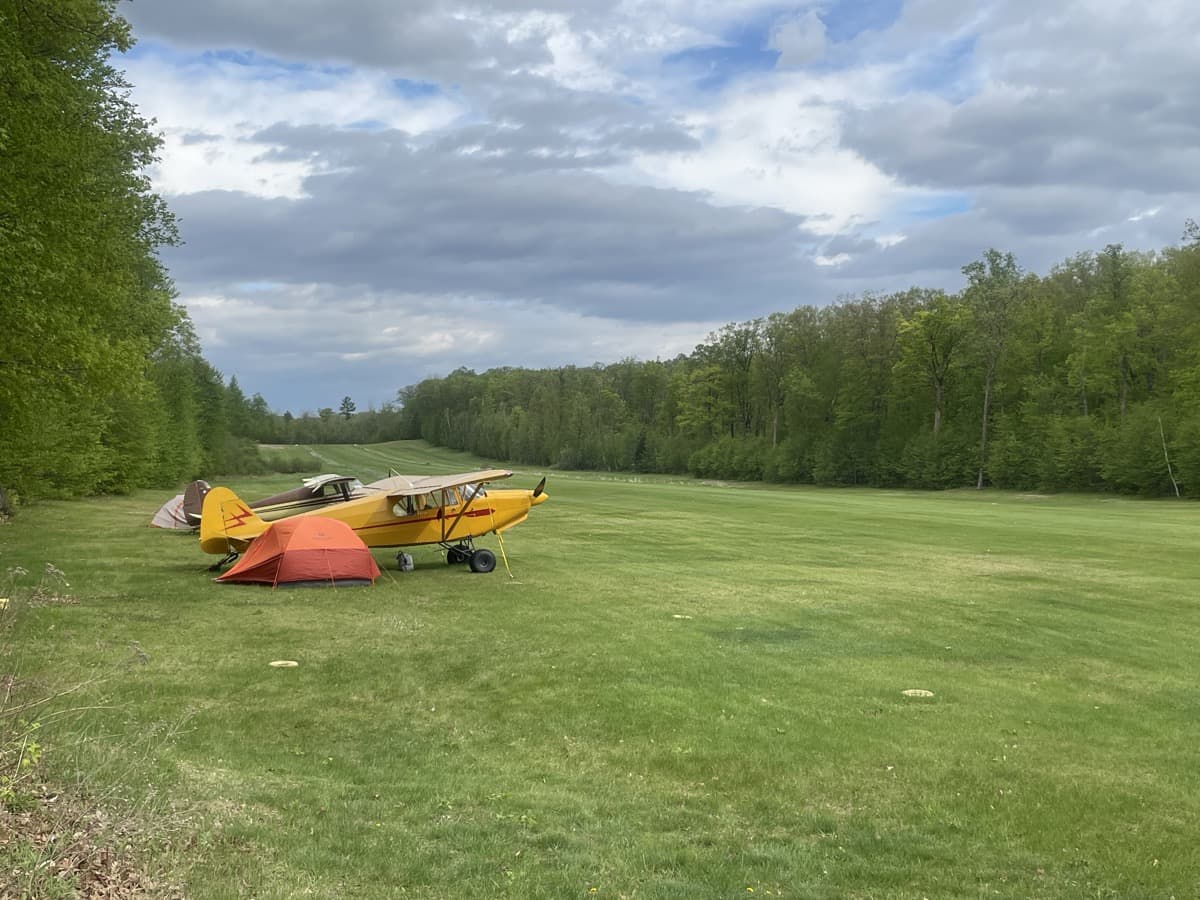
Located five miles south of Stone Lake, Gillette’s Lakewood Lodge is featured in the Recreational Aviation Foundation (RAF) Airfield Guide. Jeff Russell, one of RAF’s directors, often speaks to local EAA chapters about the organization’s mission to preserve access to recreational airstrips. I’ve come to know Jeff through my volunteer role as the RAF’s Vice President of Appreciation, where I write handwritten thank-you cards to every donor, a small but meaningful gesture that helps distinguish the RAF from other nonprofits.
My wife Lauren and I had been thinking about getting more involved, but with our two four-legged kiddos, Moose and Zanna, flying to RAF work parties wasn’t very practical. This kind of trip needed to be done by camper.
When Jeff mentioned the spring work party at Gillette’s Lakewood Lodge, scheduled for May 16-18, 2025, it really got us thinking. On top of that, my company recently introduced a Volunteer Time Off (VTO) program, offering employees eight hours for community service. They assumed I’d use it for Oshkosh, but when I said I wanted to use it for the Gillette project, they were genuinely impressed.
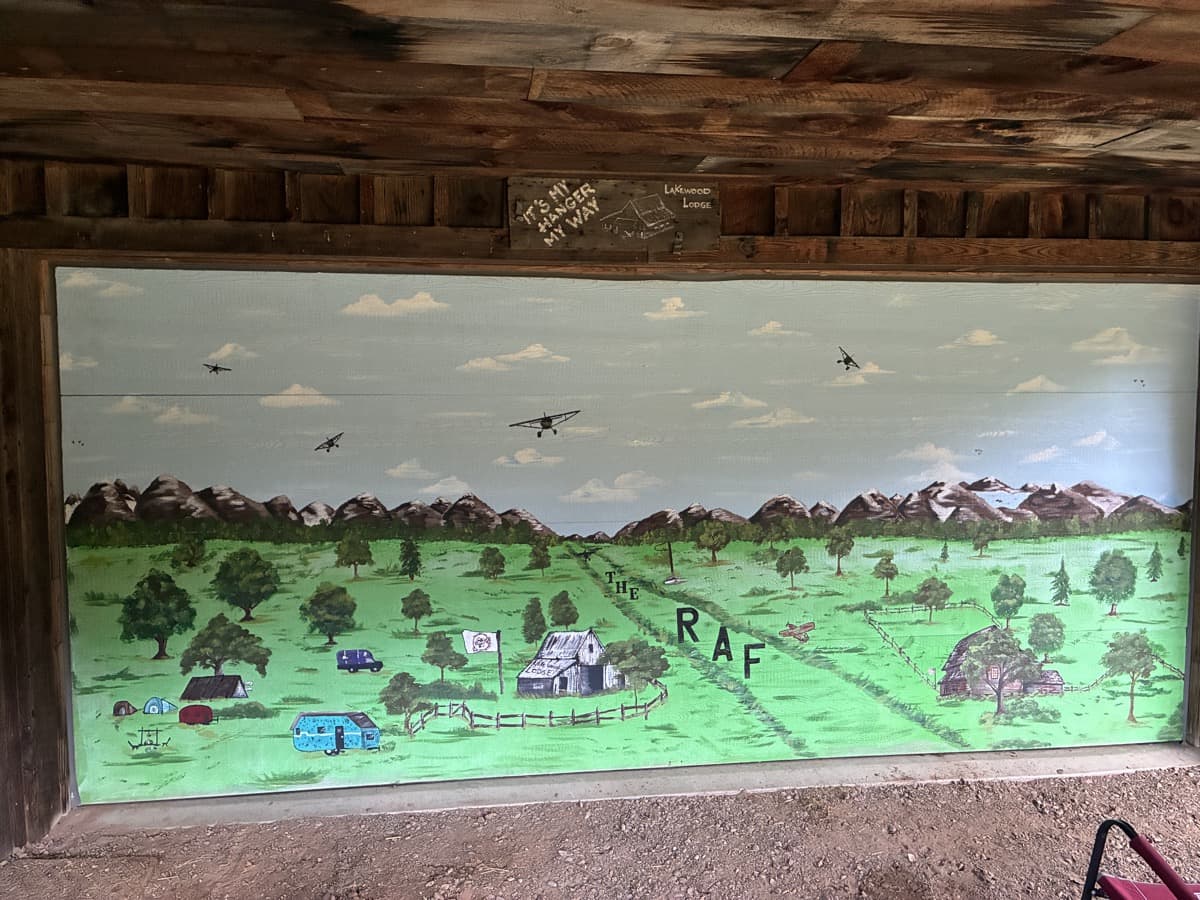
A few weeks before the trip, I received an email with a list of tasks that Bob and Judy Gillette had put together for the work party:
- Cut firewood
- Split firewood
- Move seasoned firewood to the woodpile by the house
- Mow
- Rake leaves and pick up sticks
- Roll runway
- Mow the north lot
- Locate and seal up bat ingress point in porch
- Paint outdoor post
- Install pier and swim raft
- Brush out the portage trails on canoe portage
- Erect the tipi
- Install a gate
- Repair bat house
- Fill potholes in gravel driveway.
We planned to arrive at Gillette’s on May 15, but were delayed waiting for severe weather to pass before heading out with the camper for the four-hour drive northwest. About three hours in, we decided to stop for the night instead of arriving near midnight and possibly disturbing everyone, as my F-150 hybrid makes an annoying beeping noise when reversing. That turned out to be a smart move. Just a few miles before Gillette’s, the road turns to gravel, and the only marker is a fire number surrounded by dense forest. You’d never guess there was an airport on the other side.
When we arrived on May 16, a few volunteers welcomed us, and we quickly found a place to set up. Within an hour, we were already working on tasks. Though many of us hadn’t met before, it felt like we’d been working together for years. That’s the kind of unity the RAF mission inspires. When there’s work to be done, it gets done.
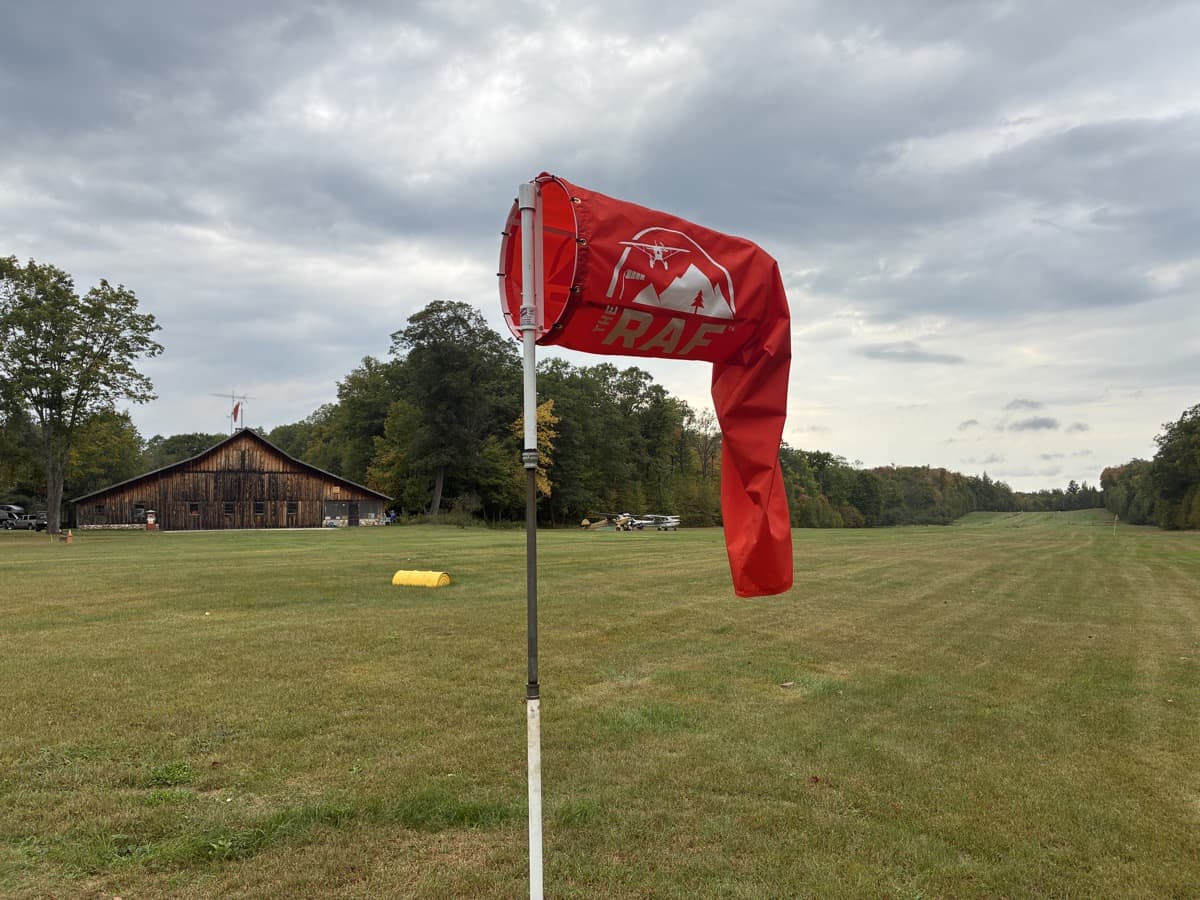
My first task was with Judy, marking trees that needed removal. After that, the cutting began. I went through two chains on my chainsaw that day, but it held up, and we had plenty of others to share.
A major help was a generous donor who, in September 2024, gifted a John Deere Model 4066R tractor and a Model 1600 wide-area mower. That tractor was a lifesaver, especially for moving larger trees and logs.
To keep us fueled, Gillette’s nephew Max and his friends, Aiden and Ferdy, cooked breakfast, lunch, and dinner for the crew each day, and every meal was absolutely delicious.
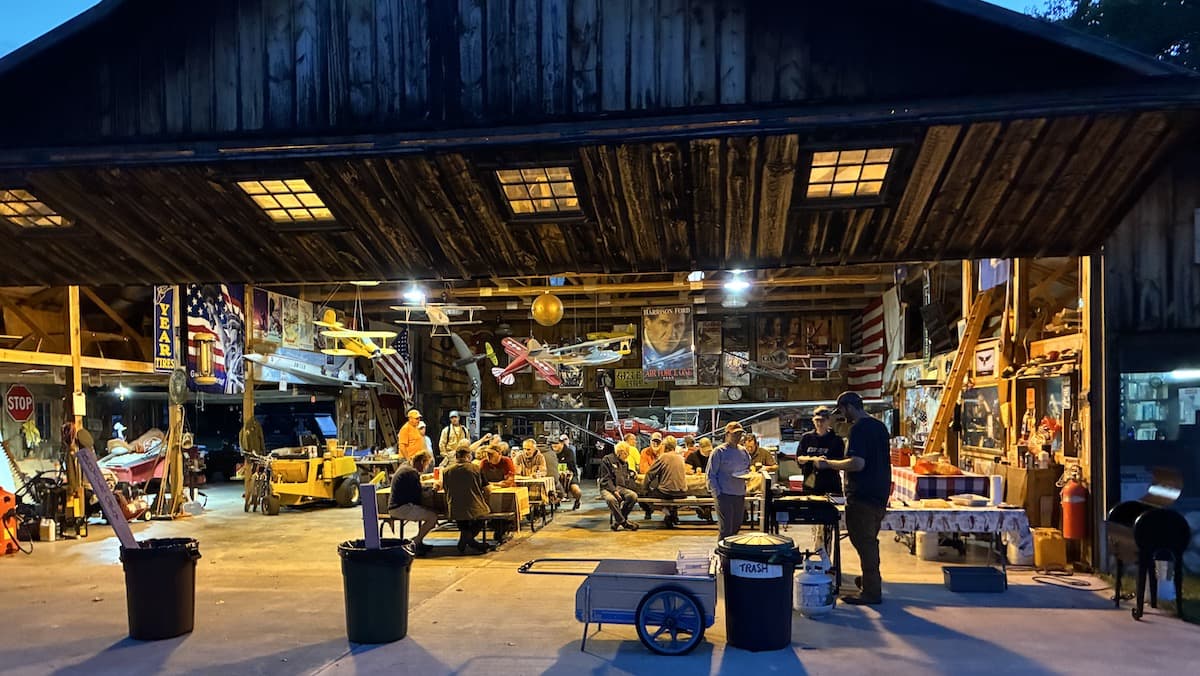
At day’s end, exhausted volunteers gathered in the hangar to unwind as rain began falling outside. Bob and Judy are truly remarkable people, a couple whose story you have to hear firsthand to fully appreciate. Judy’s tale of meeting Bob feels like a scene from a movie, and being around them, you’d think they’d just fallen in love yesterday. Their warmth made it feel like we were all family, each of us pitching in to help.
On May 17, my wife, a few others, and I worked on setting up a tipi, one of the unique guest accommodations. That night, some volunteers even spent the night in it.
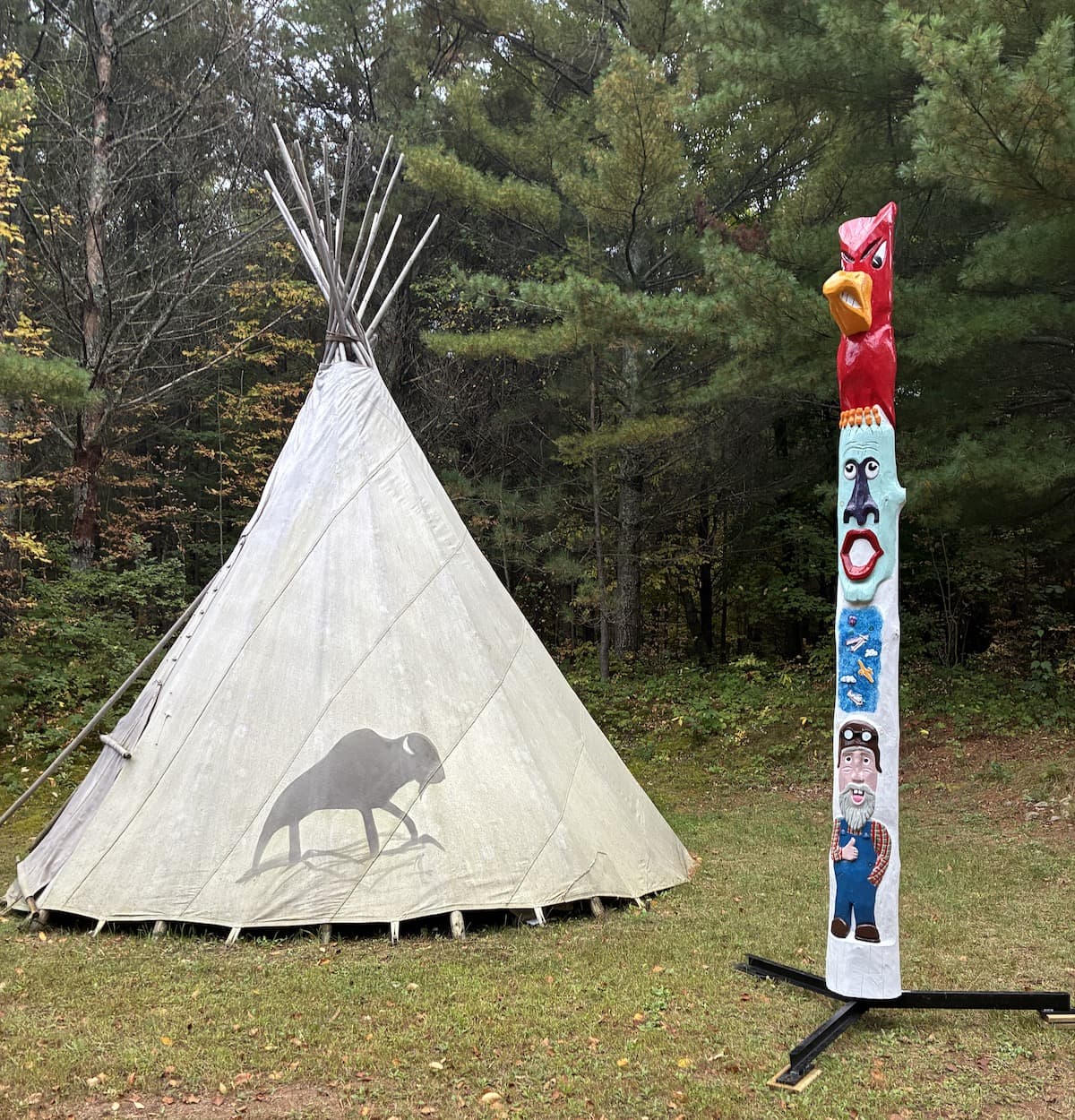
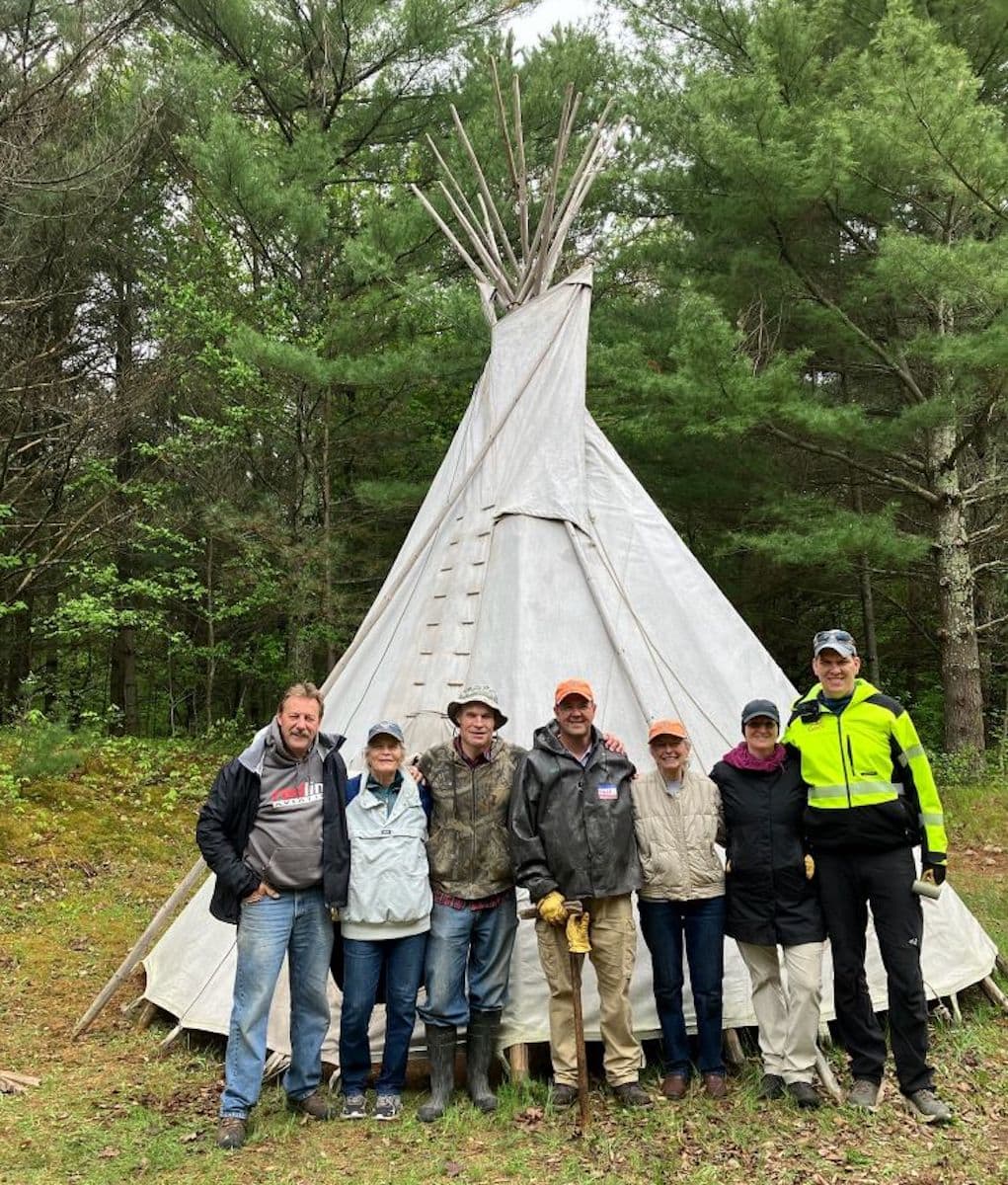
After lunch, I helped clear old trails, where I came across bear markings, likely from one seen a few nights earlier near a bird feeder. The only wildlife I personally spotted that weekend were a woodchuck, some geese, and the state bird, the mosquito.
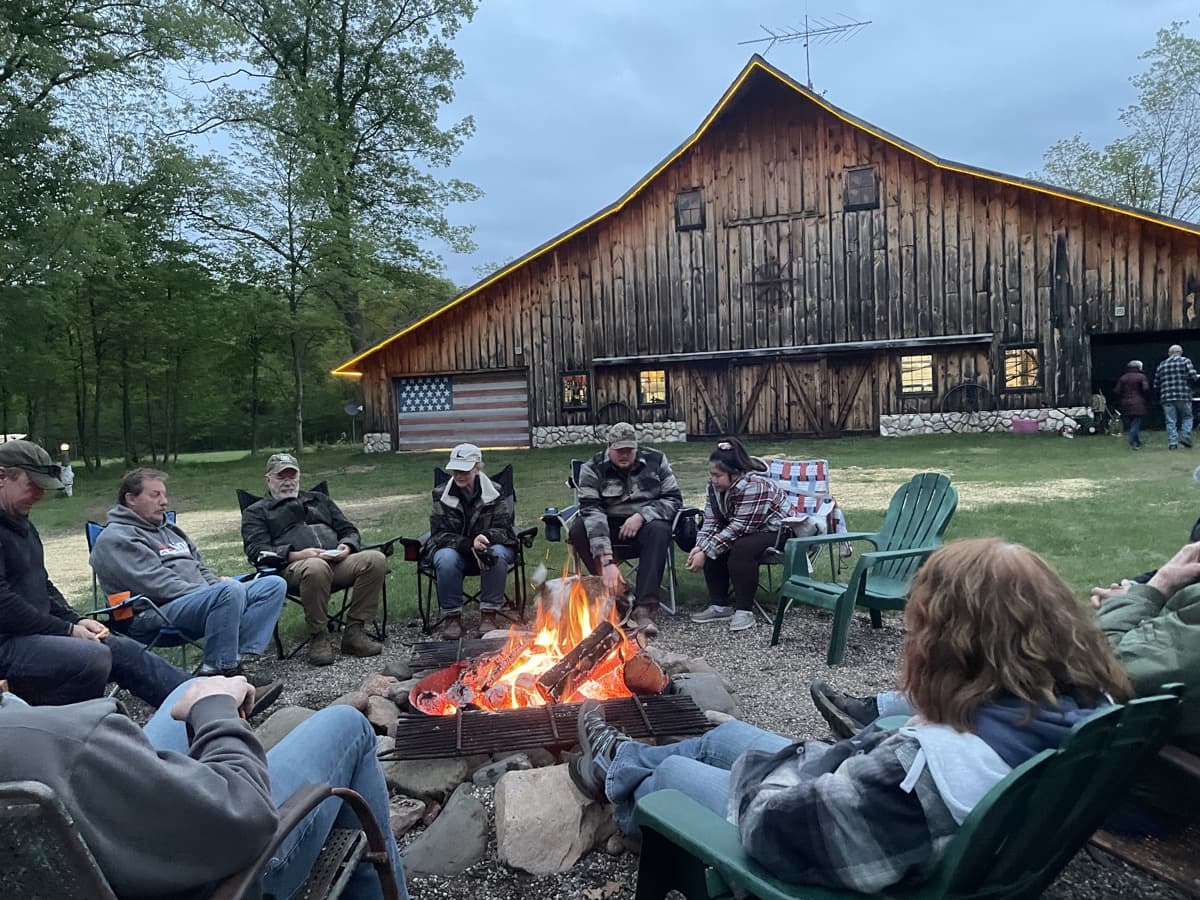
That evening, we gathered around the fire, sharing stories and bonding over our love of aviation. Over the weekend, 27 volunteers from Wisconsin, Minnesota, and Virginia showed up to help. Some were familiar faces from recent fly-ins or mutual connections. Interestingly, not everyone was involved in aviation. Some were simply close friends of Bob and Judy, there to support their incredible work.
On May 18, after completing the final tasks, the volunteers began heading home by lunchtime to rest and recover. It was bittersweet to leave, but I know I’ll be back, whether by airplane or camper.
I encourage everyone to find a way to give back through aviation. As the saying goes, aviation is a small community, and your volunteer efforts, big or small, can leave a lasting impact on the next generation of aviators.
For more information: TheRAF.org
Absolutely beautiful and true article. In all the world, this is where I want to be! Judy G’s and my deep belief. I am a friend and neighbor 4 miles south on same gravel road with same property of old abandoned resorts that were a dream. With hard work that will never end, our dreams do come true! A very special place in this world we live in.
Thank you for you efforts, both as an RAF VP of Appreciation and working hands-on with this airfield project! Lakewood Lodge is such a unique place, and Bob & Judy are the best of the best.