

The flight crew of a business jet taxied to a run-up area at the airport in Miami after their airplane had been over-fueled, as they needed to burn off the excess fuel before they could depart.
The crew did not specifically advise air traffic control that they would be performing a high-power engine run for an extended duration.
The exhaust of the business jet’s engines was directed toward a taxiway that passed behind the run-up area.
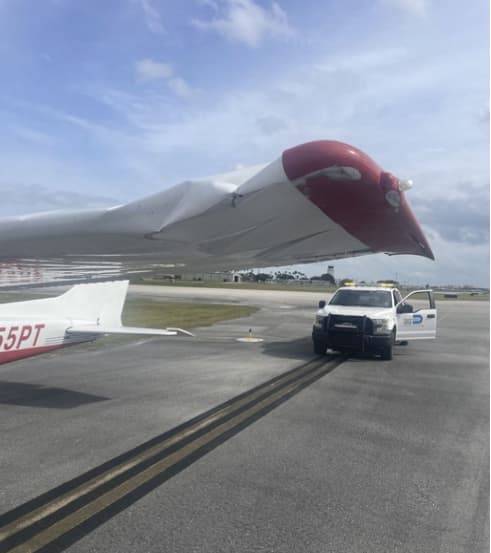
The flight instructor and student pilot onboard the Cessna 172 reported that, as they taxied toward the run-up area and behind the business jet, their airplane was blown across the taxiway by the jet blast from the business jet, resulting in substantial damage to the airplane’s left wing when it contacted the ground.
Probable Cause: The business jet flight crew’s failure to appropriately position their airplane to mitigate the impact of their extended duration, high-power engine run, and their failure to adequately communicate these factors to air traffic control, which resulted in the accident airplane encountering their jet blast while taxiing.
To download the final report. Click here. This will trigger a PDF download to your device.
This December 2023 accident report is provided by the National Transportation Safety Board. Published as an educational tool, it is intended to help pilots learn from the misfortunes of others.
I am no jet pilot but that seems like an awful waste of jet fuel. Could they not have taxied back and had some off loaded because it seems to me if you had enough overload of fuel on board to keep you from being able to take off that would have been the thing to do. I understand schedule’s but if it was so little that they could sit there at full power to burn of the little they needed they were flying to close to planes margins. Also being professional pilots or general pilots most know to point their aircraft where the prop/jet blast would not interfere with other aircraft. Dumb mistake.
No..the fixed base operator that refueled the jet could not also ‘defuel’ it.
The attached links in GAN articles take you to the supporting NTSB and FAA documentation that’ll usually answer your questions.
So now you have to tell the tower when you’re passing wind?
/J
What an insightful comment!