

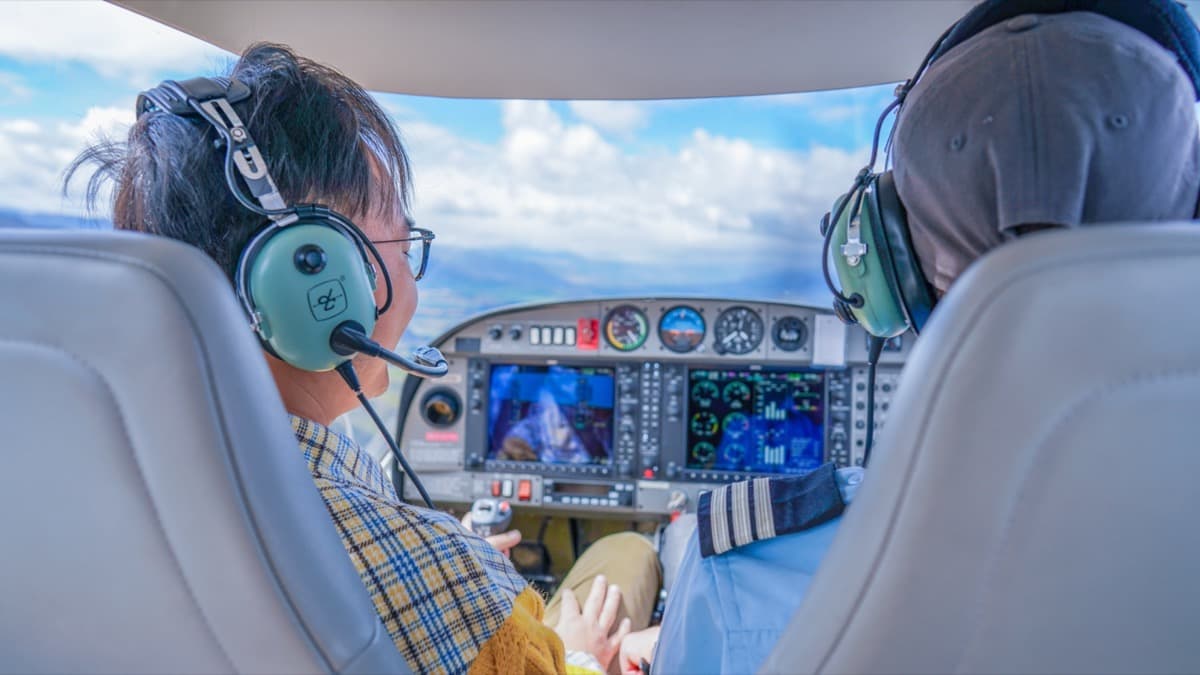
A recent study out of Griffith University in Australia is shedding new light on why some pilots handle in-flight emergencies better than others.
The study, “Exploring the role of pilot attributes and skills in response to in-flight emergencies,” by Louella Bagley and her colleagues, discovered that while pilots lean heavily on training and Standard Operating Procedures (SOP), the true difference in crisis situations are deeply personal — ranging from emotional stability and improvisation to system knowledge and sheer mental grit.
For the study, researchers interviewed 18 veteran pilots from across commercial, military, aerobatics, and aeromedical aviation. Participants ranged in age from 33 to 65, with a gender split of 14 males and four females.
All had one thing in common: They successfully navigated real in-flight emergencies.
The research corroborated the importance of known factors such as training, experience, leadership, and decision-making. But it also identified three traits pilots say played a critical role: Mental preparedness, deep systems knowledge, and resilience.
Factors to successfully managing an emergency
The researchers found that training was the most frequently cited factor, giving pilots foundational skills and confidence.
The pilots noted that skill and experience were crucial when time is limited or novel situations arise.
But it is also important to keep emotions in check, they advised.
“Deep down, you’re quite agitated,” one pilot said. “But you’ve got to take the emotion out of it and just be very procedural in how you get out of it. Start putting that into action without getting emotionally upset. But once I landed intact, then you can go ‘phew, that was scary.’”
Interestingly, the pilots often described a shift away from strict rule following in emergencies, the researchers said.
Improvisation and creative problem-solving emerged as vital tools when SOPs didn’t fit the situation — or when there simply wasn’t time to consult a checklist.
This leans into a growing recognition that evidence-based training may be more effective than traditional flight training, especially in preparing pilots for novel, high-stress scenarios, according to the researchers.
The researchers also found that while skill and experience are valuable for situations previously encountered, they are also vital for new situations a pilot had never encountered before.
“Training is the bedrock,” said one pilot, “but in a real crisis, there’s always a twist the sim didn’t prepare you for.”
The pilots may not have experienced that sort of emergency before, however they found that applying the skills they had picked up through the years, as well as relating the situation to any previously encountered situation, helped them manage the emergency.
“Nothing is entirely new,” one pilot said. “So I’ve seen this before or something like it and I dealt with it this way.”
Other well-known traits mentioned by the pilots include:
- Professionalism: Preparation, responsibility, and standards of conduct.
- Situational awareness: Understanding the big picture in real time.
- Reaction time: Important, but context-dependent. It’s not always about acting fast.
- Creativity: Thinking outside the box when standard procedures fail.
But the research also discovered three other characteristics that make for a calm pilot in an emergency:
- Mental Preparedness: Pilots mentally plan for “what-if” scenarios, enhancing calmness and effectiveness.
- Systems Knowledge: Deep understanding of aircraft systems aids in problem solving.
- Resilience: Persistence and inner strength to handle stress and uncertainty.
Not All Confidence is Good Confidence
Another insight from the study: Confidence must be calibrated. Too little and hesitation creeps in. Too much and complacency can lead to errors.
“Overconfidence in senior pilots is one of the riskiest dynamics in the cockpit,” warned a pilot with military and airline experience.
“We’ve always found that the most dangerous cockpit combination you can have is all senior pilots flying together,” another added, noting there’s complacency that comes with pilots with more experience, as well as arrogance and a refusal to listen to suggestions or feedback.
What This Means for Flight Training
The findings underscore a potential gap in pilot training and selection, according to the researchers.
Current flight training programs may benefit from a deeper focus on traits like adaptability, emotional regulation, and mental modeling — areas not always assessed in a sim or a written test.
The researchers advise that enhancements to pilot training could include more focus on:
- Improvisation
- Creativity
- Resilience
- System knowledge
While the study included a small group of pilots, the researchers noted that each pilot was interviewed one-on-one by the same researchers using the same questions. The researchers note that by interview 15, no new themes were emerging.
You can read the full study at ScienceDirect.com.

While providing PPC/IFR recurrent training for an aircraft in a flight simulator, I noticed a real breakdown of CRM when the pilots flying are:
01. Airforce pilots from fighter units converted to airline pilots. Very poor concept of CRM.
No teamwork. No knowledge of IFR flights. Very little night experience. Many had less
than twelve hundred hours but all possessed ATPL.
02. Over confidence and complacency. Knows too much and starts bragging. Has
arguments with the instructors quite often.
03. Two captains occupying the seats as trainees. In the personality issues, we call them
‘Parallel Authority’ in the cockpit authority gradient concept. Argument was common.
Mechanical intuition rather than rote checklist dependency.
“But it also identified three traits pilots say played a critical role: Mental preparedness, deep systems knowledge, and resilience.”
Agreed. I would add that time, measured in altitude, plays a significant role in the successful deployment of the traits mentioned above.
The Miracle On The Hudson was the perfect low altitude, minimum time example of well-trained pilots making calm decisions.