


DAYTON, Ohio — The National Museum of the U.S. Air Force has debuted a rare Soviet MiG-25 in its Cold War Gallery and will soon open a second special exhibit, Drawn to Combat: Bill Mauldin & The Art of War, arriving the week of Dec. 20, 2025.
Soviet MiG-25 Now on Temporary Display
The Mikoyan-Gurevich MiG-25 (“Foxbat”) was one of the fastest and most feared combat aircraft ever built. Entering Soviet service in 1970, it was designed as a high-speed interceptor and reconnaissance platform capable of reaching Mach 2.83. The MiG-25’s capabilities were so impressive that they instilled a sense of urgency within the American defense establishment during the Cold War.
“The MiG-25 is interesting not only as an adversary warbird, but also for what the fear of it did to the American defense establishment in the late 1960s,” said Will McLaughlin, NMUSAF Curator. “Technical experts’ suppositions and spy photographs flashed warning signals across the Cold War Air Force. Its large frame and huge intakes hinted at capabilities that the F-4 could only hope to achieve. This call to arms prompted the development and adoption of one of America’s most successful aircraft — the McDonnell Douglas F-15.”
The MiG-25RB was found in 2003 by American forces buried in the sand near Al Taqaddum Airbase, about 250 kilometers west of Baghdad. Recovered incomplete — with the wings missing and vertical stabilizers removed for transport — the MiG arrived at the museum in 2006.
Plans call for the MiG-25 to remain on display in the Cold War Gallery through March 2026, offering visitors a chance to explore this iconic piece of Cold War aviation history.
Drawn to Combat
Opening Dec. 20, 2025, “Drawn to Combat: Bill Mauldin & The Art of War” brings the work of Pulitzer Prize-winning artist Bill Mauldin to the National Museum of the U.S. Air Force. This special exhibit will be on display through March 15, 2026.
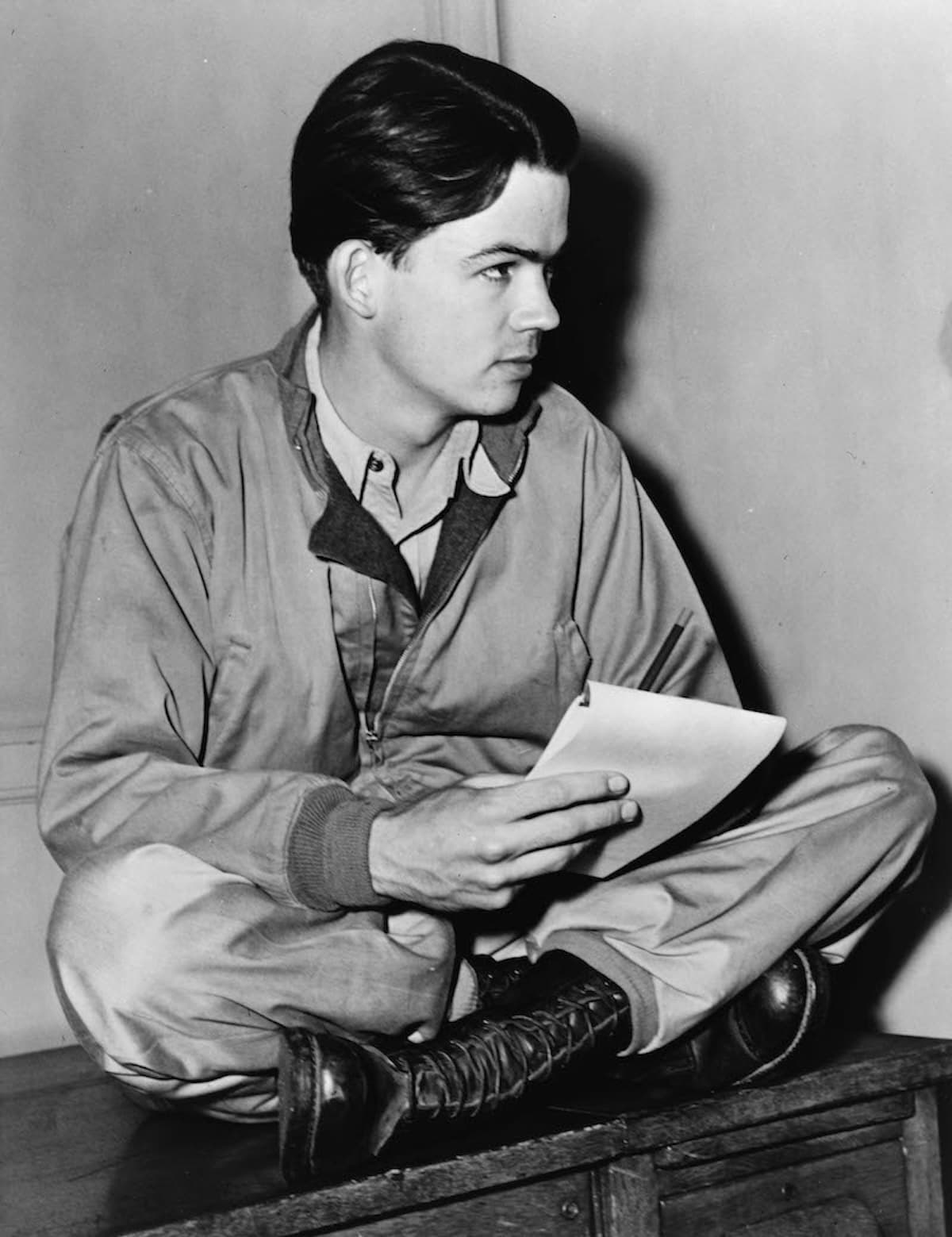
Presented through a selection of sketches and combat-themed artwork, the exhibition highlights Mauldin’s distinctive ability to capture the humor, humanity, and hardships of life at war, according to museum officials.
The exhibit is on loan from the Pritzker Military Museum & Library and made possible through the support of the Air Force Museum Foundation.
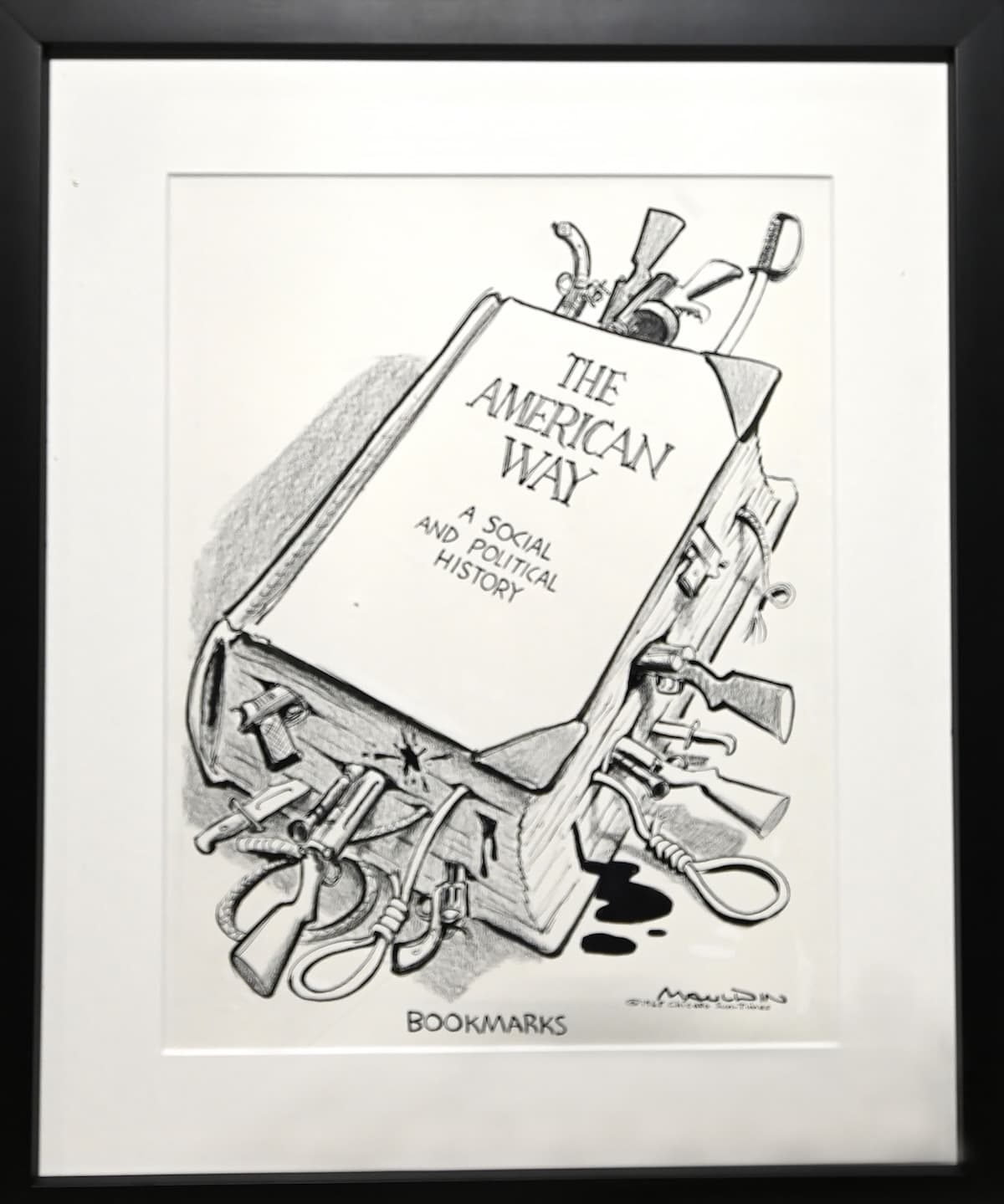
The exhibit explores themes Mauldin returned to throughout his career — from the daily realities of service life to his later commentary on military and political issues as a nationally syndicated cartoonist. Featuring more than 150 original drawings, published cartoons, and personal artifacts — including his Purple Heart and professional correspondence — the exhibit offers insight into the breadth of Mauldin’s work and his role in documenting the military experience.
“Drawn to Combat: Bill Mauldin & The Art of War, organized by the Pritzker Military Museum & Library, is a great example of an exhibition that focuses on the people who serve in the military — something the museum has worked hard to emphasize in recent years,” said Foundation Acting CEO Melinda Lawrence.
For more information: NationalMuseum.af.mil
We can scrounge for wings from other sources who have MIG-25s. Hard to believe we cannot find wings needed for this plane.
My suggestion is to ask Boeing or Lockheed Martin’s Skunk Works to fabricate a pair of the wings. Throw away pride and ask for help from all and even from the Russians.
I would hope that the museum displays the book that was written with Lt. Belenko by John Barron that was called “MIG Pilot” sub. The Final Escape of Lt. Belenko. This was printed in 1980 and tells about his life in the Soviet Union and why he defected.
Great stuff !!!
Growing up as a kid of the Cold War I have always been fascinated by the MiG-25 Foxbat and it’s more capable successor the MiG-31. The MiG-25 first came to my attention on September 6th 1976 when Soviet pilot Victor Belenko defected landing his MiG-25 at Hakodate airport in Japan. He had purposely lagged behind his flying formation a little at first and then just slipped away. I recall this incident being a major intel victory for the United States. We learned all the secrets of the MiG from its avionics to its metallurgy to weapons load, engines and more in one fell swoop. This information turned out to be of great help to the ongoing McDonnell Douglas F-15 program as the F-15 was our primary answer to the MiG,-25. Of great importance we learned that the MiG was massively heavy, still used old vacuum tube technology, was 80% a steel nickel alloy, was extremely fast and capable as an interceptor but had not nearly the nimbleness, turning capacity or advanced solid state avionics technology the United States was putting in the F-15. We found out that for all the consternation the MiG had caused our leaders and military aviation community, our technological capabilities were still thankfully far ahead of the Soviet Union. This incident was a seminal moment in the Cold War fitting well with the later election of Ronald Reagan. As a young man I knew things were going to be all right going forward when our new President Ronald Reagan said in 1981 “Here’s my strategy on the Cold War. We Win, They Lose”.
Why were American forces buried in the sand?
American forces weren’t ‘buried in the sand’.
Iraq buried weapons, including lots of MiG-25 Foxbat and SU-25 Frogfoot aircraft, to keep us from destroying them.
While very interesting as written, my thoughts, while reading about the Mig 25 Foxbat, was that I wanted to see a picture of the whole aircraft, even though it is clear why the actual aircraft is in the transported condition shown. I guess there were no funds to transport the “wings”, huh? Also, did this aircraft ever really work for the Soviet Union? Did it ever go into mass production, or was it more of a propaganda scare tactic?
Bill Mauldin’s background and talent was interesting, but I wished to have seen one or two of his other drawings.
They built 1180 of them. They were in service for a long time. Interesting fact, they were built using stainless steel instead of aluminum.