

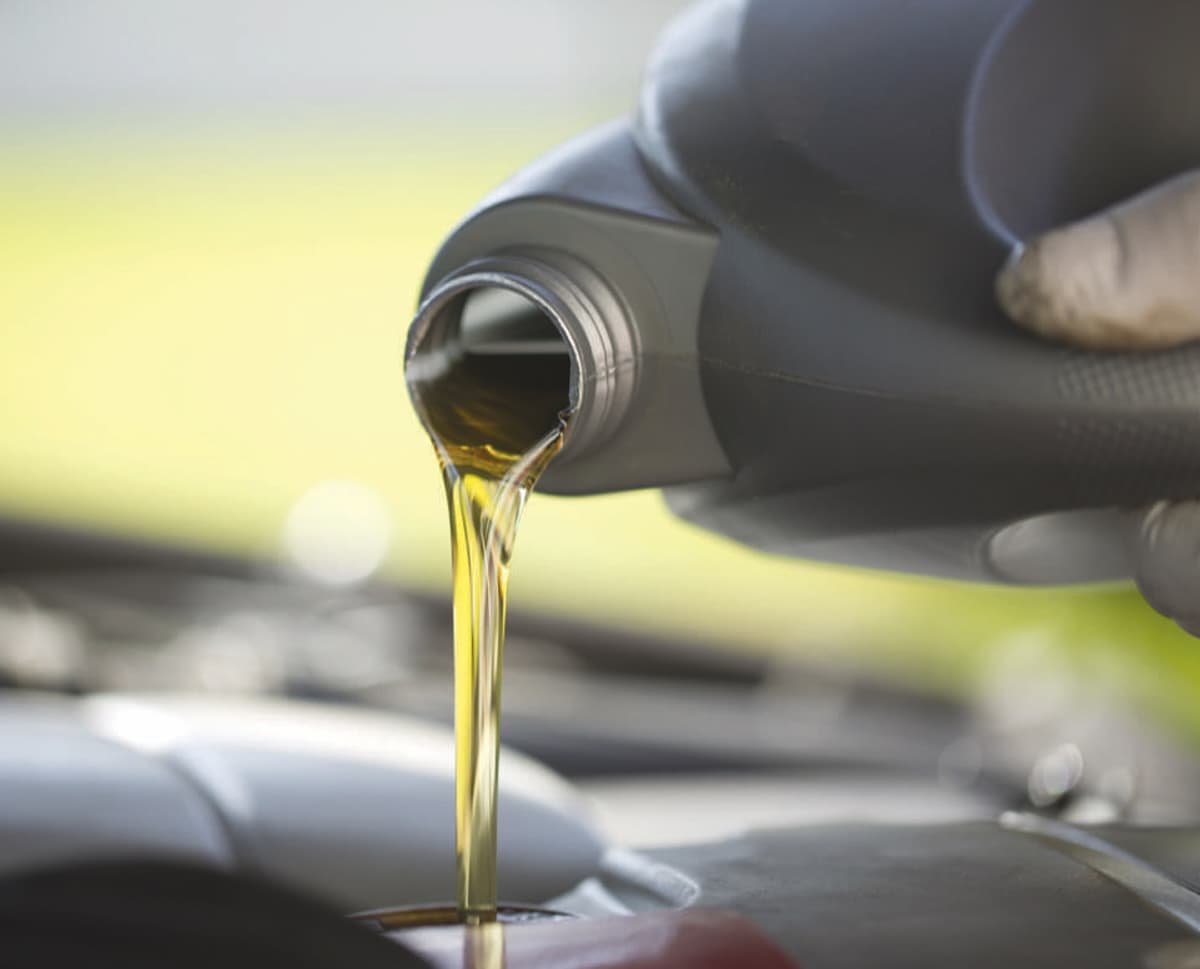
Over the past 50 or so years, the one question that most people do not understand is “why do aviation piston engine oils provide such poor anti-rust and anti-wear protection compared to automotive and heavy-duty engine oils?”
That’s usually followed by a second question: “Can they be improved and when?”
The answer to the second question is probably no, at least not in this lifetime.
The answer to the first question has to do with the fact that all oils sold for certified piston engines must meet the Mil-L22851/SAE 1899 specification. This spec is designed to work well with no significant problems in all spark ignition aviation piston engines ever produced.
The two main additive systems that are used in automotive and heavy-duty engine oils contain ash, which is not allowed in aviation engine oil. For anti-wear, these oils contain zinc dithiol phosphate (ZDTP).
The problem with ZDTP is that it works by chemically attacking and coating parts. When parts like the cam and lifters, which are the highest shear loading in engines, see higher loads during the opening of the valve, the coating is sheared off, protecting the metal parts. This is called sacrificial lubrication and greatly increases the load-carrying capability of the lubricant compared to just base oil.
The problem is that while ZDTP works well on cam and lifters, which are made out of iron, it can be harmful to softer parts made out of copper or silver.
Some aircraft have exhaust valve guides made from copper alloys and the ZDTP will tarnish the guide, which will reduce the clearance and eventually cause valve sticking.
Likewise, the ZDTP will attack the silver in radial engines that is used in master rod bearings for increased load-carrying capabilities.
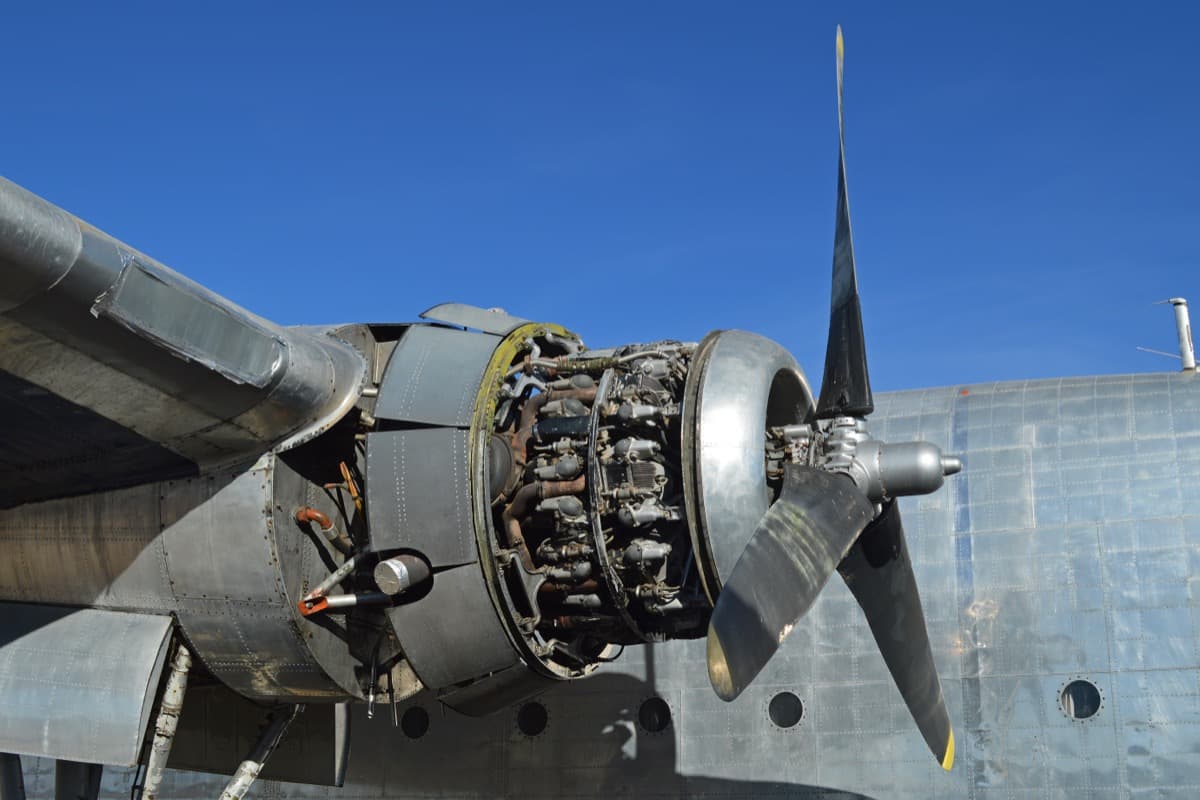
Back in the 1990s Phillips Petroleum noted that its X/C 20W50 oil produced higher wear metals and wear compared to competitive oils. The company’s solution was to add ZDTP and rename the product X/CII, which had to be marketed by an STC since it did not meet the zero-ash listed in the Mil-L-22851 spec. The product was withdrawn from the market after a few years because of exhaust valve sticking and silver bearing failures, among other problems.
The other ash-containing additives not used in aviation oils are ash-type detergents.
I know many people call oils like Aeroshell Oil W 100 detergent oils. But in lubricant circles, they are not detergent oils, but ashless dispersants (AD) oils.
Ash-containing detergent oils lead to two main problems in aviation engines.
First, when a mid-time aviation engine is switched from an AD oil to a detergent oil, the oil will clean up the engine and suspend the loosened carbon and dirt and probably plug the oil pickup screen. This can lead to serious engine and airplane problems and even pilot and passenger health concerns.
The second problem with ash-containing detergent additives is that they do not burn clean in the combustion chambers and leave notable deposits. Under high load conditions these deposits glow.
This can lead to what is called Deposit Induced Runaway Surface Ignition (DIRSI).
With DIRSI the glowing deposits act like glow plugs to ignite the intake charge during the compression stroke. This will usually lead to an engine failure.
Comparing Apples to Oranges
The oil consumption in modern automobiles is usually very low. For example, when was the last time you had to add oil between oil changes?
In comparison, have you ever not added oil between oil changes to your aircraft? And your aircraft operates at a much higher load percentage than an automobile.
This is why auto and heavy-duty oils provide so much better anti-rust and anti-wear protection than aviation oils. They have the “good stuff” additives, which are not allowed in aviation piston engine oil.
Flown West
As a PS, I just learned of the passing of Weldon Garrelts from the University of Illinois Institute of Aviation. Weldon was a leader in the aviation lubricant business who help develop the new SAE specification. He also authored several SAE papers on oil change practices and oil analysis.
You may not have heard of him, but he was a very important player in the aviation engine oil world. He will be missed.

TCP is basically a secondary lead scavenger agent. during the combustion process it reacts with the lead and forms lead phosphates which are flakey so that the action of the valve in the guide can work the deposits out. It is approved for all certified piston engine aircraft. The only problem is that it is a suspected nerotoxen.
Ben,
Thanks for the info. I do handle it carefully.
The TCP must be getting into the oil, with the oil analysis metals now are 1/2 previous samples and acting as a lubricant/ friction reducer ?
How about a layman clarification between ‘Ashless dispersants’ and ‘detergents’ please.
Inquiring minds need to know !!!
Maybe a note on ‘compounded’ oils too please.
in the oil industry the difference between the two is the ash. So any cleansing agent that contains ash like a calcium sulfonate is a detergent and if it contains no ash or metallic compounds it is labeled as an dispersant. in performance the detergents are much Beter at counter acting rust build up and deposits.
How does Camguard help this issue?
The claim is that it leaves an oil film on the cam and lifters to prevent corrosion, vs the oil draining off.
Curious about higher cam loads. Cam and lifter loads are a product of the valve springs and compression. These are fairly moderate pressure springs running at moderate RPMs in fairly low compression engines. What am I missing?
Ben,
I have been using Phillips 20w/50 and Camguard for 15 years and about 1,000 hours. The GO-300 has 2,400 hrs TT.
With a cylinder replacement [ new nitride ], the oil consumption dropped to 10-12 hrs per quart. The oil analysis with 50 hr oil changes showed lead levels jumping to 3,000 ppm.
At about 350 hrs on the new cylinder 2 othesr had stuck exhaust valves. Reaming the guides fixed the problem.
After another 350 hrs the engine start having ‘morning sickness’. Not want to do the reaming again, I decided to try Alcor TCP, 1 oz per 10 gallons.
After 4 hours of flying, the morning sickness was gone, and the engine is running smoother that ever,
Borecsope of the cylinder showed no deposits , just a light brown coating on the piston crown.
The most recent oil analysis, a 30 hr change, showed 1/2 the metals ppm, iron at 20 ppm, and lead at 1100 ppm.
Question, is the TCP safe to use ? what might it harm ?
Thanks,
JimH, N8234T, C175B