

I looked at the signature and thought, “Good Lord, this looks like I’m having my stroke in installments.”
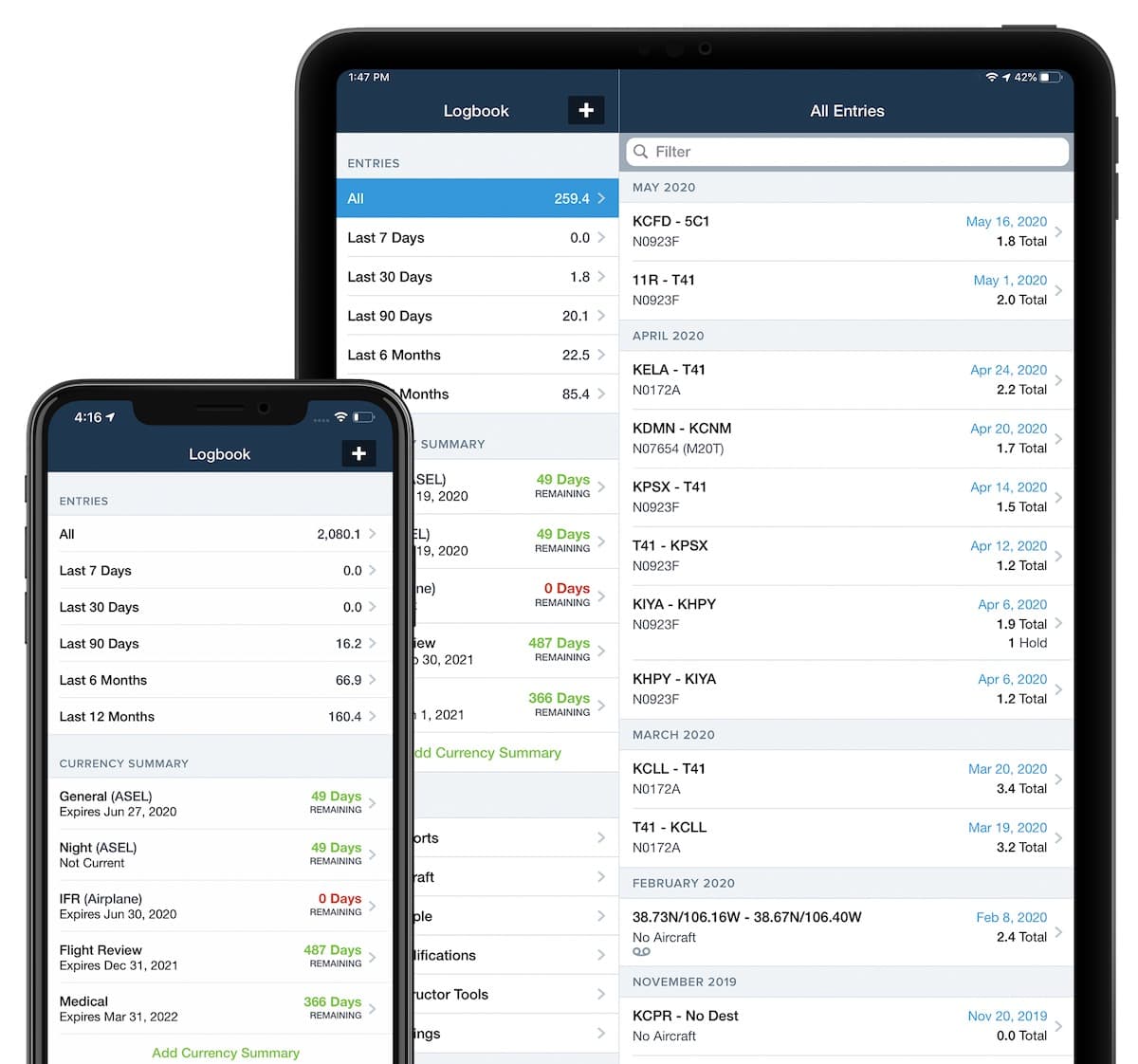
I’d just completed giving a flight review, and the client presented his iPad log for endorsement. After hunting and pecking my way through the FAA-required verbiage, the signature line was the final hurdle. My index finger traced an indecipherable squiggle across the glass, and it was official. On reflection, I should have used a different finger. Oh, for the elegant simplicity of a paper logbook.
I can hear the rebuttals…“But digital is just a tap away. No logbook to haul around and worry about losing. It’s all there in the Cloud.”
So goes the debate between digital vs. paper logbooks. I get it — digital is efficient, secure, and void of human math errors. If you keep a paper log, you can relate to that last part, especially if, like me, you sometimes let months go by without totaling the times on each page.
But what about the heart and soul of our aviation lives? After all, isn’t that what our logbooks hold?
In the 2005 film “One Six Right, The Romance of Flying,” a pilot recalls, “I wrote in my logbook…This is a love story. Please call if you find it. It was a cherished log. Every little airplane I flew.”
Does the FAA cherish our entries?
According to 14 CFR Part 61.51, “Pilot logbooks,” we have to document and record:
- Training and aeronautical experience used to meet the requirements for a certificate, rating, or flight review
- The aeronautical experience required for meeting the recent flight experience requirements.
That’s it.
The feds don’t care to know the details of the honeymoon flight with your wife, or that time you flew in a missing man formation for the funeral of a dear friend, or the view from a T-38 high over North Dakota as a total solar eclipse drew a curtain of darkness across the face of the Northern Tier.
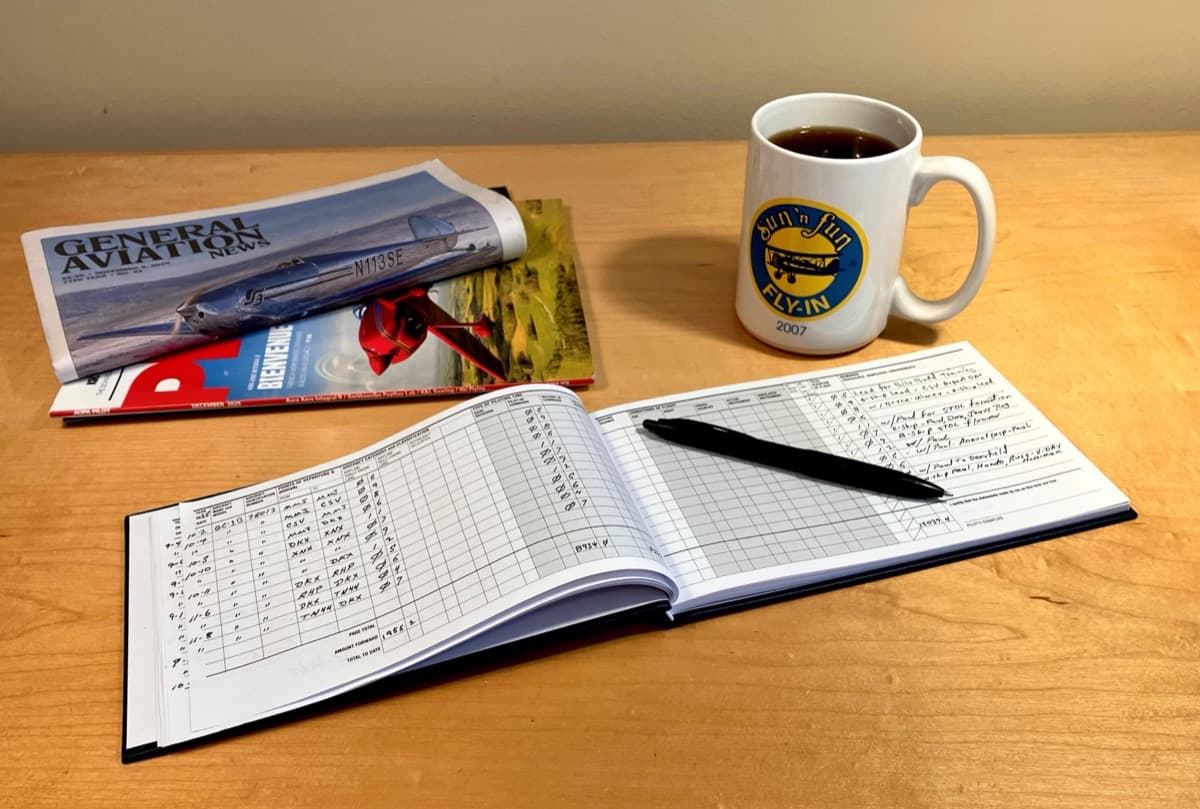
Sure, we can type those details into our digital log, but I’d rather read them in pen and ink, complete with scratch-throughs, corrections, and editorial comments.
The first logbook entry in my own hand, recording my second solo, is dated July 24, 1971. It shows 0.7 hours in a Cessna 150, N60245. Under “Comments,” the 17-year-old me wrote, “Runway switched on downwind to 22R. Narrowly missed dog on runway (verified by Delta pilot).” Literary gold right there.
The most recent entry, in a much older hand, reads, “Four-ship with Paul, Hondo, and Russ for Harriman Veteran’s Day parade.”
I can’t recall what kind of dog that was, but years from now as I flip through the pages I will remember my friends’ faces, their gleaming aircraft, and that golden November afternoon.
No doubt the digital argument is compelling. A quick entry and…whoosh!…all the details are tucked away in the Cloud. The future you doesn’t have to go up to the attic, pull out a cardboard box, and dig out a stack of logs to go down memory lane. And God forbid there’s a house fire.
My solution?
Every month or so I scan the latest pages in my current logbook and save that to the Cloud.
Hey, there’s no perfect system — Moses probably got a hernia carrying those tablets down the mountain.
But I’ll take paper over plastic any day.
Great article, and “One Six Right” is one of my favorites! Paper tells a story, has a feel (and even smells) that digital does not. This is exactly why I built BetterPlane.com on the aircraft logbook side. I wanted to keep my paper logbooks but have a tool that I could point at and easily capture and preserve the paper with modern tech.
I’ll keep my paper logbooks, thank you.
Paper, for sure, albeit I haven’t actually added up my column & page totals in a long time. My logs are full of notes, px names, weird freight hauled, cross-out corrections, makes & models flown, tail nos. and the type of flying. Some entries even take up more than one line, others have a whole day of routine air taxi flying lumped on a single entry line. All together the pages tell my story; where I’ve been since I earned my ticket on Dec 17th of the 99th year of powered flight.
Fortunately, Foreflight and/or my employer keeps track of my 90 day currency and a general idea of my total time when needed.
Scanning logbook pages does sound like a good idea though, in case of that potential house fire, or a thief grabbing my brief case.
(Merry Christmas from Alaska.)
Merry Christmas, Jeff, and a safe and warm New Year!
I still keep paper, because there is something about it that I can’t let go of. But, I also keep a spreadsheet up to date as well that makes it super easy to calculate the times required when filling out insurance renewal or named pilot added forms like time in XX type or how many hours in 30, 60, 90 days etc. They all seem to want different things.
Honestly I used to think the same that pen and paper was best; however, I have been converted. The beauty of the digital log is that you can write as much narrative as you like to each entry and not just a one liner that makes sense today but not in a decade. But the best part is that you can tag the photos of each flight to each entry as well. What a great gift to my future generations that might not have the memory we have the benefit from being there. Digital is it for me for those reasons.
Beginning with my first lesson in the early seventies to my retirement from airline flying in 2023, I have logged every flight in paper logbooks. Every flight as a student. Every flight as an instructor. Every charter or corporate flight and every leg as an airline pilot. Crazy, I know. But every flight is a memory worth saving. Stacks of logbooks now collecting dust
and I would do it the same way if I were starting a flying career today.
Excellent stuff as always, Jim! Personally I prefer the old paper method, but like you I scan it and save it. (And I’m way behind! Thanks for the reminder!)