

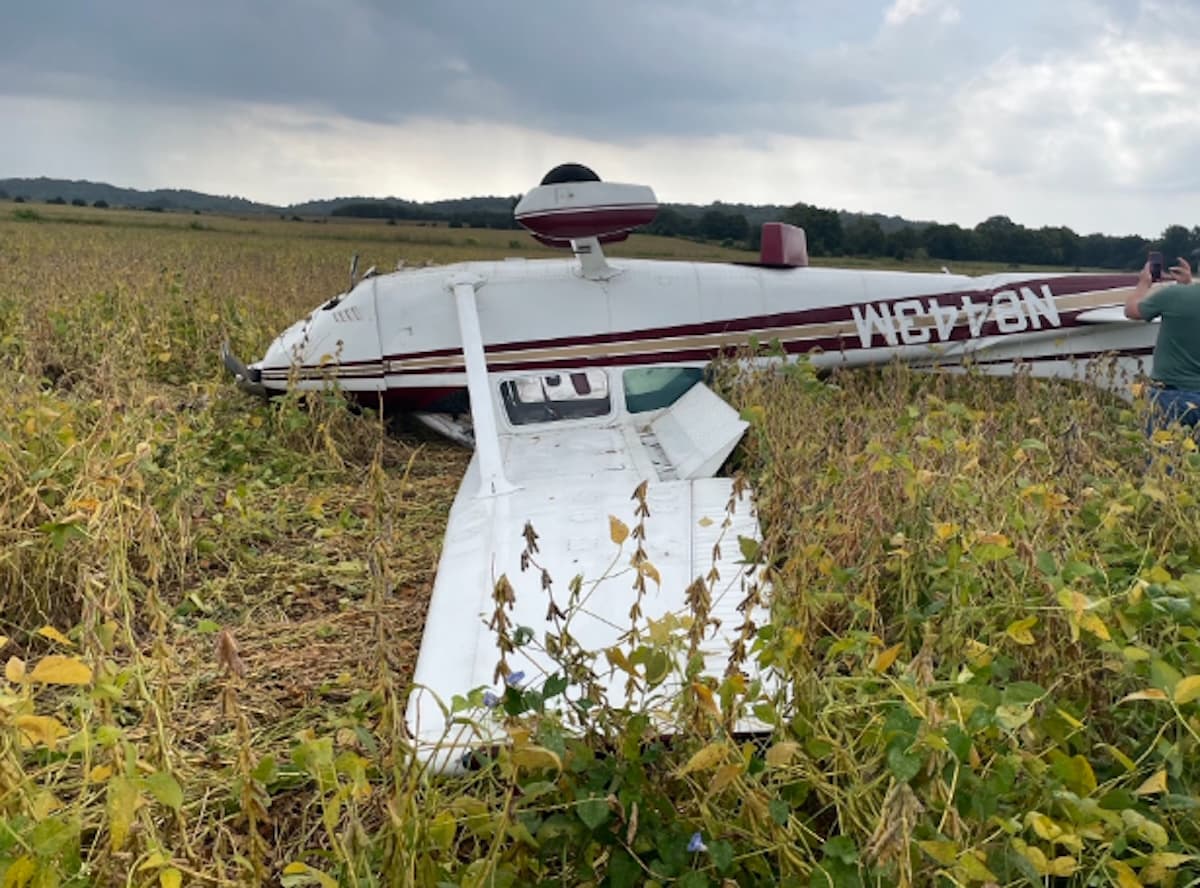
For decades, general aviation safety conversations have focused on pilot decision-making, proficiency, and training shortfalls.
But a new study takes a different tack, examining whether equipment failures have become any less lethal over time.
After mining more than 30 years of NTSB accident data, the study’s conclusion is unmistakable: The fatal accident rate tied to mechanical failures has not budged.
Drawing on NTSB data and FAA fleet-hour data, researchers Douglas D. Boyd from Embry-Riddle Aeronautical University and Linfeng Jin from Eastern Michigan University analyzed fatal accidents from 1989 through 2023, comparing type-certificated aircraft with the experimental-amateur-built (EAB) fleet.
Although fatal equipment failure accidents represent a small fraction of overall GA accidents, they stand out for their consistency, according to the researchers. While accidents from other causes declined steadily, equipment failure accidents remained flat.
The study also reinforces a longstanding concern among mechanics and aircraft owners: When engines fail, they often fail early — well before reaching manufacturer-specified time between overhaul (TBO) limits.
Even more troubling, most failures originate in components that cannot be examined during a standard annual inspection.
It’s a different story for experimental aircraft, where airframe failures are the leading equipment-related cause of fatal experimental accidents — and they are disproportionately tied to builder/manufacturer error.
Key findings of the study include:
Most common failure types
- Type-certificated aircraft: 67% of fatal equipment-related accidents stemmed from propulsion system failures.
- EAB aircraft: 36% of fatal accidents stemmed from airframe failures.
Underlying causes of failure
Type-certificated propulsion failures
- 60% due to fatigue/corrosion.
- 23% due to inadequate maintenance.
- More than 90% occurred within TBO, involving components not accessible during annual inspections.
EAB airframe failures
- 55% attributable to manufacture-builder error.
- 20% due to fatigue/corrosion.
Which engine components fail most in type-certificated aircraft?
- 34%: Crankshaft/connecting rod/piston
- 20%: Cylinder/head/barrel
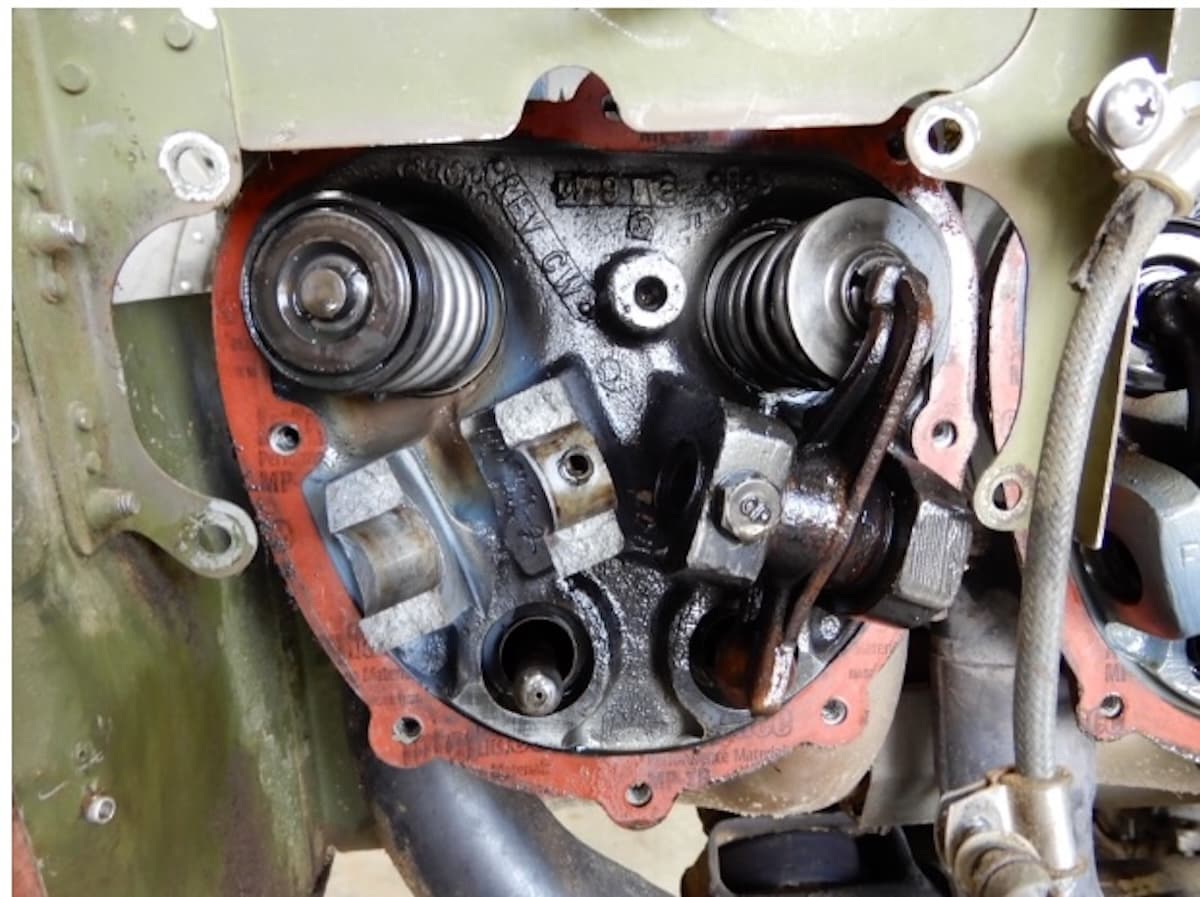
- 15%: Camshaft/valves/rocker arm
- 8%: Propeller
These items are all beyond the scope of inspection in a routine annual, the researchers noted.
A takeaway for pilots
A fresh annual and being under TBO do not guarantee immunity from catastrophic engine failure. Preflight planning must assume an engine failure is always possible, even with a healthy logbook.
Mitigating risk
The researchers offer some suggestions for GA pilots to manage risk during everyday flying, including:
Always maintain a glide option: Because internal failures are mostly undetectable and commonly occur inside TBO, the study emphasizes staying within gliding distance of suitable landing areas whenever possible.
Avoid night flight over terrain where you can’t land, crossing large bodies of water without altitude or nearby airports, and routes that leave you “terrain-trapped,” such as mountains, forest, and desert.
Be corrosion aware: Since fatigue and corrosion cause most powerplant failures, be aware of the environments that accelerate these factors, such as coastal operations, high humidity, and long periods of not flying.
Mitigation strategies include keeping desiccant plugs and dry air systems in mind, using conservative oil change intervals, and aircraft owners should consider periodic borescope inspections even when not required.
Know your powerplant trends
Even though internal parts can’t be seen during an annual, pilots can monitor trends, such as:
- Abnormal vibrations
- Sudden changes in CHT/EGT
- Drop in oil pressure
- Unexpected metal in filters
- Rising oil consumption
The researchers advise aircraft owners treat early signs seriously, noting unexpected changes often precede catastrophic failures.
For experimental pilots
- Review builder logs and construction steps if purchasing a used experimental aircraft.
- Conduct thorough transition training.
- If the aircraft has low time since build but many years since construction, consider an extra structural review.
A takeaway for experimental pilots
Build quality, documentation, and post-build inspections are critical. Airframe integrity deserves the same scrutiny as engine performance, the researchers advised.
The bottom line for pilots
Mechanical failure remains a persistent and largely unchanged contributor to fatal GA accidents. Many of the most dangerous failure points occur where no inspection can see them and well before TBO.
Your best defense is operational margin: Altitude, glide options, conservative decision-making, and a healthy skepticism that “the engine just came out of annual, so it’s fine.”
You can read the full study, “Static Rate of Failed Equipment-Related Fatal Accidents in General Aviation,” at MDPI.com.

I should add if 100 UL is finally approved then Mobil can bring out their AV-1, which was introduced many years ago.
Many operators found out the hard way that 100% synthetic oil and fuel with lead caused “SLUDGE” to develop in aircraft engines……..Mobil was forced to remove it from the market after numerous engine failures occurred …….
Getting the lead out of our fuel will help a lot. The new fuel UL100 has been under evaluation for a long time and the FAA has not approved it yet?
Why?……
Eliminating the lead in our aircraft fuel will allow a 100% synthetic oil to be used in our aircraft engines…..
The University of North Dakota ran over 300,000 gallons of that unleaded fuel through their engines. They stopped using it. Destroyed their engines.
I went to Oshkosh. I asked one of the manufacturers of this product how many hours they had on an engine. A massive 400 hours and they said it’s ready for the market. Don’t think so.
There are a few problems with this study;
Engine failures are rare. Per the Recent McSpadden report, they represent only 3% of fatal causes.
All mechanical failures causing fatalities are only 17% of total crashes.
Also, per the report from 2019 to 2023 the fatal rate has decreased by 20%
The largest cause of crashes is loss of control, LOC, and the industry is very focused on this.
I would expect engine failures to be fairly constant, since the design and materials have not change appreciably since their designs in the 1930s, Lycoming and Continental.
As far as detecting pending engine failures, the use of oil analysis will show trends in wear metals. Borescope inspections of the valves, piston crowns and cylinder walls gives a good ides of the upper cylinder health.
So, possible failures can be detected indirectly.
The broken rocker bosses shown most likely did not fail from fatigue but from continued overload caused by a sticking valve or some other binding in the valve train.
The corrosion issue is real and it is best mitigated by installing a massive magnet array on the oil filter. This is important because contrary to popular belief, paper element oil filters do NOT provide full filtration. The bypass valve in such filters is ALWAYS wide open. This provides only partial filtration through the paper. The magnets do a substantial part in arresting ferrous particles such as rust, also on a much finer particle size than a filter can catch (<5microns).
The discolored exhaust valve spring and spring-boss area would certainly support your conclusions, but head casting TIS and rocker shaft-to-rocker boss clearances could also be contributing factors. Likewise, cyclical age plays a large role in the strength of casting members, especially cylinders and crankcases. That bolt installed at the inboard rocker boss is testament to that.
Overlooked in the article, however, was this idea that an engine problem can be fixed while managing changing flight conditions. This, and the desire to find a suitable runway in order to “save the airplane at all costs” has led to far too many LOC events.
AD 94-05-05 R1 was issued in 1996 to alert owners of this problem.