

The Glasair SH2 pilot reported that, after an uneventful wheel landing at the airport in Prescott, Arizona, he held the tail off the ground until the airplane had decelerated to about 30 mph. As soon as the tailwheel touched the ground, the airplane swung hard to the right, ground looped, and came to rest on the runway edge.
The airplane sustained substantial damage to the forward left fuselage, which had buckled and delaminated behind the firewall and just above the left main landing gear leg. Post-accident examination revealed that the tailwheel was jammed at a 45° angle to the left.
The airplane was equipped with a free-castering tailwheel, designed to be locked in the straight position during takeoff and landing. It was controlled by a lever in the cabin that was connected via a cable to a spring-loaded locking arm in the tailwheel assembly. The locking arm, when activated, dropped down into a slot cut into the upper plate of the tailwheel trailing arm. The plate was a steel segment of about 90° arc and welded to the tailwheel arms. The pilot reported that, in accordance with the airplane’s operating instructions, he locked the tailwheel straight during takeoff with the cabin control and confirmed it was locked before landing.
Post-accident examination revealed that both the cabin control and locking arm were in the locked position, but the tailwheel was jammed about the 45° to the left, rather than straight.
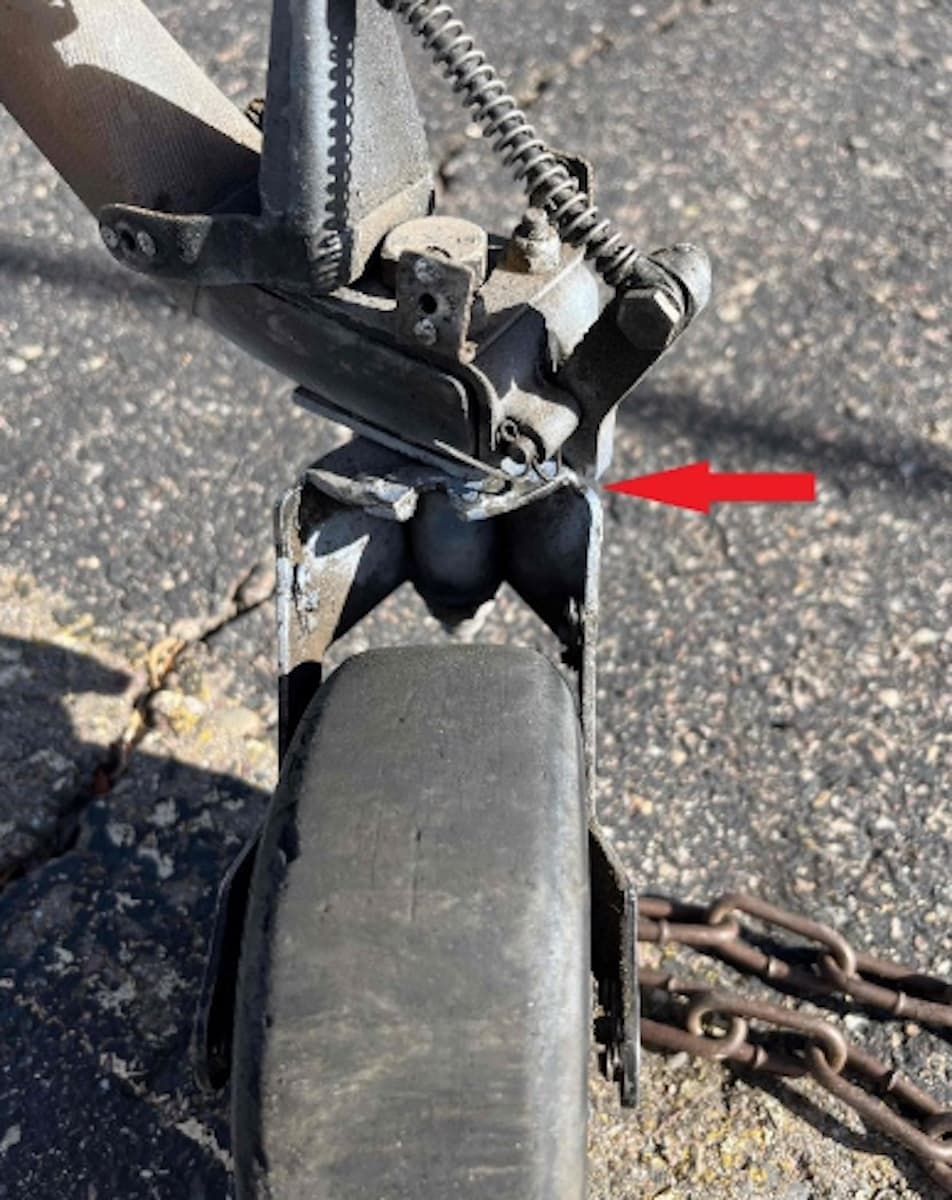
Further examination revealed that the locking arm and associated plate slot were worn, and the locking spring had limited tension, so that with light force the tailwheel could be moved out of the straight position and jammed over center as the locking arm dropped down against the outer edges of the locking plate (see figure 1).
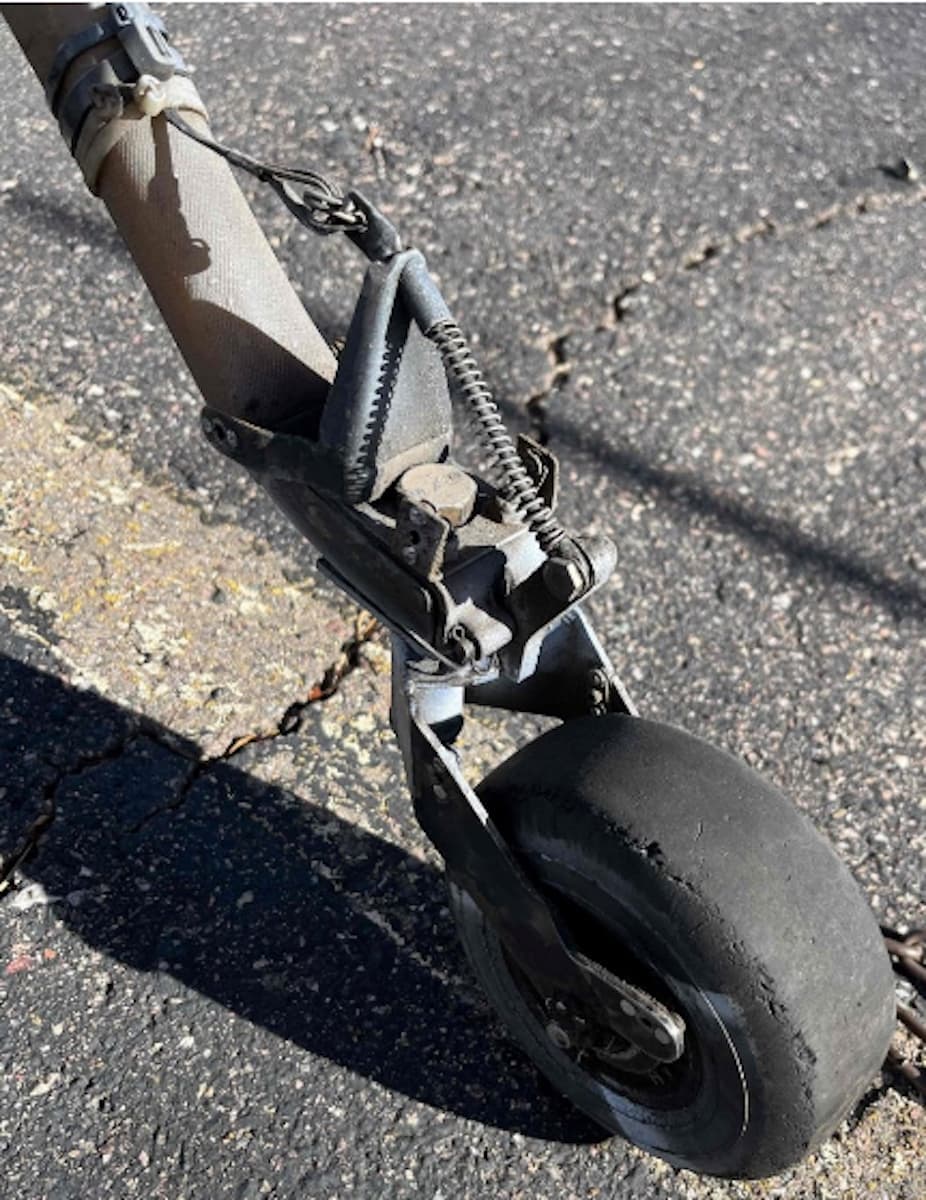
The construction plans specified that the control cable should be routed directly from the locking arm to a phenolic guide in the vertical fin shear web. However, the cable was routed from the locking arm down to a set of four cable ties mounted to the tailwheel strut (see figure 2).
Probable Cause: Loss of directional control during landing due to an improperly constructed and maintained tailwheel locking assembly.
To download the final report. Click here. This will trigger a PDF download to your device.
This December 2023 accident report is provided by the National Transportation Safety Board. Published as an educational tool, it is intended to help pilots learn from the misfortunes of others.
Leave a Reply