

The pilot reported that he was flying the RNAV (GPS) approach to Runway 24 at the airport in Ann Arbor, Michigan, and experienced turbulence about 1,500 feet mean sea level (MSL), which was about 700 feet above ground level (AGL).
He continued the approach with an airspeed between 95 and 100 kts. He stated that about 50 feet AGL and short of the runway, the Piper PA46-500TP encountered wind shear that violently forced the airplane to the ground.
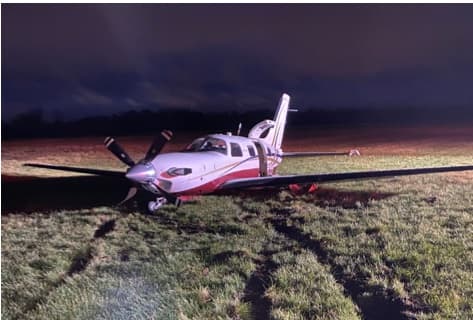
The airplane hit the ground in a wings level attitude and continued onto the runway. The left main landing gear separated, the airplane veered off the left side of the runway, then came to rest in the grass facing 180° from the direction of travel.
Post-accident photos of the airplane revealed substantial damage to the right wing.
The pilot told the responding fire department that there was a 30 kt crosswind on final approach. The recorded wind data around the time of the accident showed the wind was from 250° to 260° and 7 to 11 kts.
Probable Cause: The airplane’s encounter with unexpected wind shear during final approach, which resulted in a hard landing short of the runway.
To download the final report. Click here. This will trigger a PDF download to your device.
This December 2023 accident report is provided by the National Transportation Safety Board. Published as an educational tool, it is intended to help pilots learn from the misfortunes of others.
The pilot told the responding fire department that there was a 30 kt crosswind on final approach. How did the pilot know this? Was he listening to AWOS the entire time? If he knew there was a 30kt crosswind, why attempt to land? The demonstrated crosswind at 30 degrees is 17 KTAS. Sounds like he was way out of the envelope, tried to come in too hot and landed short.
Interesting, from the POH:
Caution – Although the minimum approved operating speed with the autopilot coupled is 90KIAS, coupled approaches below 100KIAS, particularly in gusty conditions, can create high pilot workloads. The minimum speed for autopilot coupled approaches is 100KIAS.
Reminds me of a vfr night training flight to Groton CT for practice approaches around 30 years ago. Being vectored on a left base for the ILS 5, over the mainland conditions were fine. As soon as we crossed the shoreline and started over Long Island Sound, out of nowhere, we were in severe to extreme turbulence. Another flight which was over Long Island also reported those conditions. We requested a 180 to return over the mainland and kept the bank very shallow – we still had some moments during the turn where control was lost. Back over the mainland, we were back in good conditions.
If you are doing an RNAV (or ILS), you are more than 50 ft above the runway when you cross the threshold. Sounds like he was making the approach BELOW glideslope — looking for the Numbers instead of the Captain Bars
What was the ceiling? Sounds like he just landed short.
Metar @ 20:53 showed broken @ 16 overcast @ 23, but I wasn’t there. Although I once saw a micro burst after staying overnight at a Holiday Inn Express.