

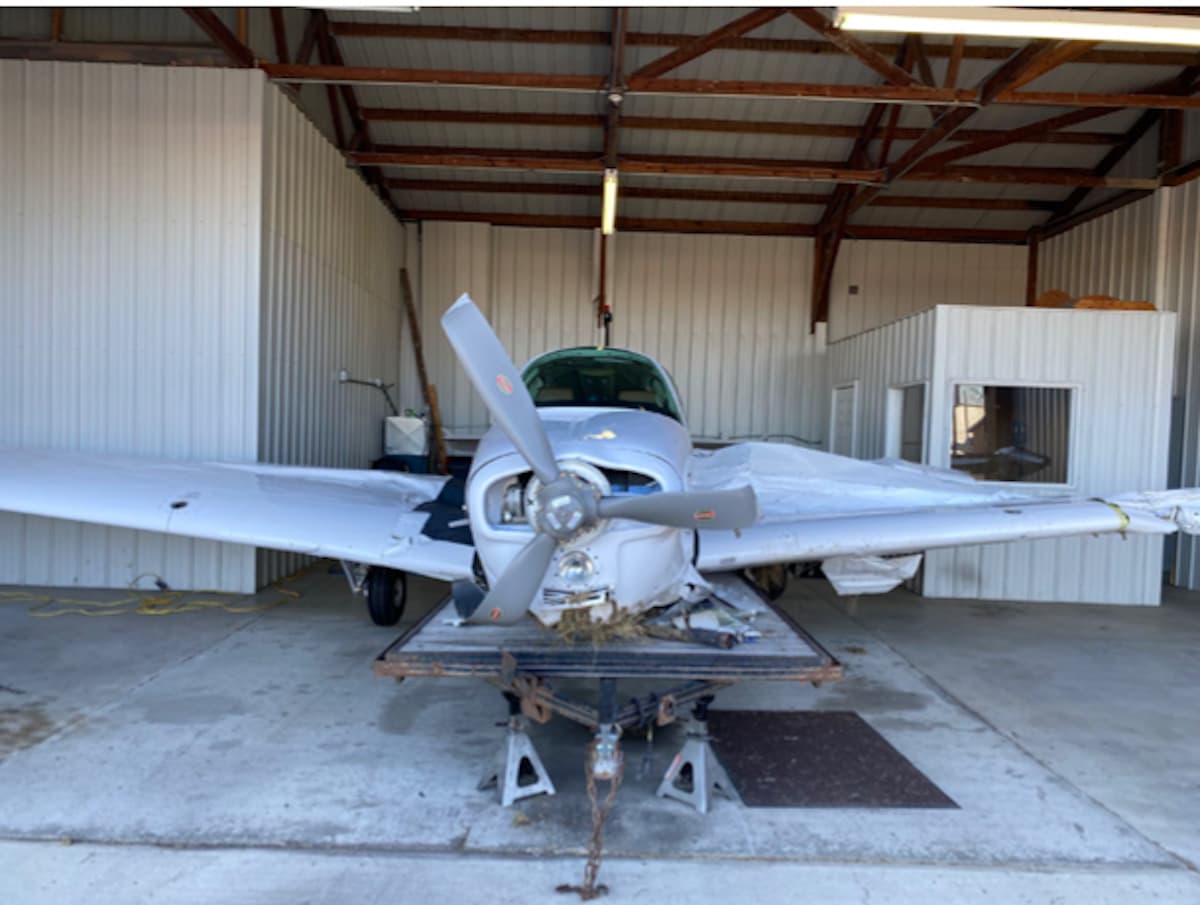
The right seat pilot reported that after performing a preflight inspection, he anticipated the Beech A36 would need to be refueled and subsequently left the fuel caps unlocked. After a discussion with the left seat pilot (who was acting as the pilot in command), they decided they would not need to refuel before the flight. Both pilots performed another walk-around inspection and neither pilot noticed that the fuel caps remained unlocked.
Shortly after takeoff from the airport in Sidney, Ohio, the right seat pilot noticed that both fuel caps were not secure, and that fuel was escaping from both main fuel tanks. He elected to return to the airport and land on the opposite direction runway.
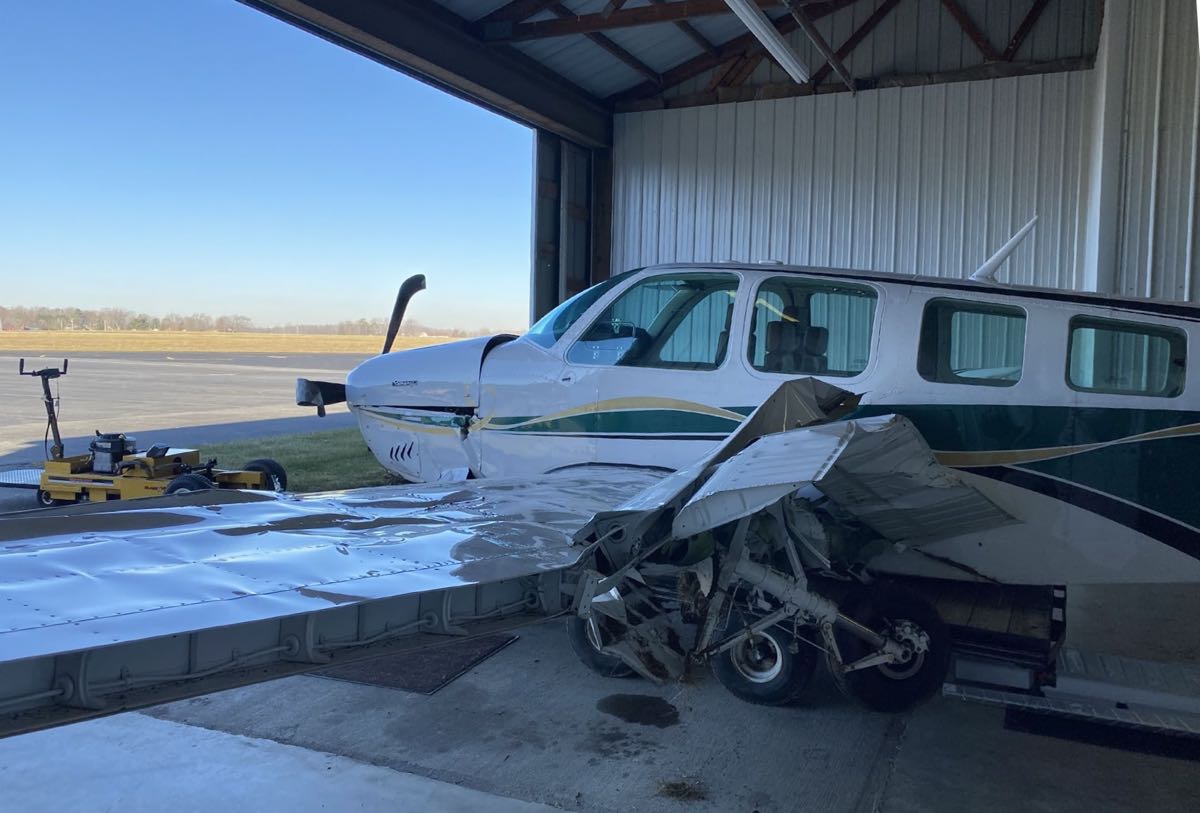
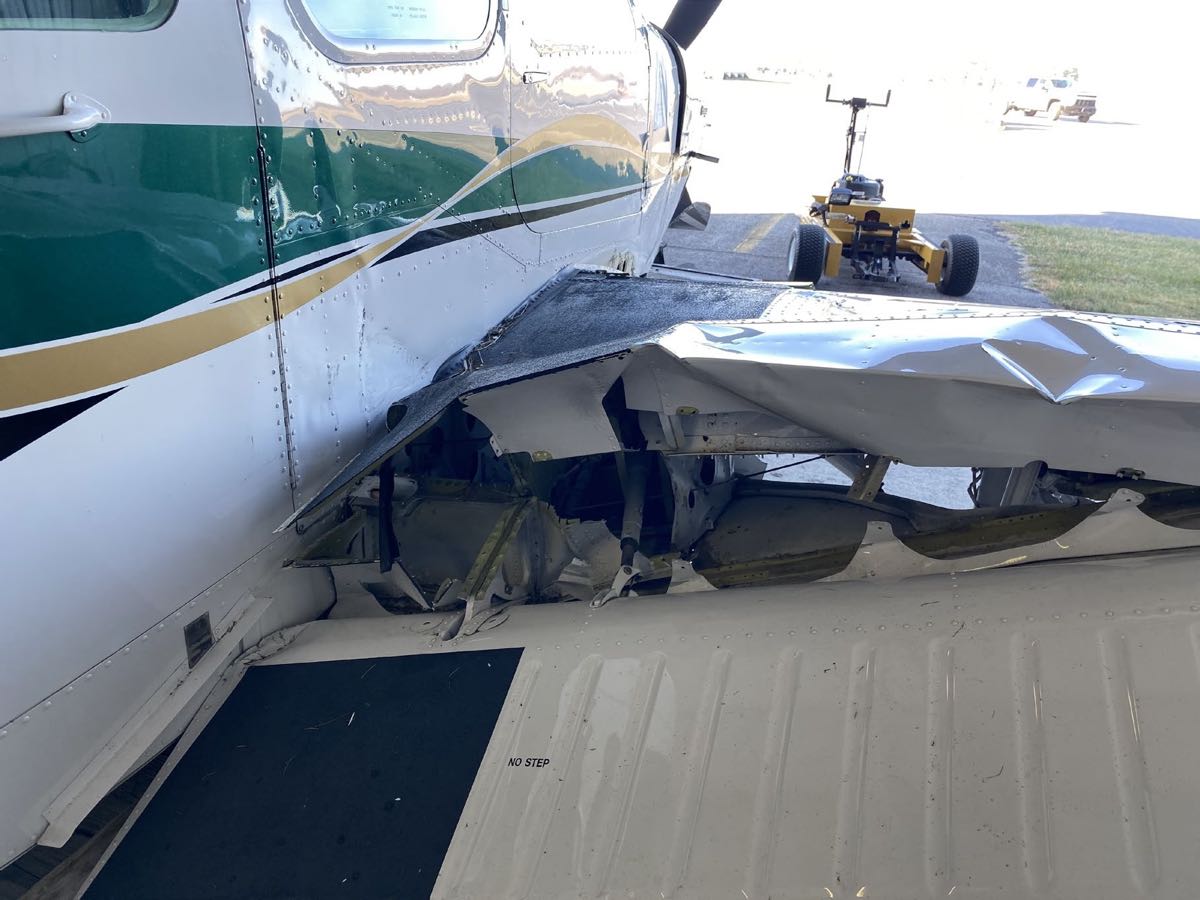
The pilots were both manipulating the controls when they landed the airplane “hard” on the main landing gear. The airplane then bounced and veered to the right of the runway, hitting a terminal sign and taxi light.
The hard landing and subsequent runway excursion resulted in substantial damage to the wings and fuselage.
Probable Cause: The pilots’ improper landing flare, which resulted in a hard landing, runway excursion, and subsequent impact with a terminal sign and taxi light.
To download the final report. Click here. This will trigger a PDF download to your device.
This December 2023 accident report is provided by the National Transportation Safety Board. Published as an educational tool, it is intended to help pilots learn from the misfortunes of others.
Who’s on first? Yes. And What’s on second. Yes. I don’t know who’s on third. Yes, I Don’t Know Who. What?
These two gray-haired** clowns had no business flying this plane. Lots of blank spaces on the 6120, so let me help the pilots a bit on the “Aircraft Damage section: Destroyed.
In their haste to get back to the airport, the ultra-impossible turn was employed at low airspeed and low altitude. An aerobatic pilot wouldn’t have attempted that turn. I agree that another 30 seconds of flight would have radically changed the outcome, but these guys reached into the luck bag that had run out. They are lucky they weren’t killed.
** I am also gray haired, and I have enough experience being at accident scenes and having first hand knowledge of accidents to know that the older one gets, particularly in cases where flight time has been limited, complacency and arrogance often gets the better of pilots. These two were not proficient, and relied on past flight time as a substitute for currency. To compound matters, too many cooks spoil the broth: Two on the flight controls was the additional ingredient for the disaster that followed. Neither should ever be allowed to fly again, unless as a back seat passenger.
Beechcraft gear are immensely strong. Back in 1947 Beech tested the gear by dropping them from ten feet I believe. Makes you wonder how hard these guys hit to break them like that.
Proving yet again, anyone can learn to fly, but not everyone can become an aviator.
Sounds like a couple of 709 flights are (or should be) the order of the day!
Sam Parsons says it best! Except should be no insurance pay out because they weren’t legal to be flying! They missed the old saying when you think you have an emergency “ smoke a cigarette”. They took what they thought was an emergency and made it one.
Folks just fly the plane, door open, fuel cap off what ever the problem just slow down.
Folks if your not flying an hour a week your not current anyway, that’s the minimum per year!
“… should be no insurance pay out because they weren’t legal to be flying!”. Exactly Leigh. Insurance company should claim coverage as null and void if not current on flight review, Same as not in annual and no legit ferry permit..
Good grief, the NTSB learns that both were operating the controls during landing with no positive exchange of controls and yet says the cause is the landing flare? They also learn that it has been over 5 years since a flight review! Yikes, what about having two 1000+ hour pilots flying illegally trying to land the same airplane at the same time? Another insurance payout impacting all of us by those who should not be flying at all.
A young, but very good flight instructor once told me “never make a relatively minor problem a decidedly imminent major problem simply for the sake of expediency.” Another 30 seconds of climb could have provided a much different outcome in this case.