

By KEVIN BROOKER
“The snow is a bit sticky, so keep moving and you shouldn’t get stuck. And have fun.”
I remember that day like it was yesterday, but it was quite a while ago, when I was just 16.
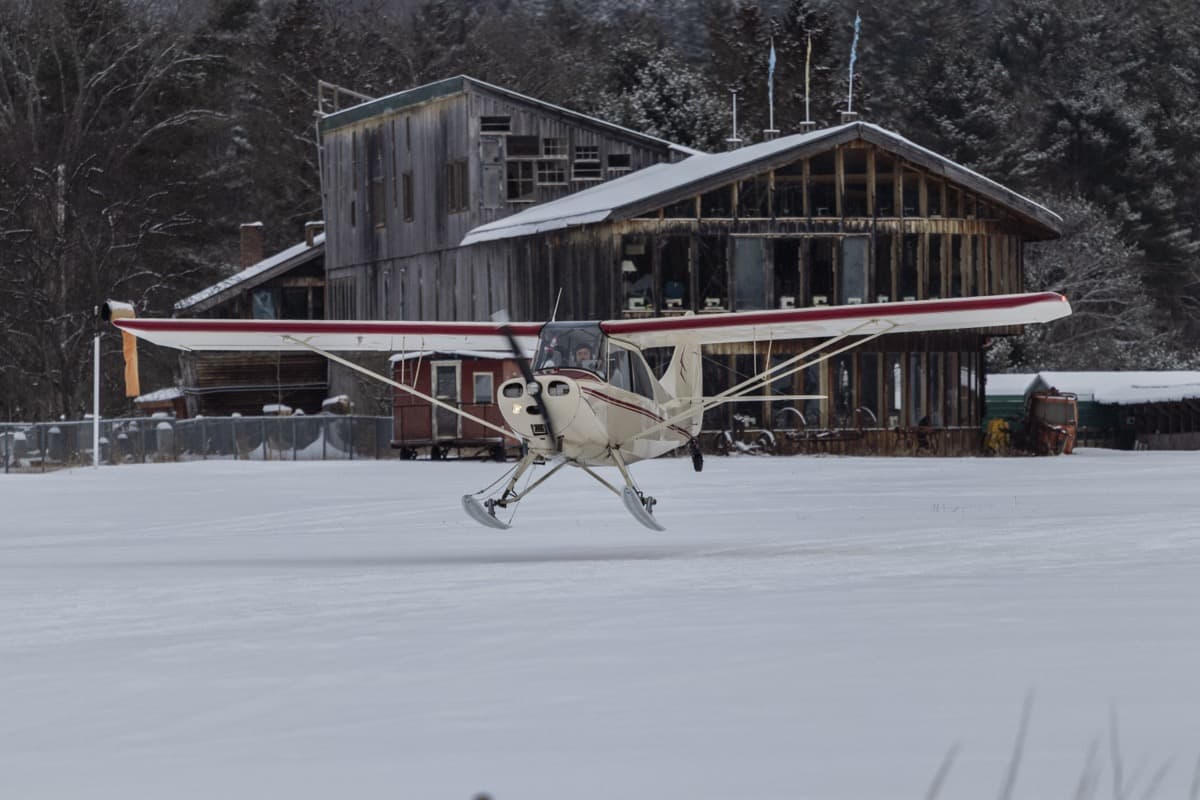
After shooting a few landings in a ski-equipped Champ, my CFI Roger climbed from the back seat and shut the door. He smiled and gave me, a recently soloed 16-year-old, a thumbs up. After pulling my gloves tight down onto my fingers, my thumbs up reply was genuine. Why wouldn’t it be? This was the same 65-hp 7AC I had been flying solo on wheels just a week earlier. This time it was on skis.
Flying on skis requires some new skills for general aviation pilots, while at the same time opening up the world.
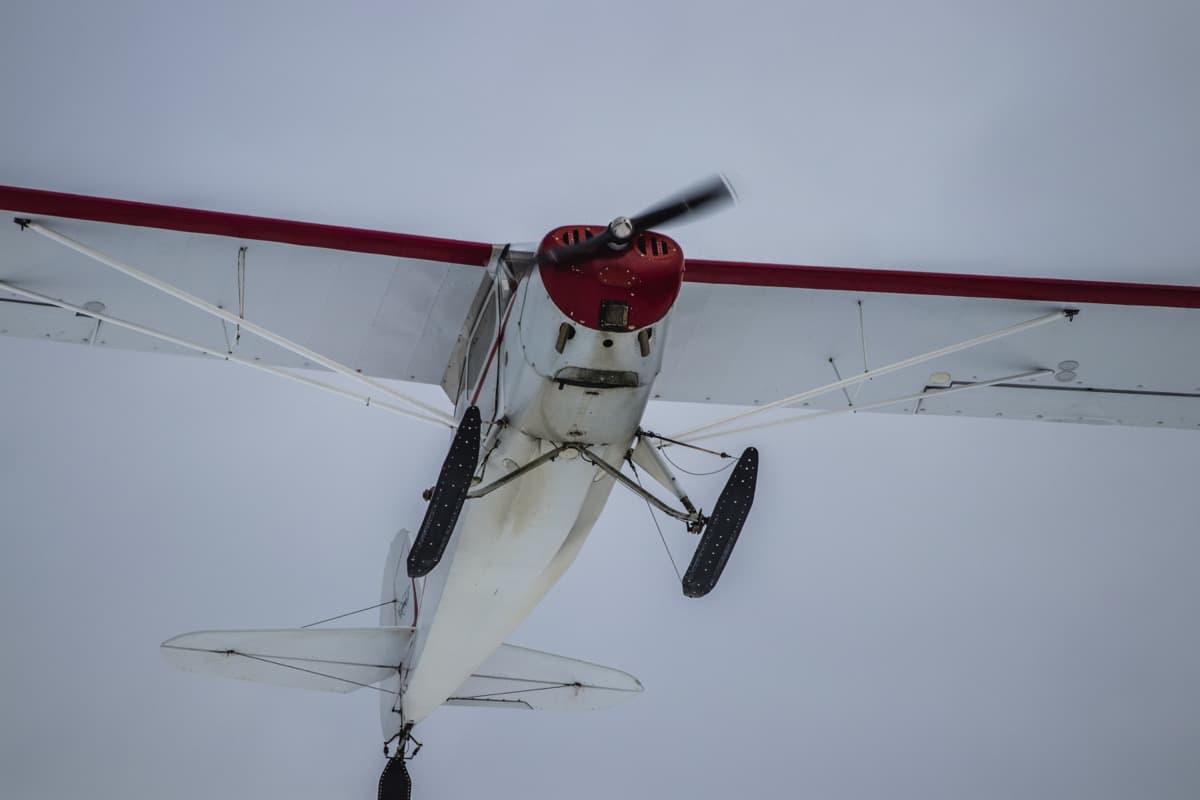
That’s the lesson I learned at 16 when the Champ leapt off the snow-covered runway at Candlelight Farms Airport (6Y2) in New Milford, Connecticut. Every lake with enough ice to support the airplane became an airport. I took advantage of the thick frozen water by making as many touch and goes as possible within the hour allocated for the solo flight.
One of those landings was a bit downwind in a particular cove of Candlewood Lake that pinched out a bit tighter than the turning radius of the Champ on skis. Somehow good judgment prevailed. The planned touch and go was abandoned for a full stop turn around and go out into the wind. I judged the available space thinking the turning ability was the same as when on wheels. Great plan until the right ski of the Champ impaled itself into a wind-drifted snow pile, preventing any further movement. Rats, or some iteration, was shouted. Stuck and what to do?
Not wanting to restart the engine solo, it was left idling while gloved hands dug at the snow, removing enough to free up the ski. I moved back to grab the tail and pulled the airplane out of the snowbank.
Traction on snow-covered ice is minimal and after lifting the tail, my feet were flying about trying to pull, turn, and not drop the airplane.
Once out of the snowbank the stationary skis stuck to the wet snow. Full power, wiggling the rudder back and forth while lifting and dropping the tail with the elevator, eventually freed things up. About 15 minutes later back at the airport while tying down the Champ, Roger sauntered up. “Did you enjoy that?”
“Yes, very much so. It was really cool.”
Patting me on the shoulder he took the rope from my hand. Tying the knot himself while smiling, he said, “Next lesson I’ll teach you how to pick a spot on a lake and we’ll do some entry level bush flying. Pretend we’re in Alaska.”
“That’d be great,” I replied not knowing if he was aware of my recent adventure.
Despite the self-inflicted headaches from my introduction to ski flying, the misadventure was one of the most memorable events of my experience as a pilot. I absolutely loved flying on skis.
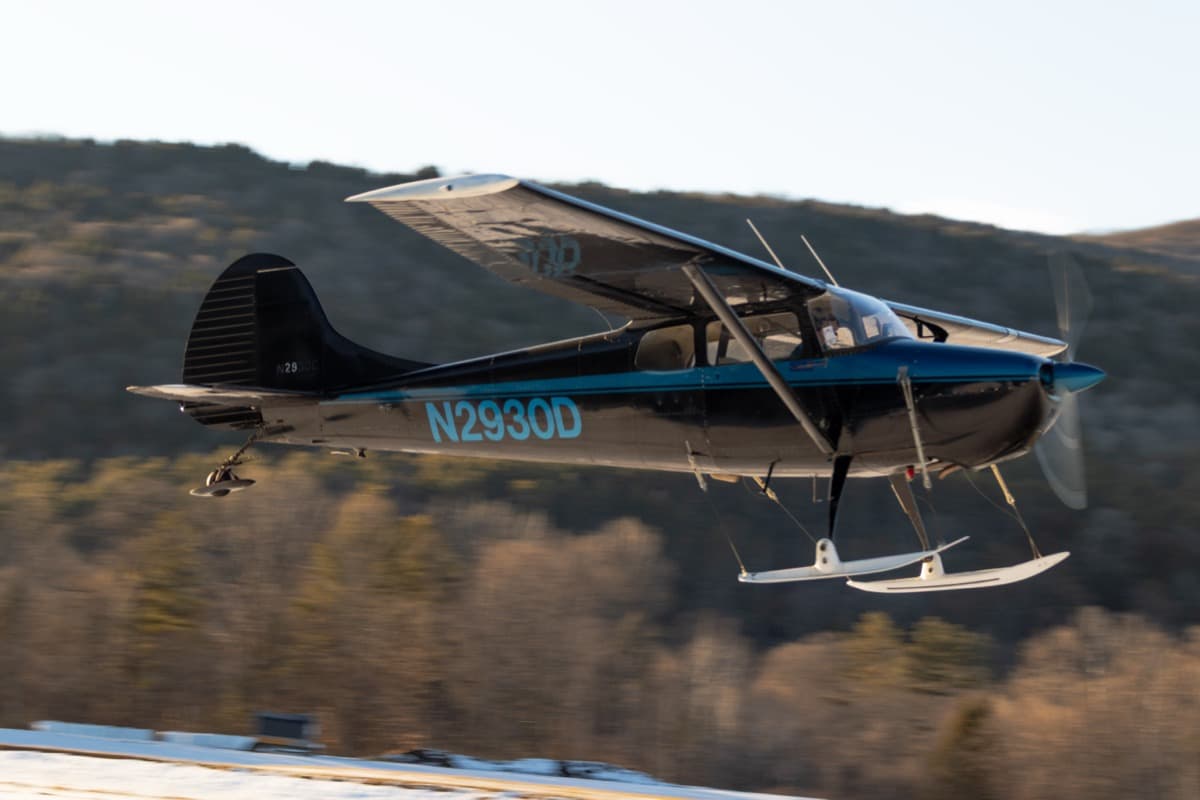
During the autumn of 1993, my wife and I moved to Thetford, Vermont. A quarter mile down the road from our winter rental on the north shore of Lake Fairlee was the local grass strip. Post Mills Airport (2B9) was the home base of Boland Balloon and the Post Mills Soaring Club. Champs, Cubs, and a Citabria, along with a few Cessna variants, filled the open T-hangars.
We learned after the first decent snowfall that the wheels came off most of the Post Mills aircraft and were replaced by skis. Necessity was part of the changeover reasoning as 2B9 isn’t plowed. If you want to fly year round, you’d better have skis.
By dumb luck we had planted ourselves near a hotbed of winter ski flying.
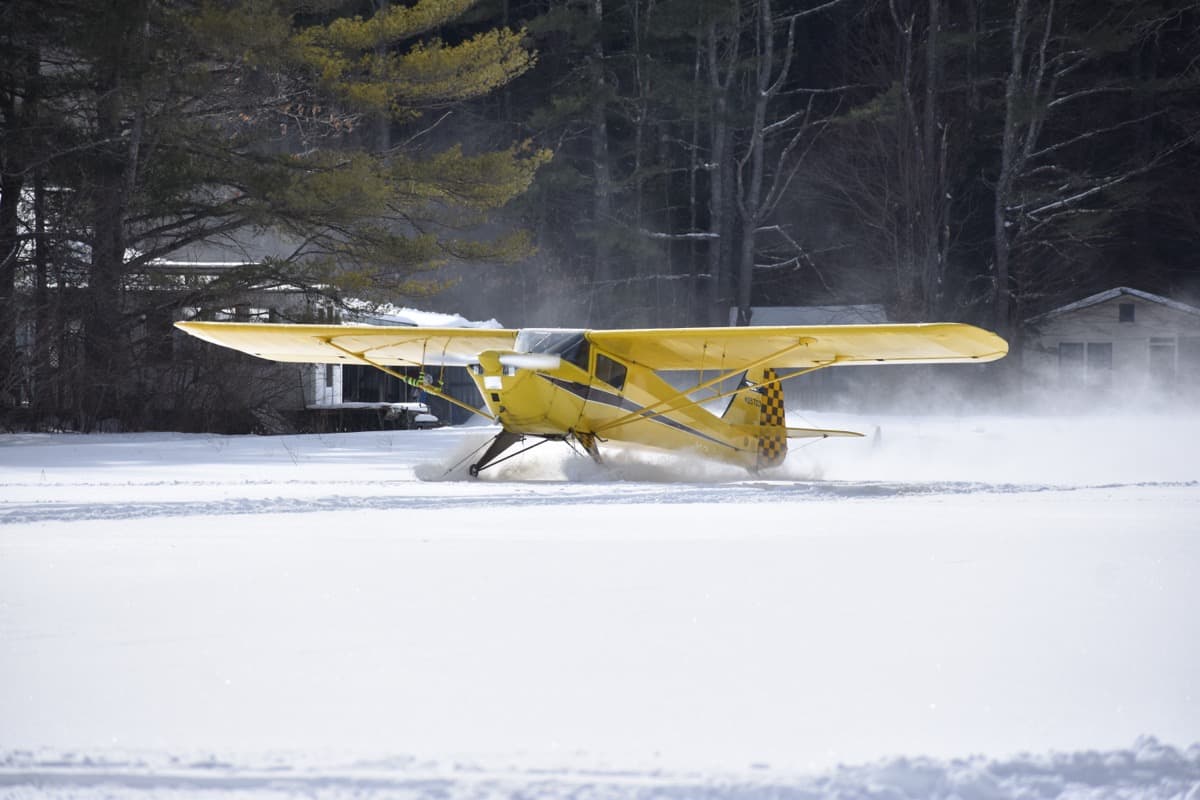
departure end of Runway 23 at Post Mills Airport in Vermont. (Photo by Niels Keller)
Not much has changed in the 31 years since we arrived. The place is still filled with Champs, Cubs, a few Cessnas, several Citabrias, a Porterfield, Husky, and a Taylorcraft. During the winter wheels are still traded for skis.
Once the lakes freeze, the snowmobile maps come out to see where to find lakes with access to fuel and food. Once the ice thickens enough for fishermen to drive their trucks onto the ice, the real fun begins. Flying to a popular lake and parking multiple airplanes alongside the snowmobiles is really fun.
Lake hopping is a favorite activity. How many lakes can we land on during a flight? The goal has always been setting down ski tracks on 50 lakes. To date the record is 38 held by a 1946 7AC.
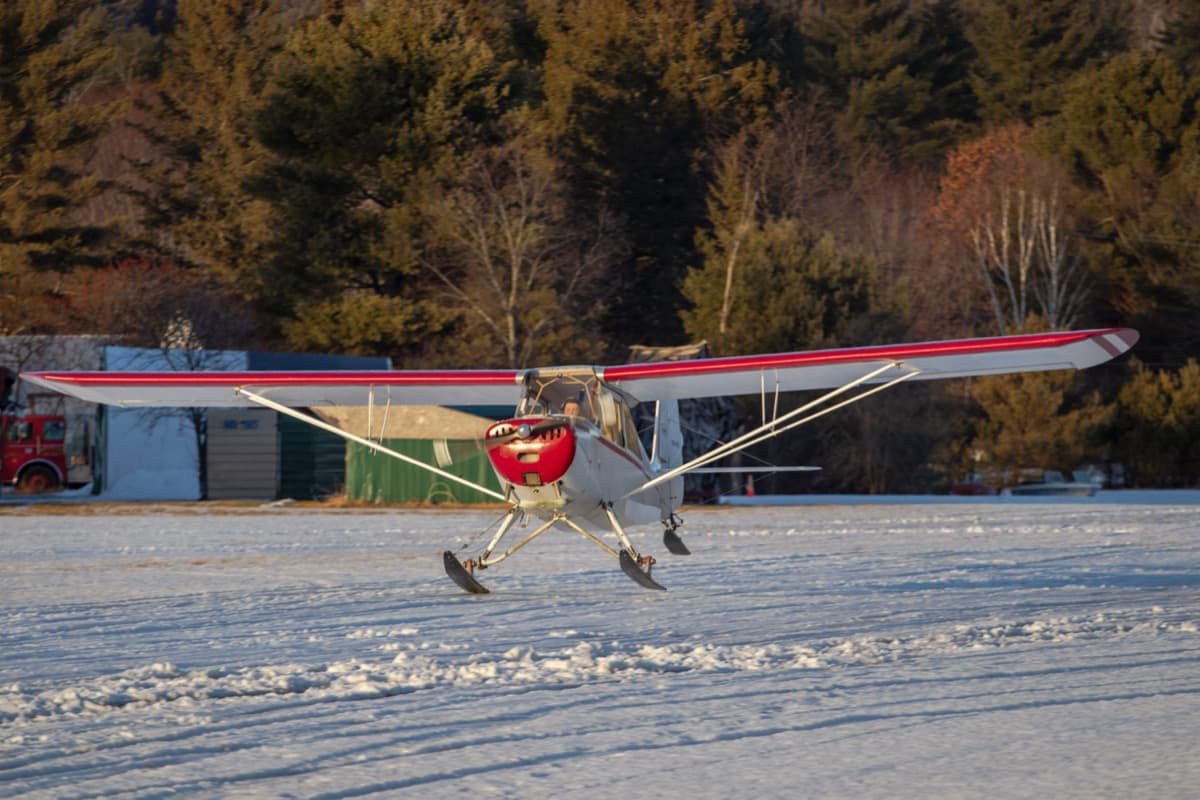
In addition to generating smiles, lake hopping builds an awareness and practice for non-standard landing patterns. Using the smoke from chimneys, camp fires, blowing snow, and patterns of drifts on the snow to determine wind direction are real-time practice and training for emergency off-airport landings.
Tips for Flying on Skis
There is a lot of great information about flying on skis in magazines and online. It is definitely worth reading and watching all of it to gain as many perspectives as you are able to absorb.
Perhaps the best tip is to find a pilot with ski flying skills and fly with them. It’s a great way to gain experience while limiting the guesswork. When you head out in your own aircraft, flying with another airplane has a measure of safety too. It is a lot easier to unstick an airplane with a competent pilot at the controls than trying to do the work yourself.
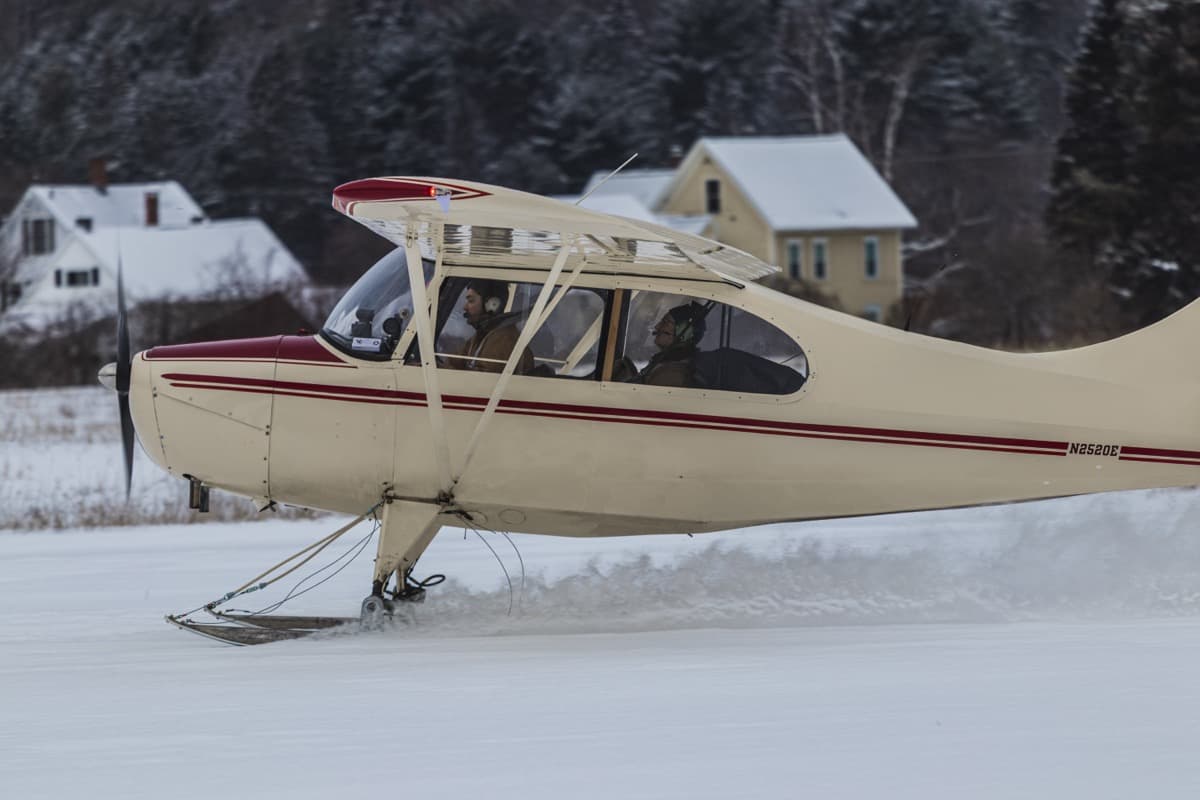
While ski flying is fun and rewarding, operating on straight skis does come with a bit of extra work, which can make ski flying a bit of a chore.
The airplane requires more effort to move. Getting the airplane in and out of dry hangars might mean shoveling snow into the space so the skis have something to slide on.
The area in front of the hangars where ski-quipped airplanes are kept at 2B9 is usually packed or partially cleared of snow with a snowblower. The height adjustment snowblower skids are set to leave an inch or two of relatively flat snow. The cleared area makes it easier to move the airplane after a day of flying.
Terry, one of the Cessna 170 pilots based at the airport, made a set of ladder rollers to move his airplane in and out of his hangar — much easier than shoveling snow into the hangar.
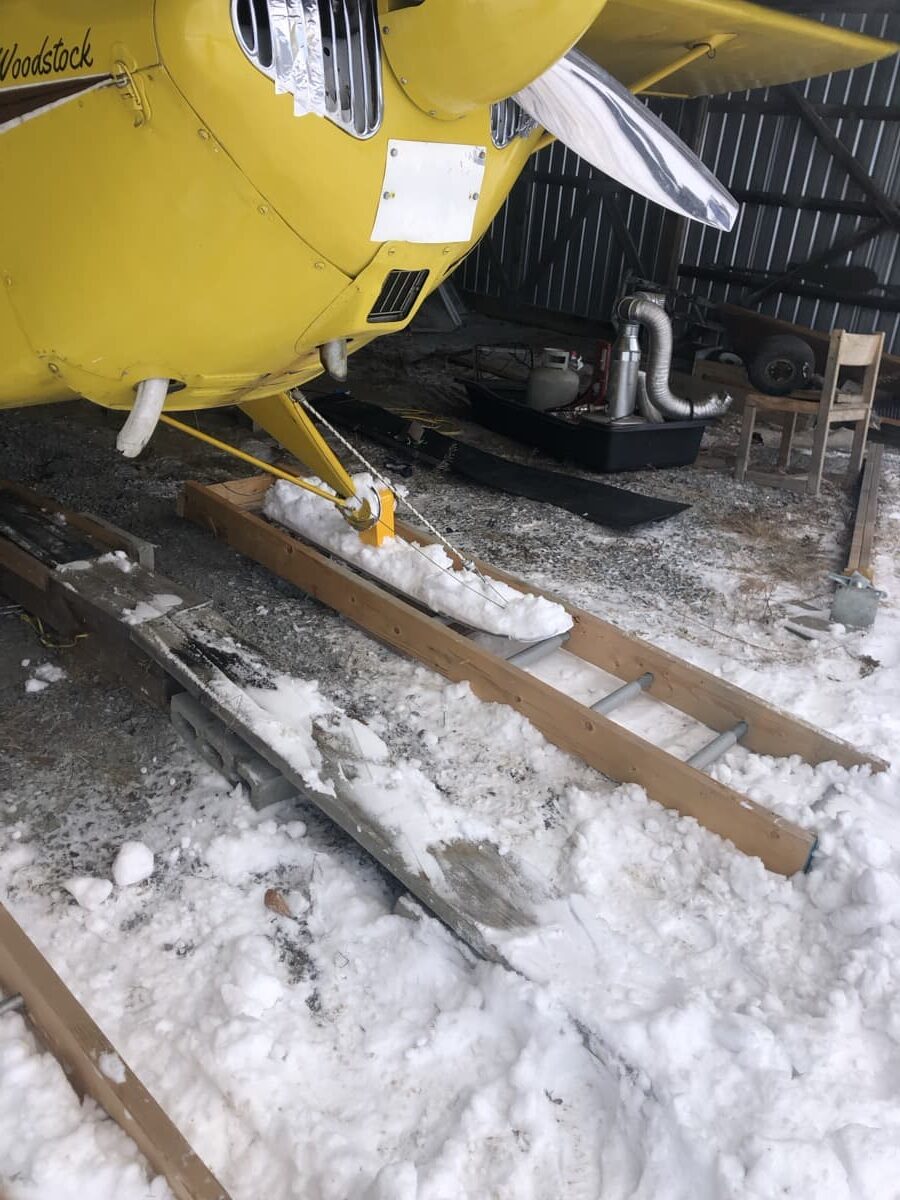
This roller helps keep the skis from sticking, which makes for significantly easier movement in and out of a T-hangar. (Photos by Kevin Brooker)
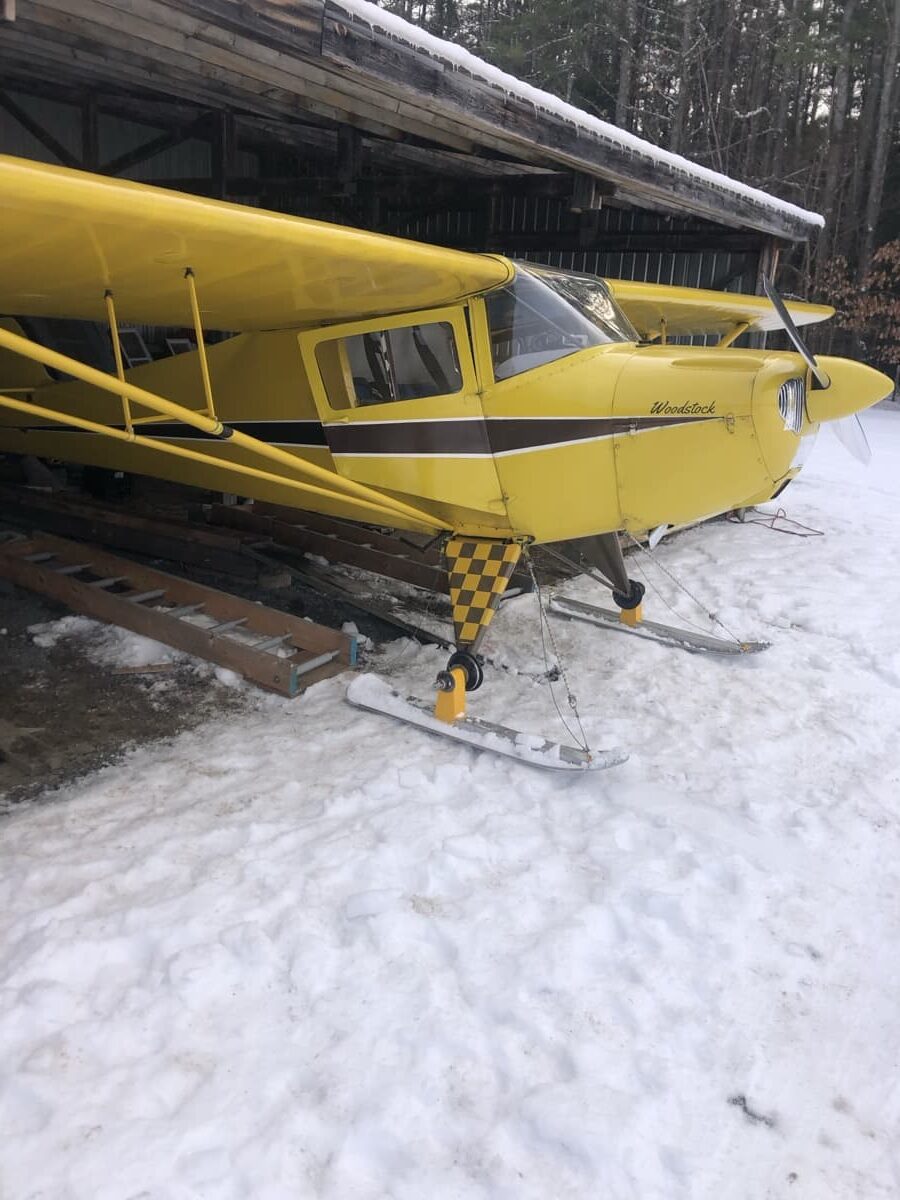
Keeping the skis up and out of the snow prevents them from freezing into place. Being lifted up off the ground and having access to the bottoms of the skis makes it convenient to add some wax, which helps the skis slide. A small tin of paste wax used on cross-country skis is kept in the baggage compartment winter ski flying kit.
With skis, you don’t have brakes. Yes, the snow has more drag, but the airplane often will move at idle when on ice. As long as the prop is spinning the airplane is going to move when operating on ice.
Be aware of the slope of the landing area if you decide to stop on a field. Landing on packed snow heading downhill the airplane might not slow down very fast. If there is untracked snow, slowing down and stopping can often be accomplished by steering into the unconsolidated fluff. If you are not stopping on flat ground, turn off the mags and kill the engine. Having to restart might be inconvenient, but it’s better than not stopping.
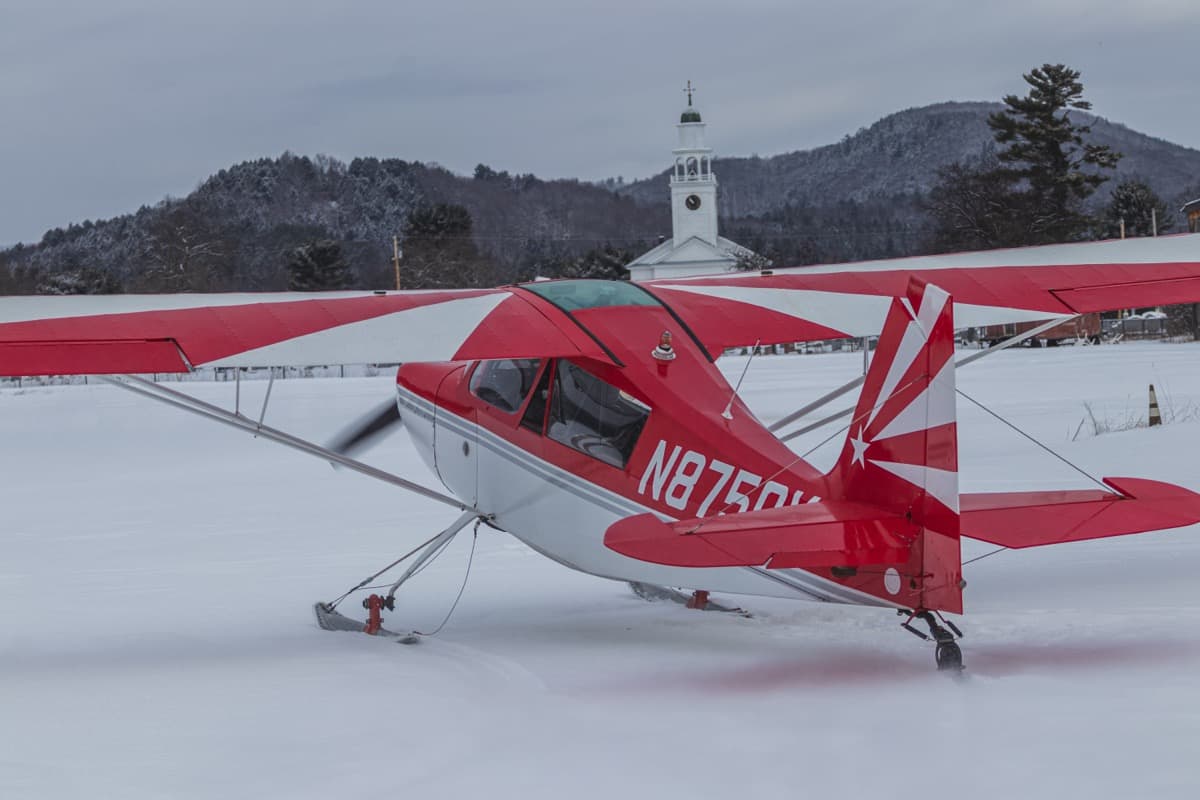
Taxiing across varied snow surfaces and taxi turns are all different. Without brakes, slowing and stopping require a lot of forethought. The airplane cannot pivot as with a brake-assisted turn.
Pivoting the airplane in place like it is on wheels doesn’t happen very often and is ill advised. The twisting is very hard on the gear legs and fuselage attachment points. To limit the side loads, have the airplane move forward or backwards while pivoting.
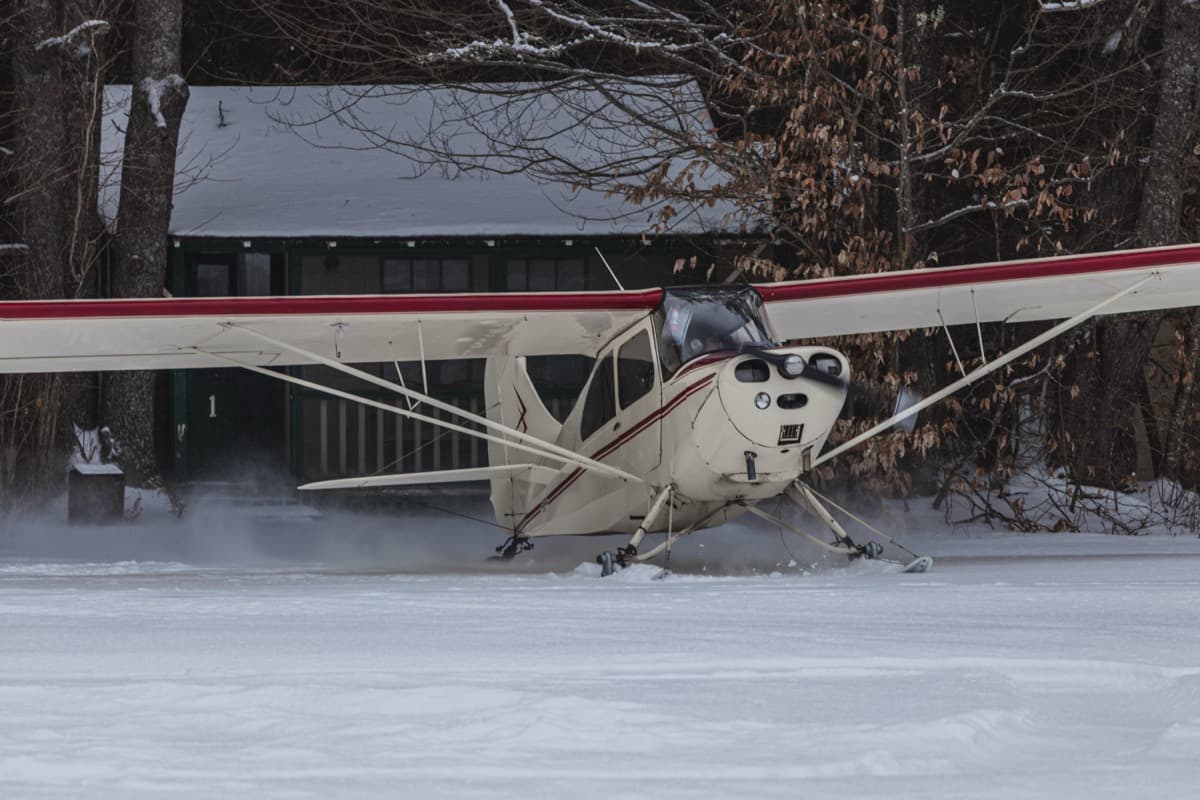
Use caution landing on clean ice. The skis will slide sideways and you will have limited directional control. Weather cocking happens. The landing gear on small airplanes was not intended to handle side loads. Even small cracks and bumps can damage the landing gear, especially when the leverage of the ski is considered.
Use caution when attending some plowed lake events for wheeled airplanes. Give yourself lots of room to maneuver and stop. The limited — read as almost non-existent — control of skis when on clean ice should not be underestimated.
The skis generate a bit of heat when sliding. The skis are actually riding on a very thin film of water. This water will freeze when the airplane stops and functionally weld the ski to the snow. Before starting the engine, break the skis loose and be sure the airplane slides before loading up.
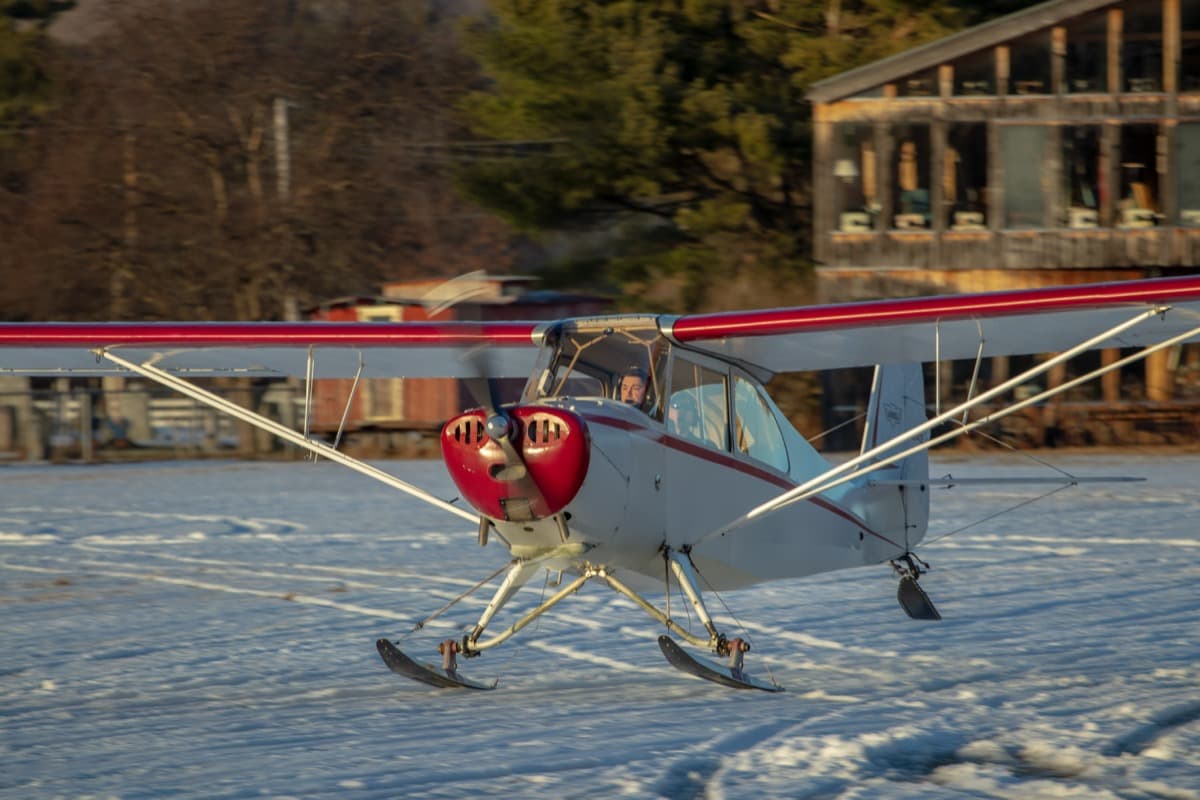
Carry a shovel. There are shovels designed to fit into a backpack for use when mountaineering or ice fishing. Put one into the baggage area. Digging out of deep snow or being able to put snow beneath the skis is a lot easier with a shovel than your hands.
Ice screws designed for protecting mountaineers when ice climbing are great tie-downs. If you need to tie the airplane down to start it and don’t want to leave an expensive ice screw behind, use an ice climber’s V-thread. The rope can be pulled through, leaving only two small holes in the ice. Another advantage of the V-thread is it will not melt and become loose from the sunshine. One ice screw can be used to create the V-thread, saving weight and some cash too.
Some sort of winch, electric or a hand crank boat trailer type, is extremely helpful to get the ship back into the hangar. Line it up and pull it in with the winch. This is easier on the pilot and the airplane. Using a winch is more controllable with less chance of falling or dropping the airplane on the slippery surface. A set of easily donned and removed traction devices or micro-spikes helps the pilot keep their feet under them when moving the airplane around.
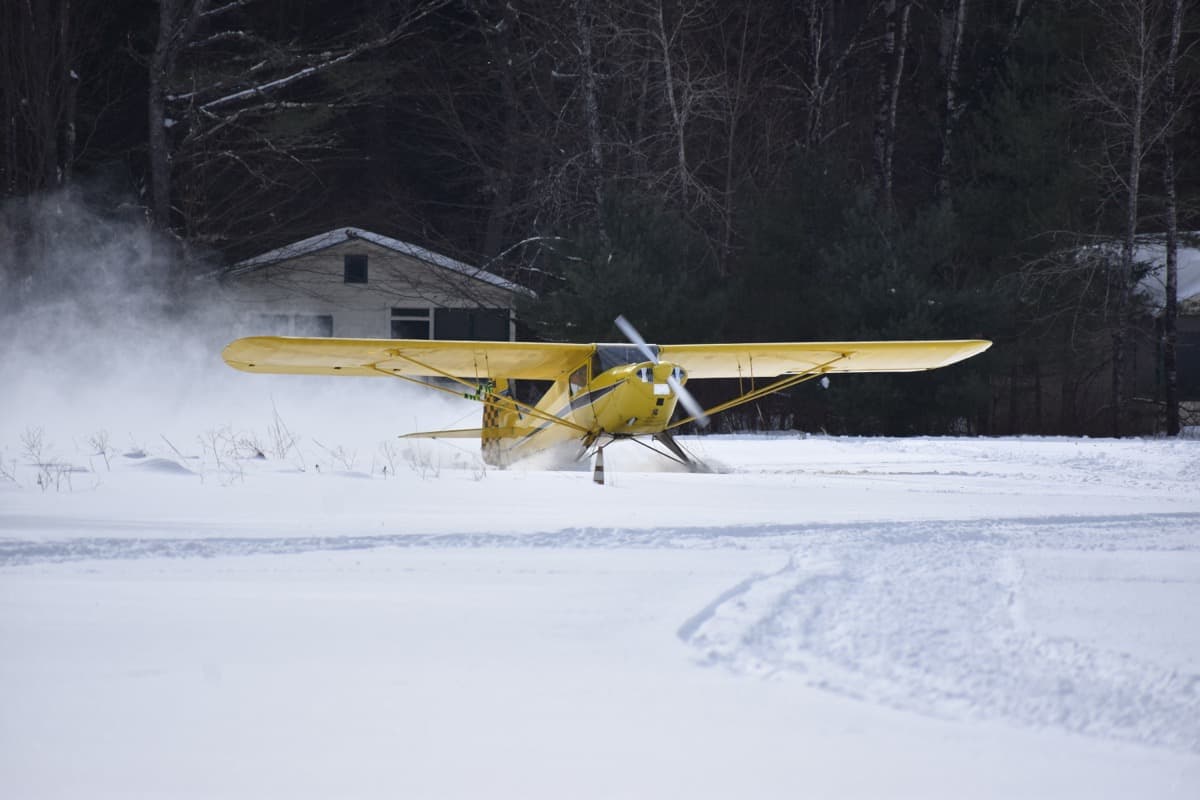
Flying on skis is a unique experience and well worth making the effort to give it a try. Each time we go ski flying my thoughts revisit my first experience a few decades ago. When Roger and I took the 7AC out for my “intro to ice landings” lesson I learned quite a bit more that just how to fly on skis.
The biggest lesson: It was pure joy and solidified a love of flying in the winter.
Oh, how I wish I were younger an still able to fly on skis in my ’65 Champ! The world was an airport.
I once landed in the field of a neighbor for a visit and encountered deep soft snow on my left side. The left wing almost touched the snow, and boy oh boy did I have a tough time packing down the snow in front if the ski , lifting the ski to free it and wiggling my way out of that predicament.
Yes, stopping on ice is a challenge too.
Thanks for sharing the wonders of flying on skis. I hope many more discover this opportunity.
George Weller who flies out of CTQ2 and hosted the Feb international fly-in on Lake Memphremagog for several years.
Great article & photos Kevin!