

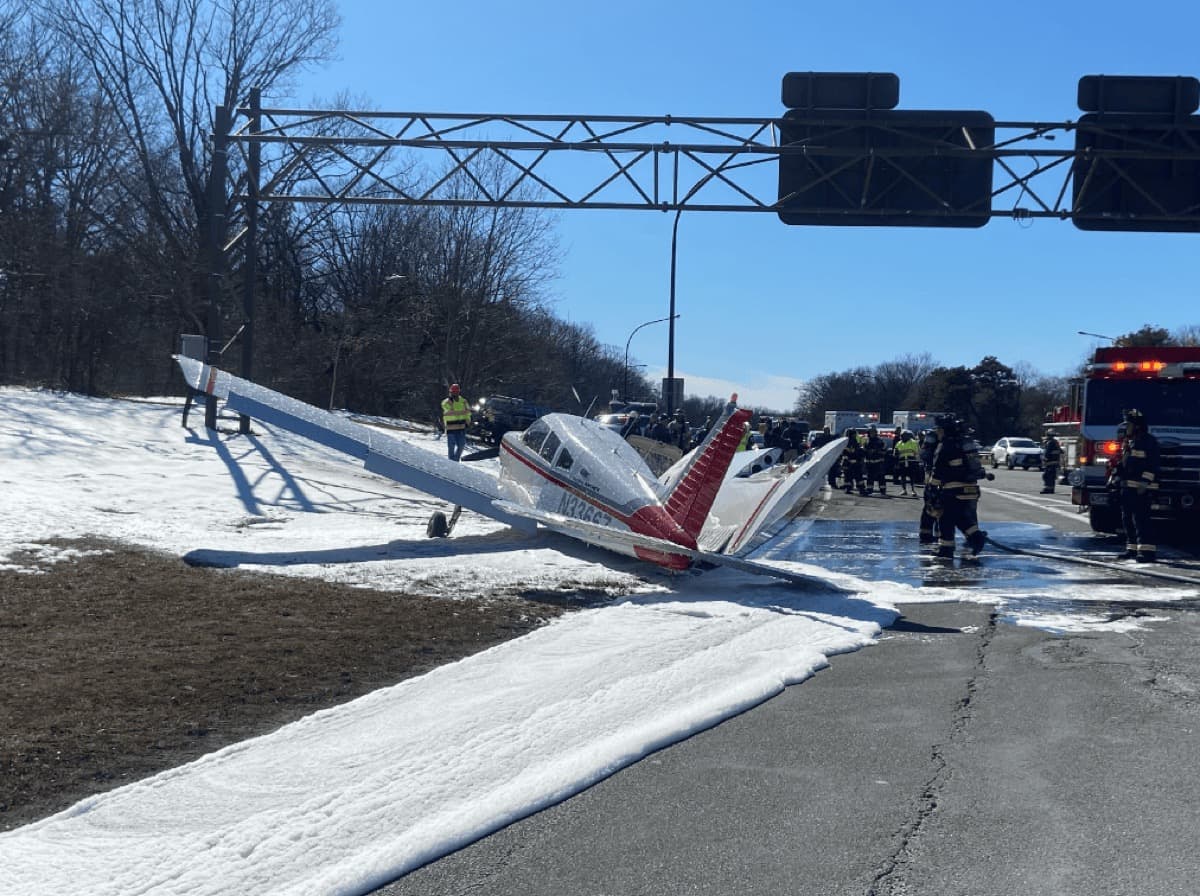
The student pilot in the left seat and his instructor in the right seat were preparing for a local flight in the Piper PA-28-180. They estimated there was about 30 gallons of fuel on board prior to departure — 17 gallons in the left tank and 13 gallons in the right tank.
After air work and emergency procedures practice, they returned to the airport in Farmingdale, New York, for some takeoffs and landings. During the second approach to landing, about two hours into the flight, the student pilot advanced the throttle but the engine did not respond.
Since they were at low altitude, the instructor took the controls and landed the airplane on a nearby highway. After touchdown, the right wing hit a road sign, partially severing the wing.
An examination of the wreckage by FAA inspectors revealed substantial damage to the right wing.
The pilots were not injured.
The fuel tank selector handle, which was located near the student pilot’s left leg, was found in the LEFT tank position. The left wing fuel tank was uncompromised and contained about ½ gallon of fuel.
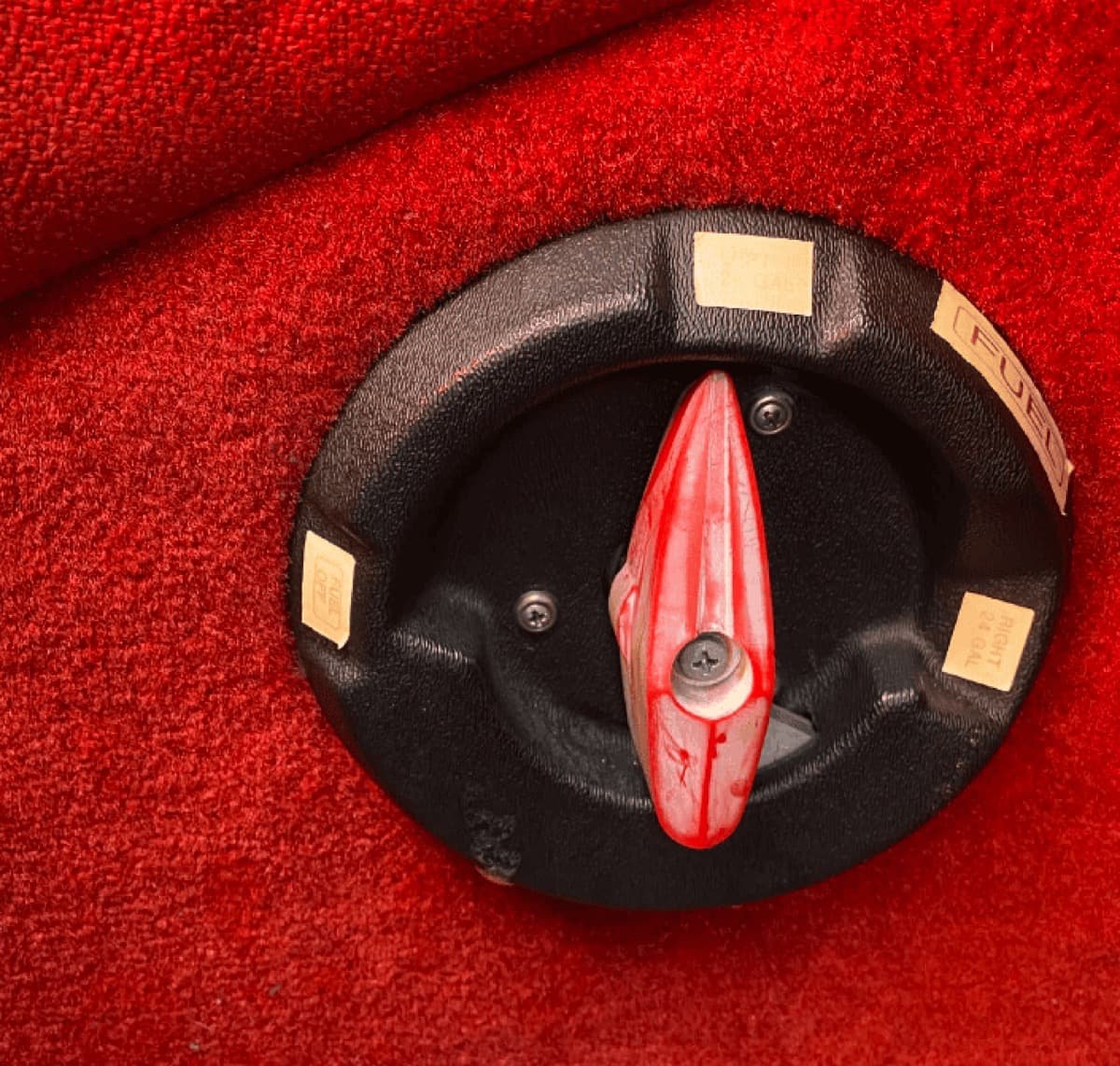
Although the flight instructor said he reminded the student several times to switch tanks, the student did not recall ever switching tanks during the flight.
Probable Cause: The student pilot’s lack of fuel management during the flight and the flight instructor’s inadequate monitoring of his student’s fuel management, resulting in fuel starvation and a forced landing to a highway.
To download the final report. Click here. This will trigger a PDF download to your device.
This February 2024 accident report is provided by the National Transportation Safety Board. Published as an educational tool, it is intended to help pilots learn from the misfortunes of others.
……..The CFI will own this accident. It was preventable and the CFI could see the fuel selector position from the right seat.
So it keeps happening….Instructional flight accidents.
Too bad!
It would be very difficult for a co-pilot to see the fuel selector lever. The pilot’s legs block it from view.
But, the fuel gauges are easily seen….so look at them in your scan.!!
Thanks for increasing our insurance rates.
Inaddition to Jim H’s comments, why not add fuel so both tanks hold the same amount – or better yet – fill them both!!
The left wing tank was at the “Tab”, a metal piece in the filler tube, which is what PA 28 180’s have to indicate 17 gallons. The right tank was calculated to be 13. Why not just fill that tank to the tab and know for sure? Also, that’s 34 gallons total and barely minimal fuel for 3 hours of flight in a 180
JimH is right on. If you’re in the pattern you should be able to land on the runway with an engine failure. Period.
I have a couple of observations;
– what sane CFI will have a low time student pilot fly for 3 hours.??
– why didn’t the CFI look at the fuel gauges and make sure that the student pilot did change tanks when asked.?
– isn’t the normal practice in a Piper, to select the fuller tank on entering the pattern ?
– And my big pet peeve; Why not fly within gliding distance to the runway in all legs of the pattern ?
Note that the vasi/papi is primarily for instrument approaches and a vfr aircraft on final , on the 3 degree glide slope WILL NOT be able to make the runway if the engine fails.
It requires about a 5 degree angle, which is about a 11:1 glide ratio, which most GA aircraft can do.
More Stupid CFI tricks..!!
– what sane CFI will have a low time student pilot fly for 3 hours.?
“During the second approach to landing, about two hours into the flight…”
Not that it would’ve mattered in this case. Although I’d hope that from 500’ AGL, an ‘experienced’ CFI (his own words) would have at least attempted to go thru a Cherokee’s very simple engine failure checklist:
a. MAINTAIN SAFE AIRSPEED
b. FUEL SELECTOR – SWITCH TO ANOTHER TANK CONTAINING FUEL
c. ELECTRIC FUEL PUMP – CHECK ON
d. MIXTURE – CHECK RICH
e. CARBURETOR HEAT – ON
It might not have worked in time; but he could’ve directed the 22-hour student pilot to run the “BOLD FACE” steps while he focused on flying.