

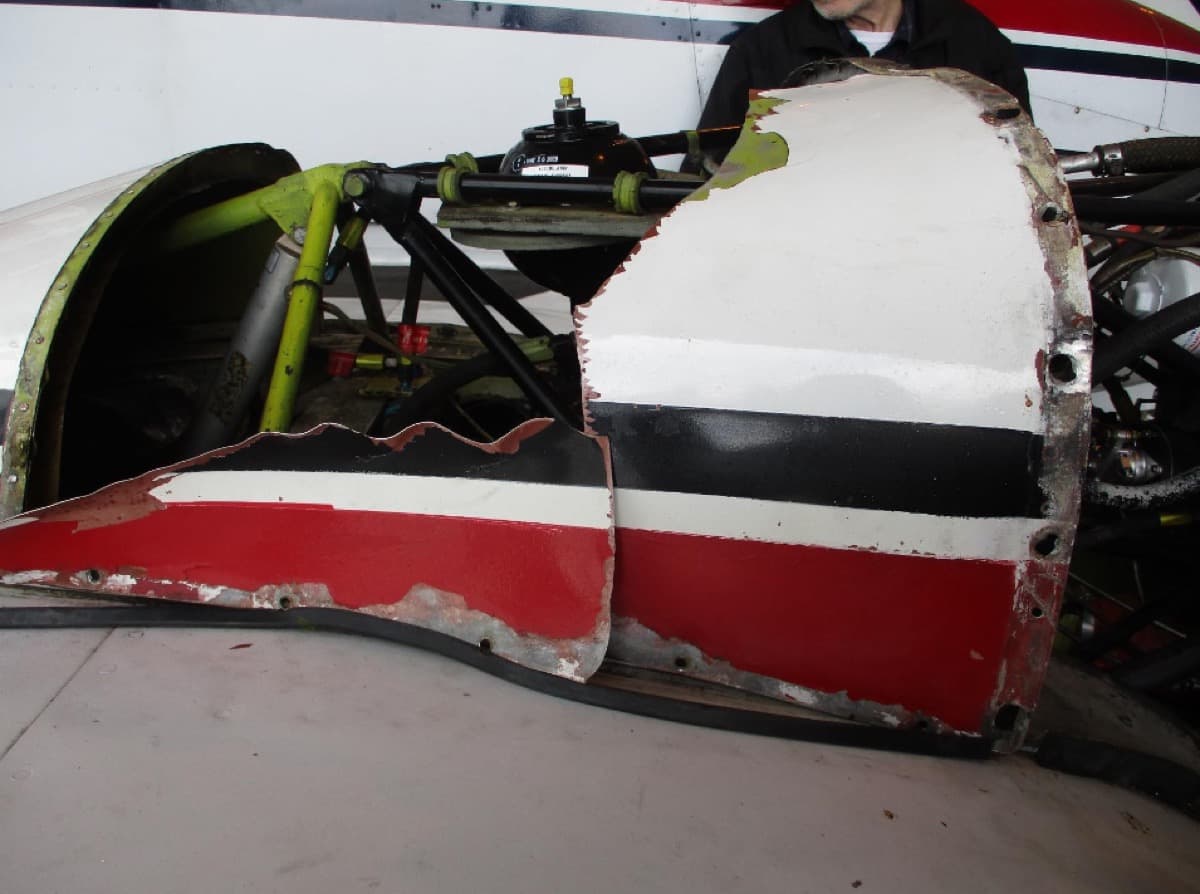
After recently completed maintenance, and the pilot and a pilot-rated passenger decided to take the Piper PA-23 for a test flight.
Both pilots reported that a preflight inspection was completed and that no anomalies were noted.
Shortly after takeoff from the airport in Louisville, Kentucky, the pilot and passenger noticed that a large part of the right engine nacelle cover had departed from the airplane. They requested to return to land at the airport and made an uneventful landing.
The pilot reported there were no adverse control issues observed during the return for landing.
An inspection of the airplane revealed that the nacelle panel had hit the right side of the horizontal stabilizer, resulting in substantial damage.
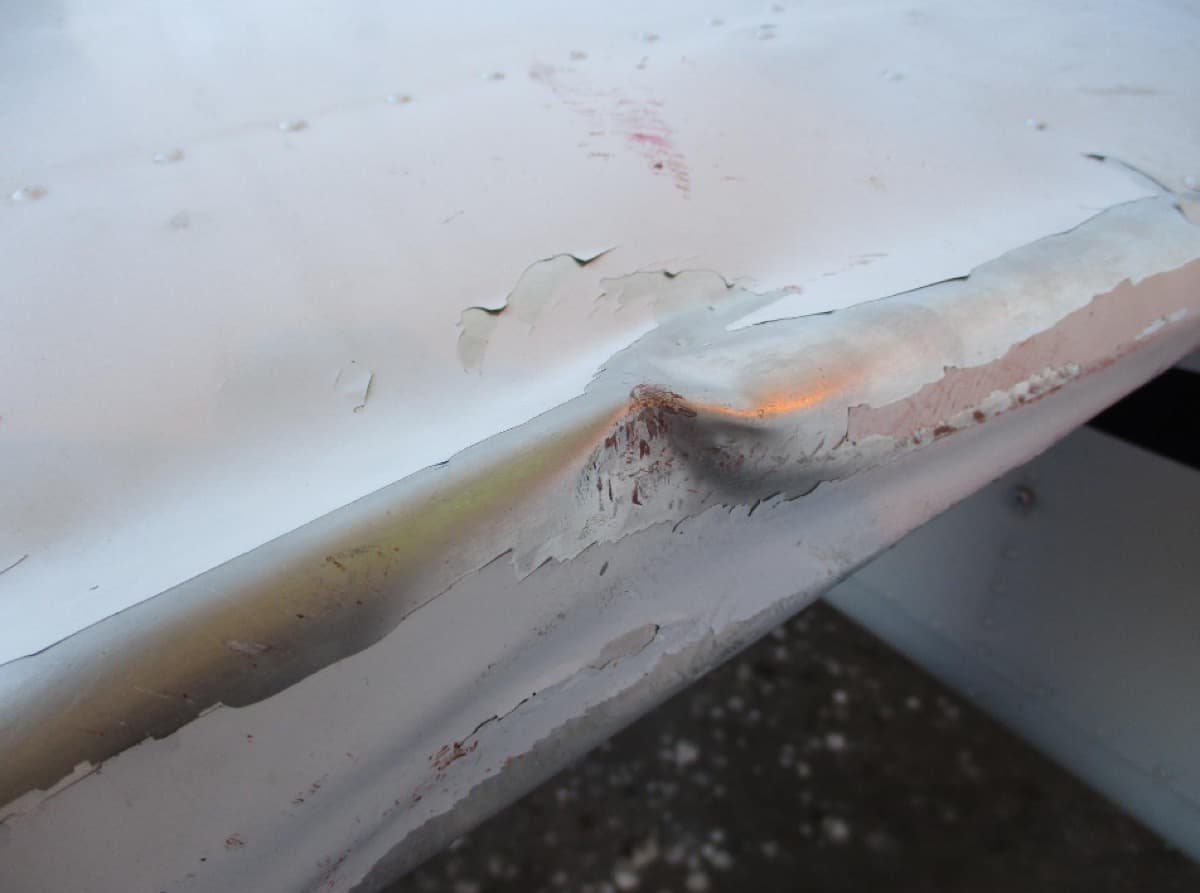
Post-accident examination of the right engine nacelle revealed that most of the inspection panel had separated from the nacelle and was not located, however a small portion of the outboard section of the panel remained attached to the engine nacelle.
The remaining portion of the panel displayed significant wear around the camlock and screw retention holes. At least one of the retention screw holes was significantly larger than the retention screw head.
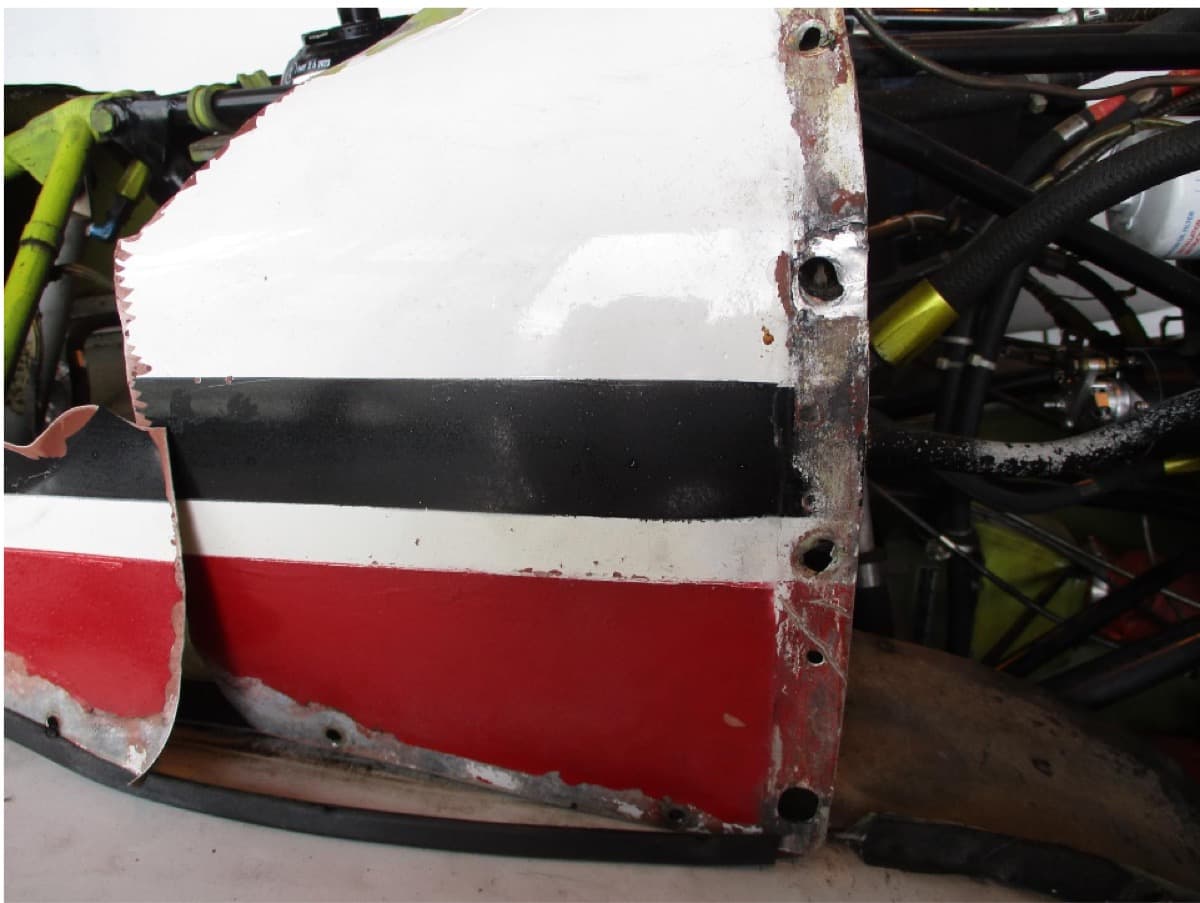
While the missing portion of the inspection panel was not available for examination, it is likely that the screw holes on this portion were similarly worn.
This wear should have been apparent to maintenance personnel when inspecting the airplane (but likely would have been obscured by the engine cowling and not visible during a pilot’s preflight inspection).
Based on this information, it is likely that when exposed to high airflow during departure, a portion of the panel pulled out of the retention fasteners and was pulled out into the airstream, resulting in most of the panel being torn from the airframe.
Probable Cause: The failure of maintenance personnel to thoroughly inspect and repair the worn-out panel fasteners and fastener holes.
To download the final report. Click here. This will trigger a PDF download to your device.
This February 2024 accident report is provided by the National Transportation Safety Board. Published as an educational tool, it is intended to help pilots learn from the misfortunes of others.
Louisville has more than 1 airport. The article didn’t state which one it was. But if it was Louisville International most outbound traffic flies right over an auto scrap yard. Probably why the part could not be found. Same scrap yard the UPS flight recently crashed in. BTW I live in the Louisville area.
It is also called a nacelle:
“A separate streamlined enclosure on an aircraft or spacecraft for sheltering the crew or cargo or for housing an engine and usually its related components.”
Hard to see that kind of wear, but perhaps “hands on” might have revealed some looseness. Fault goes to service personnel for installing a nacelle that has obviously worn holes for the quarter-turn fasteners.
Pilots responsibility to make all is secure on his or her aircraft.
If you don’t know what you are looking at then you should look for a friend or someone else to evaluate aircraft BEFORE FLIGHT.
Can’t put it all on the installer any time you have your aircraft worked on by someone else you need to remove the engine covers and inspect for loose spark plug wires, make sure no wire are close exhaust and all it properly secured.
You Aircraft Your Life critical to be part of the propcess.
stranger things have happened…….Years ago at at NY airport an Aztec pilot jumped in his plane and took off with a cinder black tie down weight still attached to the tail…..
He made it back……
Same airport different plane the pilot took off and could not get the aircraft above 200 feet……..going around the pattern declaring an emergency he land hard and damaged the aircraft….when he could not flare on landing……
The cause was a linemen hit the tail of the aircraft and severely damaged the elevator…..
That looks like a pretty beat-up airplane. Same thing happened to Tow-Mater’s hood in the movie Cars.
Regards/J
From the look of those pictures, there was more going on with that airplane than just the area affected
thats called a cowling