


General aviation activity in 2024 shows GA doing more with less.
According to the FAA’s 2024 General Aviation and Part 135 Activity Survey, while the total number of active aircraft saw a slight dip to 213,756 compared to 2023, the GA fleet logged more than 29 million flight hours — a roughly 2% jump from 2023’s 28.43 million hours.
GA Activity Survey – Compare 2024 to 2023
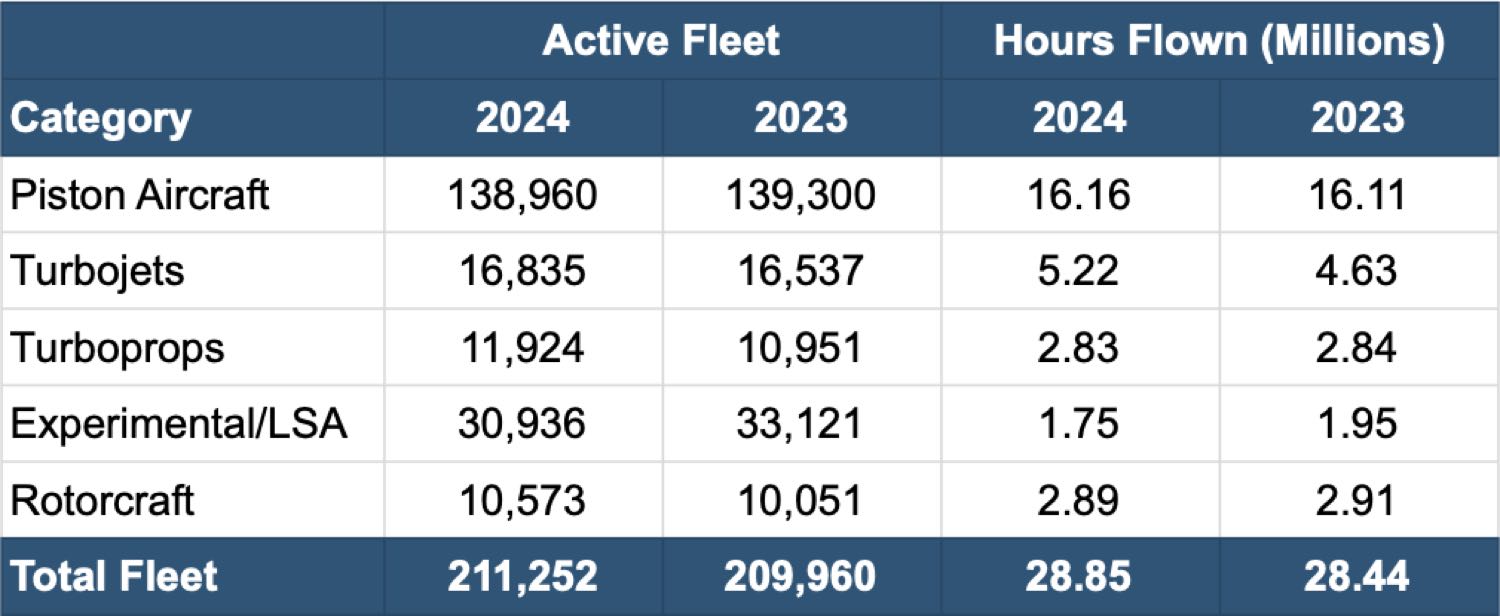
Piston-engine aircraft remain the backbone of the community. With 138,960 active planes, they account for more than half of all GA hours flown, logging 16.16 million hours. That’s down from 139,300 active aircraft in 2023, which flew 16.11 million hours.
However, the survey confirms that the GA active fleet is aging, with a significant portion — nearly 30,000 aircraft — between 45 and 49 years old.
In the Experimental/Special Light Sport Aircraft category, the survey counted 30,936 active aircraft, which flew more than 1.75 million hours in 2024. Both were slightly down from 2023’s numbers of 33,121 active aircraft and more than 1.95 million hours flown.
On the flip side, the most striking growth in 2024 was in the turbojet sector, which saw a double digit increase in flight hours — up nearly 13% over 2023. For 2024, there were 16,835 active aircraft in this sector, compared to 16,537 in 2023. Flight hours totaled 5.2 million, up from 4.6 million in 2023.
The number of turboprops also grew in 2024 to 11,924 up from 10,951 in 2023. However, flight hours were down slightly in 2024, dropping to 2.83 million from 2.84 million in 2023.
Rotorcraft also grew in numbers in 2024, to 10,573, up from 10,051 in 2023. But much like turboprops, flight hours fell slightly to 2.89 million from 2.91 million in 2023.
What is the General Aviation and Part 135 Activity Survey?
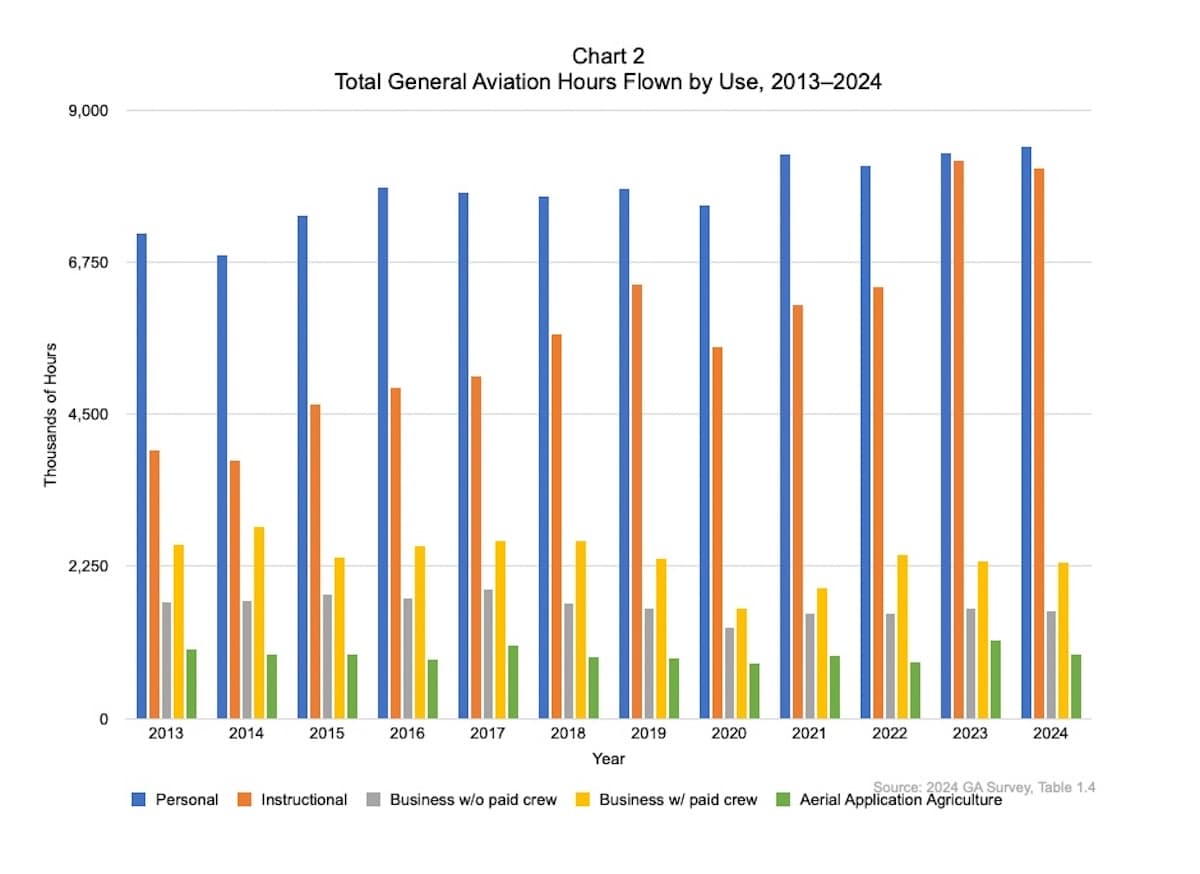
The survey is the FAA’s primary tool for understanding how the non-airline aviation fleet is used in the United States. Conducted annually for more than 45 years, it is the only comprehensive source of data on the size of the GA fleet, the number of hours flown, and the specific ways people use their aircraft — personal, instructional, or business. Participation is voluntary, with the FAA sending out invitations to pilots and aircraft owners to collect the data.
Aviation advocates note that the results are critical for the industry as the FAA and other government agencies use the data to calculate safety metrics like accident rates, justify funding for airport infrastructure and services, and assess the real-world impact of new regulations on the aviation community.
You can see survey data dating back to 1999 at FAA.gov.

Leave a Reply