

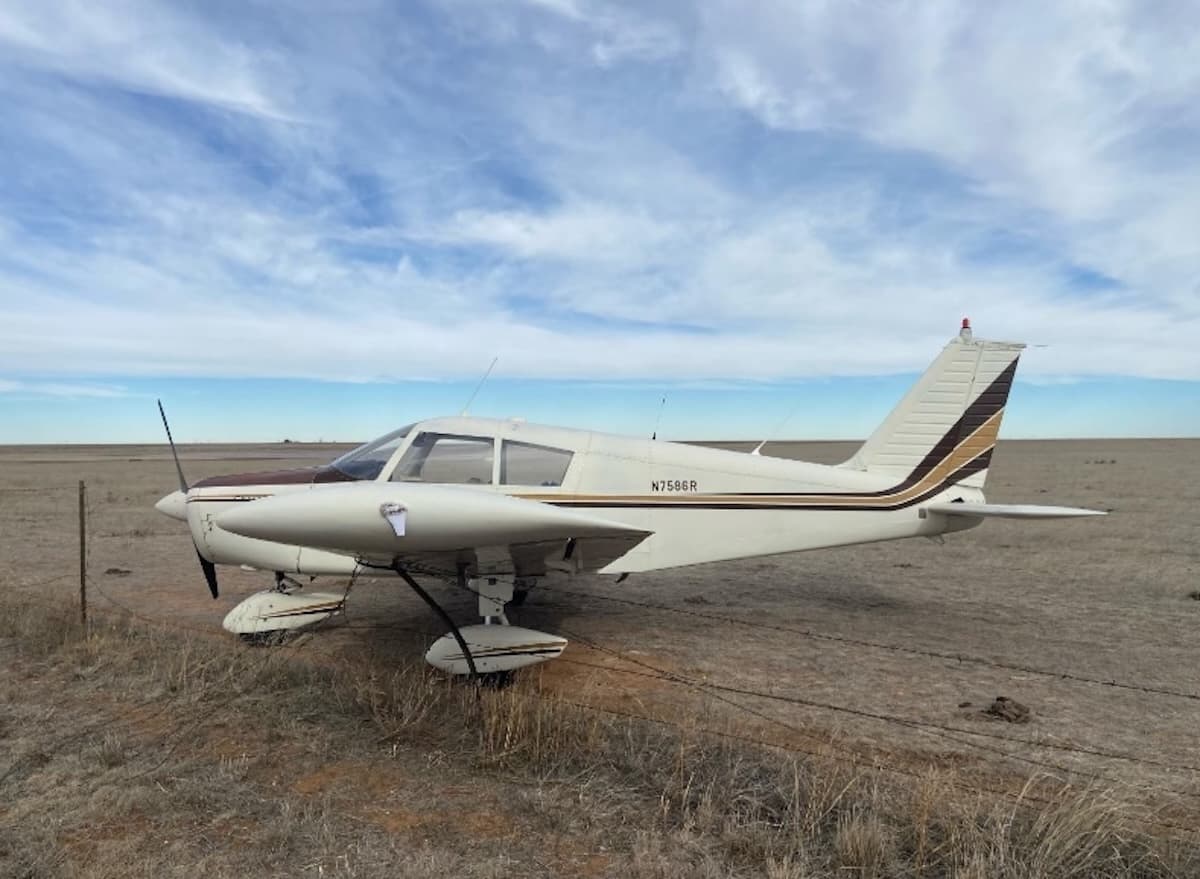
The student pilot was conducting a solo cross-country flight when the Piper PA-28-140 had a total loss of engine power due to fuel starvation.
The pilot told investigators that he switched fuel tanks but was unable to restore engine power before an off-airport forced landing was made in an open field near Wayside, Texas.
The airplane’s left wing sustained substantial damage when it struck a metal fence post during the forced landing.
According to the student pilot and fueling documentation, the airplane departed on the cross-country flight with a full fuel load (50 gallons) evenly distributed between the wing fuel tanks. The student pilot stated that he switched fuel tanks every 30 minutes during the estimated 2.4 hour flight.
However, after the accident, the right fuel tank was found void of usable fuel, and the left fuel tank remained full.
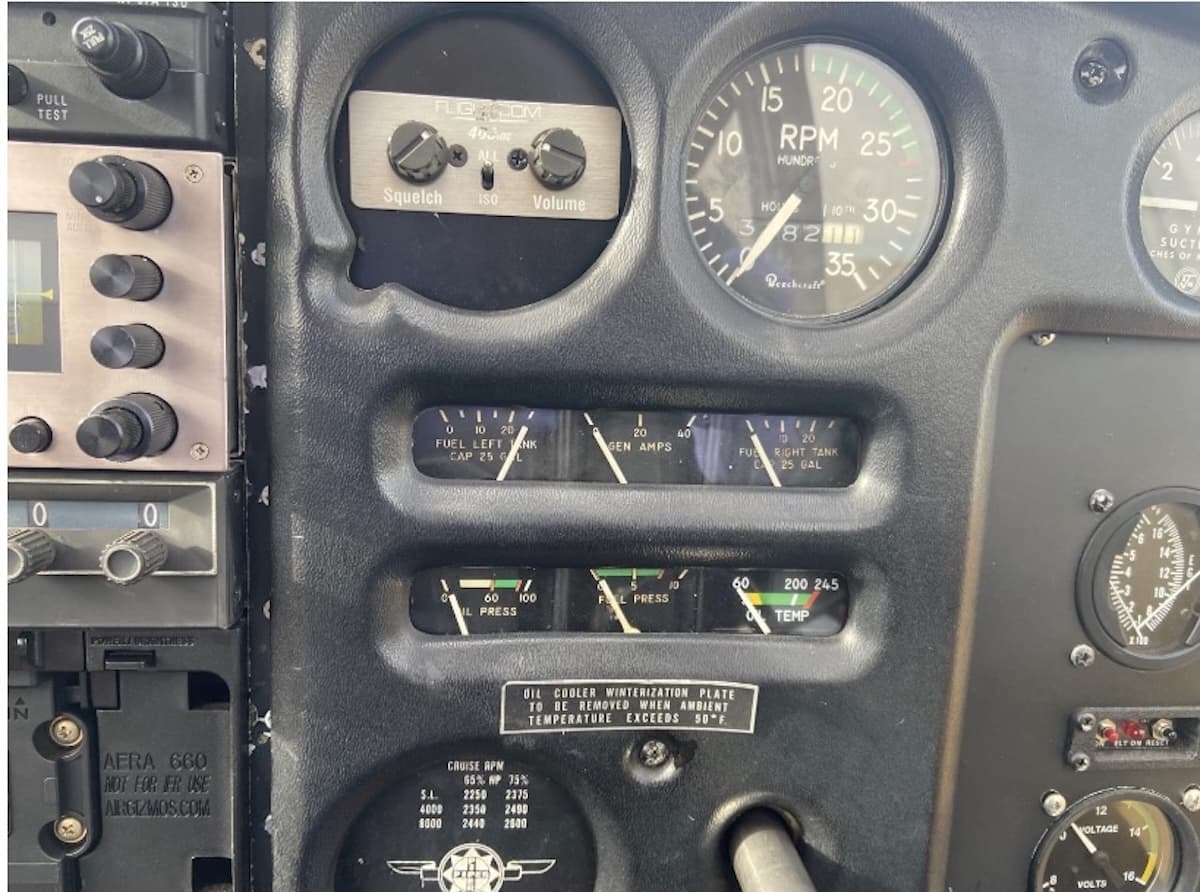
A post-accident operational engine test run did not reveal any mechanical anomalies with the engine.
It is likely that the student pilot (who did not have a flight instructor endorsement for the solo cross-country flight) mismanaged the fuel during the flight, which resulted in fuel starvation and a total loss of engine power.
Probable Cause: The student pilot’s improper fuel management during the cross-country flight, which resulted in a total loss of engine power due to fuel starvation.
To download the final report. Click here. This will trigger a PDF download to your device.
This February 2024 accident report is provided by the National Transportation Safety Board. Published as an educational tool, it is intended to help pilots learn from the misfortunes of others.
He said he switched tanks but no go. Any concern about the tank valves or manual control linkage? Just assumes he mismanaged his fuel? Come on, guys! Did a little deeper than the usual glib ‘pilot error.’ Maybe it was, maybe it wasn’t.
Regards/J
“…the usual glib ‘pilot error’. “
Nope; he was guilty as charged. The answers are there; you just have to read them.
“Inspector Wilson stated that an operation test run of the engine was conducted at the accident site. With the fuel selector on the left tank, the engine started and ran normally at idle power. The engine power was then increased to about 2,000 rpm for a run-up test. The engine continued to run normally and there were no anomalies either magneto. After the engine run-up, engine power was briefly increased to its maximum static speed of 2,600 rpm before it was decreased to 1,000 rpm. The engine controls appeared to be work normally throughout the operational test run.
Inspector Wilson said that the fuel selector was then moved from the left tank (full) to the right tank (empty). The engine continued to run at 1,000 rpm for about 2 minutes before the engine lost power due to fuel starvation. The fuel selector was then
repositioned to the left tank and the engine reprimed with fuel. The engine restarted and ran normally at idle power before a normal shutdown was completed.”
Suggestion: If you want to generate a really heated “discussion”; try posting your comments on GAN’s Facebook page…
A cross country flight with no endorsement? What CFI/Flight school wants him now?
Hmmmm it appears….. that this students should have his student certificate revoked because of lying to the inspector and going on a cross country with no Instructor endorsement….
The main thing is, he was not injured and most importantly, he did not hurt anyone on the ground and the aircraft looks like it is fixable…..