

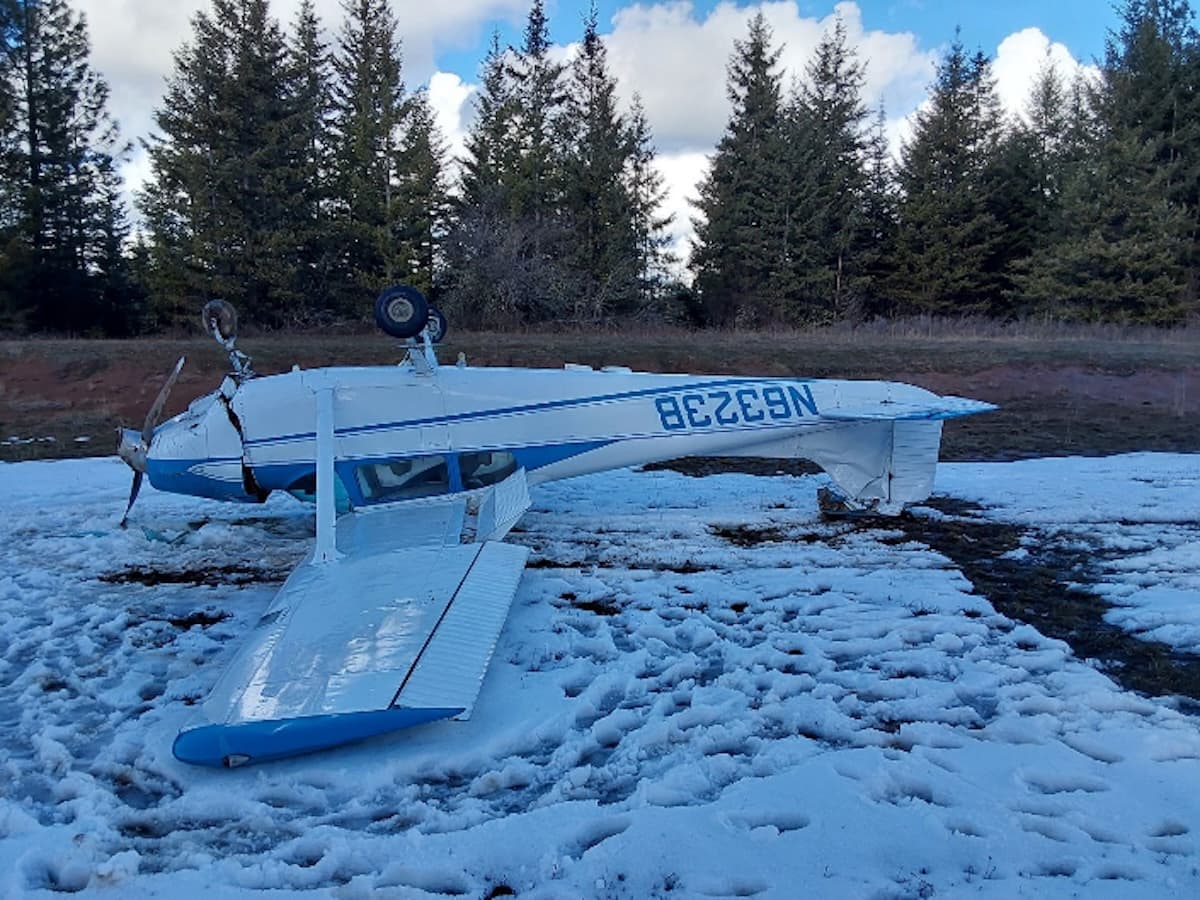
The pilot told investigators that as he exited the traffic pattern at the airport in Weippe, Idaho, he noticed that engine oil was accumulating on the left portion of the windscreen. He decided to make a precautionary landing.
During the approach, the left portion of the windscreen was obscured, so he switched from the left to the right seat. He fastened his seat belt, continued the approach, and touched down on a soft spot on the snow-covered turf runway just short of his aim point. The Cessna 182A’s nose landing gear dug into the soft surface and the airplane nosed over.
During his post-flight inspection, he noticed that the oil filler cap was separated from the filler port and dangling by its security chain. The pilot opined that during his preflight inspection, he saw the oil filler cap but did not physically twist the cap to ensure its security.
The pilot reported that there were no mechanical malfunctions or failures with the airplane that would have precluded normal operations.
Probable Cause: The pilot’s failure to secure the oil filler cap during the preflight inspection, which resulted in a precautionary landing on the soft surface and subsequent nose over.
To download the final report. Click here. This will trigger a PDF download to your device.
This February 2024 accident report is provided by the National Transportation Safety Board. Published as an educational tool, it is intended to help pilots learn from the misfortunes of others.
“ The Pilot Opined” would be a good name for a band.
Maybe.
It is amazing how fast 2-3 quarts of oil will be blown out the oil fill port….
I’ve done the same, fortunately I noted the oil streaming out onto the left main pant…
So, now I double check the oil fill cap along with being sure that the dipstick, [ A Continental ], is rotated to the locked position.