

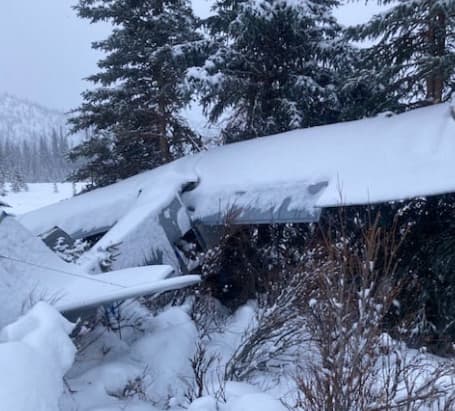
The pilot reported that while en route in the Bearhawk Patrol, flying below a 1,000-foot ceiling in two miles of visibility and light snow, he encountered various instances of carburetor icing, which were resolved using the periodic application of carburetor heat.
However, later in the flight, he encountered carburetor icing that wasn’t clearing with the application of carburetor heat.
He elected to make an off-airport landing near Galena, Alaska. While performing a descending 180° turn, maneuvering to land, the engine lost all power. He leveled the wings partway through the turn and landed straight ahead in a small clearing.
The airplane overran the landing area and hit a clump of trees, which resulted in substantial damage to the wings.
According to the Carburetor Icing Probability Chart (FAA SAIB CE-09-35), the atmospheric conditions at the time of the accident were conducive to carburetor icing at cruise power and glide power.
According to FAA Advisory Circular 20-113, “To prevent accidents due to induction system icing, the pilot should regularly use carburetor heat under conditions known to be conducive to atmospheric icing and be alert at all times for indications of icing in the fuel system.”
Probable Cause: A loss of engine power as a result of carburetor ice. Contributing to the outcome was the pilot’s failure to effectively use carburetor heat in conditions conducive to the formation of carburetor ice.
To download the final report. Click here. This will trigger a PDF download to your device.
This February 2024 accident report is provided by the National Transportation Safety Board. Published as an educational tool, it is intended to help pilots learn from the misfortunes of others.
1000 foot ceiling, 2 miles visibility in light snow? Sounds like an ill-advised flight to me, carb icing aside.
You carb guys need to get carb temp gages put in. Keep the air temp out of the icing zone. Plus make sure carb heat system is in top condition.
yup, the MS carb has a fitting for the available carb temp gauge kit.
My Cessna has a carb temp gauge, and I note that on cooler days, with temps in the 50s, on cold start the temp is in the ‘yellow’ zone, indicating possible carb ice.
So, I can use carb heat until the oil temp come up and warms the carb.