

According to the pilot, approximately eight miles from the destination airport, and while flying at 2,000 feet mean sea level, the Cessna 150’s engine experienced a total loss of power.
He attempted to restart the engine but was unsuccessful, so he made a forced landing to a blueberry field near Dunnellon, Florida, hitting several sprinkler heads, which resulted in substantial damage to both wings.
The pilot told investigators that during his preflight inspection, a calibrated fuel dipping stick was not available, so he “took a look down” into the fuel tanks and was relying on the panel-mounted fuel gauges to determine the quantity of fuel in the airplane. The gauges read about ½ full for both tanks and the pilot felt confident that was sufficient for the planned 23-minute flight.
An FAA inspector who examined the airplane after the accident observed that both fuel tanks were intact and that only a minimal amount of fuel remained in each. The inspector also noted that the fuel gauges in the instrument panel read “at E on the left tank and just above E on the right tank.”
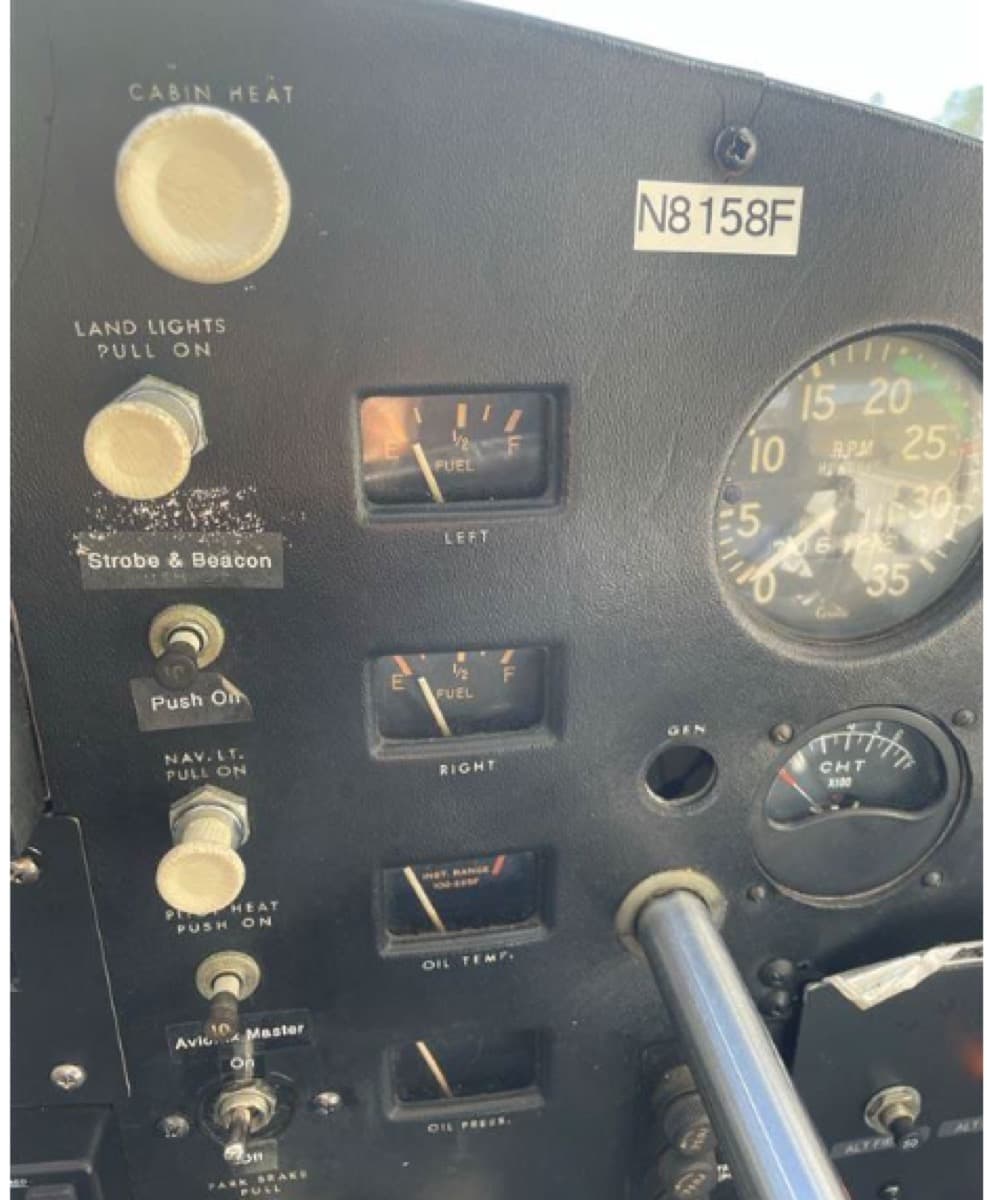
Based on this information, it is most likely that the pilot inaccurately determined the amount of fuel available for the flight prior to departure, which subsequently resulted in fuel exhaustion and a total loss of engine power.
Probable Cause: The pilot’s inadequate preflight fuel planning, which resulted in fuel exhaustion and a subsequent total loss of engine power.
To download the final report. Click here. This will trigger a PDF download to your device.
This February 2024 accident report is provided by the National Transportation Safety Board. Published as an educational tool, it is intended to help pilots learn from the misfortunes of others.
If that happened to me, whcih it wouldn’t, because skipping a positive fuel check and a proper pre-flight are not what I was trained for. Not sometimes, all the time.
I guess the blueberries were not ripe, which is a double punishment. He should have waited to do this until March or early April.
I knew that this pilot had some issues when he measured 14 gallons in a tank that holds 13 gallons, and didn’t notice that the fuel stick was for 26 gallon tanks.
So, knowing this, if the depth is the same, just take half the measured indication.
From the 6129 form, it sounded like he was running the O-200 full rich, which can have the engine use 7 gph.!!
I sure that he had renters insurance to cover the damage…[ but probably not. ?]
Based on current prices he would save $8.50 with a dry tank.
If a pilot can’t afford to top off the tanks they need to get another hobby. Perhaps riding a bicycle.
I always used an UN-CALIBRATED fuel stick; 1/4 inch clear plastic rigid tube with an O-Ring slid on and adjusted to fuel neck level. EASY to tell 1/4, 1/2 or 3/4 FULL.
But even then , I usually only left the ground when when I could easily WET my finger at the filler opening.
Jerry King
Pilot should lose his license. These accidents are totally avoidable with common sense!