

The pilot told investigators that she completed a preflight inspection of the Cessna 172 with no anomalies noted.
During engine start, the engine “sounded slightly rough,” and then it ran smoothly “after a few seconds.” During the engine run-up, there were no unusual indications, and the magneto check was normal, she reported.
During the takeoff roll, the engine indications were “green,” and airspeed was increasing “slightly slower than normal,” she reported.
The pilot told investigators that she was not sure of the exact static RPM the engine reached during the takeoff roll, but that it did not feel as though the engine was producing the normal amount of power.
Upon reaching a rotation speed of 55 knots, she rotated and began the initial climb.
As the initial climb progressed, she noticed the airspeed was not accelerating normally, staying about 60 to 65 kts, and the engine was only producing about 1,700-1,750 rpm, despite the throttle and mixture controls being full forward.
She added she did not see the engine RPM rise and then drop during the flight and characterized the engine performance as constant but sluggish.
She lowered the nose and flew toward a forced landing area near the airport in Opelika, Alabama.
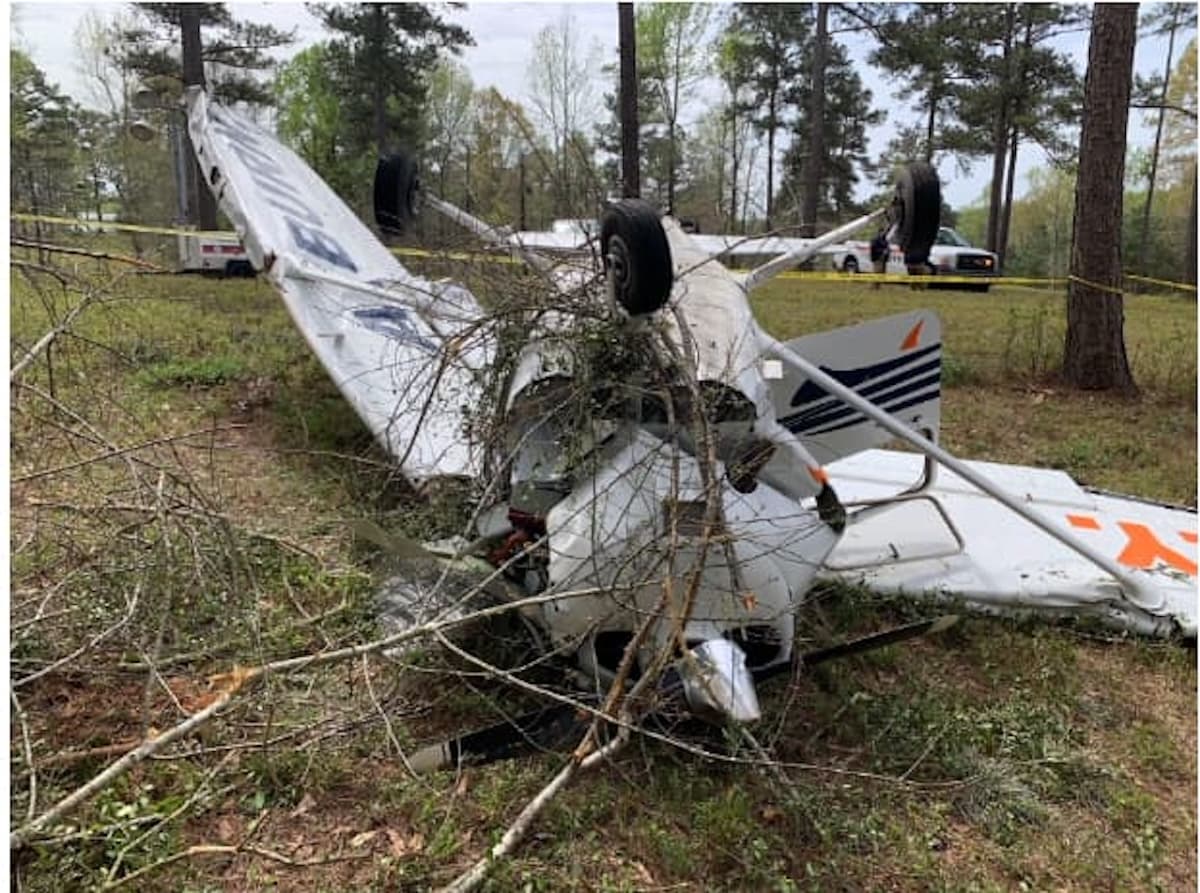
The airplane hit trees and came to rest inverted.
Post-accident photographs showed substantial damage to both wings, the fuselage, and the engine mount. The pilot sustained minor injuries in the crash.
A post-accident examination of the airplane found continuity of the engine crankshaft and valvetrain. Compression and suction were observed on all cylinders in the correct firing order when the crankshaft was rotated. Both magnetos remained secure to their fittings on the accessory housing and the timing was found to be 28° before top dead center. The engine data tag showed that the timing for the engine should be 25° before top dead center.
The fuel injector assembly was removed from the engine and disassembled. The examination of the fuel injector revealed a combination of fuel/oil contamination between the air diaphragm and the regulator cover.
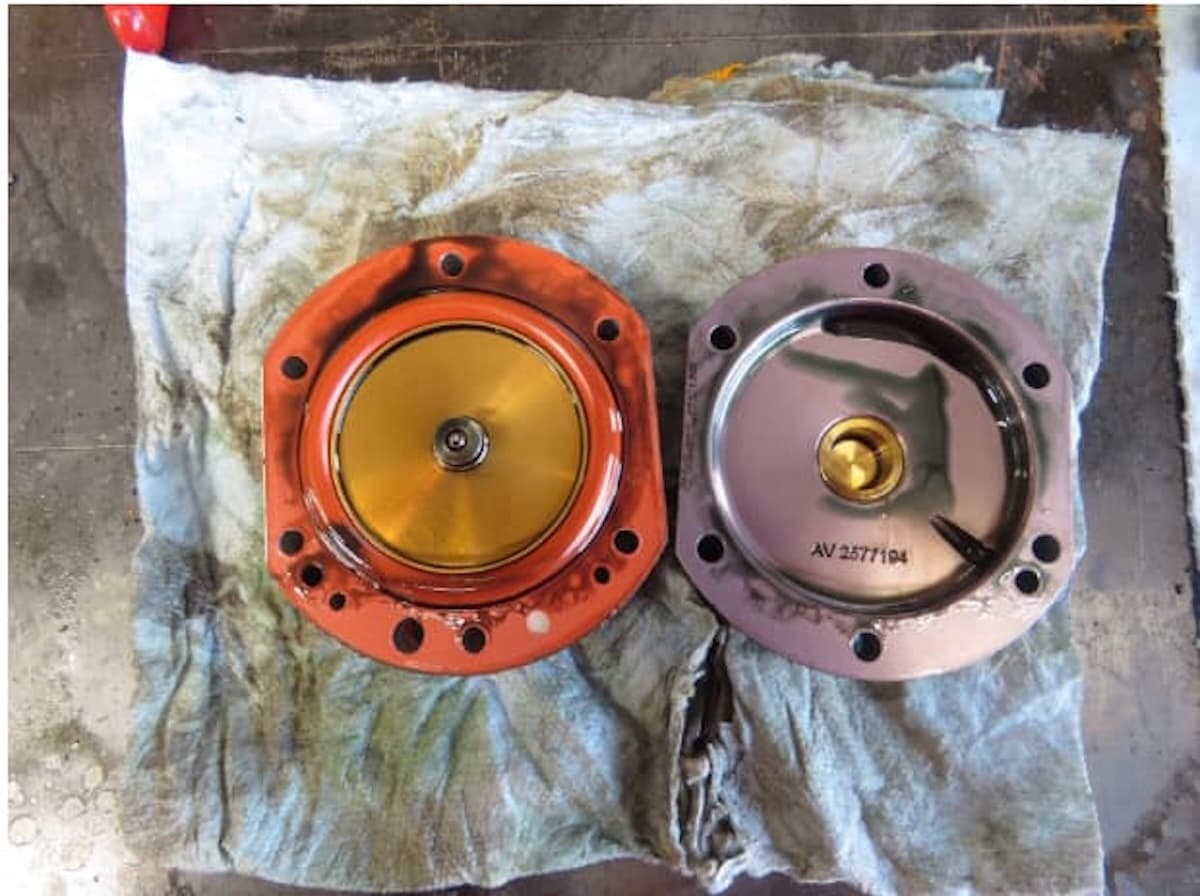
Service bulletin AFS-SB10 from the fuel injector manufacturer states: “There have been occasional reports of servo equipped engines that exhibit one or more of the following characteristics — gradually deteriorating idle, difficulty starting and/or cold engine acceleration performance. These engines may have the servo mounted in an updraft, or nearly updraft configuration. Close inspection of the servo may reveal oily contaminant in the bore of the servo that is green/blue in color. It is also possible for this contaminant to migrate into the air section of the regulator.”
Probable Cause: A partial loss of engine power due to a combination of fuel/oil contamination in the fuel injector assembly.
To download the final report. Click here. This will trigger a PDF download to your device.
This March 2024 accident report is provided by the National Transportation Safety Board. Published as an educational tool, it is intended to help pilots learn from the misfortunes of others.
The PIC reported: During the takeoff roll, the engine indications were “green,” and airspeed was increasing “slightly slower than normal,…”
Well assume she accomplished detailed POH-based takeoff performance calculations. Regardless, maybe if she had also used a takeoff performance backup ‘tool’ like the old FAA “50/70 Rule”:
“When planning takeoff from short unobstructed runways, establish a landmark at 50% of your calculated takeoff distance. When reaching that landmark, you should be at 70% of your rotation speed. If not, abort the takeoff and reduce weight or wait for more favorable wind and temperature conditions.”
One of the most bent & twisted ROTs out there: “Short” is not defined, but it works for “long” runways too. I often hear it interpreted as “50% of runway remaining”, instead of 50% of calculated takeoff distance.
Her rotation speed was 55 knots. But whether you’re flying a lightly-loaded, 180 HP, C-172S from a 4,000’ runway or a 10,000’ runway, if you still haven’t hit at least 38.5 knots by that “50%” distance, something’s not quite right.
Why continue a takeoff that doesn’t seem normal? Easy to stop on a 4000’ runway and taxi back in. I knew to do that when I was 18.
I don’t know why no decision to just fly it at 65, Announce on CTAF, make a gradual left, head downwind and just land on the runway departed from, but this was a low time pilot and maybe did not think the power would remain constant. Can’t do much about the part failure. I was required in my flight training to practice take-off for just this situation and to fly at best glide to see that it is possible and how it feels.
It’s sad that the pilot didn’t note the low power and abort the takeoff.
The 4,000 ft runway should be long enough to get back on the remaining runway, but there is not much overrun distance to a fence.
Yes – gauges in the green is an important check, but verifying rpm will tell you more about the takeoff performance. The pilot was relatively inexperienced and caught in a precarious position above the trees in a partial power condition. She evaluated correctly that speed and power were not normal during the climb, but said the speed stayed at about 60-65 knots. It’s not clear why she then lowered the nose and said she was forced to pick a landing area as it seems there would have been enough power to maintain level flight at a safe speed above stall – possibly something not ever covered in her training. There’s always been a lot of debate about scenario based training – this scenario (partial power) is a good one to include.