


Since its inception in 2004, the DreamLaunch Tour has always been about one simple thing: Launching dreams.
Planting that first seed in a student’s mind that says, “Maybe I can do something extraordinary…even if I don’t know how yet.”
Because when you’re 12, 14, or 17 years old, a career in aviation — flying jets, building aircraft, running an airport, designing the future of flight — can feel like something meant for someone else. Someone with connections. Someone with money. Someone who already knows the path.
I know that feeling all too well because I was that kid. Sitting in class with no connection to aviation, no funding to learn how to fly, and plenty of people who didn’t quite understand why I was so interested in airplanes. And yet I couldn’t shake the dream.
That dream eventually took me from a middle school student imagining what it might be like to fly to performing in air shows headlined by the Blue Angels the year I graduated high school. But none of that would have happened without one simple spark.
For me, it came from my very first flight experience through the EAA Young Eagles program. Those early moments matter.
A spark is powerful — but it will fade if it isn’t fueled with ongoing momentum.
That’s why the most recent DreamLaunch stop was especially meaningful.
Each year I spend about half the year on the road, which translates to roughly 20 events annually. With nearly 19,500 incorporated cities in the U.S. — about 5,000 of which have public-use airports — it’s not often I revisit the same city, even if it’s my hometown.
My last official DreamLaunch visit to Augusta, Georgia, was 14 years ago — the same place where that initial spark in aviation was first lit for me.
Bringing Aviation Inspiration Back Home
AviationStart recently partnered with the National Aviation Hall of Fame (NAHF), and we’re now adding school visits in cities where we host DreamLaunch events. The goal is to bring aviation inspiration directly into classrooms through NAHF’s nationally recognized aviation curriculum, developed in partnership with PBS.
The curriculum introduces students to the stories of aviation legends — individuals who faced obstacles, doubt, and setbacks, but still pursued what many believed was impossible.
The message is universal: Even the biggest dream — the one people tell you is unrealistic — is still possible if you stay committed to it.
Of course, I’d love for as many of those students as possible to apply that mindset to aviation. But, more importantly, I want them to apply it to their lives.
Today, more than 6,000 classrooms — reaching over 250,000 students annually — use this program. And when I hear that number, I don’t think “mission accomplished.” I think: “We’re just getting started.”
Because there are still thousands of classrooms across the country filled with students who haven’t yet been exposed to aviation — or the idea that they can be part of it.
A Full-Circle Moment in Augusta
That’s what made the February 2026 stop in Augusta so special.
My initial curiosity about aviation — even just wanting to fly a simulator — started while I was sitting in a classroom in Augusta. So it felt fitting to launch this new initiative in one of the same local classrooms that helped spark that curiosity in the first place.
As it turned out, Dr. Lutricia Parkman, assistant principal of Warren Road Elementary School in Augusta, had submitted a request for a DreamLaunch visit just a few months earlier.
So we made it happen.
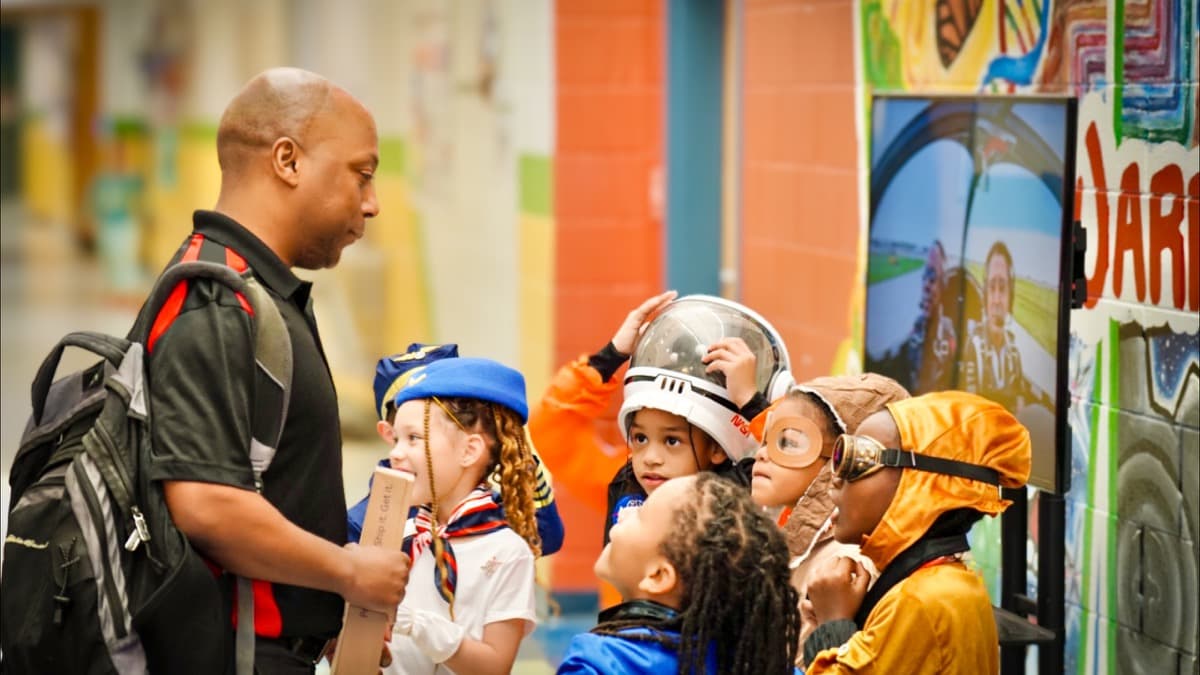
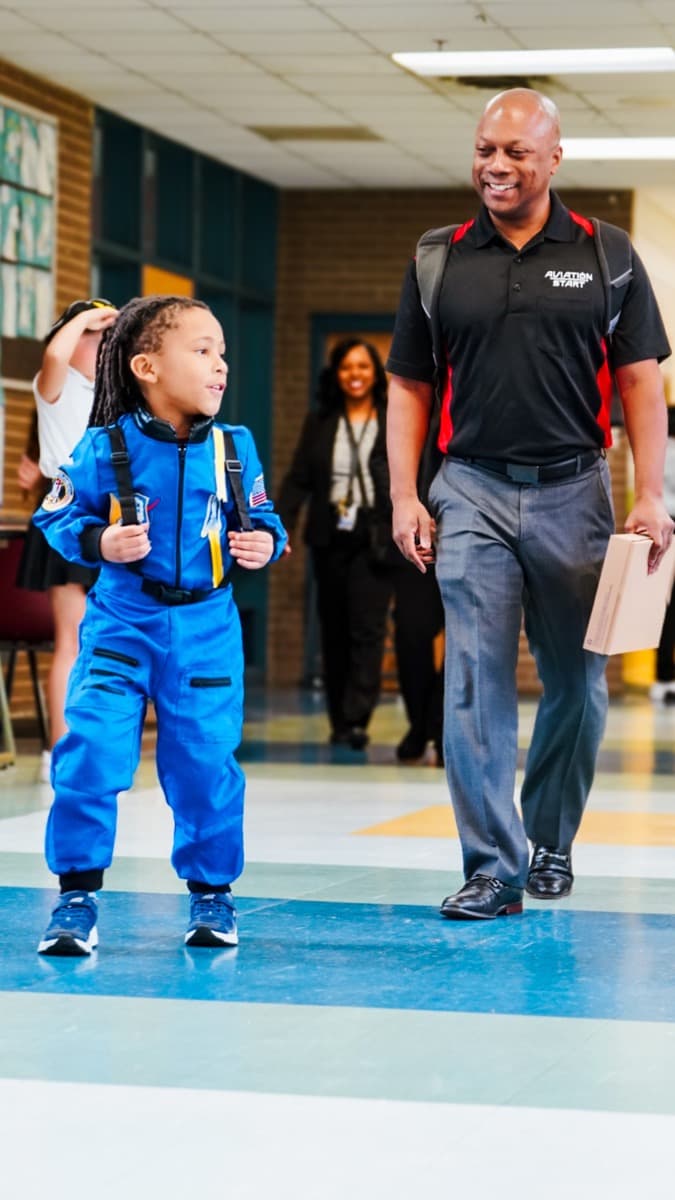
When I arrived at Warren Road Elementary, I was greeted by students dressed as pilots, engineers, mechanics, astronauts, and even ramp agents. Some students were marshaling traffic as if they were working the ramp at a busy airport. The school’s drama department even built an airliner set for the stage.
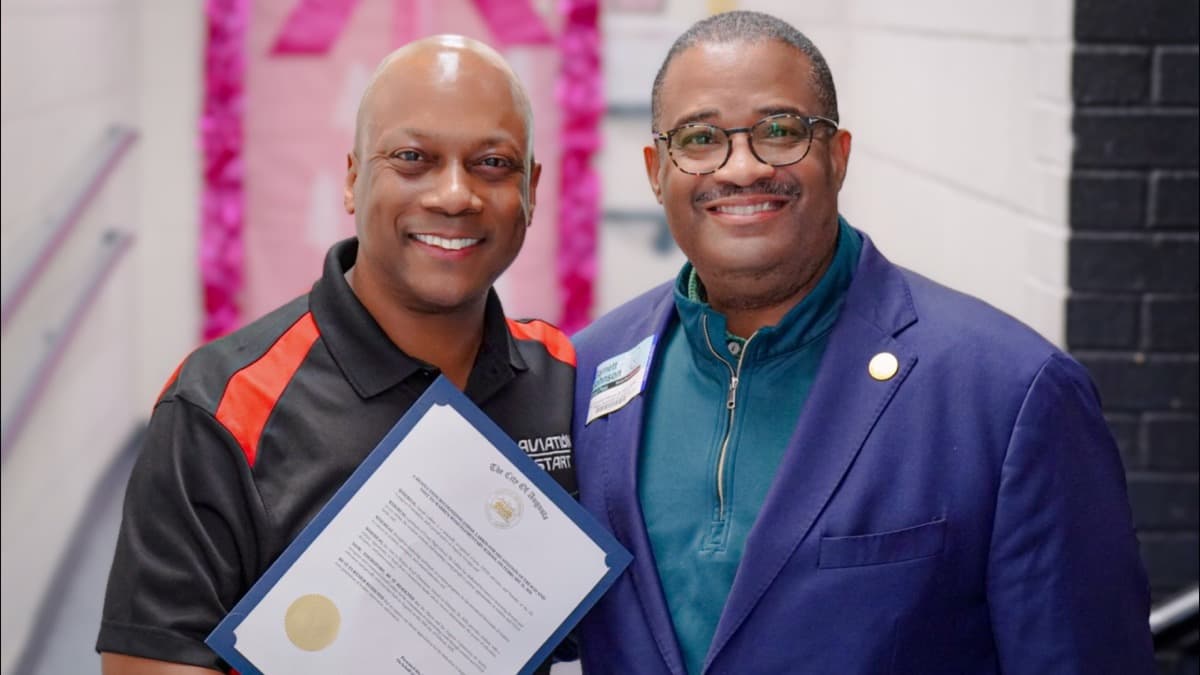
And to top it all off, Mayor Garnett L. Johnson attended the event and presented AviationStart with a City of Augusta proclamation recognizing our efforts to connect students to aviation careers.
Favorite Question of the Day
At Warren Road Elementary, a fourth grader asked a simple question: “How can I fly like you?”
And in that moment, everything came full circle.
Because I remember being 12 years old — sitting behind a computer, logging onto a CompuServe aviation forum — and asking that exact same question.
A Delta Air Lines captain named Jeff Bosonett took the time to answer me. He gave me direction. He gave me belief.
And because of that, I knew exactly how to help that student begin his own journey in aviation.
Aviation Pathways for Every Age
One of the most exciting parts about aviation education today is that there are free, high-quality programs available at every stage of a student’s journey. And these programs can provide the fuel necessary to keep an aviation-curious person involved until they are ready to begin their training and ultimately join the aviation workforce.
Here are just a few of the pathways schools and families can access nationwide:
- K-6: National Aviation Hall of Fame + PBS Curriculum: Story-based learning that introduces young students to aviation and space through inspiring real-world figures.
- Grades 6-12: The FAA Airport Design Challenge: Students design their own airport using Minecraft — learning engineering, human factors, and operational decision-making while competing with teams nationwide.
- Grades 9-12: Aircraft Owners and Pilots Association (AOPA) High School Aviation Curriculum: Students can begin a structured pathway toward becoming a pilot or commercial drone operator while still in high school.
These programs work because they meet students where they are — through stories, creativity, technology, and hands-on problem solving — instead of “selling” aviation to them. They let students discover it naturally.
Helping the Next Generation Takeoff
If you’re an educator, a parent, or someone who works with students — or you know a young person who’s even slightly curious about aviation — these programs can change the trajectory of their life. Find a full list of programs available to help anyone (including adults) get started in aviation, at AviationStart.org.
Leave a Reply