

Joe Bechtold did everything right, but still couldn’t avoid having an accident.
And what he learned in the aftermath of that accident he’s sharing with his fellow pilots to help them navigate dealing with everything from the FAA, NTSB, and insurance companies, to the emotions that inevitably come up after such a traumatic event.
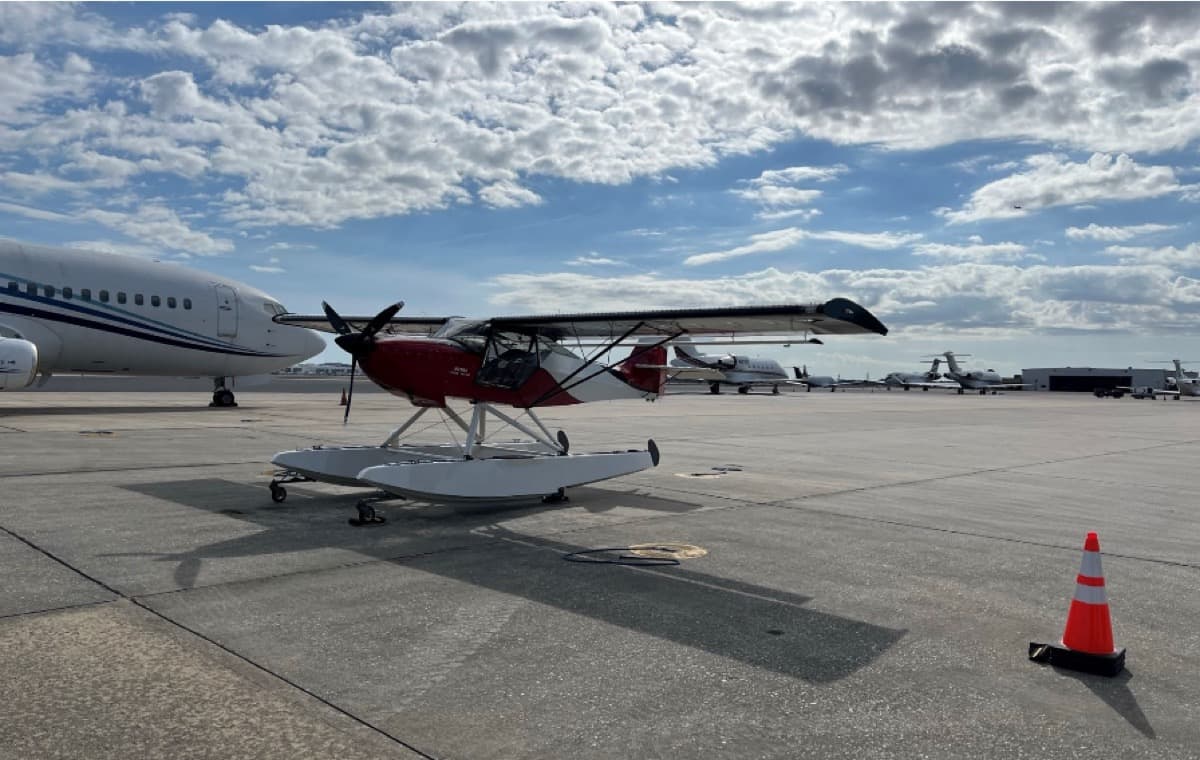
A pilot for more than 33 years, Joe is an avid aviator. He’s flown a variety of aircraft, from gliders, helicopters, a Grumman Tiger, a Cirrus, and more. His latest ride is his favorite: A Kitfox 7 STi on floats he completed building just a few months before his accident.
Joe, who lives in Washington, D.C., flies a lot. But he doesn’t base his plane in the nation’s capital. Instead, he says, “I keep the airplane where it’s fun to fly.”
That means in the winter his Kitfox is based at an airport in Lake Wales, Florida, and the rest of the year in the western part of the country, including Utah, California, Oregon, and Idaho, near the Kitfox factory. When he’s ready to fly, he hops on an airliner to get to the Kitfox.
On Jan. 19, 2023, he was in Florida after several days of flying the Kitfox with no idea of what the day would bring.
The Accident
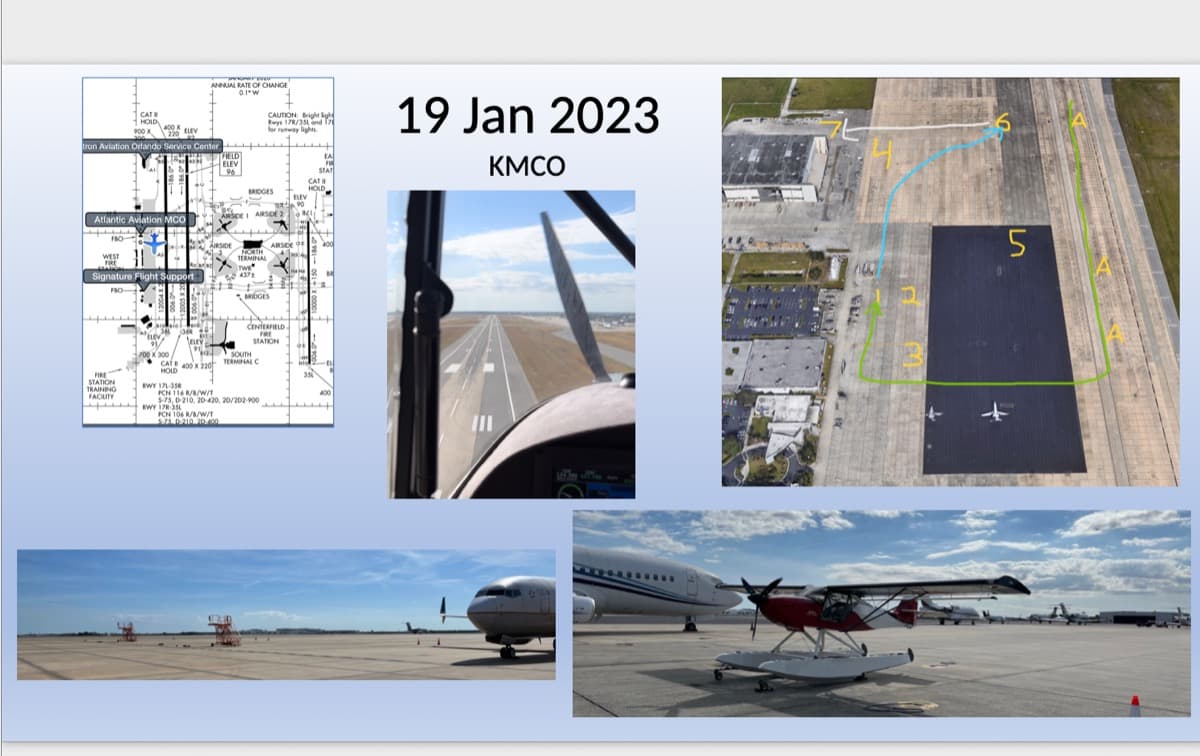
Joe flew into Orlando International Airport (KMCO) to drop off a friend who was catching a commercial flight home.
“He was one of the folks who helped me build the airplane and he was in from Idaho,” he recalls. “We’d been flying around Florida for a couple of days and he had to head back home, so he was flying out of Orlando International.”
There was another reason he wanted to go to KMCO.
“I have a map in my office — it’s one of those big six foot sectional maps — and I put pins in it on airports I’ve flown into. I’ve got about 2,000 pins in it and whenever I have a chance to go to an airport I haven’t been to before, I always try to do that.”
Since it was his first time landing at KMCO, Joe did his homework.
The first step was talking to the locals, including the guy Joe rents a hangar from in Florida. Familiar with the airport, he shared his knowledge of the local airspace and dealing with ATC at KMCO.
Next Joe called ahead to the FBO so they would be expecting him. He asked about fees and whether there would be transportation for his friend from the GA side of the airport over to the airline terminals.
After arriving at the airport, he checked in with the FBO, dropped his friend off, then did his normal walkaround, and got fuel. After listening to ATIS, he called ground to get his taxi instructions.
As he began to taxi, he realized a few things: There were no airplanes for hundreds of yards in front of him and the winds were right down the runway.
So when the right wing lifted up, he didn’t understand what was happening, he says.
“I’m thinking this is crazy. I’m just taxiing and the winds are not that bad,” he says. “At first I thought it was some kind of freak gust of wind. I saw my left wing going towards the ground and it’s like a car wreck. Everything’s in slow motion. All I could think is ‘I can’t scratch the paint. This is a brand new airplane.’ I mean, it was only six months old that time. It took years to build this thing, and I just couldn’t believe that the paint was going to get scratched.”
In shock, he slid across the ground for several seconds before he realized that the plane wasn’t going to stop. He shut down his engine, jumped out of the plane, then grabbed the wing to try to stop the airplane. But he couldn’t.
In his report to the NTSB, he wrote, “The jet blast was very difficult to overcome and I was lifted multiple times off the ground.”
He dangled from the strut for what he estimates to be five to 10 minutes, but no one came to his aid. Finally, two people in a passing truck stopped to assist and help him keep the airplane on the ground.
At this point he still didn’t know what happened. And when he did find out, he realized it was something that he never could have prepared for.
The Cause of The Accident
He discovered that a Bombardier Challenger 650 was doing something completely unexpected. It had been overfueled and since the FBO refused to defuel the jet, the jet pilots decided to burn it off themselves while sitting on the ground.
“Because the ramp was so wide open, they probably figured it was no big deal,” Joe says. “It never occurred to me that you’d have an aircraft doing that without talking to a controller.”
It turns out the jet pilots did talk to a controller. They asked for permission to do a run-up and the ground controller told them they were outside of the movement area.
After that, the ground controller wasn’t talking to the jet. In fact, no one at ATC or the FBO was talking to the jet.
And it seems that no one was aware of where Joe’s plane was either.
Joe said he “falsely assumed” that the controllers were watching him as he taxied.
But what he discovered after the accident was that it wasn’t until there was a shift changeover in the tower that one controller said to another, ‘hey there’s a Kitfox I haven’t heard from for awhile.’
“And that’s when they had someone look over to see what was happening,” he says.
Eventually, the manager of the FBO came out to the accident site, as well as the base operations manager for the airport.
First Things First
One of the first things Joe did after successfully stopping the airplane was to text his friend, who was sitting on an airliner ready to fly home. His friend jumped up, told the crew he had to get off the plane, and took an Uber back the GA side of the airport.
And it’s a good thing he did.
“I was in disbelief,” Joe remembers. “All I wanted to do is takeoff and put my airplane in its hangar back at the airport in Lake Wales. I just wanted to get away.”
But his friend took over once he arrived.
“He told me ‘you’re in no position to make any decisions right now,’” he says. “He told me ‘I got this.’ And then he basically took over from there.”
That’s one of the first lessons Joe shares: After an accident, you’re going to be in shock and in no condition to make any decisions.
“I had a fight or flight response,” Joe explains. “I’ve got a lot of experience in general aviation, and I’ve been through a lot of challenging and stressful situations over my 30 years of flying, but not like this. And I just wanted to get away. That was one of the biggest things in all this that was new to me — that experience of just wanting to escape.”
Joe eventually made it into the FBO, where the pilot of the jet put him on the phone with his company’s insurance company.
“He said ‘don’t worry, we’re a big company. We’re going to make things right,” he recalls.
Since both Joe and his friend had to work the next day, they took the FBO manager up on the offer to store the Kitfox in a hangar, headed to the terminal, and booked flights home.
The NTSB, FAA and Insurance Companies
Once he got home, he reported the accident to the NTSB. A day or so later, an NTSB investigator called Joe back.
“And that’s when I became acutely aware that my little fender bender in an experimental airplane was nothing compared to what else he was working on that day with multimillion dollar jets and fatalities,” he says.
He spent about a half hour on the phone with the NTSB investigator, then filled out the Pilot/Operator Aircraft Accident Report, NTSB FORM 6120.1. That was it for his contact with the NTSB.
About a week later, he got a call from an FAA inspector in Orlando, who Joe calls the “hero” of the story.
The FAA inspector is the one who did all the digging into what actually happened.
“He calculated that the estimated wind speed was 55 miles an hour 560 feet away from the jet,” he says. “He’s the one who listened to the tapes and heard that I had called ground and gotten permission to taxi. He did all the research.”
He notes that the FAA inspector was “determined to assign responsibility where he thought it needed to be.”
“In his initial report, he actually used the word irresponsible,” he recalls. “I’m certain I wouldn’t have gotten everything that I got in the settlement if he wasn’t so determined.”
One of the things the FAA inspector told Joe is that when the ground controller informed the jet pilots they were not in a movement area, they should have asked the FBO for the location of the “run spot,” which at this airport is on Taxiway Zulu, between Runway 18L and 18R on the western side of the terminal.
“It was only 200 yards away from where they were sitting,” Joe says. “They could have taxied for 20 seconds and could have gone to full power and done whatever they wanted.”
He adds that while many pilots are intimidated by FAA officials, he advises it’s important to look at the FAA inspector as “part of the team, especially if there’s going to be an insurance settlement.”
Joe spoke to the insurance adjuster for the Challenger several times, but it took about two months for them to decide it was, indeed, their fault. At one point, Joe was told to talk to only his insurance company, which then negotiated with the jet’s insurance company.
But after all was said and done, the jet company’s insurance adjustor actually stopped by to introduce himself to Joe at EAA AirVenture Oshkosh where his airplane was on display.
During that conversation, Joe learned that because of what happened to his airplane, the company operating the jet changed its procedures.
Joe got a full settlement from the jet company’s insurance company just six months after the accident.
Six months is quicker than “anybody expected,” Joe acknowledges.
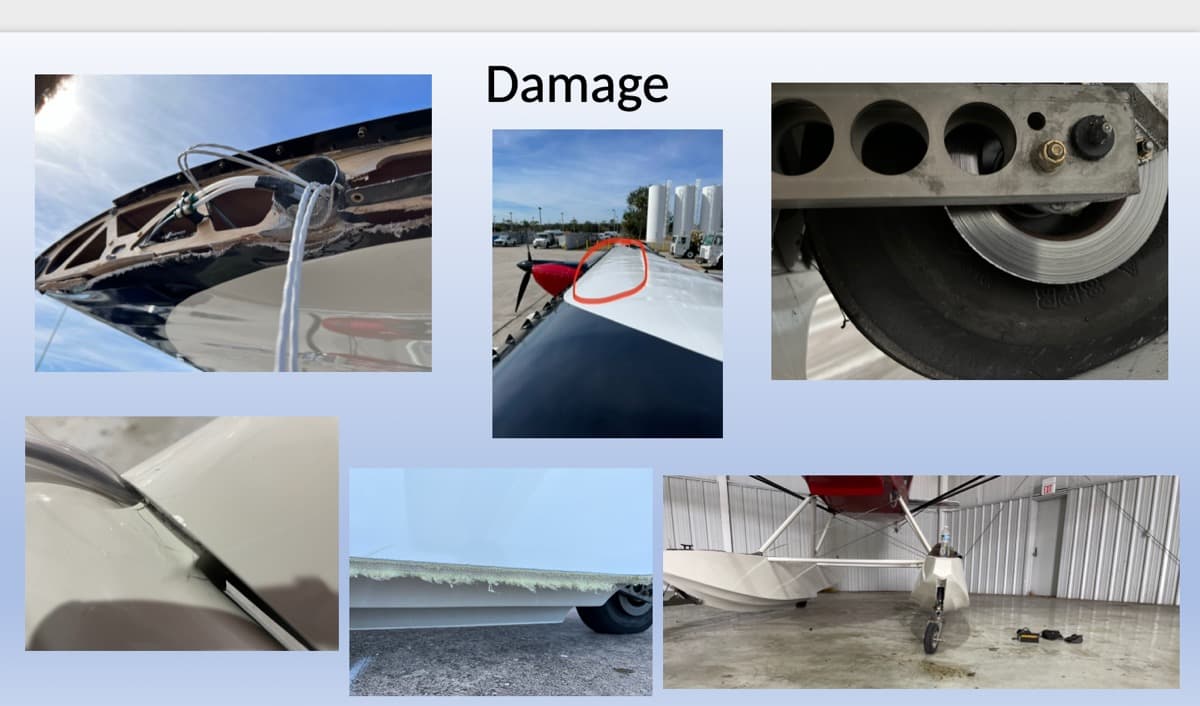
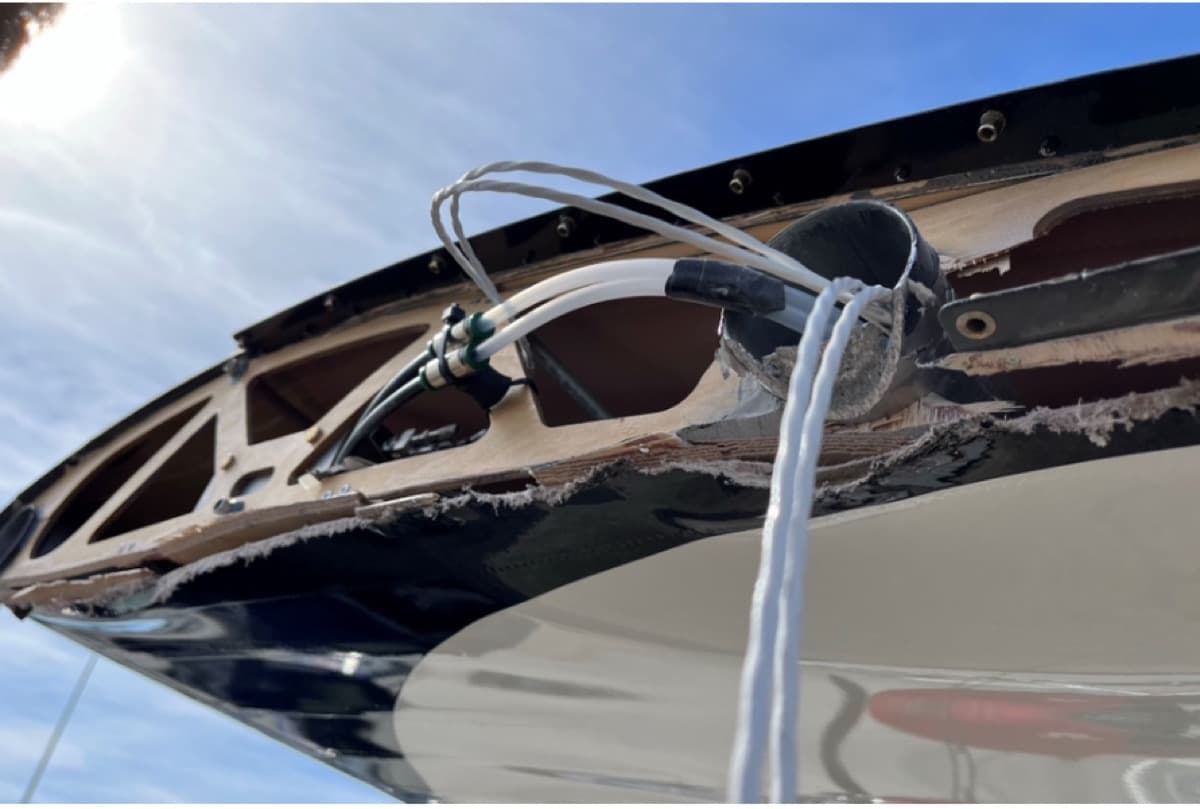
“The good news is that my Kitfox was back in the air within six months with new floats, a new left wing, new left flapperon, and new left wing strut,” he reports. “As a result of the investigation, everything was covered and I received reimbursement for rental aircraft during the downtime, as well as some loss-of-value compensation.”
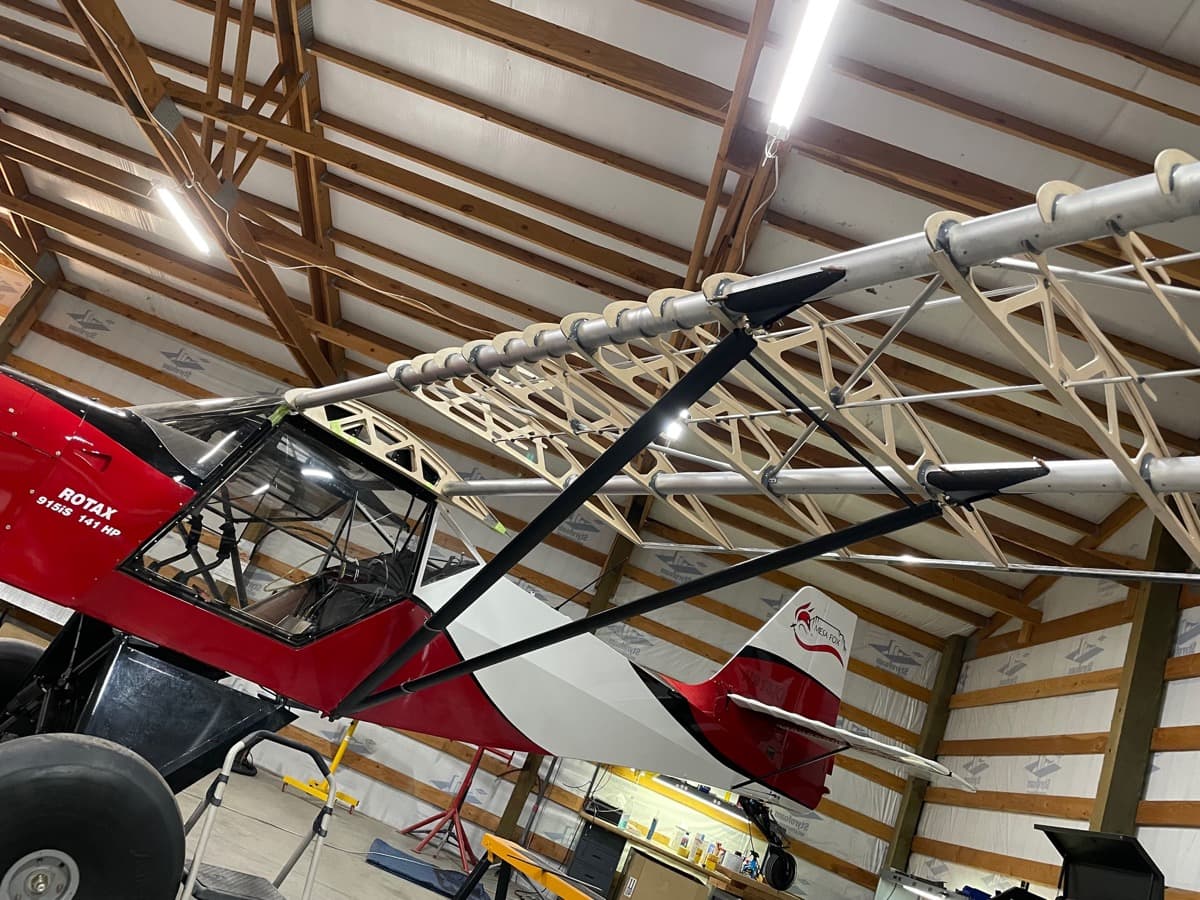
He credits his day job with that speed, along with Kitfox Aircraft and the repair center.
“Kitfox and the repair center had substantial backlogs, but both found a way to fit me into their workload without impacting other customers,” he explains. “Also, I am a project manager and that’s what I do for the clients I work with when they have projects they feel are going too slow. I talk to people all day saying ‘are you done yet?’ I spent a lot of time saying, ‘okay, what are we waiting on? What’s the next thing?’ And then calling that person and asking ‘what are we waiting on? What’s the next thing?’ If I had calculated my bill rate and the number of hours I spent, the settlement would have been much higher.”
And that is what other pilots in similar situations must do to ensure a similar outcome, he says. If you can’t handle it, find someone to help you, Joe advises.
“I’ve got 40 years of working with lawyers and contracts,” he says. “If you don’t have that kind of background, get somebody who does. There is a dance you have to know and I’m fortunate to know how to do it.”
Back In The Air
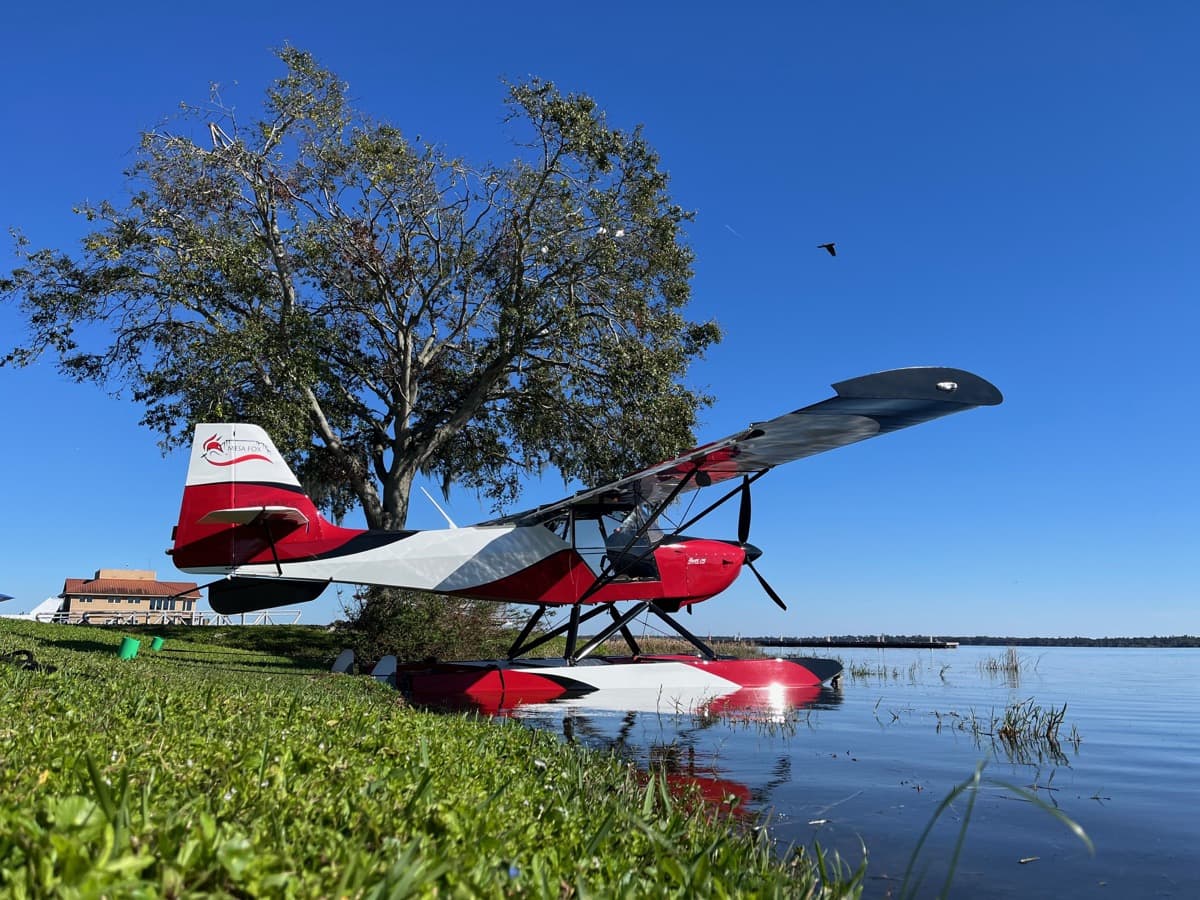
Back in the air, Joe reports he put another 500 hours on the Kitfox flying multiple coast-to-coast trips in the 18 months after getting his airplane back, including 114 landings in seven days to earn a jacket in the Fly Washington Passport Program. Many of those were water landings in lakes and rivers.
“The Kitfox amphib is far and away my favorite aircraft in over 33 years of general aviation hobby flying,” he says.
During those three decades, Joe was on a constant search to learn something new. That’s one reason he racked up an impressive list of certifications. “Not to make a living, but to learn more,” he explains.
That list includes ATP, commercial, and variety of flight instructor tickets, as well as an instrument rating, helicopter rating, seaplane rating, and more. He’s also an A&P.
Once he “ran out of certifications” to earn, he wondered “what’s next” for his aviation journey.
That’s when he discovered the Kitfox. He did a lot of research, including reading aviation magazines. He remembers an article by Dave Hirschman in the Aircraft Owners and Pilots Association magazine that contained a line “that really solidified the whole thing for me.”
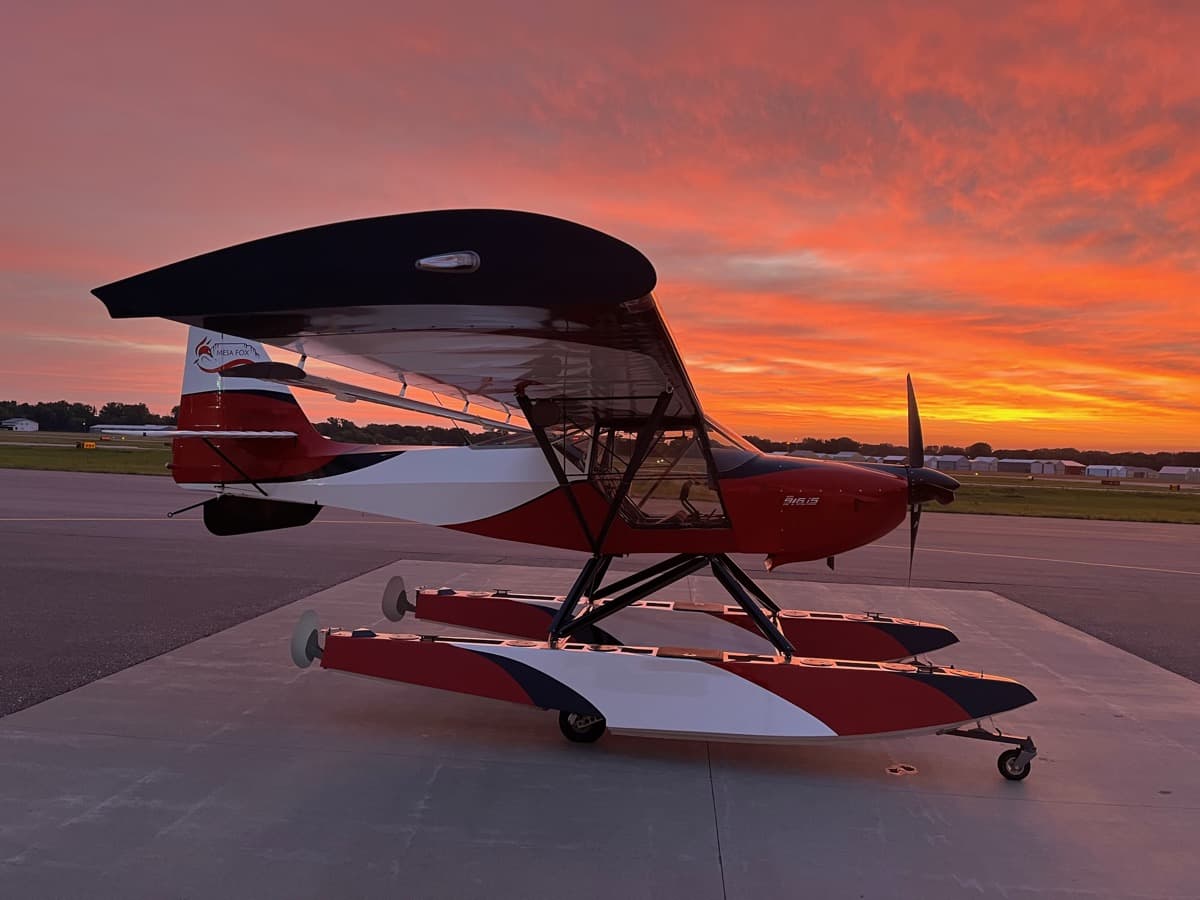
“The STi is an adventure machine, and that fits well with pilots seeking to explore beyond the bounds of paved runways, swank FBOs, and expensive hamburgers,” he recalls. “That really resonated. And then, of course, the floats just took it that much further.”
“Every flight is a new adventure,” he says.
Lessons Learned
Since the accident, Joe has shared his story in presentations to EAA chapters.
“I’m always happy to help others learn from my experience,” he says. “Beyond the aviation elements, I passed along to my EAA friends some of the complexities of working through the insurance claim process and my lessons learned. I’m happy to share with anyone who is interested.”
“It was a very educational experience,” he adds.
During his presentations, Joe presents a list of lessons he learned from his experience:
- Be prepared for the unexpected. “It doesn’t matter if I’m cleared to take off by a controller, I still look in both directions just to make sure no one’s approaching,” he says. “I’ve always done that, but I never thought something like this could happen.”
- Don’t make big decisions immediately after an accident.
- Resist the urge to “patch it up” and get your plane back to the safety of your hangar.
- Collect as much evidence as you can, including pictures, names, times, video, ATC audio, and anything else that will help your case.
- Be Practical: Save receipts.
- Stand up for yourself: Be your own advocate with the FAA, NTSB, and insurance companies. If you don’t have the fight in you, find someone else to be your advocate. As part of this, in an accident where you are not at fault, realize that you can be compensated for loss of use and other damages.
- Know your rights.
- Respect the seven stages of grief: Shock, denial, anger, bargaining, depression, reconstruction, and acceptance. Realize that you’re first going to be in shock, then mad, then grieve the loss of your airplane (even if it’s only temporary).

A few comments.
It is not a good idea for a high powered aircraft to do an engine run creating jet blast onto the ramp. Even if there are no aircraft on the ramp that would be departing, an aircraft could be arriving. or perhaps a vehicle will drive behind you. In the unlikely event that there is absolutely no alternative, to creating significant jet blast on the ramp, best to come up with a plan such as having marshallers to keep the blast area clear of traffic.
At a controlled airport, I would not be asking FBO employees where the run-up area is. I would ask ATC. They will likely have the most up to date information of where they would like this to be done.
A lesson that should be learned but was not in the lessons learned section is for pilots, especially in relatively small aircraft to make themselves aware of the potential threat from jet blast(or from large prop aircraft and helicopters). The jet pilots likely had their beacon on. Assuming that to be true, that was the main clue to the kitfox pilot of the danger. In addition, during the daytime, it is frequently quite obvious that a jet engine is running as you can see the heat signature. The kitfox pilot likely could have avoided the accident through observation of the jet aircraft and not passing behind it until gathering further information.
I want to give credit to the author, Ms. Wood, and for GAN for this follow-up article. As reported, Mr. Bechtold is a role model pilot who fell into the perfect storm situation. What I really appreciate about this article is that it truly uncovers the story behind the music. When we’re fortunate enough to learn from accident survivors, we should really dig into more than the NTSB report to understand what actually happened to get our fellow pilots into the situation in the first place. I am guilty myself of reading countless accident summaries and thinking that the pilot was so foolish and I would never do something similar. But if we can learn more about the details leading up to event, that’s where the real lessons exist. Well done GAN.