

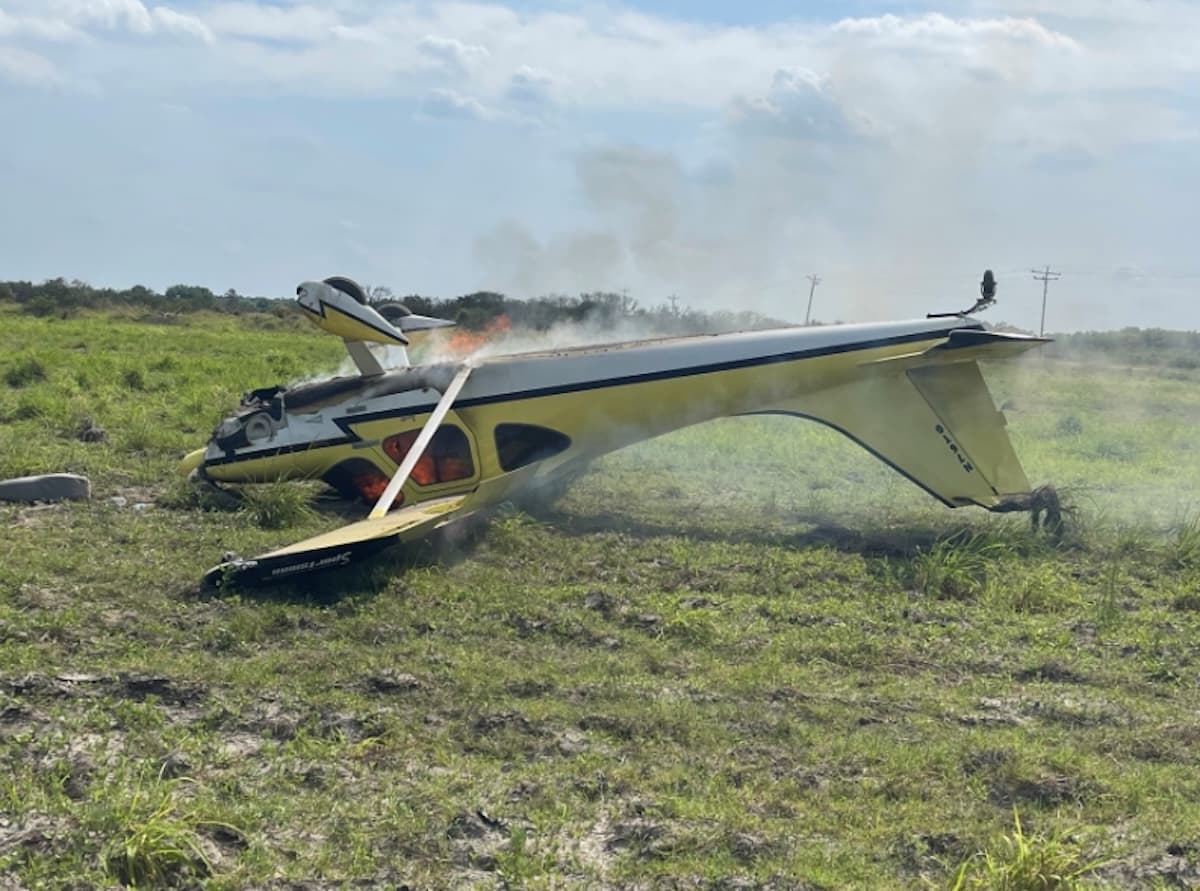
Earlier on the day of the accident, the pilot flew the Glasair Sportsman 2+2 uneventfully from Fly In Ranches Airport (FD25) in Vero Beach, Florida, to Lakeland Linder International Airport (KLAL) in Florida.
When he was attempting to depart KLAL, he told investigators the outside air temperature was very hot and that the airplane had idled for longer than he had previously experienced before being cleared to depart.
Shortly after takeoff, he smelled a strong “hot” or smoke smell. After conveying his concerns to air traffic control, he returned to the airport and landed. He subsequently taxied, parked the airplane, and shut down the engine. When he opened the engine cowling, he found that a “scat tube” near a header pipe was discolored. He then used a zip tie to secure the tube to an engine mount cross-member, after which he departed.
While en route, about 10 miles away from KLAL, smoke entered the cockpit and the engine noise changed. The engine then stopped producing power and he made a forced landing to a field near Fort Meade, Florida. During the landing, the landing gear dug into the ground and the airplane nosed over, coming to rest inverted.
The pilot and passenger were not injured and were able to get out of the airplane before it was destroyed by fire.
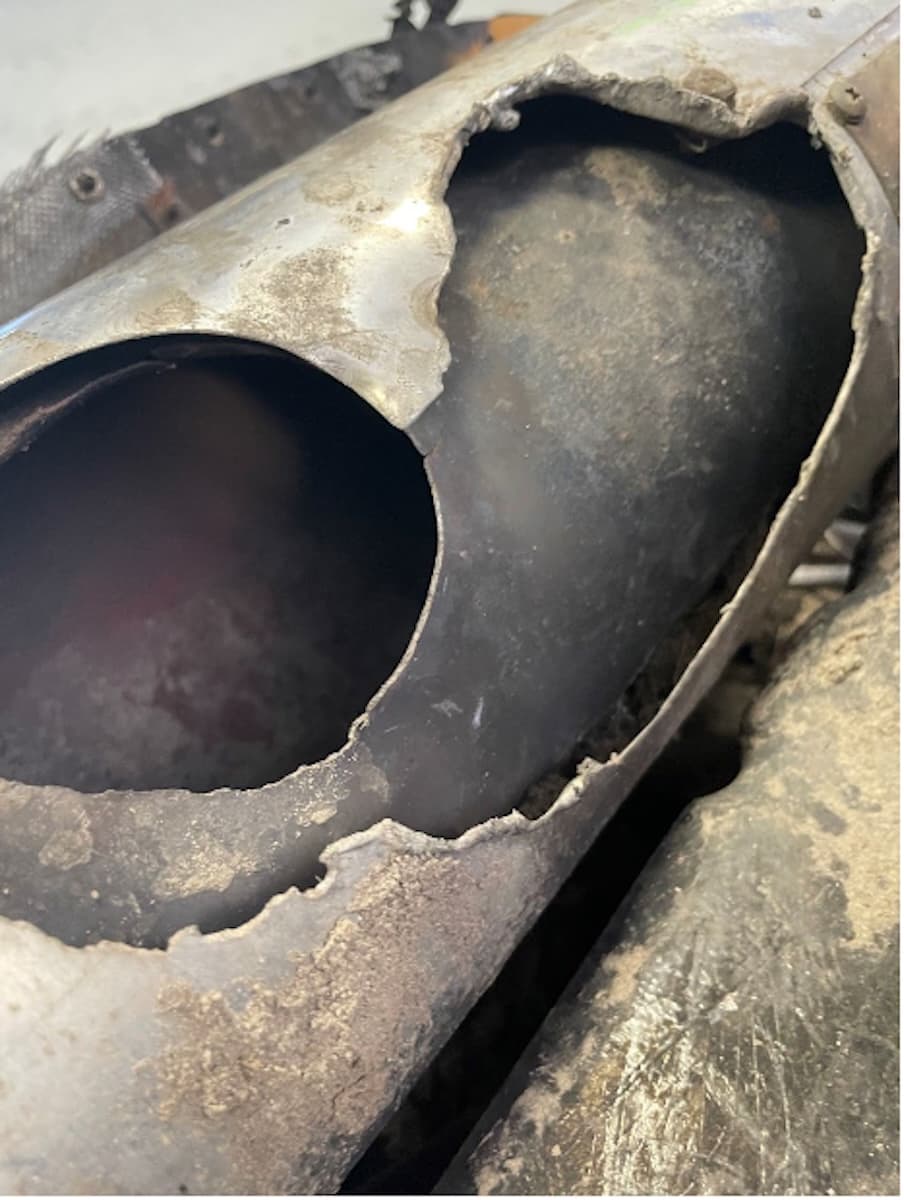
Post-accident examination of the wreckage by an FAA inspector revealed that the engine exhaust pipe was missing. There was evidence of the components in that area having been exposed to extremely high temperatures. Additionally, fire damage was noted on the lower cowling, engine fluid lines, carburetor, and other components beneath the engine.
Probable Cause: The pilot’s inadequate inspection of the airplane following an inflight smoke event, which resulted in separation of the exhaust pipe and hot exhaust igniting the engine cowling, and a subsequent loss of engine power.
To download the final report. Click here. This will trigger a PDF download to your device.
This March 2024 accident report is provided by the National Transportation Safety Board. Published as an educational tool, it is intended to help pilots learn from the misfortunes of others.
I think you can bet that a loose or missing SCAT hose didn’t cause this fire. It appears to me that the exhaust pipe had been cracked at the muffler, letting hot exhaust gas impinge on the cowling and into the heater muff, exacerbating the problem. At every 100 hour, annual or condition inspection, these muffs need to be removed to inspect the muffler in its entirety.
Henry,
Did you actually look at the exhaust or are you just guessing? Does nothing toward finding the actual issue to help others avoid them. Had the exact plane catch on fire recently and inspected exhaust carefully after and it was completely intact.
Holy Smoke! Chap’s lucky to be alive. Should’ve used duct tape.
Duct tape melts at 200 degrees. A proper preflight should have caught this. How this pilot was not gagging on CO or having hydrocarbon headaches is beyond me, but he clearly doesn’t check the exhaust pipe for integrity before flight. This issue did not just happen of this flight, it had been present for a while.
I’d suspect that he ran the engine excessively lean.
Wait…duct tape doesn’t fix everything?