

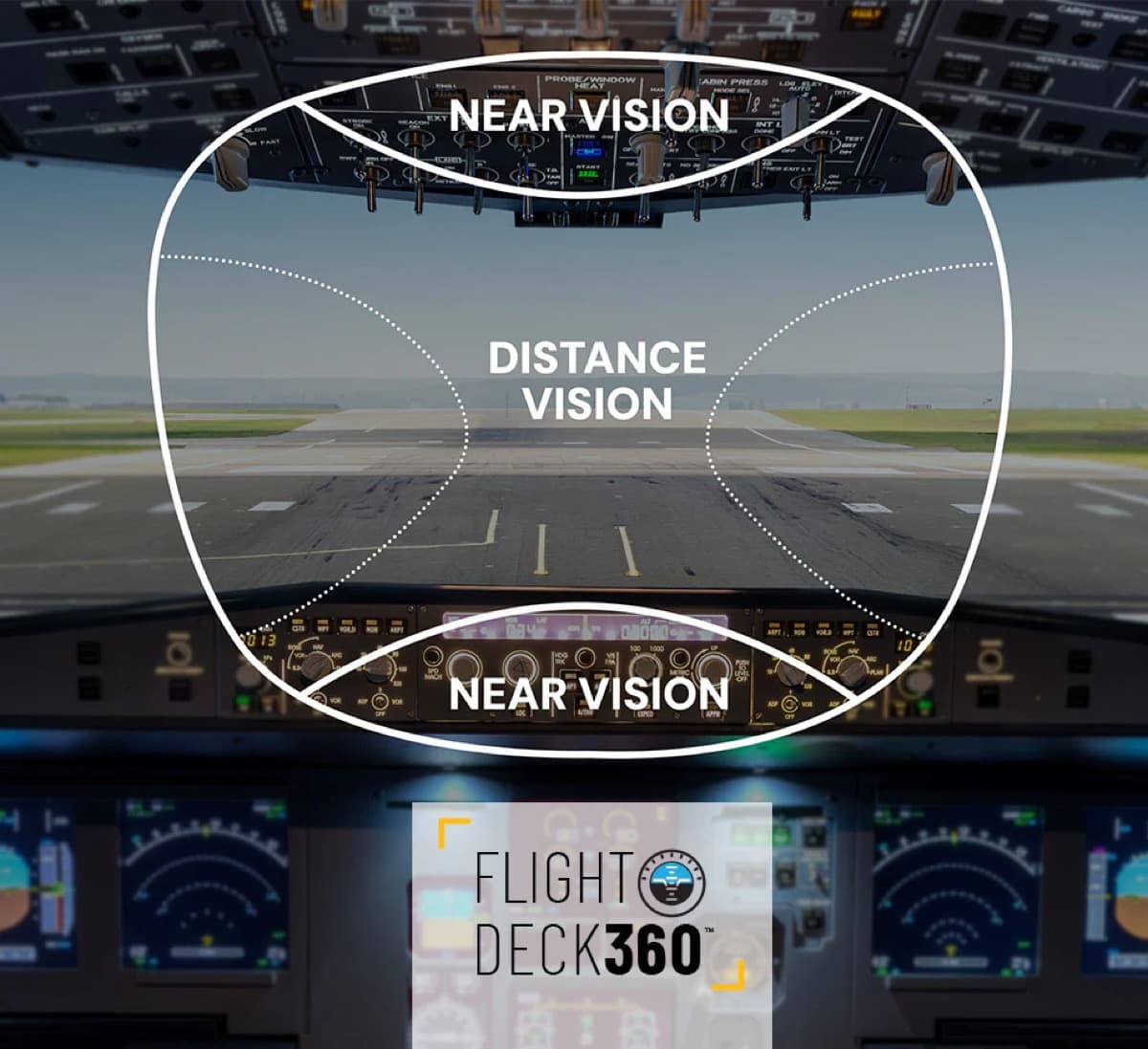
AUSTIN, Texas — Flying Eyes Optics has introduced the FlightDeck 360, prescription lens technology designed specifically for pilots.
The FlightDeck 360 provides near-vision correction at both the top and bottom of the lens, with distance correction through the center. This specific configuration allows pilots to scan overhead panels, primary flight displays, and the horizon without the fatiguing head-tilting and neck strain required by standard progressive lenses, according to company officials.
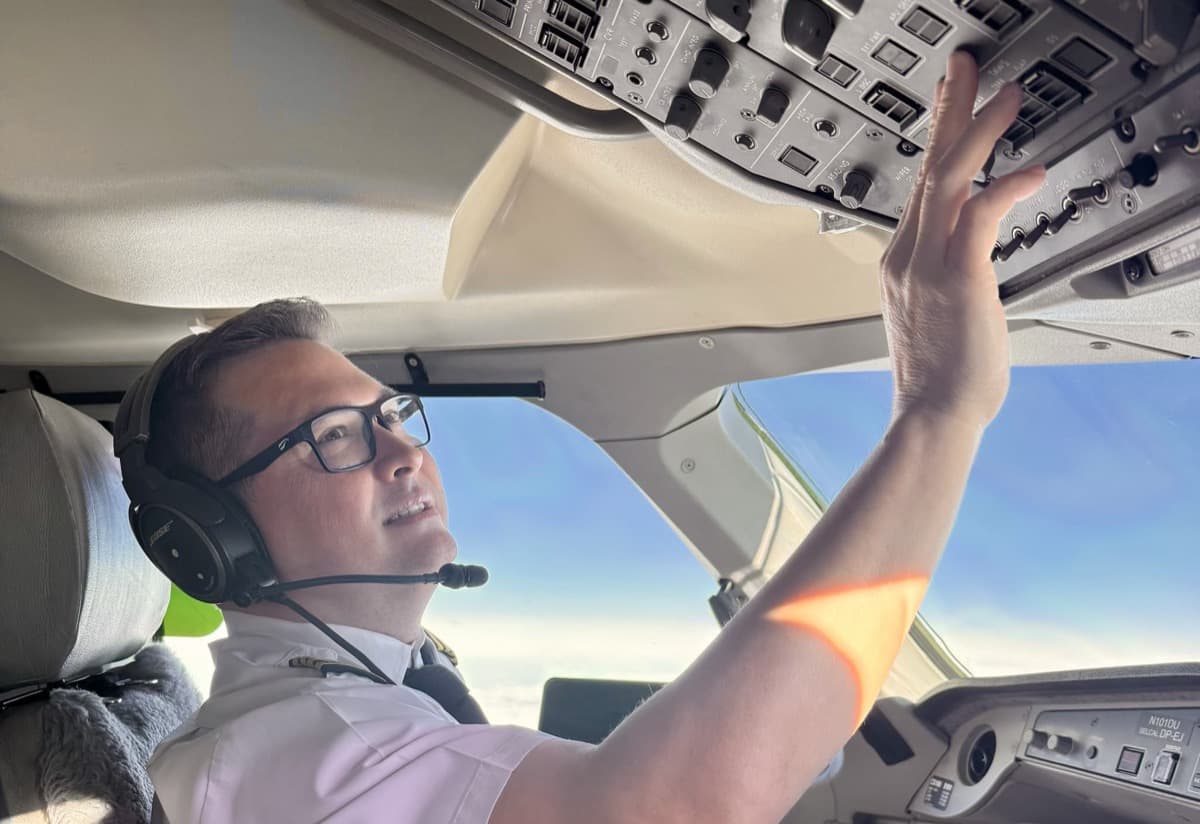
Historically, “double-segment” lenses were only available in heavy, fragile mineral glass, featuring unsightly lines and limited focal ranges. Flying Eyes has modernized this concept using ultra-lightweight, high-performance polymers, including Trivex and High-Index materials.
“Standard progressives are designed for life on the ground — looking down at a phone and straight ahead at the road. But pilots look up at overhead panels just as often as they look down at charts,” said Dean Siracusa, Founder of Flying Eyes Optics. “By utilizing Trivex and High-Index polymers, we’ve created a lens that is significantly lighter and more impact-resistant than old-school glass, while offering the smooth visual transitions of a true digital progressive.”
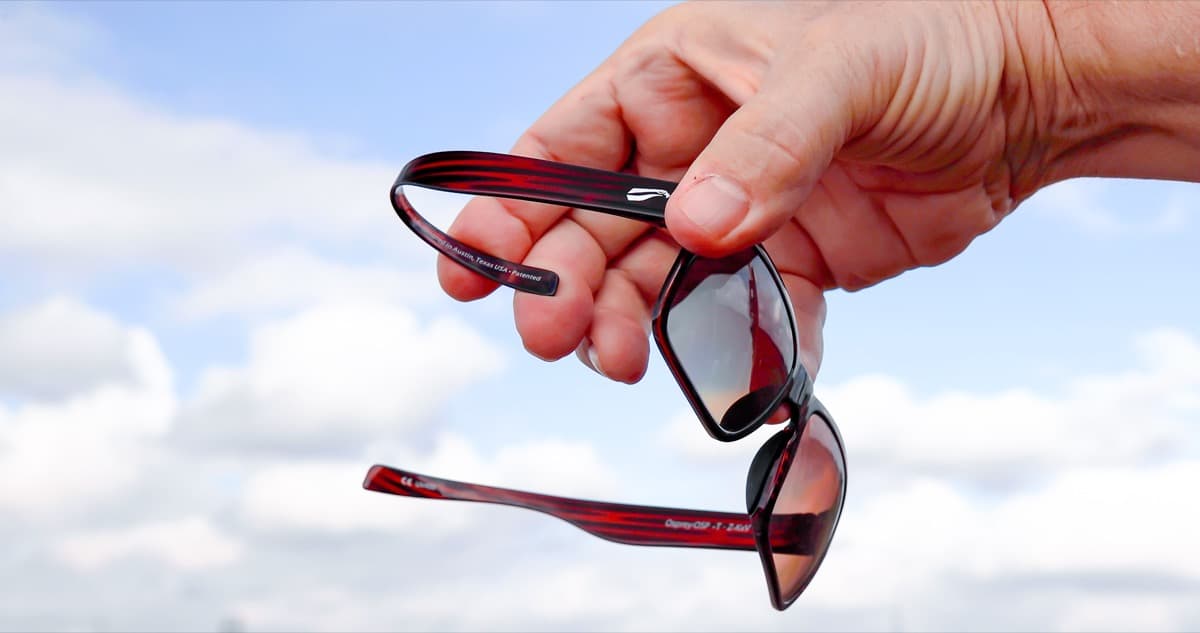
The FlightDeck 360 lenses are available via professional consultation to ensure precise segment placement tailored to each pilot’s specific cockpit environment.
For more information: FlyingEyesOptics.com
Interesting! But what is the correction power in the areas with the dotted lines? I’m assuming it is just clear glass, is that correct? I don’t even see that area mentioned in the article.
My father-in-law was a pharmacist. In the 1970’s he had a set of lenses like this made because he had trouble reading medication labels on tall shelves.