


As World War II drew to a close, most military pilots were eager to hang up their helmets and goggles, return to their families, and get on with a ground-bound life. Others sought their fortunes in peacetime skies. Two of these, celebrated aces Don Gentile (Gen-TILL-ee) and John Godfrey, landed in Fort Worth, Texas, promoting the new Globe Swift.
As historian of the Swift Museum Foundation, I was cataloging original issues of The Globe Beam magazine and came across a story and photos of Gentile and Godfrey. That led me to finding an advertising brochure and digging deeper into their story.
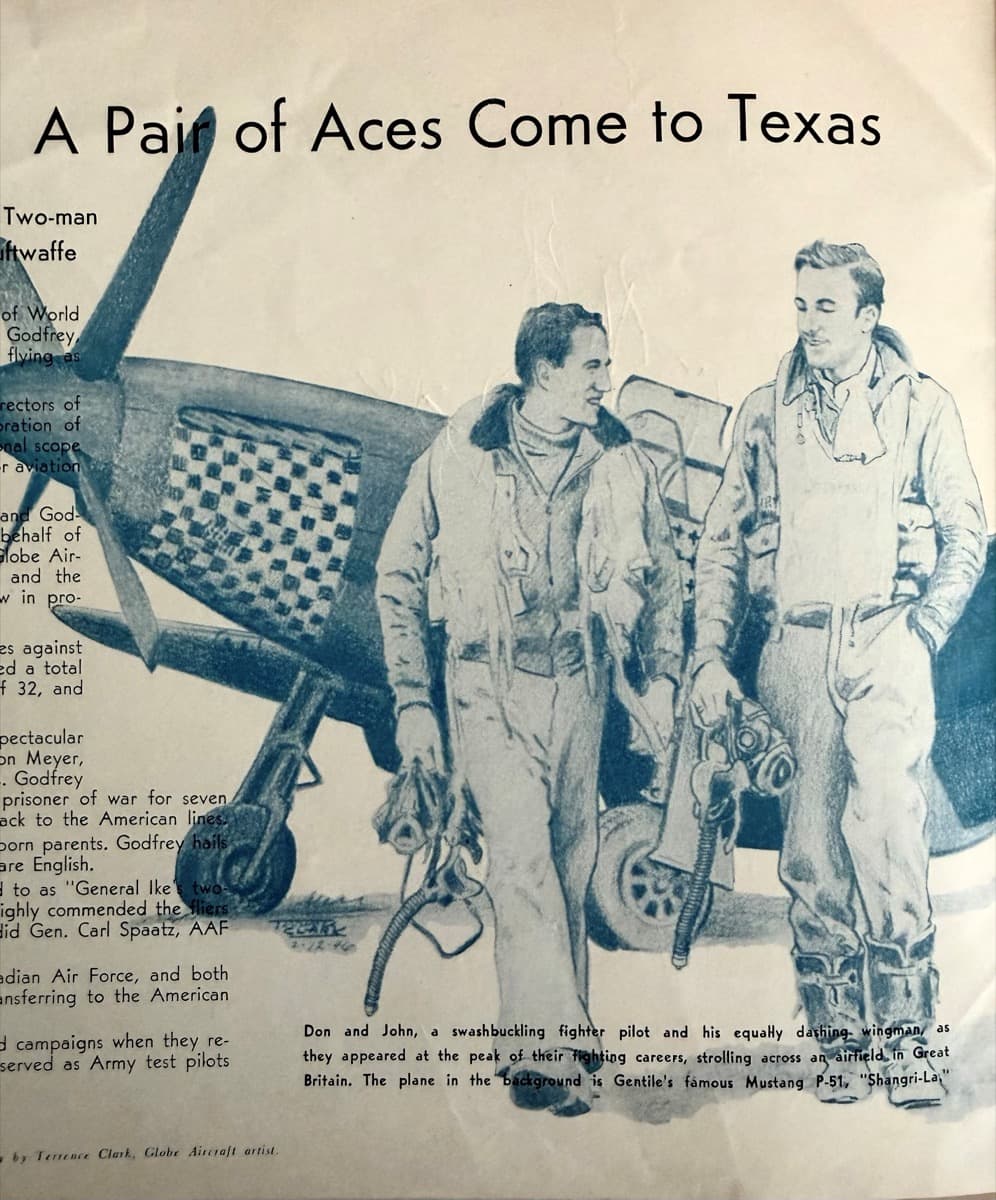
Their story begins in a dogfight over western Europe.
“The theory of fight between fighter planes is very simple. You see the enemy, grab for his coat-tails, hold on to them, put your guns up against his back pocket and press the trigger. But while you are reaching for his coattails, he is reaching for yours.
“You make your grab and he twirls out of the way and into position to make his grab. Whereupon you twirl with a twist that will put you in a fair way to grab him and so on and so on — grab, twirl, twist, grab, twirl, twist — sometimes for quite a long time — for 10 minutes or maybe 15 minutes — until at last somebody has grabbed hold for good and the other fellow starts to die.”
That’s how 8th Air Force ace, Captain Don Gentile, described fighter combat over Germany in April 1944. By then, the P-51 pilot had come a long way from Piqua, Ohio, where, at 16, he had entertained his neighbors from the cockpit of an Aerosport biplane.
In an interview with the Dayton Daily News, he recalled, “On Saturday afternoons I would beat up the town in my airplane and the cops chased me. I could see their cars running after me. I’d raise the hair on everybody’s head with my propeller. I’d blow in the curtains on Betty Levering’s house (his girlfriend) and make the geraniums in Mary Dill’s front yard give up the petals.”
Gentile and his frequent wingman, Captain Johnny Godfrey, became known as “General Ike’s two-man air force.”
“I picked the best man I could get to fly on my wing — Johnny Godfrey of Woonsocket, R.I., who doesn’t like Germans,” Gentile stated. “They killed his brother, Reggie, at sea, and the name Johnny painted on his plane is ‘Reggie’s Reply.’ He means it, too.”
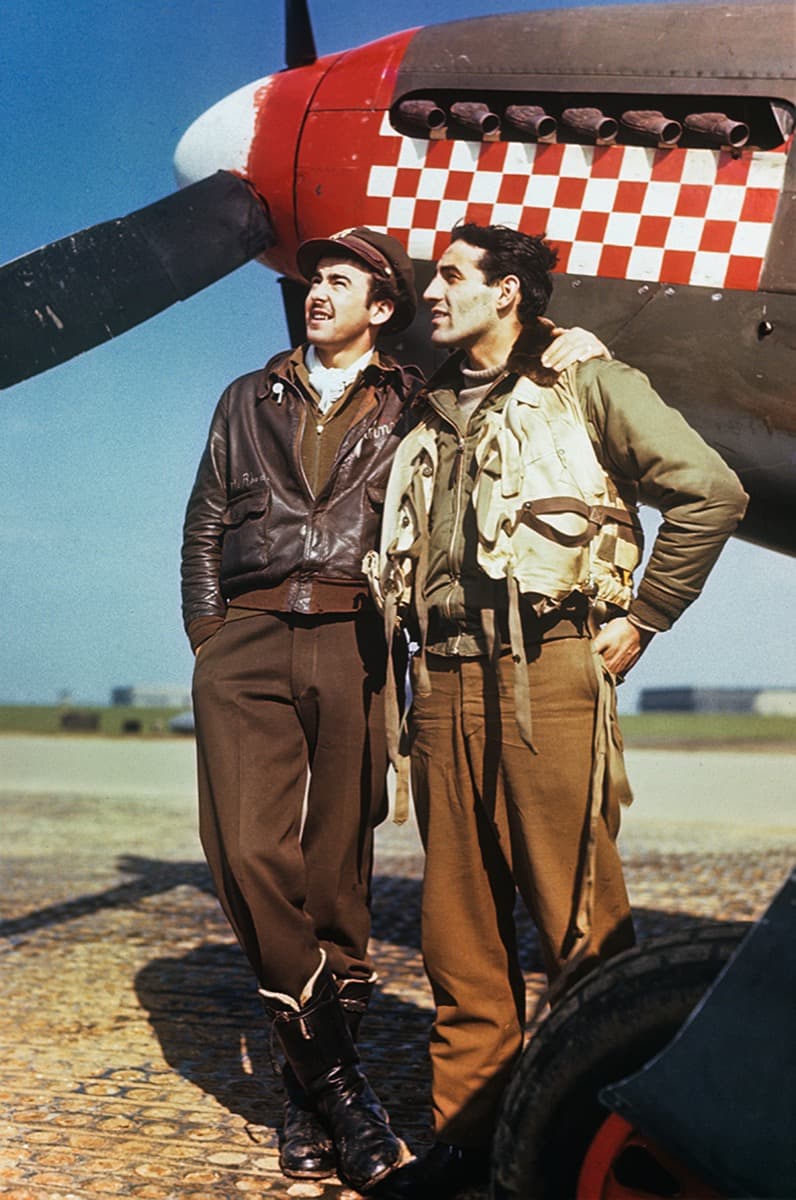
An April 1944 news dispatch described their tactics: Godfrey flies behind him, either to the right or left. Gentile keeps tabs on him by asking every few seconds over the radio phone: “Are you still with me, Johnny? Are you still with me, Johnny?”
“You break to the starboard,” Gentile will call out, “and I’ll hesitate and if he follows you around I’ll follow him and we’ll have him right between us.”
By war’s end, Gentile, flying his P-51 “Shangri-La,” was credited with destroying 32 enemy aircraft and Godfrey 37. The victories came with a cost. On Aug. 24, 1944, Godfrey was accidentally shot down by a wingman and captured by the Germans. He later escaped from Stalag Luft III shortly before the end of the war.
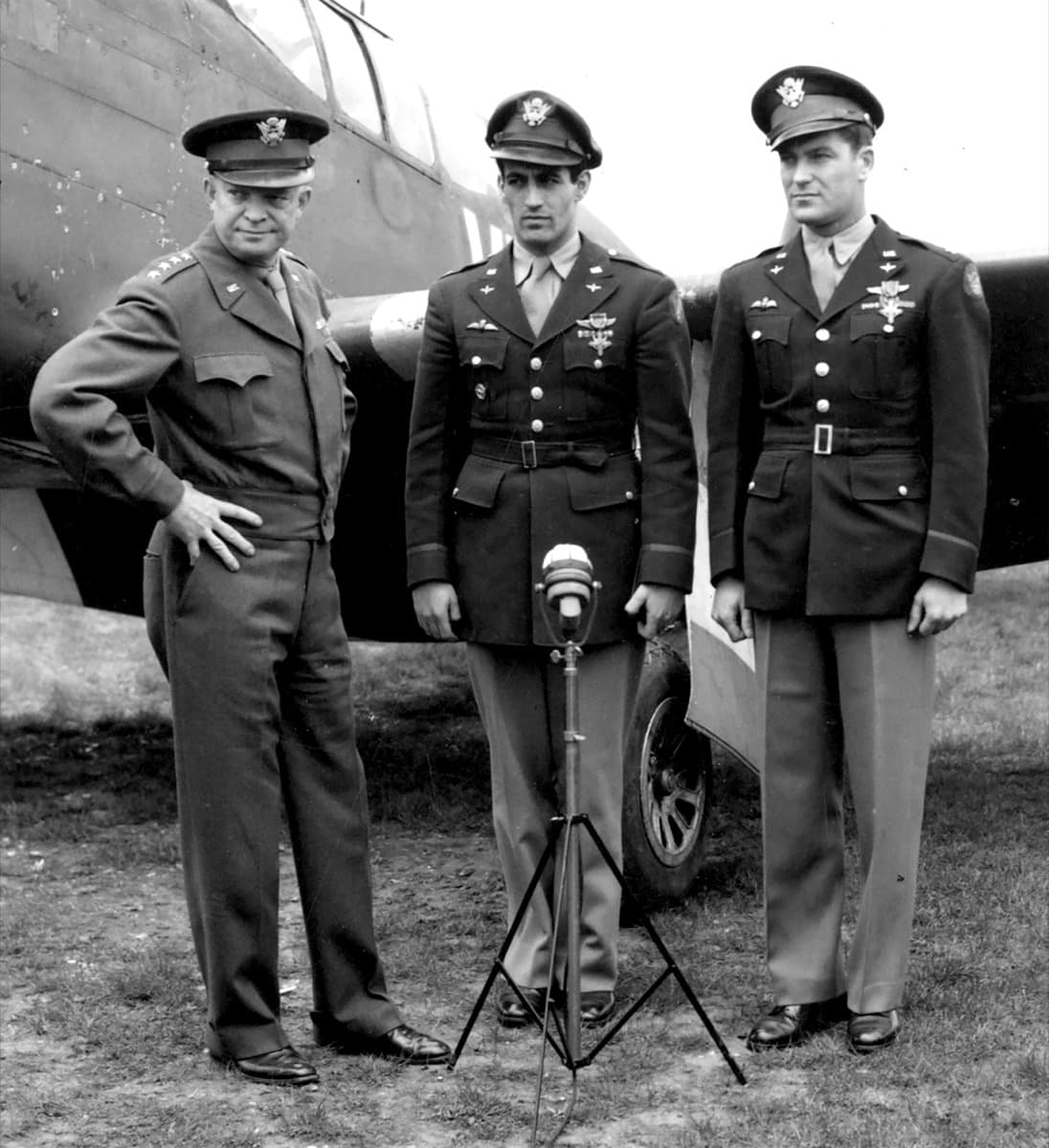
After the war, Gentile and Godfrey toured on war bond drives and served as test pilots before leaving the service.
Knowing a good team when he saw them, Globe Aircraft President John Kennedy recruited the duo as ambassadors for the “New All-Metal Swift.”
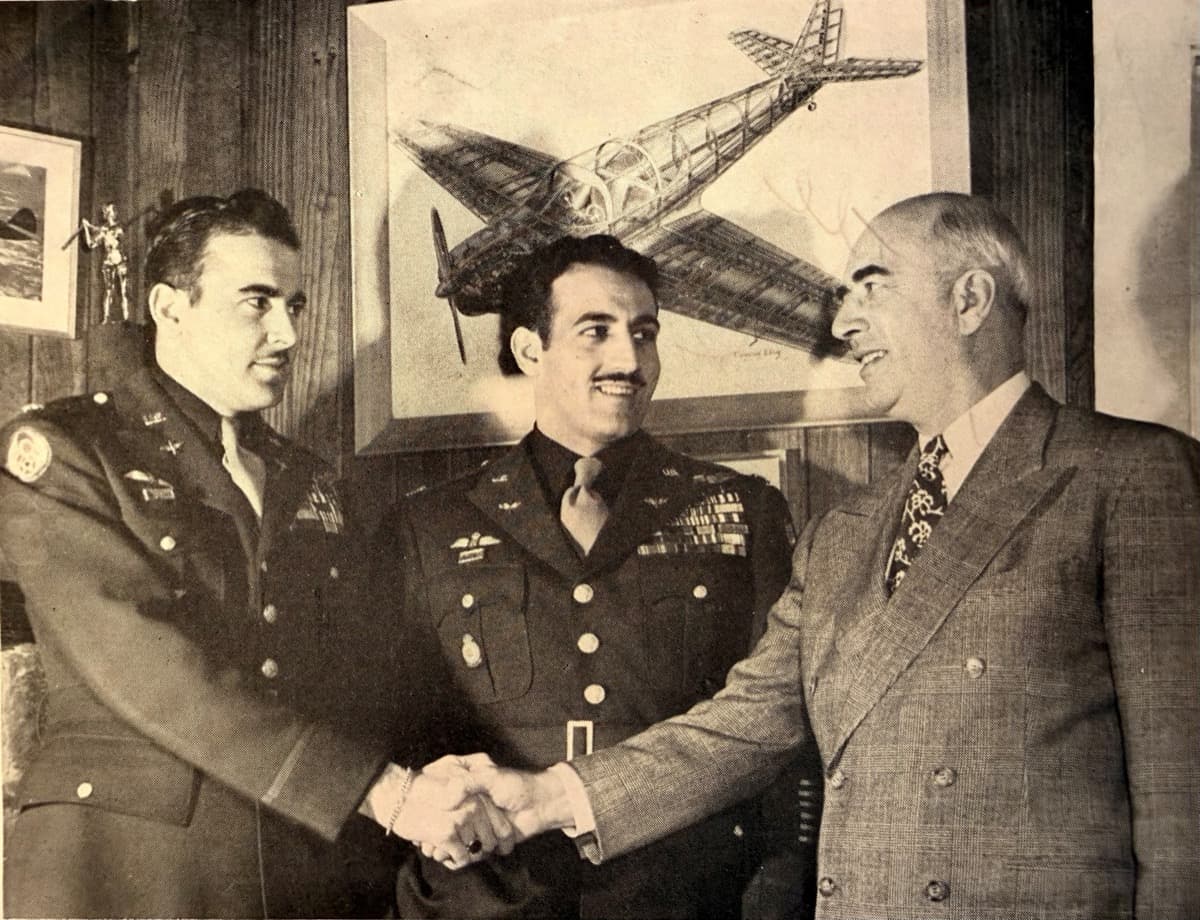
The Spring 1946 issue of Globe’s in-house magazine, The Globe Beam, introduced the pair as new division directors of sales and service. As such, they toured the nation as representatives of Globe Aircraft and ambassadors of aviation in general.
The Beam described their introduction to Texas: “Gentile and Godfrey were given a typical Western welcome as guests at the Fort Worth Club of Amon Carter, who presented them with Shady Oak hats, noted symbols of hospitality where the West begins.”
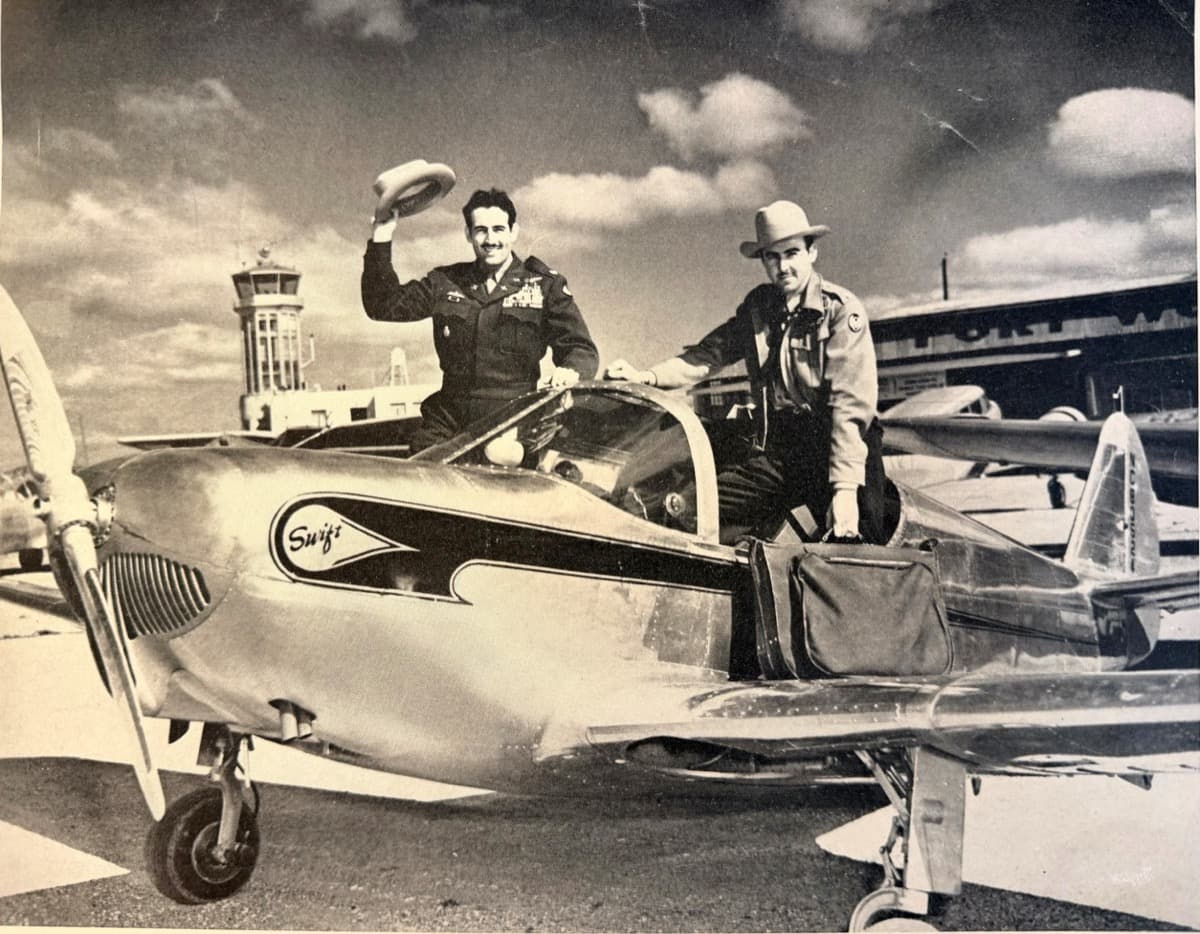
The pair of aces spoke at the University of Texas and Texas A&M before appearing at the Southwestern Aviation Exposition in Fort Worth.
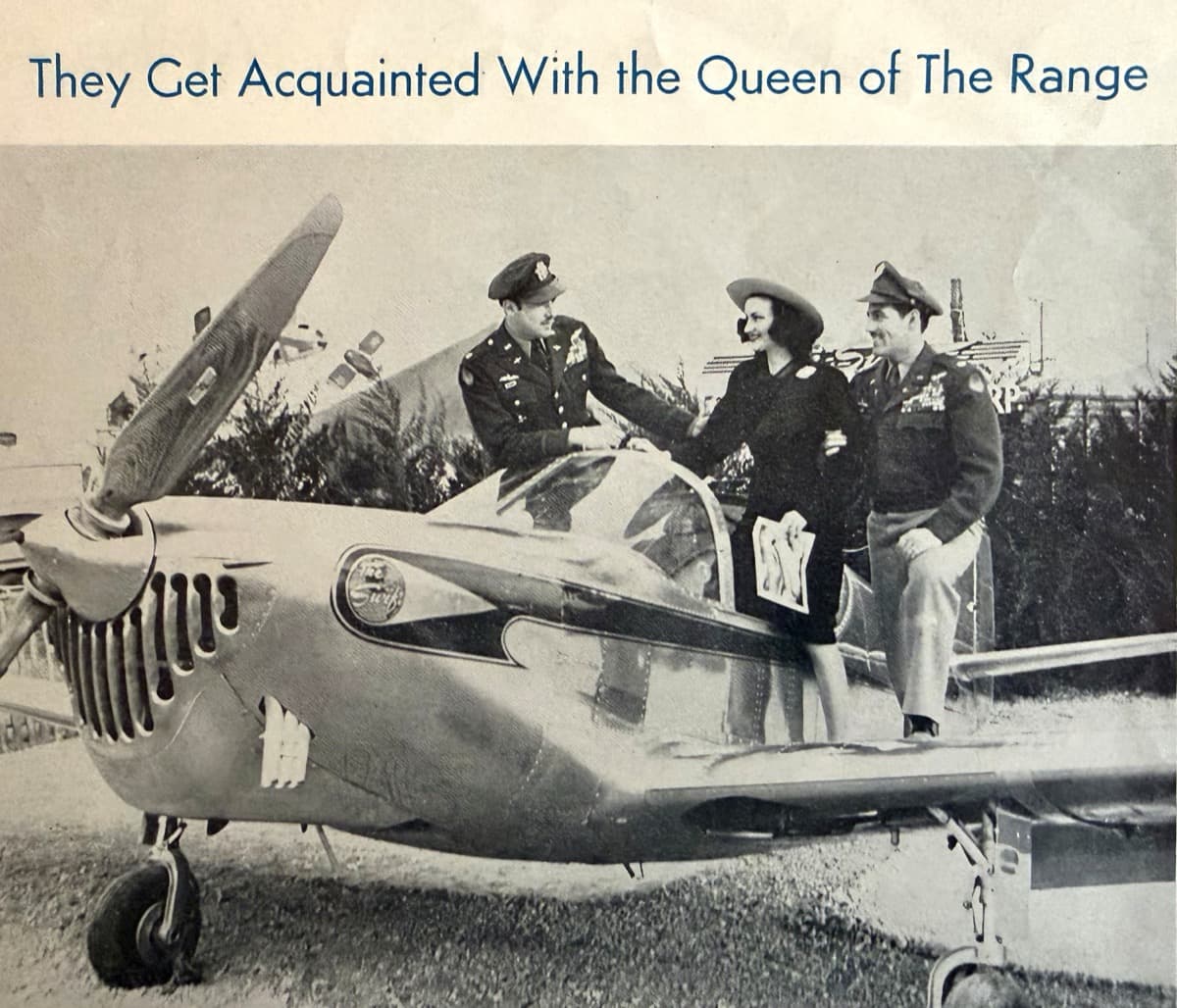
They then departed for the Midwest, where they showcased the Swift at the Cleveland National Aircraft Show, the Chicago Sports and Travel Show, the National Aviation Show in New York, and the Northwest Annual Airshow in Minneapolis.
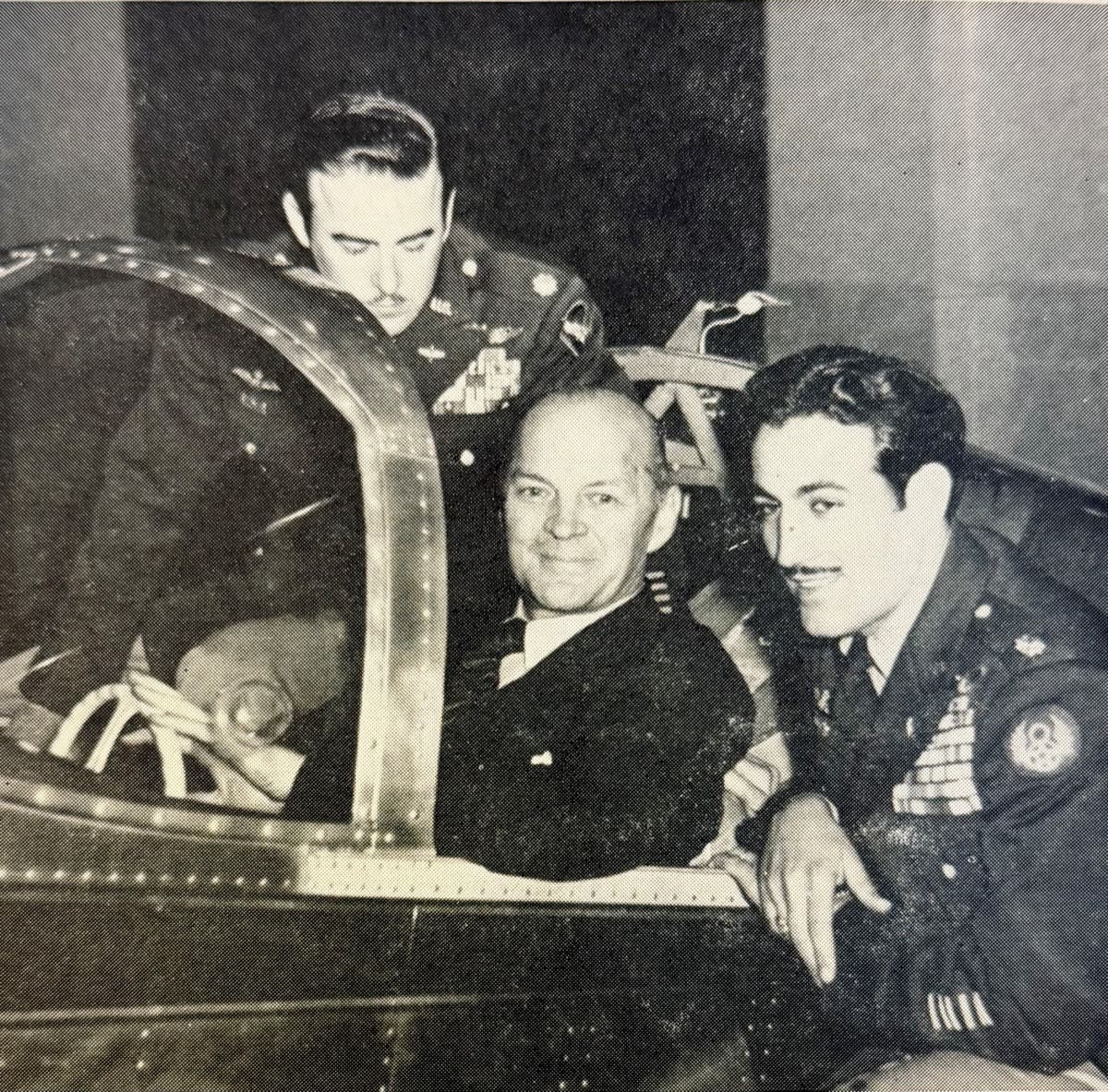
Little is known about the pair’s later activities at Globe, but we can surmise that, as business began to falter, they left the company for other endeavors.
Godfrey served in the Rhode Island Senate. Elected in 1952, he served until 1954, when he moved his family to Maine. He died on June 12, 1958, of Amyotrophic Lateral Sclerosis (ALS) or Lou Gehrig’s disease. His autobiography, “The Look of Eagles,” was written with Thomas D. White and published posthumously in 1958.
Gentile returned to the Air Force as a test pilot at Wright Field in Ohio. On Jan. 28, 1951, he was killed in the crash of a Lockheed T-33A-1 Shooting Star in Forestville, Maryland, leaving behind his wife Isabell, and sons Don Jr., Joseph, and Pasquale.
In the Swift Museum Foundation historical archives, a torn and yellowed page from the Fort Worth Star-Telegram bears the headline, “Don Gentile, 30, Ace Pilot, and Passenger Are Killed.”
It begins, “Capt. Don S. Gentile, 30, World War II ace and veteran of 182 combat missions, died Sunday when his jet trainer crashed. Officials said he was on a routine flight.”
To the right of the headline is a 1950 photo of a beaming Gentile with his wife and newborn son, Pasquale.
Jim Roberts, a recipient of the FAA Wright Brothers Master Pilot Award, enjoyed a 45-year career in aviation. His favorite pastimes are photography, writing, travel with his wife, and flying their 1946 Globe GC-1B Swift.

They were two really super guys! Both of them must have been very skilled pilots and being involved with the Swift program must have been a real treat for them! I really loved that sweet little airplane and came very close to buying one.
Very interesting piece of history!
I was once told by a Globe Swift owner that the Swift’s empennage is an exact duplicate of the P-47’s, only scaled down in size. If you look at the tail section of a Globe Swift, it does look remarkably like a P-47.
P-40 is the one you’re thinking of. The Swift designer, Bud Knox, was an engineer on the P-40 design team.
Great research and interesting story. Thanks