

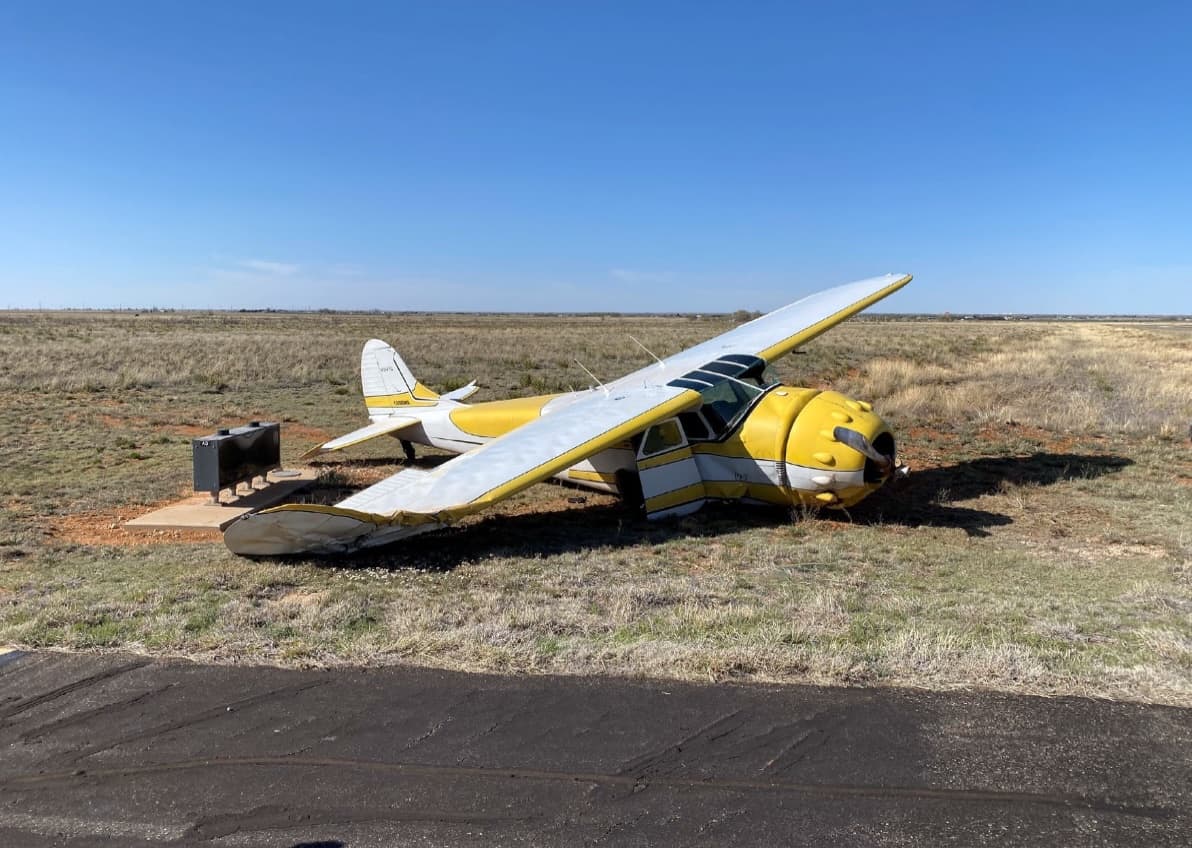
According to the Cessna 195B pilot, he landed at Portales Municipal Airport (KPRZ) in New Mexico to refuel during a cross-country flight.
After refueling, he proceeded to take off on Runway 19 with controls applied to counter the left crosswind. He reported that the takeoff roll was normal, and the airplane remained on the runway centerline.
He told investigators that just before the airplane became airborne, it veered to the right. When the airplane exited the right side of the runway he brought the throttle to idle and applied maximum braking.
A pilot-rated witness observed the pilot refuel the airplane and believed the pilot topped off the fuel. He also stated there was “a lot” of baggage in the airplane, making the airplane heavy with the three occupants.
He and another witness observed the airplane taxi to the departure runway and observed most of the takeoff and the accident. The witness told the investigators the windsock indicated there was a quartering tailwind gusting to about 20 knots, and he and another witness commented to each other that the pilot should not takeoff from Runway 19 because of the tailwind.
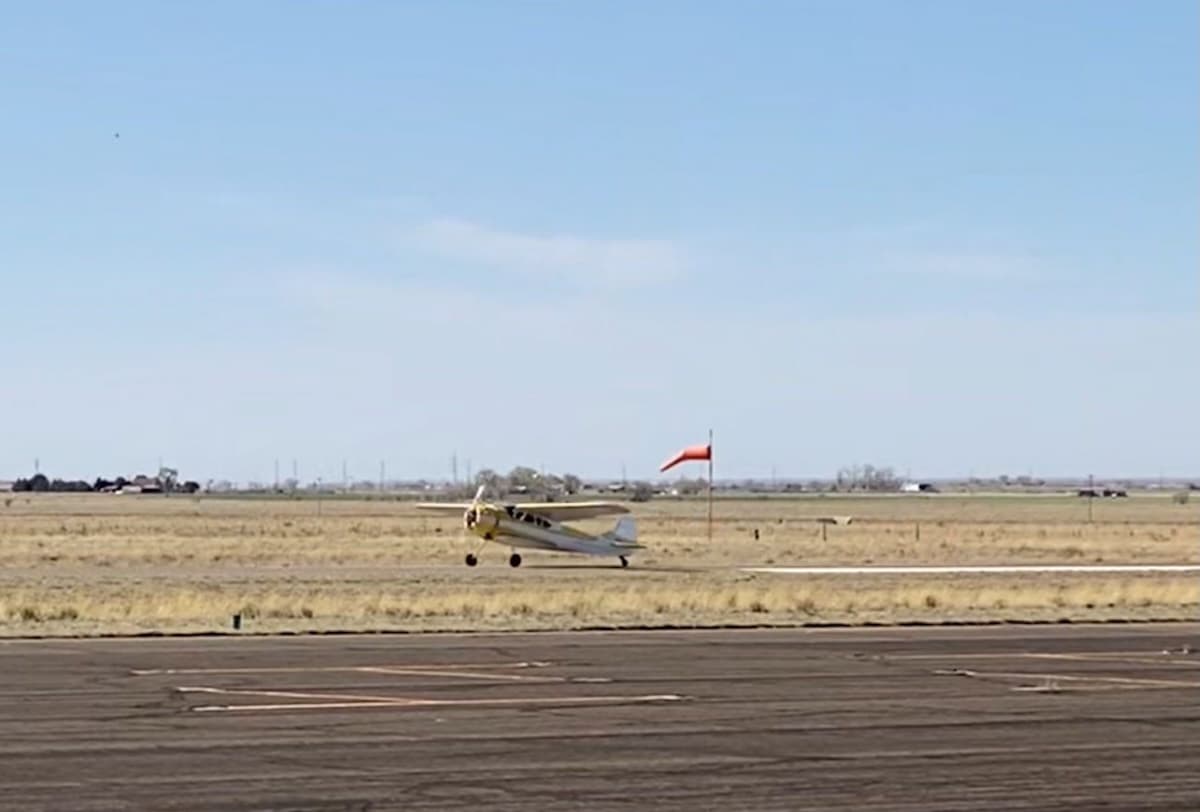
He added the elevator was “pinned full aft” in the full trailing edge up position during the takeoff
The second witness captured most of the airplane’s takeoff roll and the accident on video. The video matches the witnesses’ recollection of events. The airplane can be seen accelerating, and the engine can be heard operating at a high power setting for about nine seconds before the airplane goes out of sight behind large fuel tanks located between the witnesses and the runway. The elevator position can be seen in the trailing edge up position as the airplane goes out of sight behind the fuel tanks. The engine can be heard until the airplane reappears from behind the fuel tanks about three seconds later.
When the airplane reappears, it is in a wings-level, nose-high attitude about five feet above the ground. The engine RPM can be heard rapidly decreasing as the airplane comes into view and descends. The left wing dropped momentarily before the wings leveled. The airplane then made a hard landing off the right side of the runway. The airplane bounced once and then nosed into the ground before stopping upright. The right main landing gear collapsed and the right wing struck the ground, resulting in substantial damage.
The pilot and two passengers received minor injuries in the crash.
An FAA inspector noted the airplane’s ailerons did not move together during an on-scene examination of the airplane. After the airplane was lifted off the ground, wreckage recovery personnel verified flight control continuity and proper flight control movement before disassembling the airplane for transport to a repair facility. Personnel at the repair facility also examined the disassembled airplane and found no anomalies with the flight control system.
According to the automated weather report, the wind was from 120° at 12 knots. The windsock, as seen in the witness video, corresponded to the witnessed left quartering tailwind.
Probable Cause: The pilot’s decision to take off with a quartering tailwind and his subsequent failure to maintain directional control. Contributing to the accident was the pilot’s improper elevator control inputs during takeoff.
To download the final report. Click here. This will trigger a PDF download to your device.
This April 2024 accident report is provided by the National Transportation Safety Board. Published as an educational tool, it is intended to help pilots learn from the misfortunes of others.
Don’t know the winds, or equipment here, however we have chosen closest runway purposely MANY times because winds would not allow a LONG taxxi due to weak tailwheel steering, older brakes were small and over heat, or high ambient ground temperature the engine oil would over heat or all three.
Our Cessna 190/5 had a 7 cyl 240 continental with no oil cooler. Also the ailerons were anemicaly small and not a lot of help with directional control on the ground, but would definitely be a causal issue when used improperly.
60yr TW CFI St louis
P.S. Ailerons rule.
Looks repairable.
Wind from 120 degrees , take off from runway 19, would translate into tailwind?
Was this a case of expectation bias – maybe he followed the information from the ASOS (wind 120 degrees) but didn’t check the windsock. And why aft elevator – that’s similar to what we see in other reports where the airplane is heavy or the temperature high and the pilot tries to increase climb performance. But it usually leads to a stall.
Three minutes to failure. That’s about how long it may have taken to go to runway 01.
Article says reported wind was 120 degrees. Article speculated perhaps he did not check the windsock. Visibility out a C-190/195 is somewhat limited. He may have looked for a windsock and not seen one.
It is sad to see a classic aircraft damaged by a stupid pilot trick….
Was he too lazy or in a hurry to not taxi to the other end and take off on rwy 01 ?