

It was going to be a rough flight.
I knew this fact before I even took off, which to this day makes me wonder about the wisdom of launching that morning. The PAVE checklist begins with the Pilot, and assessing the pilot’s state with the IMSAFE acronym, which ends with E for Emotion. And my emotions were all over the place, to say the least.
Later that day I was going to attend a memorial service for my flight instructor, who had recently passed. I had spent a couple years doing early morning sunrise flights with him, until an untimely CFIT accident abruptly ended that routine. I would have the opportunity to say some words at this event in his memory, and I thought I could get inspiration on what to say, hear his voice in my head, if I took one of those sunrise flights.
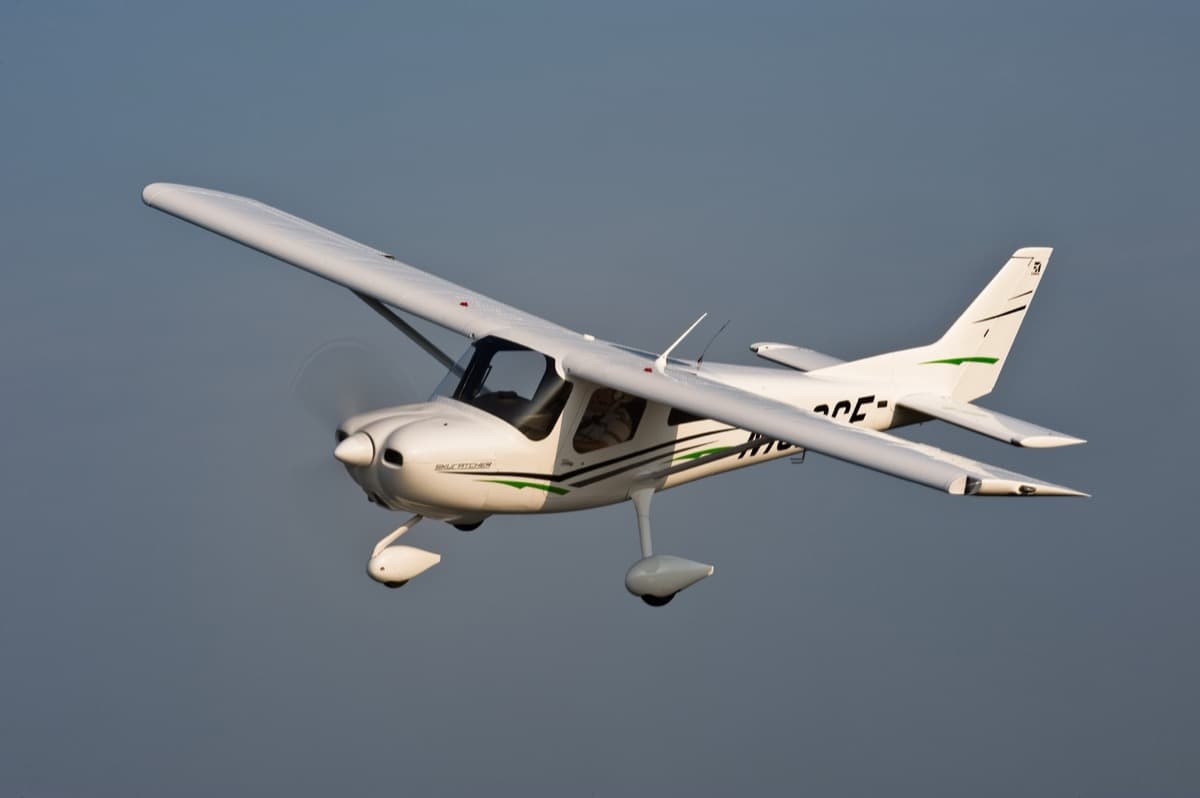
I was flying the Oregon State Flying Club’s recently acquired Cessna Skycatcher C162. The Skycatcher was Cessna’s ill-fated attempt to return to the instructional two-place market, and the flying club thought updating its fleet of tired 152s might be a good move.
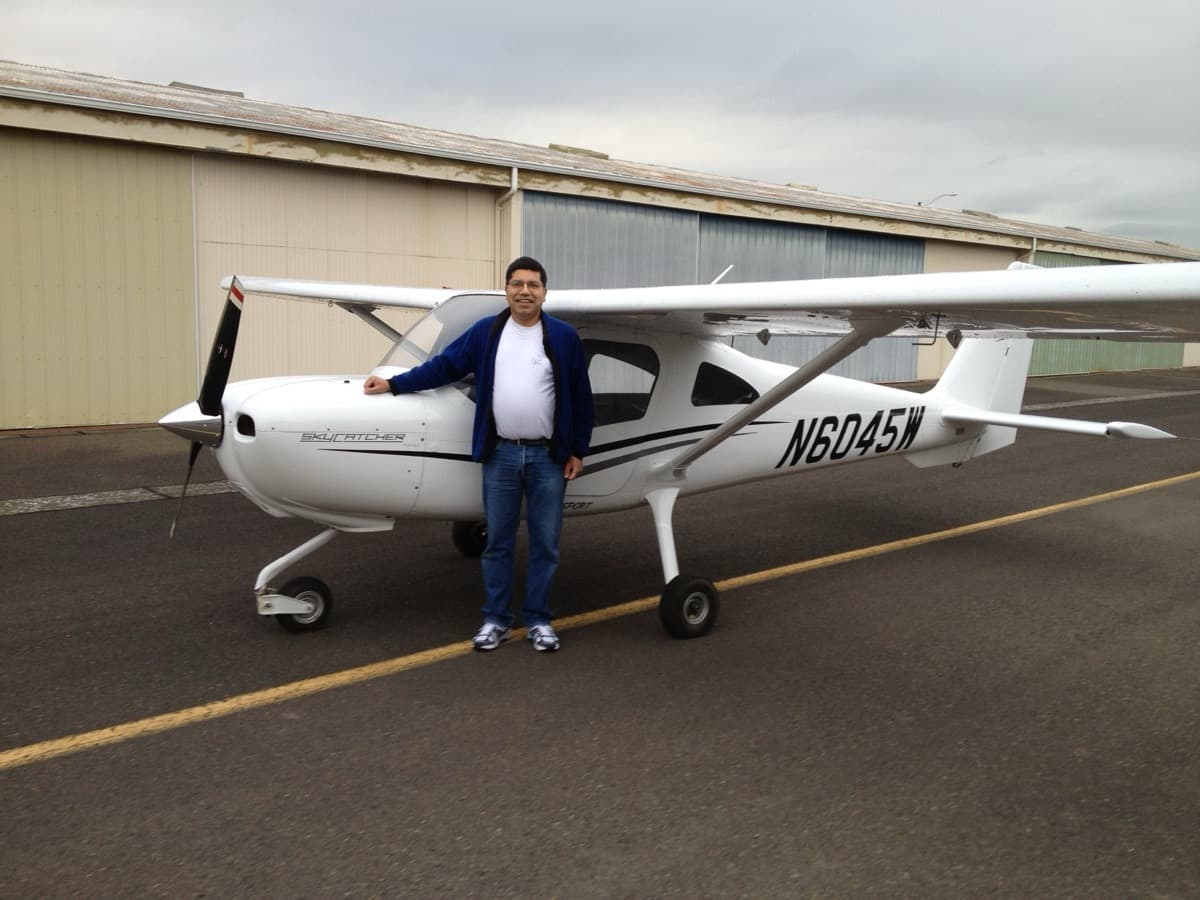
The Skycatcher had been out on an instructional flight the night before and was low on fuel, so my first step was to taxi from the hangar to the fuel pumps to add fuel to both tanks prior to my flight. I pulled up to the pump, shut down, and popped open the door.
The Skycatcher was a clean-sheet design and one of the updates was making it easier to get into and out of the plane by hinging the door at the top instead of the front edge, like the club’s 152s. I was in the habit of lightly shutting the door of the 152 after exiting when fueling up, but was still developing habits in the Skycatcher or, perhaps preoccupied with finding the right words for the memorial service later that day, I left the gull-wing door wide open while fueling.
I have not spent much time at airports outside Oregon’s Willamette Valley, but at least here in the valley in the summer, there is a considerable profusion of winged insects of the scary kind wandering around airports early in the morning looking for open aircraft doors to enter so as to present a nuisance later during some critical phase of flight. I learned this the hard way, with a not-so-pretty landing early in my flying that was considerably distracted due to a large hornet that was quite riled up by my wayward attempts to dispatch it in flight with a paper chart. This experience led me to both search for stowaways on board the aircraft before launching and to always wear a baseball cap that could be used to gently usher unwanted passengers out of the cockpit upon discovery. But the best approach was still prevention, such as keeping the door closed at the fuel farm, which I neglected to do.
Sure enough, some sort of wasp entered the Skycatcher cabin, but was luckily advertising its presence by buzzing up against the windshield, allowing me to deal with it before starting up. Congratulating myself on remembering to wear my baseball cap, I was able to send the wasp on its way and quickly — too quickly as it would turn out — lean out of the cockpit and pull down the gull wing door and close it with the sliding latch before the wasp could return.
Chafing from the delay in having to add fuel and having neither seen nor heard any other airport activity, I blew through the pre-takeoff checklist. Soon after I was pushing in the throttle and headed skyward to seek the right words with which to memorialize my instructor. Things were going quite well until they weren’t: Right after liftoff, the gull wing door popped open and, aided by the door’s piston and the slipstream, transitioned from closed to wide open in the blink of an eye. By the time my mind adjusted to this new reality, the runway had disappeared from beneath me and I was committed to some sort of flight.
I believe improperly latched doors and windows popping open at takeoff to be a Cessna feature, worthy of inclusion in the company’s sales brochures. I still remember how shocked I was during my initial Discovery Flight when the instructor, bemused at my gentle car door-like treatment of the 152 door, leaned over and re-opened and slammed it shut with a startling amount of force.
However, with forward-hinged doors, even if the door pops open in flight it is a non-event. There might be a bunch of noise, charts might take a flight of their own, but the small gap presented by the door being held mostly in check by the slipstream keeps the situation manageable.
But in the Skycatcher, an open door in flight is a whole different animal. The original design of the Skycatcher had a clearly visible lever and latch assembly mounted at the door sill below the base of the window, but it proved to be quite wimpy in practice, resulting in the retrofitting of an additional latch along the leading edge of the door. This second latch was hard to see — perfectly matching the interior cabin color by being black and located right where a pilot’s knee blocked it from sight.
That lack of visibility, my haste, my mental state, and the wasp-caused disruption now resulted in a view that I was only able to match some years later at considerable expense during a “doors off” helicopter tour in Hawaii, but missing from the view this day was a super experienced pilot in the left seat.
I nervously leaned out, attempting to grab the loop at the bottom of the door to pull it back in, but to no avail other than banking the airplane quite alarmingly, completely filling the gaping opening with a view of the valley floor. I throttled back, leveled off, and decided to ignore the yawning door and just fly a low altitude pattern back to land. Not surprisingly, this is also what the 162 POH instructs you do as well.
“Just fly the airplane!” The memories came flooding back and I heard my instructor’s voice from countless lessons when training for unexpected scenarios. “The plane doesn’t care about pattern altitude right now, so don’t do something silly just because you do!”
Well, by one measure, the flight had been a success, for my instructor’s voice was most definitely ringing in my head: “Best place to have a problem — right over the airport, now focus on landing and deal with the problem at your leisure. Aviate, navigate, communicate…fly the airplane, not the mic!”
All of the resentment I felt that much of my time during flight instruction had been consumed by dealing with abnormal situations was rapidly being replaced by gratitude for my deceased instructor’s presence in my life, and all the wise lessons he imparted to me during his time in the sky and on the ground.
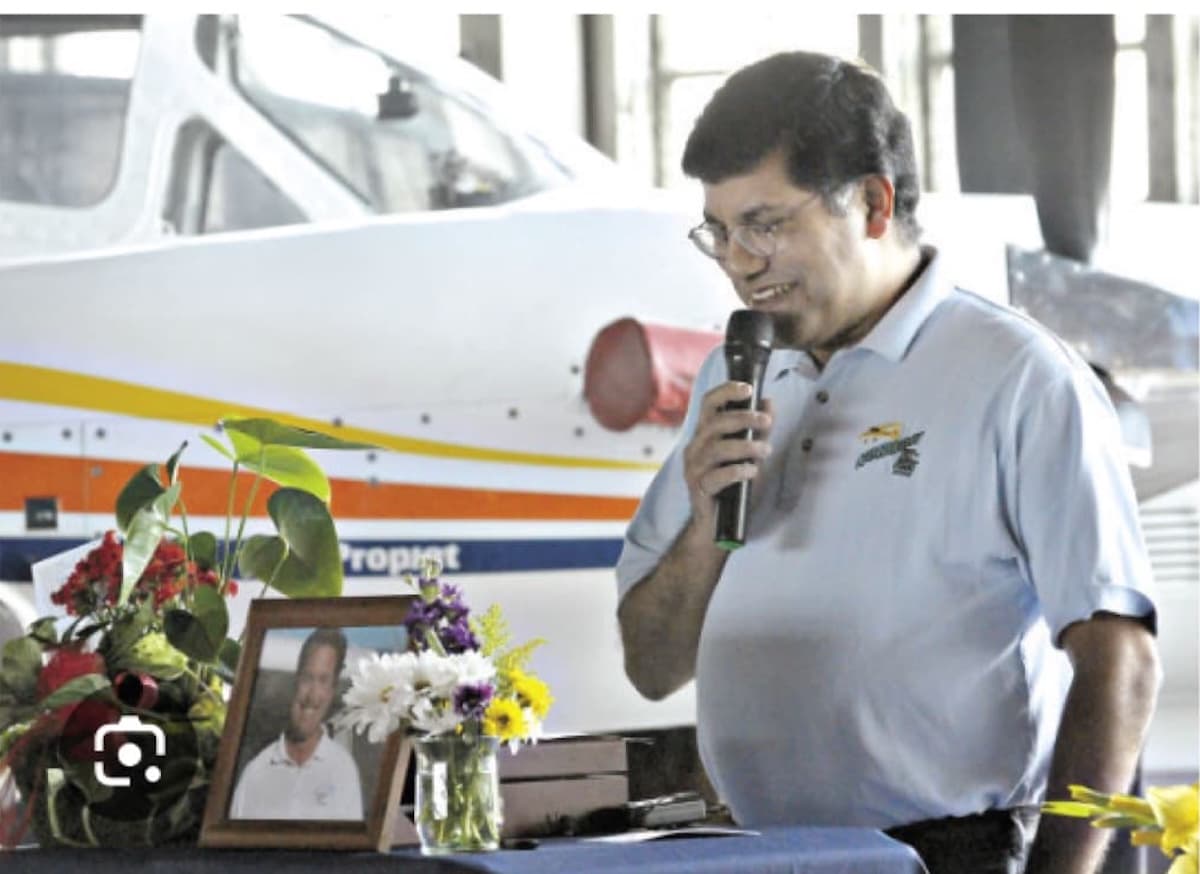
After the longest three-minute flight of my life, the Skycatcher and I were safely back on the ground, and I had plenty of inspiration for the memorial service.
Ernest Gann’s classic is titled “Fate is the Hunter” for good reasons, but thankfully fate decided not to hunt me that day. Fate was not so kind to a plane perhaps within spitting distance of mine coming off the assembly line, for that Skycatcher suffered the same door issue in July 2015, but the outcome was an injured pilot and a substantially damaged plane.
Our club’s Skycatcher never caught on with members for instruction, so its stint with the club was short. That plane certainly taught me some lessons that day, though it was indeed a rough flight.
Rajeev Pandey is a private pilot with over 500 hours logged. He owns the more expensive half of a 1976 Grumman AA-5B Tiger, based in Albany, Oregon.
Nice article, especially as I learned to fly with the OSU flying club. I even personally knew the gentleman who thought the Skycatcher was the perfect plane to replace their 152’s with. Bad decision.