

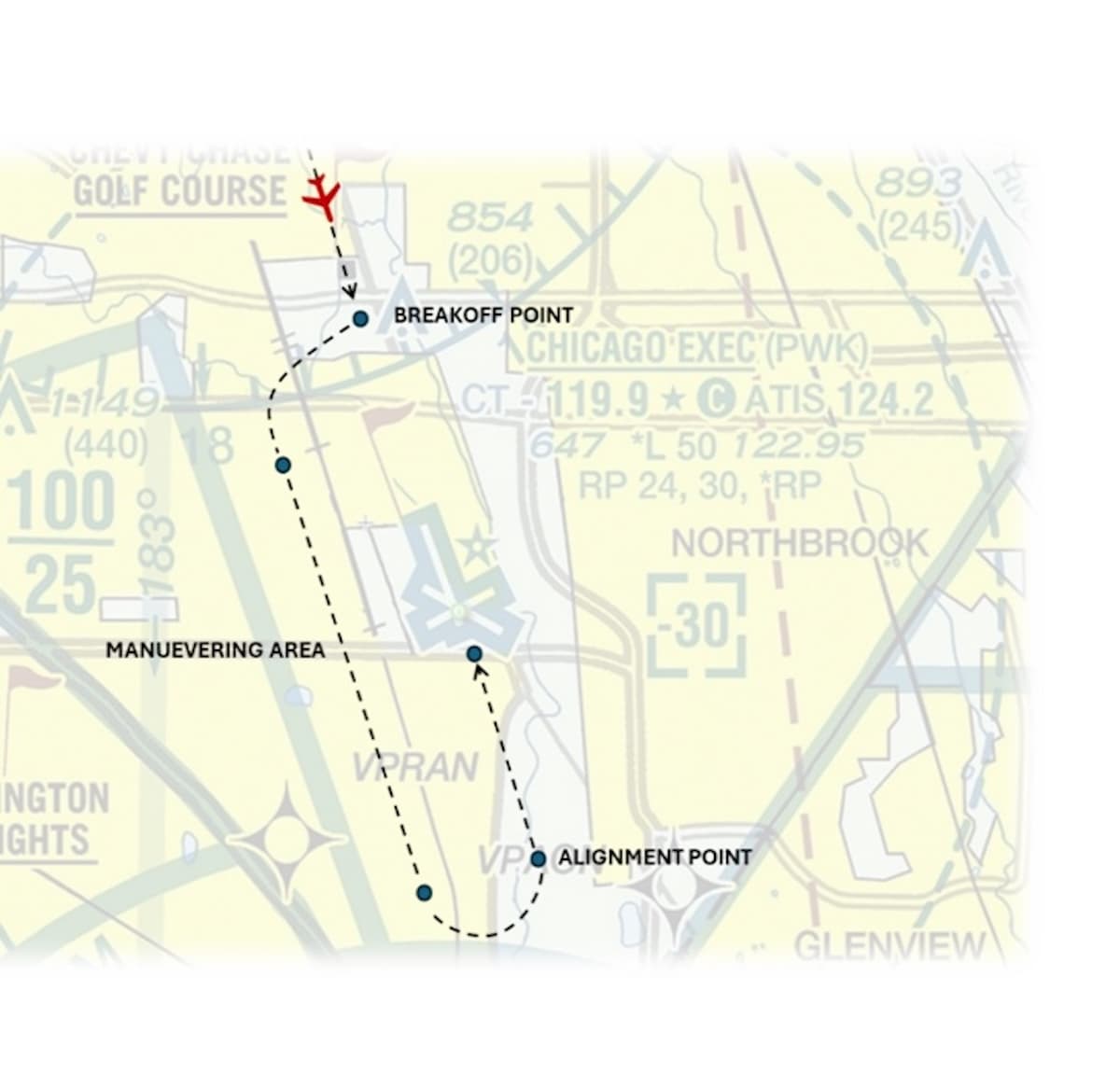
A recent analysis of circle-to-land approaches has resulted in a new Circle-To-Land Approach Hazards resource for general aviation pilots.
Conducted by the Aviation Safety Information and Analysis Sharing (ASIAS) program, an FAA/industry partnership, the analysis was designed to identify factors that contributed to safety issues related to the procedure.
The analysis found that 10 accidents involving Part 91 and 135 operators occurred during circle-to-land approaches between 2008 and 2023, resulting in 17 fatalities.
ASIAS notes three key areas of interest for pilots:
- There is a subset of airports where circling approaches are more common. Pilots should be aware of the circling approaches at these airports and conduct thorough pre-flight and pre-approach briefings.
- Pilots should be aware of the circling approach obstacle protected airspace for the individual approach and airport, using all available tools to remain within the obstacle protection area.
- There’s a link between circling approaches and unstable approaches.
“ASIAS completed this analysis following recent accidents, including those at Truckee Tahoe Airport (KTRK) and Gillespie Field (KSEE), involving a circle-to-land approach, noting these maneuvers often result in an unstable approach,” said Mark Larsen, director of safety and flight operations for the National Business Aviation Association and a member of the ASIAS General Aviation Issues Analysis Team.
“A stabilized approach reduces risk of loss of control in-flight and decreases the probability of some of the most common and fatal accident types,” he added.
ASIAS identified several airports where circling approaches are conducted at a higher level than other airports across the country, including:
- Chicago Executive Airport (KPWK) in Illinois
- Eagle County Regional Airport (KEGE) in Colorado
- Long Beach Airport (KLGB) in California
- Catalina Airport (KAVX) in California
- Van Nuys Airport (VNY) in California
- Peachtree/Dekalb Airport (KPDK) in Georgia
- Scottsdale Airport (KSDL) in Arizona
- Teterboro Airport (KTEB) in New Jersey
- Southwest Oregon Regional Airport (KOTH) in Oregon
- Rogue Valley International/Medford Airport (KMFR) in Oregon
“While circling approaches are sometimes necessary due to airport environments or unfavorable winds, we know these approaches present increased risk,” Larsen added. “This resource is an opportunity to disseminate information collected and analyzed by ASIAS, highlighting those risks, and providing mitigation strategies for pilots. In general, pilots should utilize an alternative option to a circling approach, especially when a straight-in approach is available to a suitable runway.”
For more information: NBAA.org
Leave a Reply