

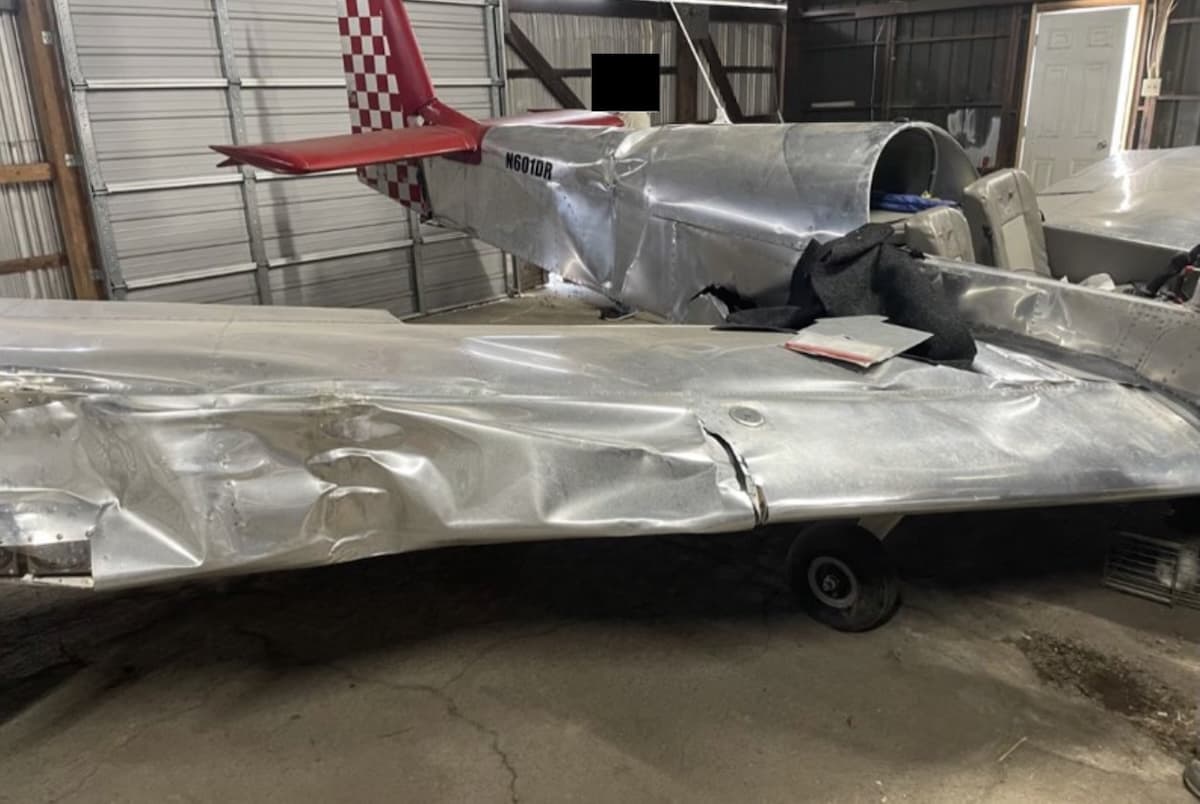
The pilot and builder told investigators that the purpose of the flight was to test cooling plenum changes that he had recently made to the experimental amateur-built Zodiac 601XLB’s automotive conversion engine.
After takeoff on the planned flight in the traffic pattern at the airport in Dunbar, Pennsylvania, he heard over the radio that another airplane was inbound to the airport for touch-and-go landings, so he flew away from the airport and performed ground reference maneuvers.
Shortly after, he returned to the traffic pattern, entering on the upwind leg. Upon turning onto the crosswind leg, his engine began to “sputter,” so he made a 180° turn to land on the opposite direction of the same runway.
About that time, he noticed that the other airplane was back taxiing on the runway. He elected to not land on the parallel taxiway due to its condition and out of concern for a possible collision with another aircraft. He overflew the other airplane on the runway.
His engine lost power completely as he neared the end of the runway.
About that time he was turning the airplane left, but could feel it slowing, so he leveled the wings and landed straight ahead, perpendicular to the runway. The airplane traveled over a grass embankment and hit trees, resulting in substantial damage to the right wing and fuselage.
Following the accident, an examination of the engine revealed that a bracket for the fuel/air mixture cable had “bent and overextended,” which resulted in the engine’s fuel/air mixture becoming excessively lean.
The pilot told investigators that he had fabricated the bracket during a recent engine replacement and knew that a new bracket would need to be refabricated but had not completed the task before the accident flight.
Based on this information, it is likely that the loss of engine power was the result of the improperly fabricated bracket, which resulted in an excessively lean mixture to the airplane’s engine.
Probable Cause: A total loss of engine power as a result of an improperly fabricated fuel-air mixture cable bracket. Contributing was the pilot’s decision to fly the airplane with a known mechanical engine issue, and the presence of another airplane that was back taxiing on the runway while the pilot was attempting to maneuver the airplane for landing.
To download the final report. Click here. This will trigger a PDF download to your device.
This April 2024 accident report is provided by the National Transportation Safety Board. Published as an educational tool, it is intended to help pilots learn from the misfortunes of others.
“ Shortly after, he returned to the traffic pattern, entering on the upwind leg.” This is unusual, entering the pattern on the upwind leg. But even more unusual, in the accident report, he says that he radiod to the other aircraft back-taxiing on Runway 23 that he had a engine emergency and “could you please expedite leaving the runway,” etc. that aircraft, a Civil Air Patrol aircraft, replied “I would if you would make proper radio calls,” and kept back-taxiing up the runway.
Increasingly, these stories involve more
Stupid Pilot Tricks and fewer legitimate equipment failures, that is to say failures of equipment that is designed to legitimately be used on airplanes. Hope the guy learned something.
What sort of hair-brained twit was the pilot to even think of flying an aircraft he KNEW had what amounted to a defected part installed ????
Hindsight is always 20-20. Remember you can always get on the radio declare an emergency and repeat “CLEAR the RUNWAY, Emergency RETURNING!” ! ! A good 15-minute ground run to check whatever parts have been replaced is always a good idea.