

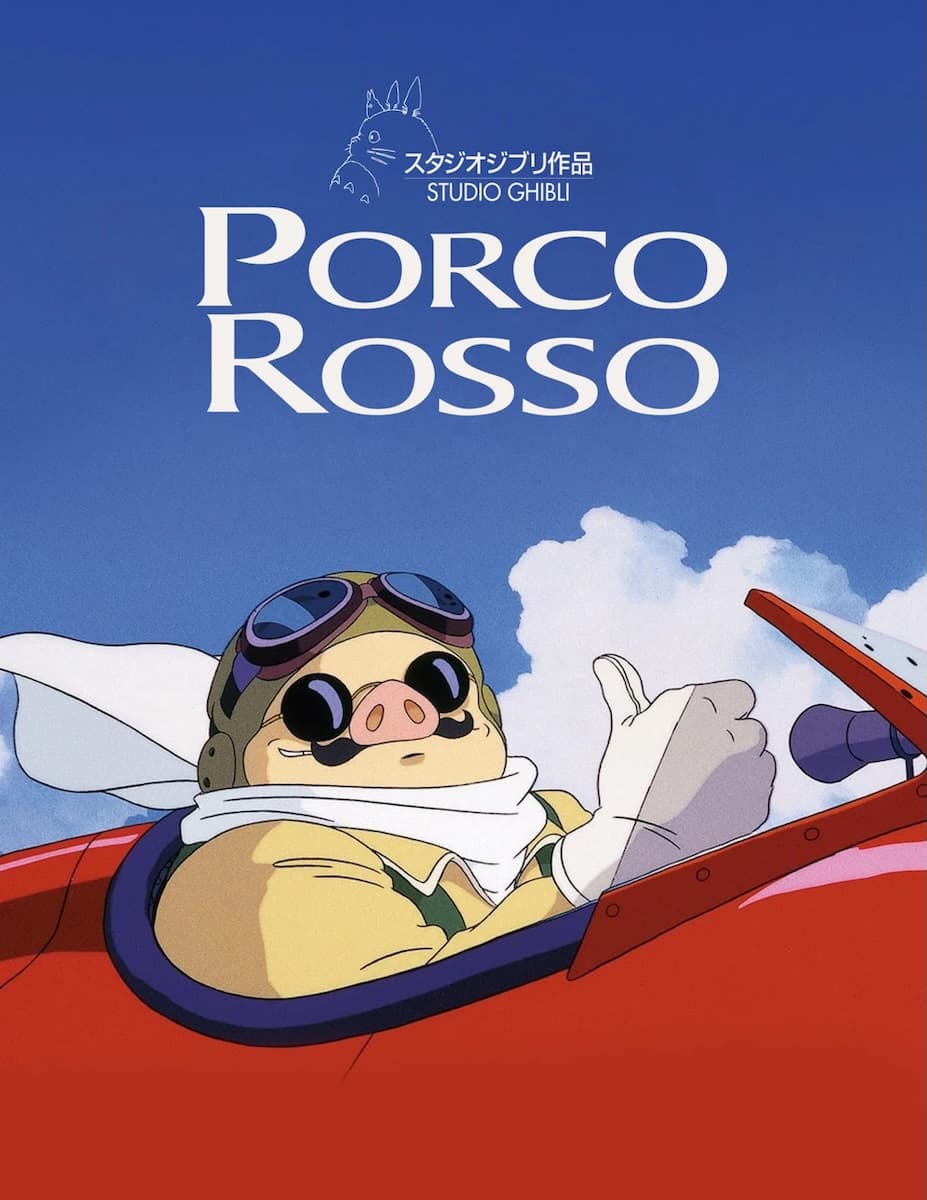
Adam, an airline pilot based out of Texas, writes: “I recently watched the Japanese cartoon Porco Rosso with my little nephew. Afterward he asked me if there were really seaplane pirates back in the day. I told him that I thought they were probably fictional, but that years ago one of my teachers was ‘William Fly, the Airplane Guy’ and he would know for sure — so I’m asking you!”
Ah, I remember when your class gave me that call sign (although at the time, having never heard of Bill Nye, I didn’t truly appreciate the honor). I’m happy to see you made it to the airlines!
Now for background, before I get to your question about seaplane pirates, I have to admit that I only recently discovered “Porco Rosso” for myself. I was on a commercial flight and catching up on my aviation reading, and an article in AOPA Pilot was contending that the Japanese animated movies of Hayao Miyazaki — especially “The Wind Rises,” “Castle in the Sky,” and “Porco Rosso” — were something that all aviators would love and appreciate. I was a bit skeptical, probably because I take myself a bit too seriously for my own good, and couldn’t see myself wasting two hours on a cartoon. (I did, however, recently build the Lego Concorde, a complete “waste of time,” and the most fun I’ve had for years, so I’m starting to get over myself.)
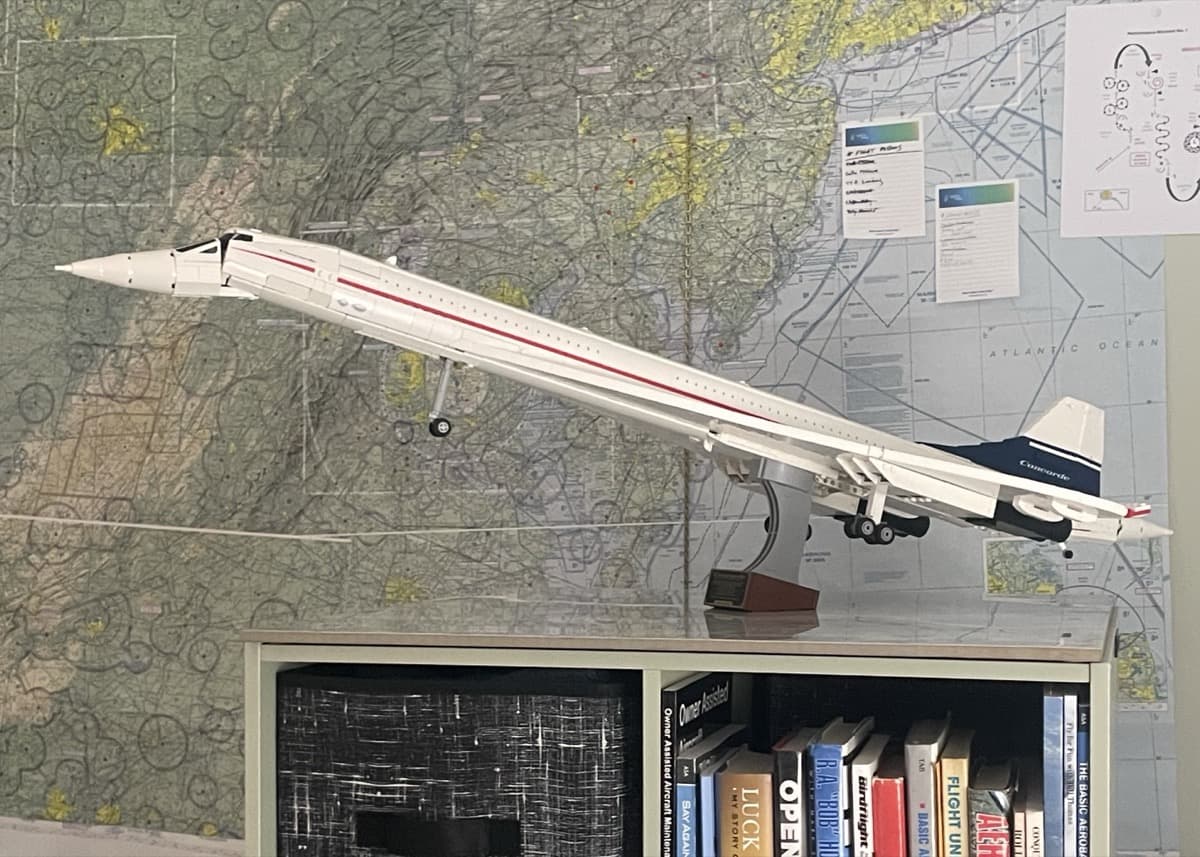
Anyway, one evening after a particularly exhausting day at the training center, still too early to turn in, and the Concorde guilty pleasure completed, I tuned into a Miyazaki movie…and then started binge-watching. Oh my goodness, they are fabulous! I’d never seen Japanese animation before and it’s really different. It still has a hand-drawn look and yet is somehow hyper-realistic. And stunningly beautiful. Of course, from the aviation perspective, aircraft in these movies — even improbable ones — act in realistic ways. As does the sky, clouds, and weather.
Some aspects of the Miyazaki movies are surprisingly accurate, too. In Wind, several times I had to pause and reach for my iPhone, thinking, “That can’t be right,” only to learn it was. Who knew the Japanese Zero prototype had inverted gull wings like the later F4U Corsair?
But the seaplane pirates of Porco Rosso… yeah… well… not much accuracy there.
That said, pirates of the air have a more interesting lineage than you might suspect. There are isolated instances in history where it can be argued that there were honest-to-goodness flying pirates, if not quite the eye-patch wearing, peg-legged, swashbuckling, yo-ho-ho and a bottle of rum sorts of pirates.
Now, before I get to the real sky pirates, I’d be remiss in not tipping my hat to the cultural legacy of flying pirates. They show up in a surprising array of science fiction and fantasy stories, comics, cartoons, TV shows, movies, and games. Oh, and flying pirates are Steam Punk fixtures, too. Some of these flying pirates use airplanes and seaplanes, but the bulk seem to favor airships.
Now, this bevy of flying pirates is interesting, because while aquatic pirates have existed practically since Noah — so it makes sense that we have a rich literary and silver screen pirate ecosystem — there isn’t really much of a historical legacy of pirates using aircraft, so where did this remarkably common theme come from?
It all seems to start with the Father of Science Fiction himself, Jules Verne. While probably best known today for “20,000 Leagues Under the Sea,” “Journey to the Center of the Earth,” and “Around the World in Eighty Days,” he was a prolific writer who published more than 50 novels, along with numerous short stories and other works, many of them featuring flying machines. Balloons were Verne’s most commonly featured airborne contraption, which makes sense, as they were the only functioning flying machines at the time he was writing. Still, Verne had an appreciation of what was possible, at least theoretically. In fact, he even wrote one space-flight adventure, but we’ll save that for a Buck Rogers discussion. Back to pirates.
A somewhat lesser-known Verne flying work is “Robur the Conqueror,” which is basically an airborne version of 20,000 Leagues with a giant heavier-than-air flying machine that’s somewhere between a helicopter and an airship. That book, and its sequel, were turned into a big-budget Hollywood film in 1961 starring Vincent Price and Charles Bronson called “Master of the World.”
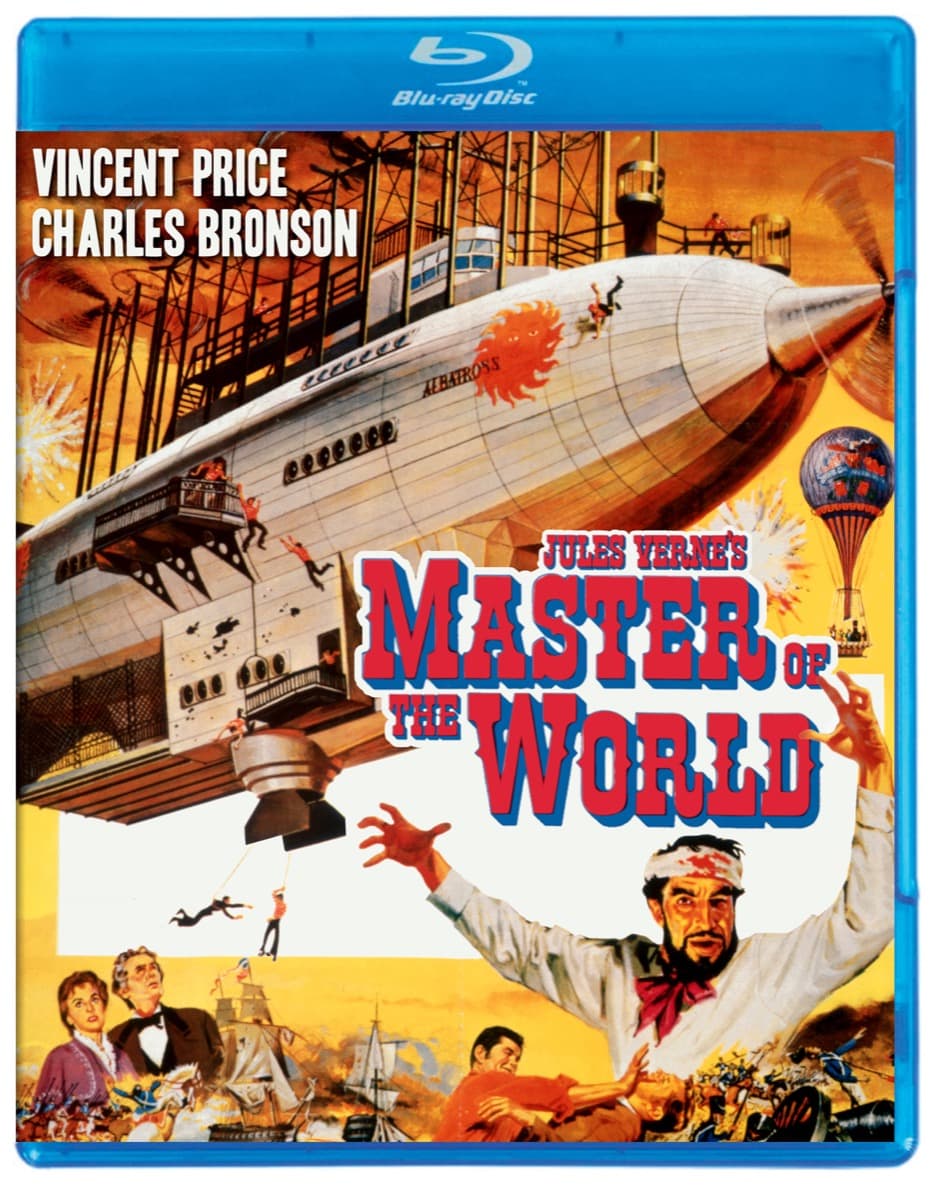
Anyway, my thinking is that this is where the legacy of airship-equipped pirates comes from. The idea was born at the time that sci fi was born and grew with the genre. And why not? Pirates were popular, sci fi was becoming popular, so what could be better than combining the two?
And I’d guess that most of these nouveau fictional pirates use airships, because traditional pirates use ships, and because it’s obvious to most people that — Miyazaki’s seaplane pirates aside for the moment — airplanes actually make a rather poor tool for piracy, if you exclude the traditional pirate side-line of smuggling, for which seaplanes would be great!
So it’s not too surprising, then, that the best-documented historical act of traditional piracy by “pirates of the air” involved an airship, the German Navy’s L23, a 585-foot-long Zeppelin.
On April 23, 1917, the L23, on a marine patrol mission over the North Sea, spotted the “neutral” Norwegian sailing ship the Royal, and went in for a closer look. At the Zeppelin’s approach, the sailing ship’s crew hastily began abandoning ship, taking to their lifeboats, an action which the Germans (correctly) took to mean that the Royal was smuggling war cargo to England in violation of treaty.
Apparently, with no surface ships readily available to capture the Royal, the L23’s commander, Ludwig Bockholt, decided to take matters into his own hands. Rather than sink the sailing ship by bombing it, he decided to capture it. He came down low over the Royal, then hovered over the clustered lifeboats and demanded that the crew surrender, which they did. He then nearly landed his massive airship on the water — a terrific feat of airmanship — and dispatched a crew from the Zeppelin with the never heard on an airship before (or after) command of: “Helmsman, prepare to board our prize.”
Three German airship men climb down from the L23’s control car into one of the lifeboats and capture the Royal’s crew. One of the boarding party later wrote: “They stared at us like we were ghosts from another world.”
But the giant Zeppelin is so weight sensitive that the reduction in ballast created by the three men departing sends it surging upward before the crew can offload the machine gun they intended to use to ensure the compliance of the captured Norwegian sailors. The Germans improvise and use a flare gun to intimidate them. Well, that and the airship itself, which circles above the ship and fires a few machine gun bursts at the other lifeboats, which are trying to flee, to encourage them to return to the Royal. It’s a tense couple of days for the three Germans on board, but they successfully keep the captured sailors in line and force them to sail the Royal to the German port of Cuxhaven.
Needless to say, while delightfully audacious, given the myriad ways this could have gone wrong, the commanders of the German Imperial Navy were not too thrilled by Bockholt’s antics and ordered that, in the future, airships were absolutely not to be capturing prizes.
Now generally speaking, seizing someone else’s ship on the high seas is absolutely an act of piracy. But in this case, it was allowable under the rules of war in place at the time, so technically it’s an act of privateering, rather than outright piracy.
Another interesting historical act of piracy, in the classic sense of stealing a ship, involves an airplane, but sadly for your nephew, not a seaplane. Rather, it was a Russian Ilyushin Il-76 which, while beefy by airplane standards, doesn’t measure up to a Zeppelin, size-wise. The Il-76 is a 4-engine cargo plane with a wingspan of about 156 feet and is 152 feet nose-to-tail.

This airplane was actually involved in two acts of piracy about a year apart during the Afghanistan civil war in the mid-1990s. In the first act, the cargo plane and its Russian crew were on a charter flight carrying weapons to the Russian-supported side of the conflict when it was intercepted by an “enemy” Taliban Air Force Mig-21 (one of only five, apparently) and made to divert to Taliban-controlled Kandahar, where the crew was held prisoner for over a year.
From the Taliban perspective, I guess this was privateering.
At any rate, during the various ineffective negotiations to free the crew, the Taliban agreed to let the crew continue routine maintenance on the aircraft. It was during one of these rounds of maintenance that the second act of piracy took place. The crew stole their plane back and escaped.
The story is straight out of Hollywood. Normally six guards watched over the Russians, but on Aug. 16, 1996, half of the guards left for afternoon prayers and the pirates made their move. They overpowered the remaining guards, jump-started an auxiliary power unit using a battery, and used that to get one engine running, and then used the running engine to start the other three. As they taxied out, the Taliban forces tried to block the runway with a fire truck, but the crew got the plane in the air before hitting it, high-tailed it out of Taliban airspace, and made good their escape.
Now, if you don’t think that stealing your plane back from the pirates who stole it from you really counts as piracy, let’s not forget Bob Hoover who, as an escaped POW in World War II, pirated an enemy aircraft and daringly used it to fly back to friendly lines.
So there you have it. Not as glamorous or romantic as the movies, and not as common as the entertainment ecosystem would suggest, but airborne pirates are — occasionally — real and just every bit as swashbuckling.
Paraphrasing Bill Nye: Aviation rules!

Leave a Reply