

The FAA has issued a Special Airworthiness Information Bulletin concerning seat belts and torso restraint systems in general aviation aircraft.
Released April 15, 2026, the bulletin is “for information only,” according to FAA officials, who remind aircraft owners that the recommendations aren’t mandatory.
“At this time, the airworthiness concern is not an unsafe condition that would warrant an airworthiness directive (AD),” FAA officials added in the bulletin.
The recommendations come about after the National Transportation Safety Board (NTSB) notified the FAA of several general aviation accidents in which restraint assemblies failed, with FAA officials noting that “failed restraints may contribute to serious injury or death of occupants.”
One accident cited in the bulletin occurred in September 2012 when an Aeronca 7AC crashed after losing control during takeoff. The pilot sustained serious injuries, while the passenger died in the crash.
The NTSB investigation revealed that the airplane’s four-point restraint, shown in Figure 1, separated at the shoulder harness Y-junction threading that separates the two shoulder straps and connects to the fuselage attach strap behind the occupants’ heads as shown in Figure 2.
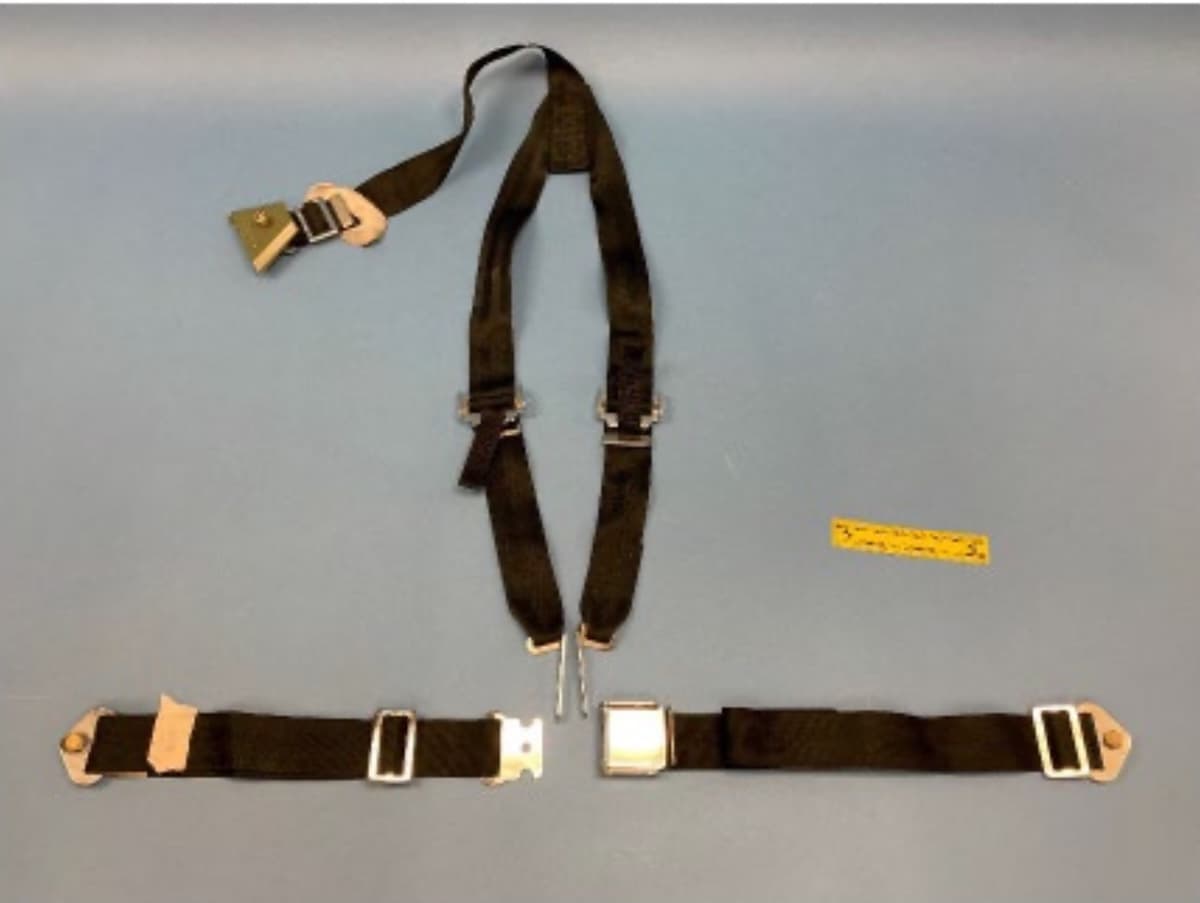
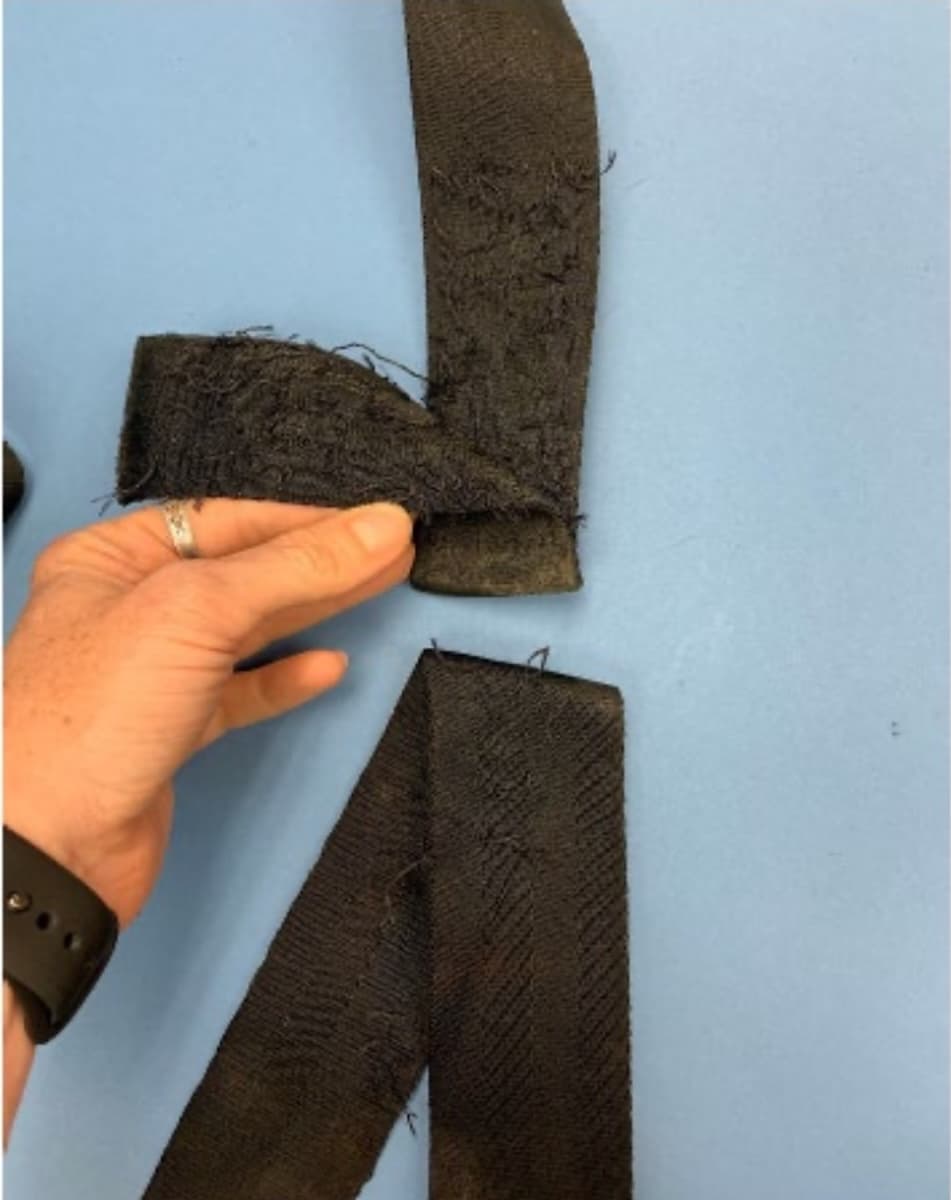
After performing additional testing, the NTSB concluded that the shoulder harness failed at loads below those prescribed in current Technical Standard Orders (TSOs).
A search of NTSB public dockets identified at least 15 other general aviation accidents resulting in full or partial failure of the restraint system. Many of these failures occurred at the Y-junction threading as shown in Figure 2. These accidents often involved serious or fatal injuries of the occupants.
Further inspection of the accident findings revealed that these restraints are often designed to obsolete TSO requirements, FAA officials noted. Minimum torso restraint system performance requirements are prescribed in TSO-C114 dated March 27, 1987. Minimum safety belt performance requirements are prescribed in TSO-C22g dated March 5, 1993. Both TSOs provide standards equivalent to SAE Aerospace Standard Document No. AS8043, “Torso 1 Restraint Systems,” dated March 1986.
Recommendations
The FAA recommends that owners of general aviation aircraft ensure their restraint systems meet the minimum performance requirements in the TSOs.
Owners can identify that their restraints meet these minimum performance requirements through a visual inspection of the manufacturer’s label on the restraint assemblies. These labels may list the TSO numbers and/or the rated strength of the restraint assembly. The assembly’s rated strength to meet the current performance requirements is 3,000 pounds or more.
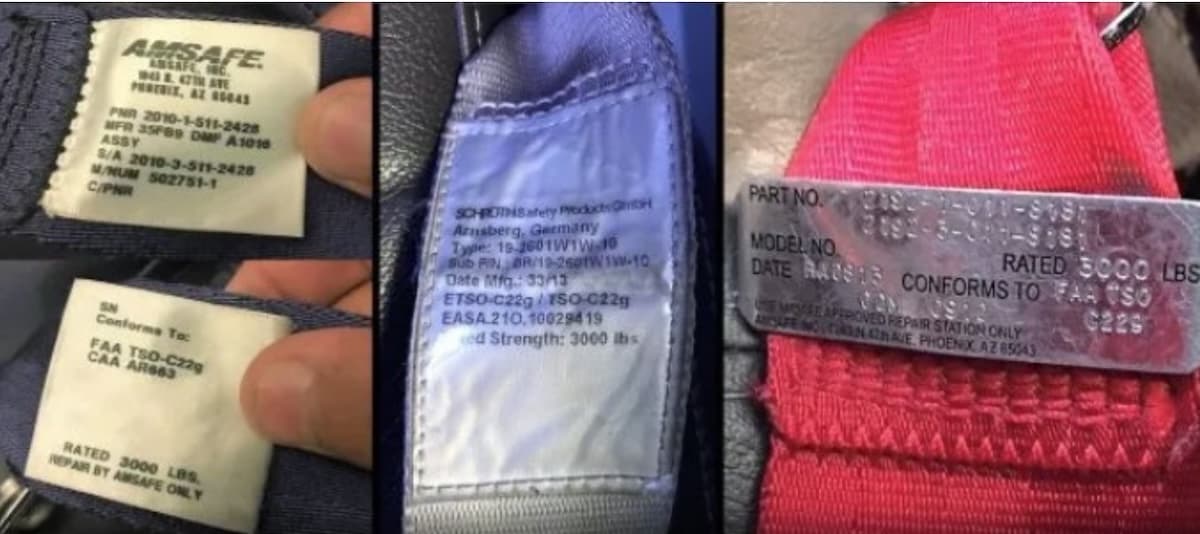
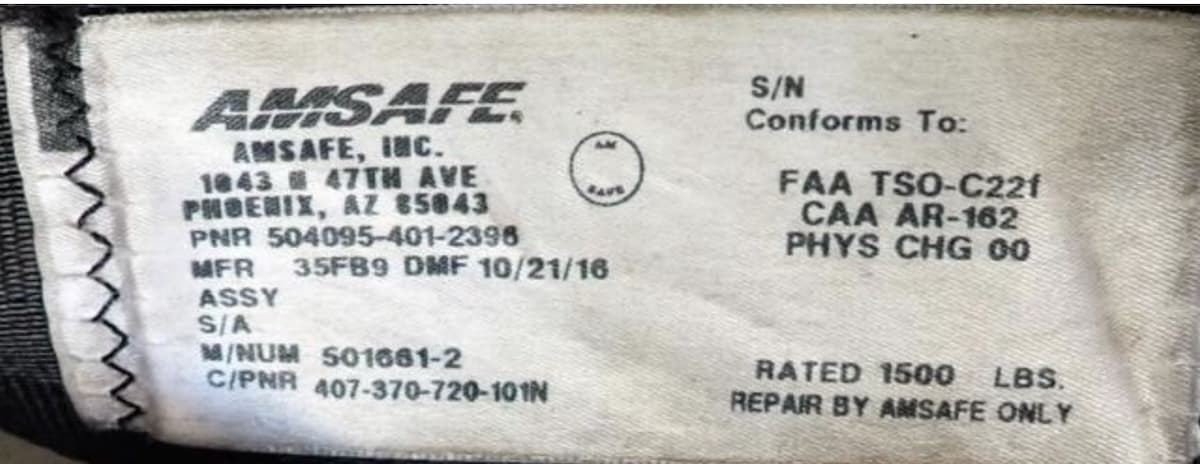
Owners should replace restraints that are not labeled as meeting the TSO and the rated strength requirements, as well any that have a missing, illegible, or unreadable label, the bulletin adds.
Other recommendations include:
- Perform routine preflight and annual visual inspections of both the shoulder and seat restraints to check for signs of wear, deformation, discoloration, defects, or fraying. Special attention should be paid to the threading on the Y-junction that separates the two shoulder straps and connects to the fuselage attach strap behind the pilot’s head, as well as the fastener hardware.
- Report findings of damage to the FAA. Include the make, model, and serial number of the restraint and aircraft, a description of the damage, photographs, recommended inspection techniques to locate the damage, the damaged part’s time in service, and any other information that could assist the FAA in evaluating this issue.
For further information, you can contact the agency’s Compliance and Airworthiness Division at 817-222-5390 or [email protected].
You can read the full bulletin here.
The last picture shows a AMSafe belt manufactured in 2016 to TSOc22f. TSOc22g with the 3000 lbs rating was issued in 1993. Why did AMSafe not manufacture the belt to the TSO22g standard? I have tried in the past to get owners to install shoulder harness in any plane without them. Never could talk owners into it.