

Most DreamLaunch Tour stops focus on the next generation directly — getting in front of students, raising awareness of aviation career opportunities, and putting real-world context behind what’s possible in this industry. But every year, Jamail Larkins — the force behind the DreamLaunch Tour and AviationStart, includes a few stops aimed at the other side of the equation: The aviation stakeholders who make those opportunities exist in the first place.
“Aviation events, when done right, do a lot more than fill a hangar with people,” he explains. “They improve airport relations in the local community. They build a pipeline of motivated, excited future workforce, extremely important in today’s hiring environment. They create new customers for flight schools, which keep local maintenance shops busy and local FBOs selling fuel. The whole ecosystem benefits. That’s the message I try to bring to the stakeholder side of the tour.”
This year, that message took him to North Dakota — where he quickly learned that being from the South does not adequately prepare a human being for what North Dakotans casually describe as “the warmest winter we’ve had in a while.”
A 2 a.m. Lesson in Northern Plains Logistics
Jamail was traveling to North Dakota to deliver the morning keynote address at the North Dakota Aeronautics Commission’s 2026 FLY-ND Annual Conference.
“I’ve gotten pretty comfortable traveling solo to DreamLaunch events over the years — commercial, GA, whatever it takes to get the job done,” he notes. “Modern conveniences like Uber have made this whole operation a lot smoother than it was when I started the tour back in college, when landing in an unfamiliar city, and being under the minimum age to rent a car, made trying to get to a school across town its own adventure.”
Still, even after all these years — the tours started in 2004 — Jamail says “North Dakota had some lessons to teach me.”
After a string of mechanical delays, he touched down in Minot at around 2 a.m. on a Monday morning in early March 2026.
“Here’s a tip for any pilot, speaker, or traveler reading this: Rental cars and Uber do not, in fact, operate at 2 a.m. on a Monday morning in Minot, North Dakota. This is information I now possess,” he says. “The FLY-ND team — to their enormous credit — came through for a stranded Southerner in the middle of the night, and I will be forever grateful.”
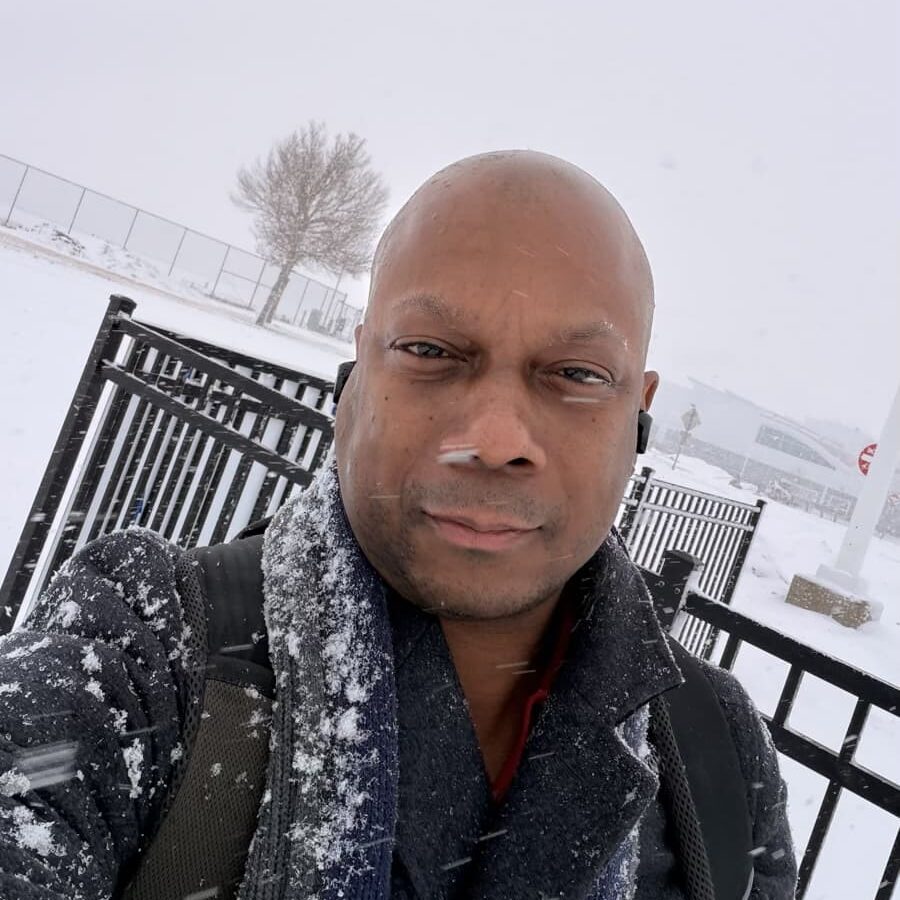
“The second lesson came the moment I stepped outside the terminal,” he continues. “I now understand, on a cellular level, what ‘warmest winter we’ve had in a while’ means to people who were not born and raised below the Mason-Dixon line. My scarf was immediately covered in snow. My face was immediately covered in snow. There is a photo. It is not flattering. North Dakota does not care about your feelings on the matter.”
Why FLY-ND Gets It
Once we got to the conference, the cold became background noise — because the room was full of people who already understood the message Jamail was there to deliver.
“The local airports, FBOs, aviation businesses, and government agencies that make up the FLY-ND network have built something genuinely impressive,” he says. “The North Dakota Aeronautics Commission, especially Mike McHugh, have done the kind of long-term, unglamorous, ecosystem-level work that other states should be studying. Almost every school district in North Dakota has an aviation program in at least one local high school. Almost every district. In an entire state. That’s not an accident — that’s intentional infrastructure.”
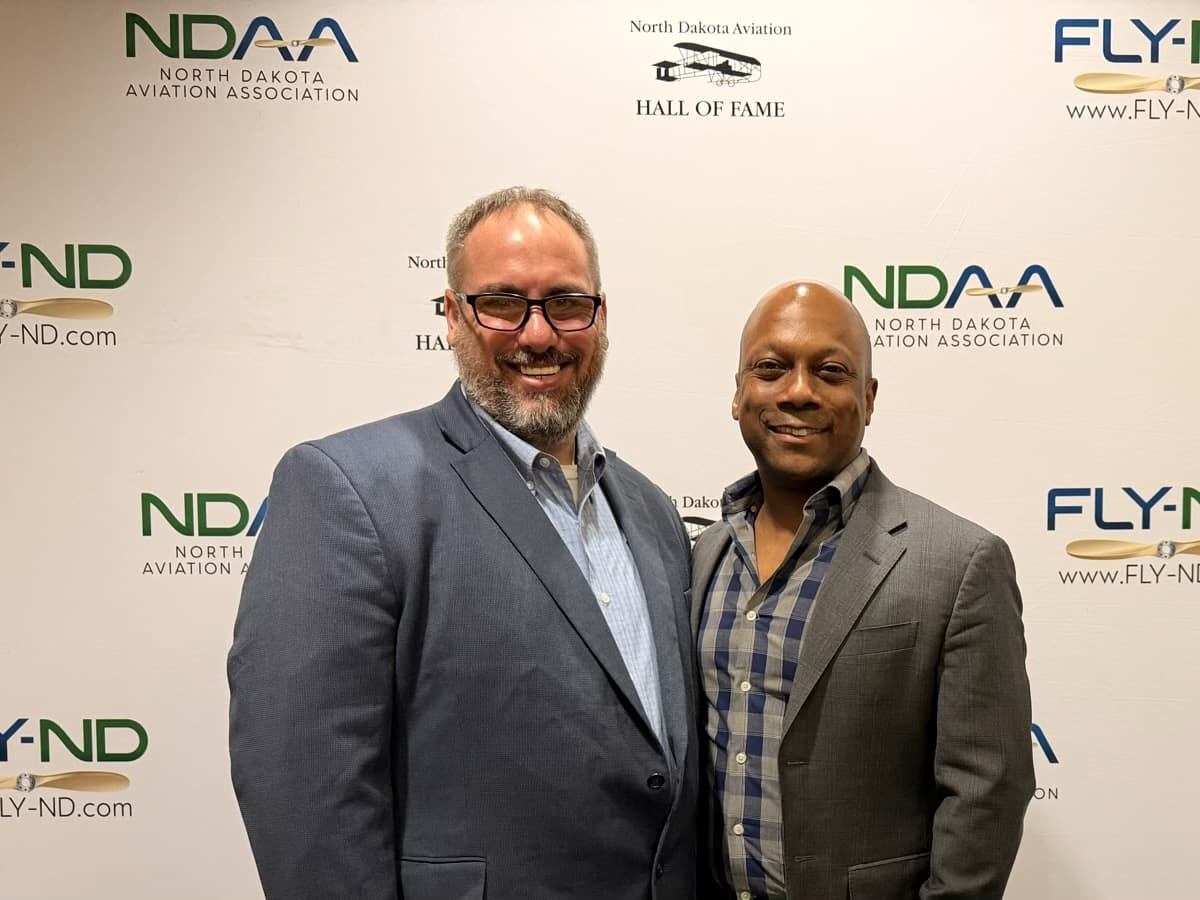
FLY-ND offers a range of scholarships to North Dakota students, and Jamail had the chance to meet several of the 2026 recipients.
“These were not casual recipients,” he says. “These were students taking full advantage of high school aviation programs in their respective communities, and the scholarships clearly meant something real to them — not just financially, but as validation that their state was investing in their future.”
This is what the message looks like when it’s actually working. North Dakota stakeholders aren’t just supporting aviation events — they’ve built a state-wide pipeline, he declares.
A Visit to UND
After FLY-ND, Aviation Product Systems (APS) arranged for Jamail to travel across the state to Grand Forks for a visit to the University of North Dakota (UND).
As a proud Embry-Riddle alum, even Jamail says that the university is one of the best.
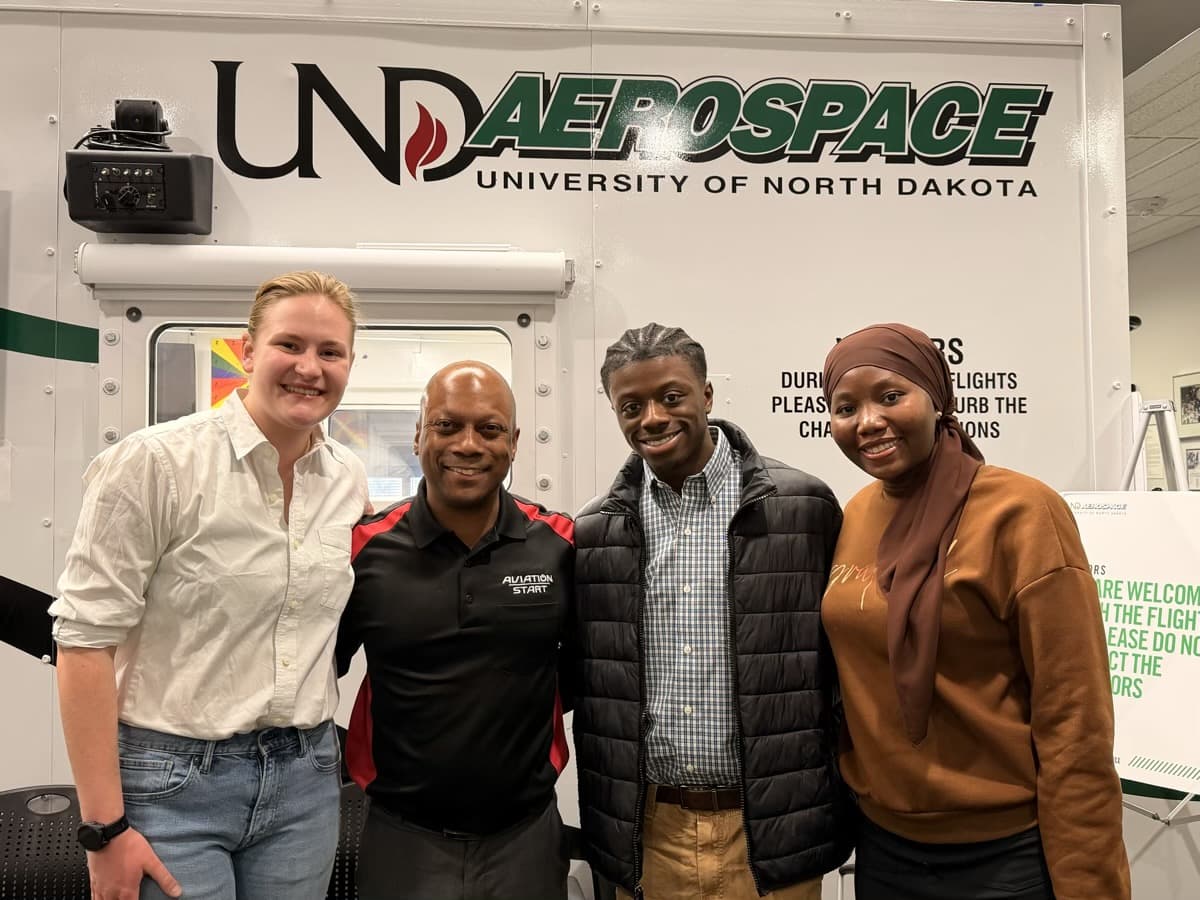
“UND has built one of the most impressive collegiate aviation programs in the country,” he says. “The fleet is massive and modern. The training infrastructure is designed to operate in conditions all the way down to -40°, which I assume is a temperature that exists somewhere on Earth, but cannot personally confirm. The students I met were sharp, motivated, and came from all over the world. And UND has one of the few hypoxia chambers I’ve ever seen on a college campus — the kind of hands-on training resource that genuinely sets a program apart.”
It’s a first-class operation, he notes.
“Embry-Riddle, you know I love you. But North Dakota came to compete — and competing they are, if you remember my article, The NCAA of Aviation,” he adds.
The Takeaway
The DreamLaunch Tour spends most of its time talking to students.
“Trips like this one remind me why it’s just as important to talk with the stakeholders — the commissions, the FBOs, the flight schools, the maintenance shops, the airports — who decide whether their state will be a place where the next generation of aviation professionals can actually get started,” he says.
“North Dakota has figured this out,” he concludes. “The cold is a feature, not a bug, apparently. And I’ve added two new items to my packing list: A real coat and the phone number of someone willing to pick me up at 2 a.m.”

Leave a Reply