

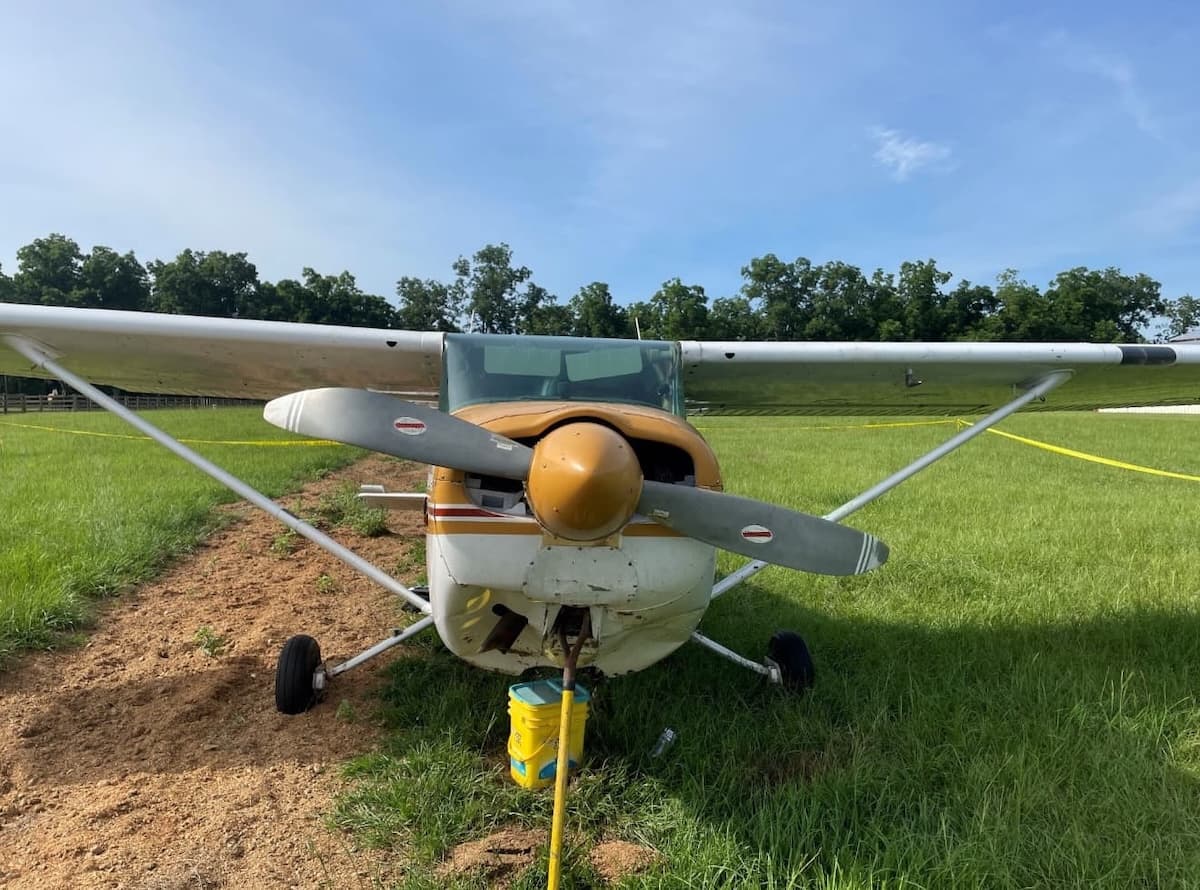
According to the FAA aviation safety inspector who responded to the accident scene in Citronelle, Alabama, the owner had arranged for the pilot to recover the Cessna 172P from the maintenance facility that had just completed an annual inspection. The owner reported that the airplane had been idle for 25 years before he purchased it and had the annual inspection performed.
He said the pilot flew the airplane for about 45 minutes, returned to the airport for fuel, and then departed on the accident flight from Copiah County Airport (M11) in Crystal Springs, Mississippi, to Peter Prince Airport (2R4) in Milton, Florida.
According to local law enforcement, the pilot stated at the scene that he had “lost his engine” and performed a forced landing to the field, where the airplane came to rest upright but substantially damaged.
In a written statement, the pilot said the airplane was in a cruise configuration when the engine “surged slightly a few times” before it began running “erratically.”
The pilot described his remedial actions to restore full engine power as maneuvering the airplane toward a suitable forced landing site that was “beyond gliding distance.” The engine stopped producing power and he “stretched” the glide for the desired field, but “lacked the energy for a proper flare” and landed hard.
Examination of photographs revealed damage to the underside of the engine compartment, a separated nose landing gear, and damage to the left wingtip. The propeller remained attached, and one blade was bent aft. The pilot was seriously injured in the crash.
Examination of the cockpit and cabin area revealed that the copilot and rear seats were not installed. There was no carpeting nor interior trim panels installed, and unsecured insulation was exposed. One blanket of insulation hung free from the ceiling. Instruments and radios were labeled “Inop” across the instrument panel.
The airplane was recovered from the accident site to a secure facility for examination. The engine was run using a temporary fuel cell. No anomalies were noted during the engine run.
A drop of about 125 to 150 rpm was noted during a magneto check using the airplane’s magneto switch. The magneto P-leads were removed from the magnetos and two separated wires were installed on the magneto P-leads to perform the second engine run, bypassing the airplane’s magneto switch. No anomalies were noted on the second run and the magneto rpm drops were consistent to that observed with the magneto switch.
A total of four engine runs were performed. The engine started without delay and ran smoothly from 700 rpm to 2,600 rpm. The fuel pressure was noted at 2 psi and 6 psi with the boost pump engaged. Oil pressure was in the green/normal range.
The fuel tank vent tube located near the leading edge of the left wing was found obstructed during a field test with low-pressure air. Further examination of the vent line revealed the obstruction was a compacted organic material consistent with mud dauber nesting.
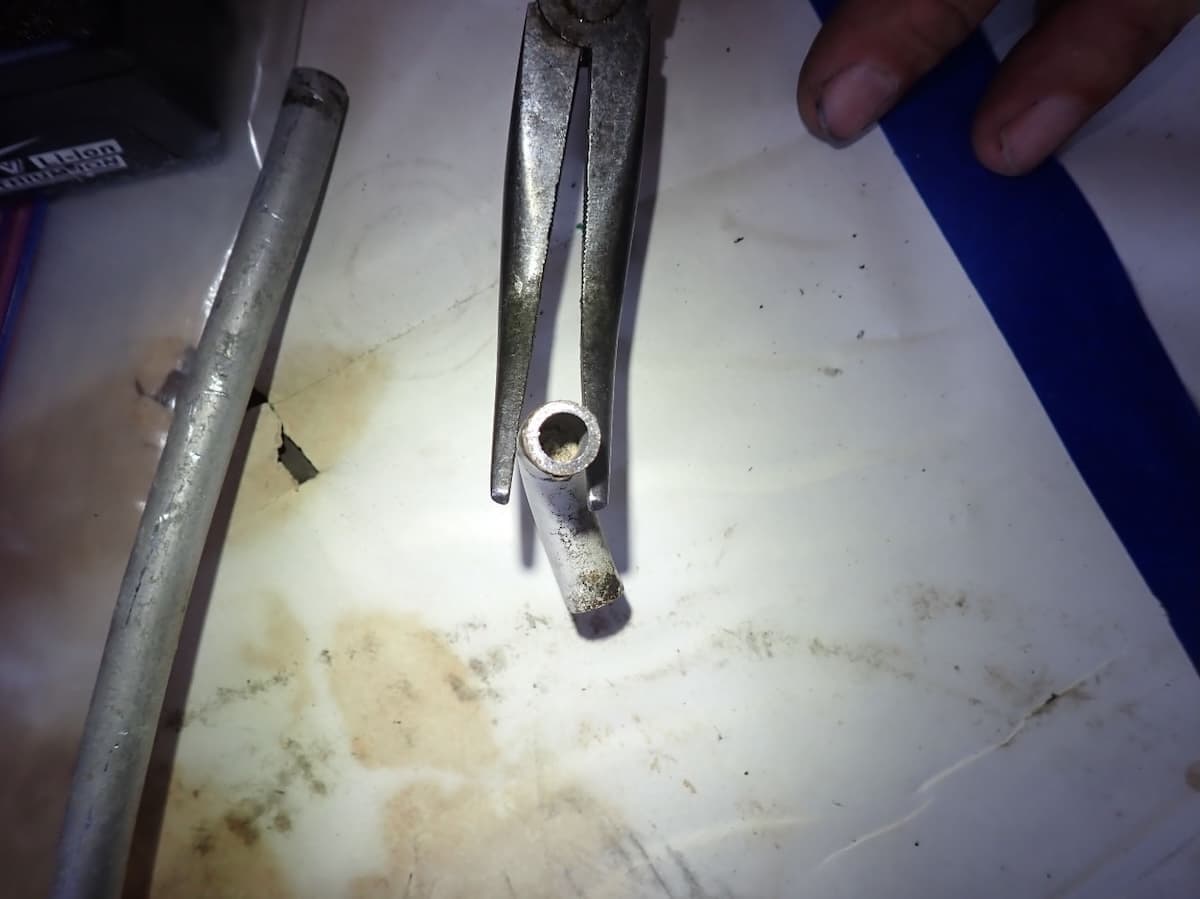
According to the manufacturer’s Model 172 Series Service Manual: If stoppage of the either the fuel vent or vent bleed hole occurs, with the engine running, it can lose power, and eventually stop due to fuel starvation, which can lead to collapsing of the fuel tank.
Probable Cause: A total loss of engine power due to fuel starvation as a result of a fuel vent line that was clogged by an insect nest.
To download the final report. Click here. This will trigger a PDF download to your device.
This May 2024 accident report is provided by the National Transportation Safety Board. Published as an educational tool, it is intended to help pilots learn from the misfortunes of others.
I had a mud dauber plugged fuel vent on my 172 once. Luckily it was discovered on the ground. After I landed, I stuck the tanks to see what my fuel use for the trip was and discovered fuel had only drained from one tank even though the valve was set to “both”. If the trip had been much longer I could have had a bad outcome. After that I purchased a fuel vent cover, like a pitot cover. Sorry to hear this had a serious injury.
Is it reasonable that a plane just out of Annual Inspection would have this clogged vent unnoticed? Just curious if it would have been a standard thing to check on a Cessna 172 Annual? Of course one not inspected for 25 years would seem to need a lot of extra care on the part of the AI.
The Cessna 172P also has severely flawed integral fuel tanks that do NOT offer positive detection for copious amounts of water hiding in the fuel tanks. Google it and learn something that could save your life.
This should be known to any pilot who flies or owns a 172. I was always taught as a student pilot to rock the wings upon approaching the aircraft, then sumping the tanks *last* to allow the water to settle.
As far as sumps go, I can recall one pilot who owned a plane who did not know that there were more sumps than just the wings. I drained two ounces of water from the gascolator the day of our flight. He was a Private Pilot, I had a student ticket only.