

The National Transportation Safety Board has called for changes in the way runway conditions are assessed during heavy rainfall, warning that the current system increases the risk of a runway overrun.
The NTSB issued three safety recommendations to the FAA on May 26, 2026, aimed at improving its runway condition assessment matrix (RCAM). Landing distances on wet runways are calculated using the current matrix.
The NTSB recommends the FAA update the RCAM to account for the progressive decrease in the wheel braking friction coefficient, the measure of the slipperiness of the runway, associated with increasing rainfall intensity.
The NTSB also recommends the FAA add additional rainfall intensity descriptors for aviation weather reports to identify rainfall intensities that can exceed the current heavy rain threshold of 0.3 inches per hour. The rainfall intensity descriptors currently used in aviation weather reports do not identify the highest rainfall intensities that are possible at an airport, limiting pilots’ ability to accurately assess the runway condition and the required landing distance.
The recommendations follow NTSB investigations into 11 runway overrun accidents and incidents from 2008 through 2022 that occurred after landings on wet runways.
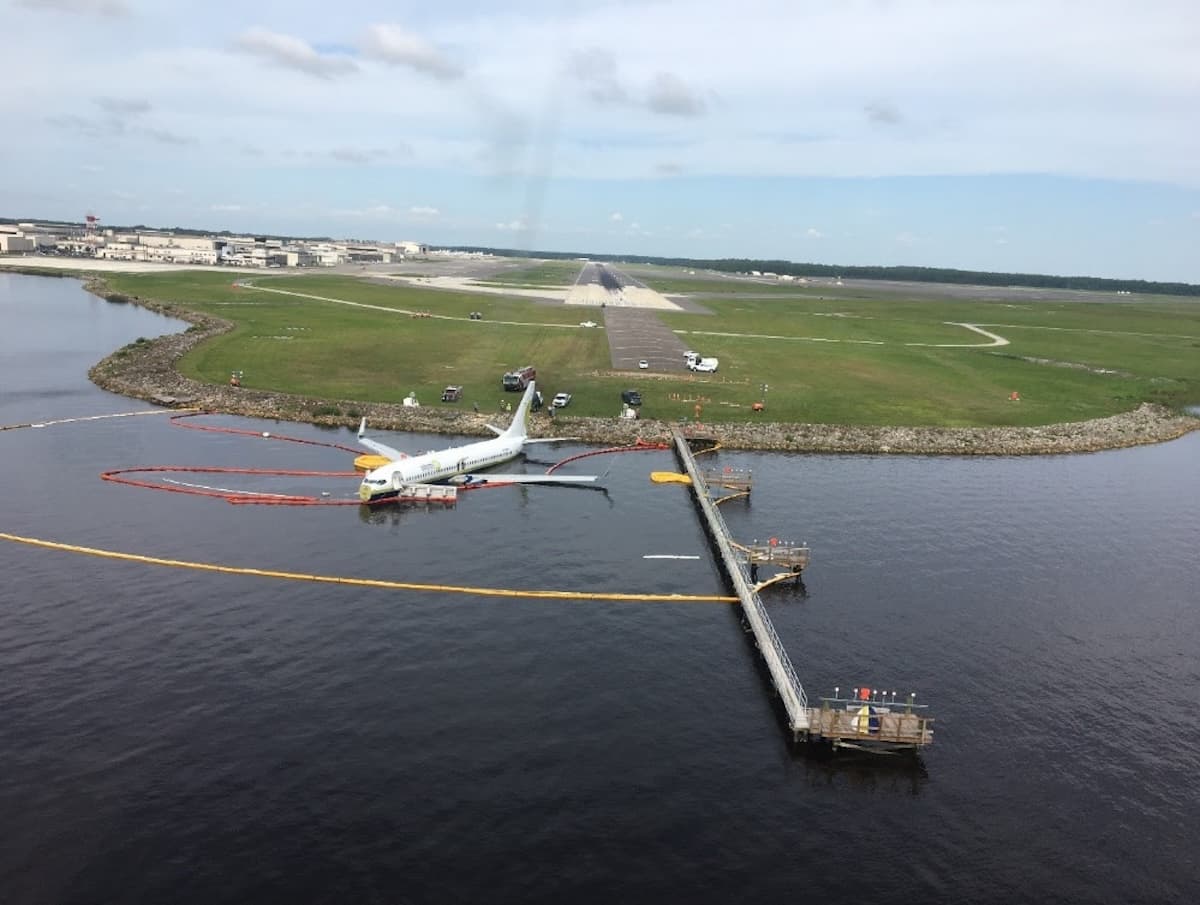
In one of those investigations, the 2019 runway overrun of a Boeing 737 in Jacksonville, Florida, the NTSB determined the probable cause was, in part, “an extreme loss of braking friction due to heavy rain and the water depth on the ungrooved runway, which resulted in viscous hydroplaning.”
Rainfall intensities at the time were two to eight times the heavy rain threshold value. Under such conditions, braking can be reduced to such an extent that pilots should not attempt to land, according to NTSB officials.
Aviation Investigation Report 26-04 and the safety recommendations are available online.
For more information: NTSB.gov
Leave a Reply