

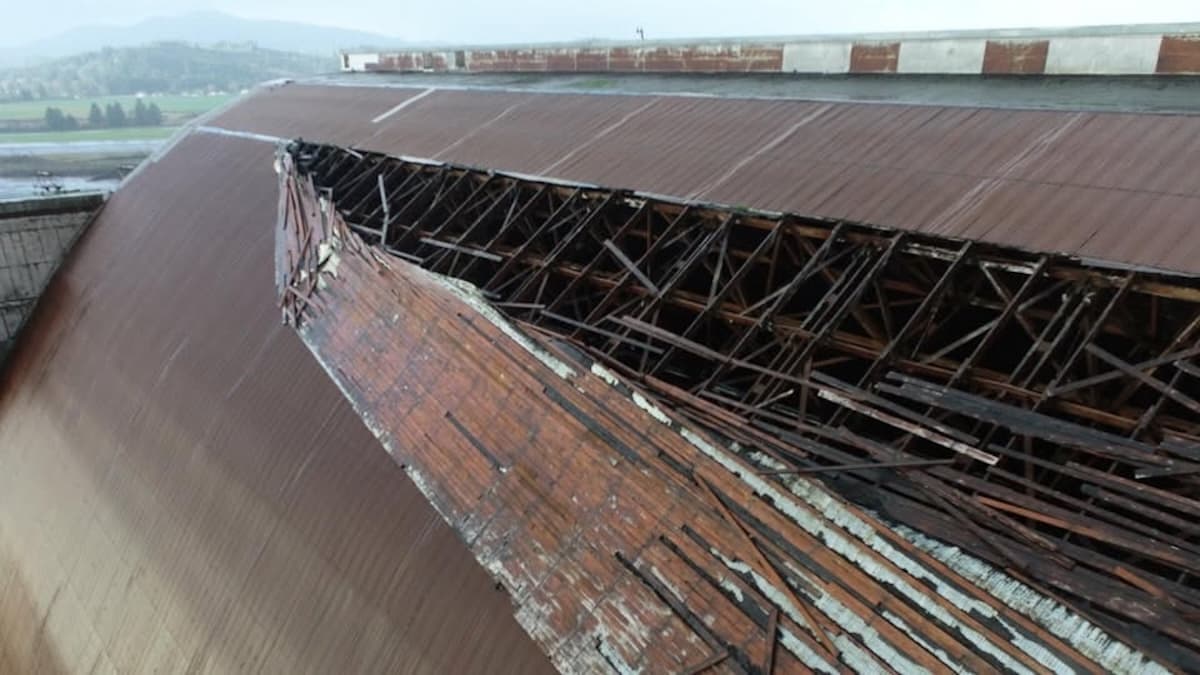
Board members of the Port of Tillamook Bay in Oregon have voted not to repair the storm-damaged roof of Hangar B, which houses the Tillamook Air Museum.
During a Dec. 18, 2025, storm, severe winds tore open a large section of the roof — estimated at 160 to 180 feet in length and up to 30 feet wide — leaving the World War II hangar exposed. The roof did not separate completely from the building but folded inward, creating ongoing safety concerns both inside and around the exterior of the hangar.
“With a heavy heart, the Port of Tillamook Bay board, following extensive discussion, financial analysis, and consultation with industry experts since December, voted 4-1 to not proceed with repairs to the storm-damaged roof section of Hangar B,” officials said in a press release.
The decision came after months of evaluation regarding the long-term financial sustainability of the historic structure and the significant local financial obligations tied to any potential repair effort, according to Port officials.
While FEMA assistance may become available, the Port would still be responsible for a required 25% local match — estimated to be $1.3 million — which would require the Port to secure additional financing through a loan for this portion of the roof repair only and does not include the whole building, Port officials explained.
Board members also discussed the ongoing risks associated with the facility, including concerns about future storm damage and the uncertainty surrounding long-term maintenance obligations for the aging structure.
“For now, and into the immediate future, the Tillamook Air Museum will remain closed,” Port officials said. “Any significant repairs (more than just the current safety issue) would take months or years to complete throughout the building.”
Board members emphasized that immediate safety concerns are being addressed. The hanging portion of the damaged roof structure, identified as the primary public safety issue, will be removed in the near future. In addition, the Port will continue pursuing opportunities and partnerships related to asbestos abatement assistance and future site stabilization efforts.
Throughout the evaluation process, board members collaborated closely with consultants experienced in similar historic military hangar facilities, including recent work involving Navy hangars in California.
Commissioners acknowledged that the decision was extremely difficult given the community’s deep connection to the iconic World War II-era structure. However, financial realities ultimately guided the board’s action, officials said.
“Repair of the full structure is not sustainable in the future,” officials said. “The board’s role is to oversee financial decisions for the port, and the board wasn’t willing to put the rest of the port in financial distress with debt.”
“Everyone loves Hangar B and recognizes its historical significance,” Commissioner Bill Baertlein said. “But even if the building were rebuilt, the long-term financial outlook remains unsustainable. Estimated annual maintenance costs alone are three times greater than the revenue the building had been generating.”
For more information: POTB.org
Leave a Reply