

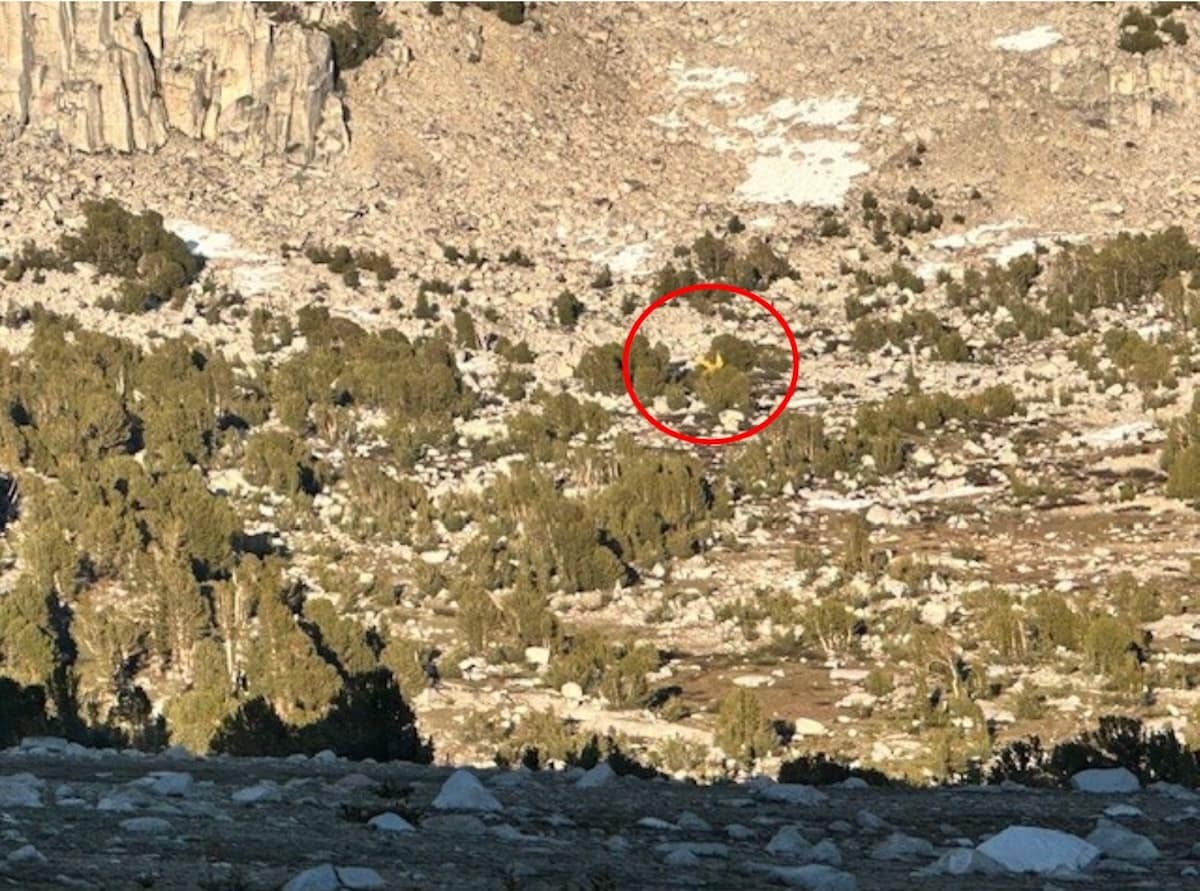
The 76-year-old pilot told investigators he had recently purchased the Piper J-3C-65. While flying through mountainous terrain, he mistakenly flew the airplane into a box canyon near Scheelite, California. He felt that the bigger engine (Continental C85-8F) would help the airplane climb over the mountains.
He noticed the terrain was rising faster than expected, but was unable to turn around due to constrictive terrain. Realizing the airplane was not going to clear the ridge and concerned it would stall if he attempted to turn around in the narrow pass, he looked for an area to make an off-airport landing.
He noticed an area that had a tree and elected to use the tree to take the brunt of the impact during landing. He reduced the airspeed and hit the tree, which resulted in substantial damage to the left wing and fuselage. The pilot was seriously injured in the crash.
The pilot told the investigators that he was seated in the rear seat of the airplane and was not able to lean the engine due to the fuel mixture controls being located in the front seat of the airplane. He believed that the combination of high altitude and the inability to lean the engine degraded the airplane’s performance.
Post-accident site examination by local law enforcement revealed that the airplane hit rugged, remote, mountainous terrain at an elevation 11,200 feet mean sea level. According to local law enforcement, the calculated density altitude was about 12,500 feet.
Probable Cause: The pilot’s inadvertent entry to a box canyon where the airplane could not outclimb the rising terrain.
To download the final report. Click here. This will trigger a PDF download to your device.
This June 2024 accident report is provided by the National Transportation Safety Board. Published as an educational tool, it is intended to help pilots learn from the misfortunes of others.
The #1 problem, is that no one flies a low powered aircraft over the Sierra Nevada mountains, especially during the afternoon hot weather in June.!!…A major stupid pilot trick!!
100s of aircraft have crashed in the mountain; DA problem in Summer, obscured peaks in Winter…
The better route, which I’ve flown in an old C172, is to go south along CA99 ,past Bakersfield, at the Goreman VOR, turn east, at 5,500 ft. , descend into Palm Springs, to Jackie Cochran airport.
It’s then a relatively low altitude flight eastward to Phoenix….DONE.!
As far as the rear seat is concerned, a Piper Cub is solo’ed from the rear seat. That is what he was doing.
As far as horsepower, any GA plane is going to be challenged at 12,500 to get a climb rate that is anywhere close to out climbing a cliff.
Mixture or no mixture.
Overconfident and in a flight envelope he never tested.
Unless I misread this report – What was the pilot doing flying from the rear seat???
Any pilot who has his ticket should know not to fly into a box canyon – or even fly in mountainous terrain – without training.
What pilot flies a plane where the mixture controls are inaccessible? That’s stupidity of the highest order.
This not a dangerous flight. Just follow highway 395…no canyons, no high density altitude issues.!!
More ‘stupid pilot tricks’.!