

After you crash an airplane, assuming you are still alive, one of your responsibilities as pilot in command is to fill out a NTSB Form 6120.1, called the Operator/Owner Aircraft Accident/Incident Report. It’s nine pages long, which sounds scary, but most of it is checking off boxes.
What certificates do you have? Check all that apply. What ratings do you have? Check all that apply. Etc., etc., etc.
The 6120.1 collects information on the airplane, the location of the accident or incident, the crew and passengers, the flight, the weather, and the damage. Then there is a large blank section called Narrative History of Flight where the pilot tells the story of what happened in his (usually) or her (less frequently) own words. And then, very nearly at the end of the form, is a section headed Recommendation, followed in parentheses by “How could this accident/incident have been prevented?”
It’s amazing to me that most folks that bend metal leave this part of the form blank.
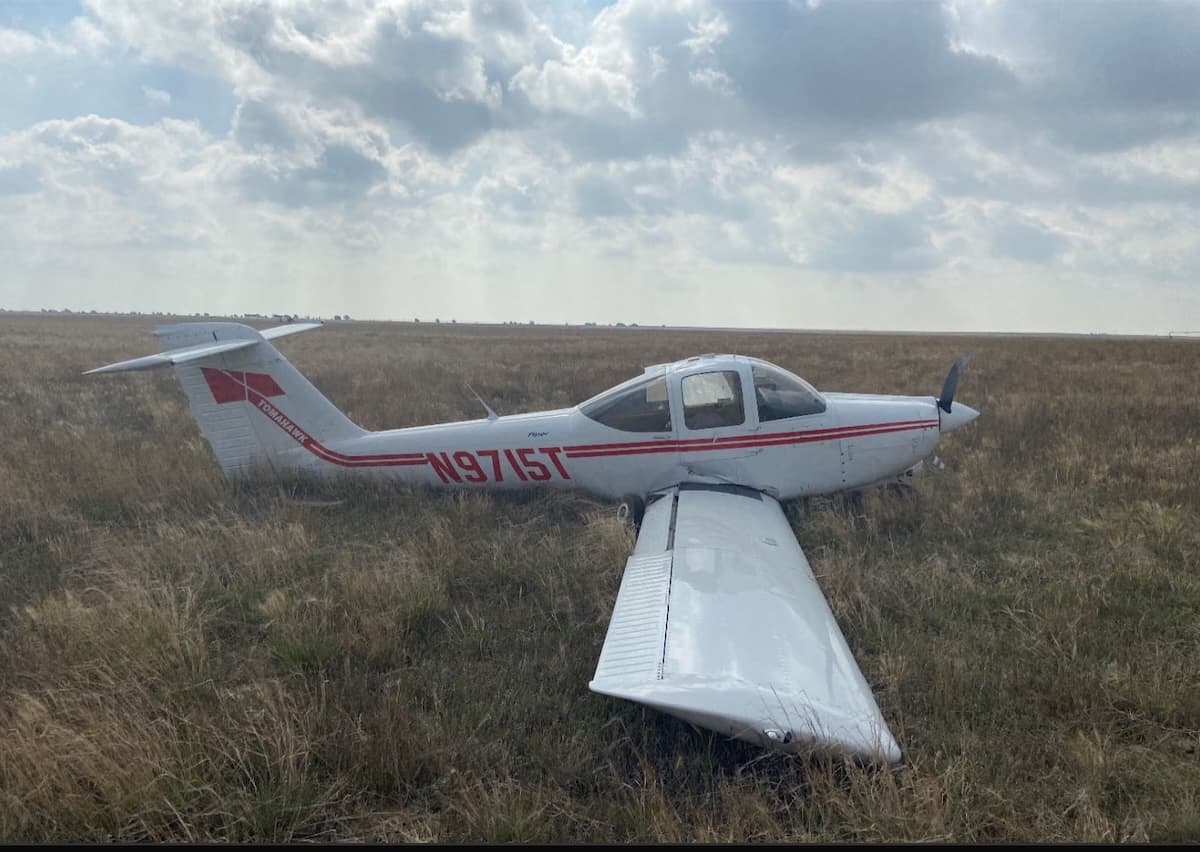
But the 20-year-old private pilot who belly-flopped his 1978 Piper PA-38 Tomahawk into a field not far from Dalhart Municipal Airport (KDHT) in northwest Texas in the summer of 2024 did make a recommendation. He wrote, “Have a better understanding of low horsepower aircraft in high density altitude environments.”
Roger that. Here to help.
Density Altitude 101
For background, pilots are taught that “high and hot” reduces performance, meaning that our aircraft struggle more out of higher airports and out of any airport on a hot day. High because the higher you go, the thinner the air is. Hot because the hotter it is, the more air expands, becoming relatively thinner.
Thin air affects airplanes in three ways:
- The wings generate less lift in thin air compared to in thicker air
- The propeller — which is just a sideways wing — generates less thrust, and
- A normally aspirated engine generates less power.
You turbo jockeys keep your power, but your props and wings are still affected.
Interestingly, the impact of the heat side of the air density equation can be quantified by calculating what is called density altitude. This is a mathematical trick that lets us express the impact of heat and barometric pressure — another atmospheric thinning or thickening agent — as well, by comparing their combined effect to the impact of altitude.
Said another way, density altitude is elevation corrected for the impact of heat and pressure, sometimes described as the altitude that the airplane “feels” it is at. And the effect is far from trivial. On a hot day, an airport’s effective field elevation can double!
The beauty of this is that most airplanes have performance data for a range of altitudes (it doesn’t matter what the physical altitude is, we only need to know about the altitude the airplane “thinks” it’s at), so that we can judge the impact.
And it can be stunning. For instance, looking at the performance tables for the ubiquitous Skyhawk, takeoff roll varies from 860 feet at a low, cool airport to 2,450 feet at a hot and high one.
There’s more to talk about, but first, back to our story…
The Flight
The pilot and his female passenger both hailed from Wisconsin, but the airplane was owned by an individual or company in Florida, and the records don’t indicate where the flight started or where it was ultimately headed. The reports do show that the day started in Cheyenne, Wyoming, with an additional fuel stop in Pueblo, Colorado.
The pair landed for fuel for both the Tomahawk and themselves at Dalhart, bound next for Albuquerque, New Mexico, pretty much staying at lower altitudes skirting the east side of the Rocky Mountain chain. Even though crossing over parts of four large Western states, the total route was well within a good day’s GA flying, at something around 650 miles.
The Pilot
The pilot held a private certificate and a second class medical. His total time was 187 hours at the time of the accident, with 55 hours in the last 90 days and 84 in the make and model. He had quite a bit of simulated instrument time, suggesting that he might have been working on his instrument rating.
The Accident
The pair landed and had the airplane topped off by the FBO and then grabbed lunch. It’s not in the official reports, but I know the airport, so they must have eaten at the Red Baron Restaurant, which is very good.
It was a warm summer day, now just before 2 p.m., with the air temperature just getting hot at 29°C (84℉). The field elevation is 3,391 feet MSL, and the NTSB would later calculate that the density altitude was at 6,667 feet, making Dalhart, Texas, the new Mile High (and then some) City. The temperature and the barometric pressure that afternoon added nearly 2,500 feet of effective altitude.
Or, if you prefer, it imposed a 2,500-foot performance penalty on the little Piper.
But the pilot was well aware of this, according to his narrative. He wrote that he used the POH to run “a few performance charts,” further saying, “I knew I had plenty of runway to use for takeoff.”
Then he added something interesting: “Density altitude was similar to the density altitude at KCYS and KPUB and I was able to depart both airports earlier in the day.”
That’s a lovely example of confirmation bias, where pilots take past data and impose it on their desires, rather than looking at each situation independently. But that’s a topic for another day.
He does his preflight, and they load up for the next leg of the flight. According to his 6120.1, the airplane is two pounds under max gross. He does his run-up and all is well. They line up on Runway 21, with a strong wind of 20 knots gusting to 30 straight down the pike. He rotates at 70 knots into ground effect and, once there, was “able to pop out and start a climb.” He notices that his RPM is on the lowish side but says he had been told that is normal in a “higher density altitude environment.”
The climb is sluggish at first, then stops altogether at 300 feet above the ground. Then the little Tomahawk starts sinking. Thinking that something must have gone wrong with the airplane, the pilot starts a very shallow turn to return to the airport. The sink rate increases and he knows the gig is up and commits to putting down in a field.
He tells his passenger what he’s going to do. She unlatches the top latch for the side doors and cracks open her door. He pops his door, pulls the mixture, shuts off the fuel valve, pulls the throttle to idle, turns off the mags and the master, and the ground comes up to meet them. Committing to the landing to touchdown: 10 to 15 seconds.
He plants wings level, mains first, nose gear following shortly after. But it’s a rough field. The nose gear digs in and the plane jerks to the left, the gear crumples, and the Tomahawk skids across the ground. When the dust settles, all three gear have sheared off, the wing roots are damaged, the tail clumped, and they’ve sustained a prop strike. The NTSB describes the damage as substantial and also finds damage to the engine mount after the airplane is recovered. But both the pilot and his passenger are uninjured.
They are less than a mile from the airport.
The NTSB
It will come as no surprise to readers that the NTSB called out density altitude as a factor in the crash. But it’s a secondary one. Because the investigators ran the numbers themselves using the POH, and there was no reason that the airplane shouldn’t have been able to climb. The numbers show that at max gross, it should have delivered a 400 feet-per-minute climb at that density altitude. Yeah, not stellar, but enough to climb away from Dalhart, which is a pretty flat location. Investigators knew they were missing something. And it weighed on them.
But not for long.
The probable cause statement for the accident reads: “The pilot’s improper decision to take off with the airplane over its maximum allowable gross weight at a high density altitude, which degraded its climb performance and led to an off airport landing.”
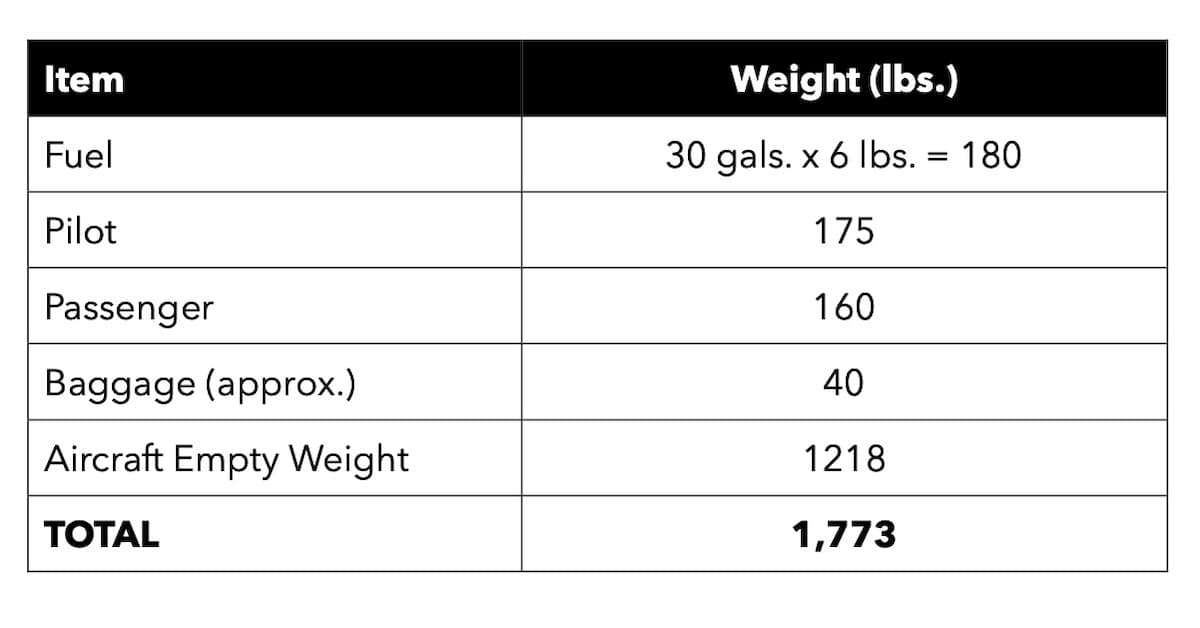
Yep, while the pilot reported being two pounds under max gross on his 6120.1, apparently he gave slightly different numbers when asked by the NTSB staff duty officer who took the initial notification. The NTSB investigators tallied those initially-reported numbers (fuel, pilot, passenger, baggage, and empty weight) and figured the airplane was 103 pounds over gross — around 6%.
Analysis & Discussion
So let’s get the overweight out of the way first. This is certainly not ideal, but it hardly seems enough to rob this airplane of the ability to climb at all. Assuming those numbers are correct, that is. If anyone asks me my weight, the only number I have at hand is my morning bathroom scale weight, not my fully clothed after a yummy meal weight. And did he really know his passenger’s weight? And the baggage? Did they actually weigh it or ballpark it? Was their flight gear included in the baggage weight?
My point is that, perhaps instead of 6% overweight, they could have been 10% overweight. And even then, while there would be a performance penalty, it shouldn’t have been a fatal one for the airplane.
Likewise, the density altitude is highish, but not crazy high, either. The NTSB’s calculated density altitude is only 300 feet higher than the field elevation at Cheyenne where they took off from that morning.
Was it simply the combination of the two factors, as the NTSB suggests, that tipped the balance, or are we missing something?
Density Altitude, The Graduate Course
Circling back to density altitude, there’s actually more to it than what we pilots are typically trained about. Most of us are taught to whip out an E6B, quickly reset the airplane’s altimeter to standard pressure to get the realtime pressure altitude, then line up the current temperature to that altitude on the E6B and read the density altitude in the proper (very small) window.
But there’s a whole other factor in density altitude, and that’s humidity, what Boldmethod calls “the factor you don’t compute.” I’m not going to go into all the details, but humidity can further increase density altitude over and above pressure and temperature, easily adding a couple hundred feet.
I looked up archived weather data for Dalhart for the day of the accident, and while the hour-by-hour data wasn’t stored, the dewpoints (which can serve as mathematical proxies for humidity) that day ranged from 49° to 56℉, with an average for the day of 53℉. I plugged that into the superb Shelquist Engineering Calculator and the results state the density altitude the day of the accident could have been 6,554, so only 81 feet higher in this case, but sometimes you can see triple-digit add-ons.
As to the pilot’s request to better understand low horsepower aircraft in high density altitude environments, there is one significant operational difference, and that’s in the leaning procedure. Nowhere in the documents on this case is leaning mentioned. I hope the pilot leaned his engine, although if he didn’t (and many “flat land” pilots who normally fly below 5,000 feet don’t have this on their radar) that would certainly explain why instead of delivering an anemic 400 fpm as advertised, the plane sunk out of the sky.
Now, that 400 fpm has an interesting side note, relative to the subject of leaning. The chart from the POH says that it was calculated at “best power mixture.” This is neither the lean of peak nor rich of peak that pilots and engine experts argue over from dawn to dusk. This is adjusting your mixture until you are getting maximum RPM. And yes, that will run the engine hot. But when you are hot and high and heavy and need to get into the air, you need all the power you can get, and running the engine hot for the takeoff and climb out is the lesser of evils, especially considering the greater of evils is an off-airport “landing.”
The Takeaway
The takeaways are three fold, this time, I think.
- You and your airplane are probably fatter than you think. Most times that’s OK. But when the rest of the margins shrink or stink, you need to keep that in mind.
- If it’s humid, the density altitude is higher. Do you need to break out a fancy calculator? Not necessarily, as you don’t easily have access to humidity (while you can calculate it from dewpoint, the math gets cumbersome in the field). But we can feel humidity readily. So if it feels humid, just know that performance will be even worse.
- Lean for power when it’s hot and high, especially with lower-power engines.
Oh, right, and a bonus takeaway: When landing a trike off airport, once the mains are down, start hauling back on the yoke as you slow. You want to keep that nosewheel off the ground for as long as possible.
The Numbers
Want to read more? Download the NTSB’s final report here or view the items on docket here.

The 3-Hells of aviation = High Hot Humid
NOW…
The 4-Hells of aviation = High Hot Humid Heavy
Rented piper tomahawks for many years and gave flight instruction in them too.
Installed fancy iridium spark plugs and we had to lean aggressively on ground year round in Florida. But the plugs stayed cleaner much longer per month .
After 1 year and a half or 1500 hours , we simply replaced the plugs with new plugs.
Expensive , but much less hassle. The Tomahawk would start much easier too.
Plus we kept the best Concorde battery installed in bird with Concorde s extra cranking power . Again expensive but the bird started easier. Especially in the summer in Florida s hot , humid weather .
A great trainer and nice cool cabin to fly in hot weather.
Did the strong gusty winds play into the climb? When he turned crosswind and down wind to return to the airport?
I feel you know what you’re talking about! You must be a flight instructor of many hours of experience. !!!!
Maybe he fell into the backside of the power curve?
Another consideration is that the O-235 is well known for plug fouling if not leaned aggressively during taxi. I have many hours in Tomahawks flying heavier and from higher altitude airports. While the climb wasn’t stellar, the plane will easily handle it if flown correctly. Failure to lean is a likely issue, as is the possibility of carb ice. Most pilots pull on carb heat and look for an RPM drop, then shut it off. Once you’ve taken off with ice in the carb, you’ll find the performance to be much like that described for the Tomahawk in this case. Always give the carb heat a long enough run time to properly clear the carb, and if conditions are ripe for carb ice, so so again as you are taking the runway.
Correct!
Two things if you don’t want this to happen to you. First take 10% off of your gross weight when operating in density altitude above 4000’. That 3000 gross minus 300 equals 2700lbs. New gross weight. This helps to take into account less horsepower and thinner air. Second and more important is get your glider license. Why? because you will learn what a thermal is. How you can use it to climb and if you hit the sink of a thermal close to the ground you can have this same experience this pilot had. Power pilots lack so much in understanding the air they fly in.
Excellent advice. Except ‘hauling back’ on that yoke in powerless off field landing probably won’t matter much, if at all.
I have a few items to consider;
– the engine has almost 2,000 hrs on it, so probably not making full power
– cold oil, less than 160 degF, can rob the engine of 5-10 hp, vs the ‘mighty’ 108 for the Lyc O-235..
– carb ice can form while taxiing to the run up area, with the RH vs temp shown.
So, besides leaning for best RPM, a few other things can reduce the available power.!