

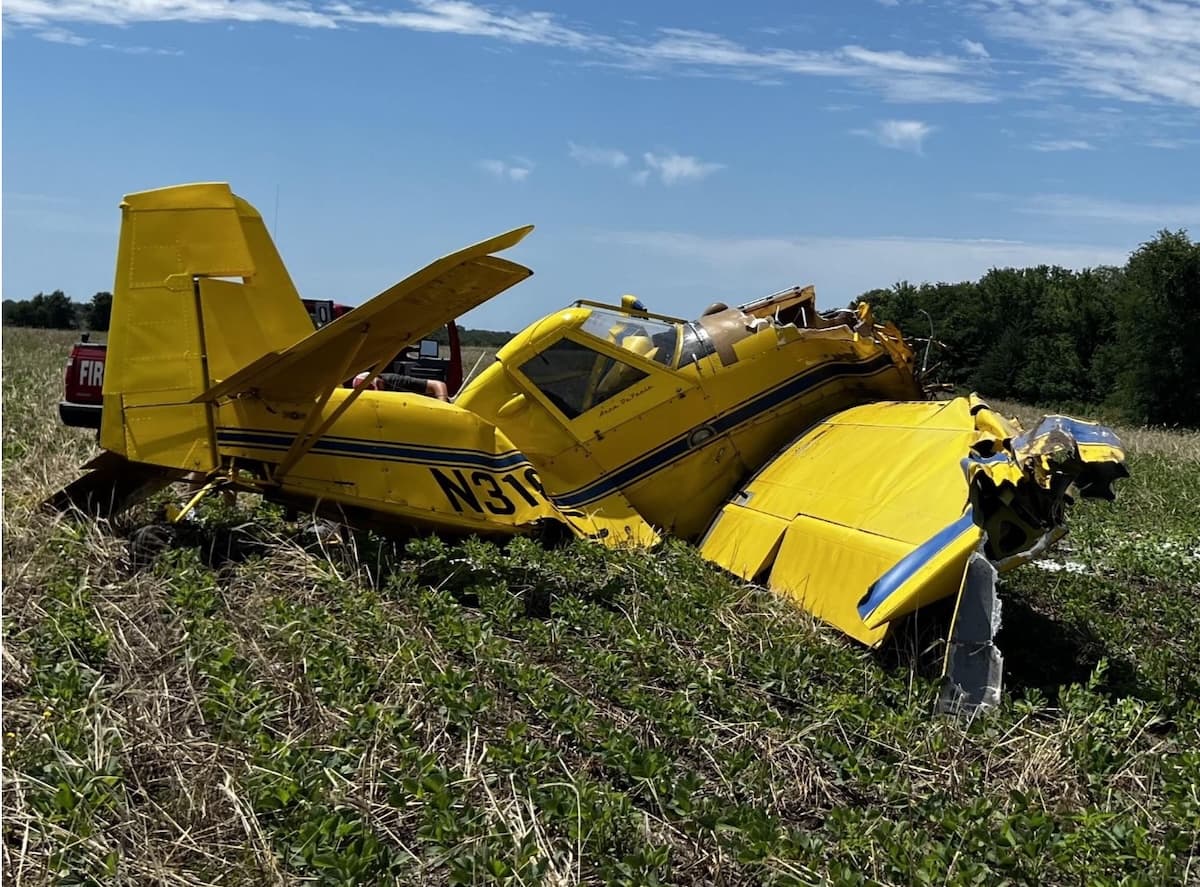
The pilot was conducting an agricultural flight near Andover, Missouri, when the Air Tractor Inc AT-301 was unable to maintain altitude and airspeed during cruise flight between the departure airport and the field to be fertilized.
The pilot told investigators that the engine continued to operate normally, and all the engine instruments (engine RPM, manifold pressure, oil pressure, fuel pressure, and oil temperature) indicated normal values for the airplane in a cruise flight configuration with the flaps retracted. She verified that the mixture and throttle positions were correct before she increased the throttle, but there was no increase in engine power and the airplane continued to descend.
She began to jettison the 1,700 pounds of dry fertilizer as she maneuvered the airplane toward a nearby open field. The airplane’s left wing clipped a tree as the airplane descended into the field.
The airplane landed hard and came to rest upright in the field. The fuselage, engine mounts, and both wings were substantially damaged during the hard landing.
The airplane’s wing fuel tanks remained intact and contained ample fuel that exhibited the color and odor of automobile fuel. A review of airworthiness documentation revealed that the airplane was not authorized to use automobile fuel.
When interviewed, the airplane owner/operator acknowledged that the airplane did not have a Supplemental Type Certificate (STC) to use the 87-octane automobile fuel that he sourced from a local gas station.
According to a company that specializes in issuance of automobile fuel STCs, the use of automobile fuel containing ethanol can result in damage to rubber and aluminum fuel system components, increases the volatility of the fuel, and can absorb significant amounts of water. Carburetor icing can develop faster with higher volatility fuels.
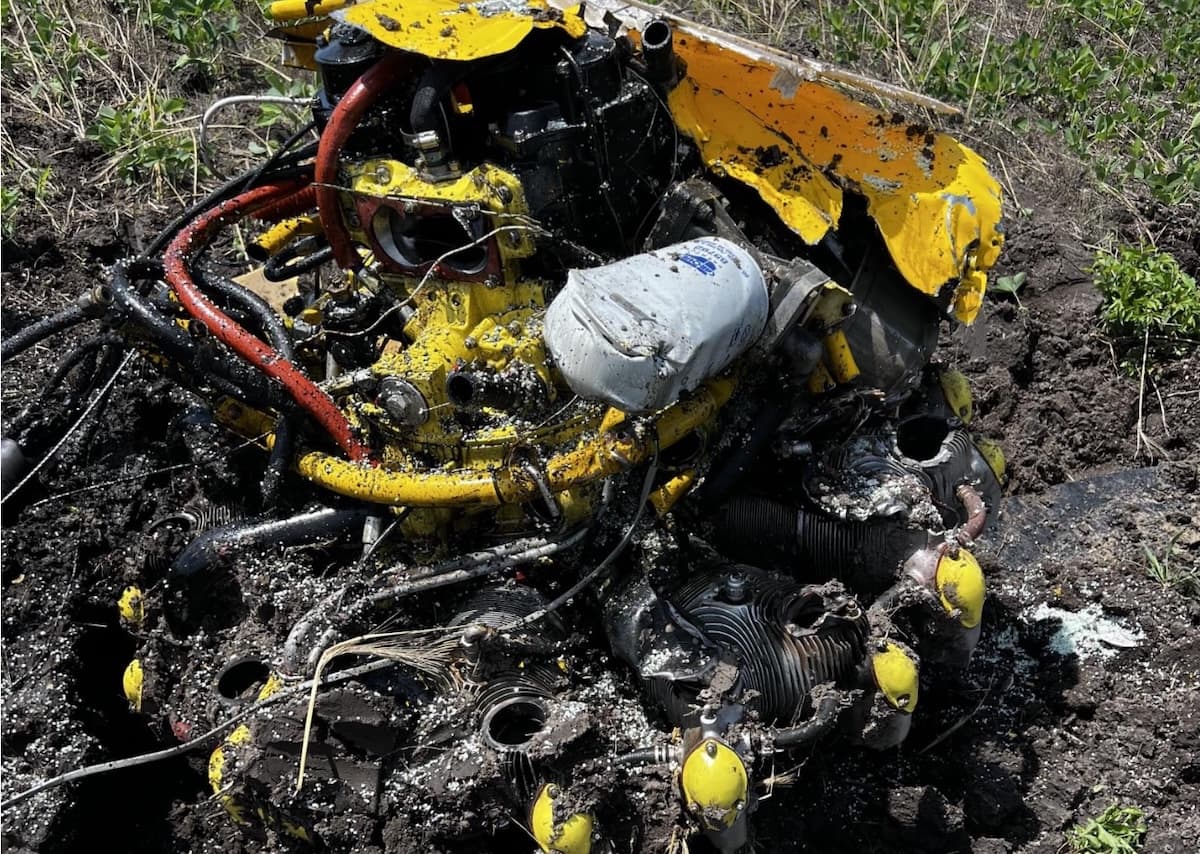
Additionally, older engine designs like the airplane’s Pratt & Whitney R-1340-59 radial engine, are susceptible to valve seat recession if the fuel used contains an insufficient level of lead.
When asked, the airplane operator indicated that he did not check the automobile gas for the presence of ethanol, nor did he blend aviation fuel to increase the lead content of the automobile fuel.
The airplane’s radial engine separated from the fuselage during the accident and was not examined during the investigation.
Probable Cause: The pilot’s inability to maintain altitude and airspeed during cruise flight likely due to a decrease in engine performance associated with the unauthorized use of automobile fuel, which led to an inflight collision with a tree and hard landing.
To download the final report. Click here. This will trigger a PDF download to your device.
This June 2024 accident report is provided by the National Transportation Safety Board. Published as an educational tool, it is intended to help pilots learn from the misfortunes of others.
An STC would probably have excluded ethanol so it wouldn’t have mattered if he was using it anyway. And some STCs are simply pay the money and they’ll tell it’s OK now.
With 120 gallon capacity, and avgas at $6 vs auto gas at $3.50, that’s a difference of $300 per tank…..not a ‘few bucks’ !!
But with no stc, it shouldn’t have been used.
Saving a couple of bucks per gallon costs a lot in the end.