

The flight instructor told investigators that the purpose of the flight was for the pilot receiving instruction to practice instrument approaches. No anomalies were noted during the preflight inspection, taxi, or engine run-up.
Both the flight instructor and the pilot reported that, following a normal takeoff from the airport in Zephyrhills, Florida, when the Piper PA-28 was about 300 feet above ground level, the engine partially lost power.
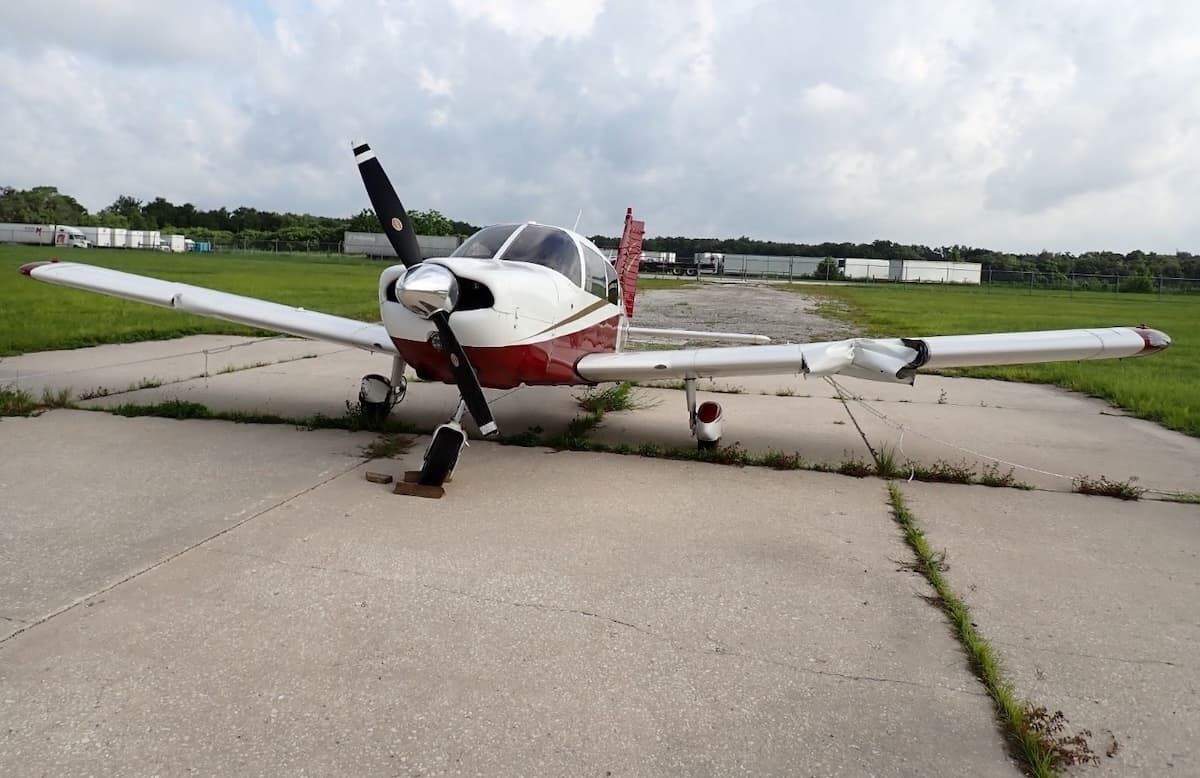
The airplane was no longer able to climb, so the pilot reduced the engine power and performed a forced landing in the grass off the departure end of the runway. During the forced landing, the airplane hit a fence, resulting in substantial damage to the left wing and the fuselage.
The airplane was equipped with a Dynon primary flight display. Its recorded data revealed a sharp increase in engine speed (recorded in RPM) and manifold pressure (recorded in inches of mercury) at 1015:45, consistent with full power being applied. The engine reached a maximum speed and manifold pressure at 1015:56 and remained there until 1016:10, when the RPM dropped from 2,554 to 1,399 rpm within six seconds, while the manifold pressure dropped from 28 to 20.8 inches of mercury.
The engine speed then increased to about 2,500 rpm for two seconds, followed by a drop to 1,841, then an increase to 2,560, followed by an immediate decrease to 1,170. The engine speed then increased to 2,370 rpm at 1016:13, followed by another immediate reduction to about 1,000 rpm until the engine shut down at 1016:24. During the RPM fluctuations, the manifold pressure also went through several oscillations consistent with fluctuating engine power.
The data also revealed that, during the time that full power was applied to the engine, fuel flow steadily increased to a maximum of 18.8 gallons per hour (gph) at 1015:58, but then began to steadily decrease. At the time the first reduction of engine speed and manifold pressure was recorded, the fuel flow indicated 10.3 gph. During the engine speed and manifold pressure fluctuations, the fuel flow varied between a high of 11.2 gph to a low of 6.9 gph.
The total recorded engine operation time for the accident flight was about 12 minutes.
Post-accident examination of the wreckage revealed the left auxiliary fuel tank was breached and devoid of fuel. Removal of the left auxiliary fuel tank and fuel pickup screen revealed the fuel pickup screen was clear of any contamination and was unobstructed. The left and right main fuel tanks were undamaged and found to be almost full of fuel that had the color and odor consistent with 100LL avgas. The right auxiliary fuel tank displayed minor impact damage to the fuel tank quick drain, and the fuel cap was secure. The fuel tank was devoid of fuel.
The fuel selector in the cockpit was rotated and noted to have a normal detent for each position. The fuel selector was positioned to the left auxiliary tank position, and low-pressure air was blown through the fuel strainer outlet. The left auxiliary fuel tank lines were unobstructed with no signs of breaks in the lines.
Removal of the fuel strainer bowl revealed some large pieces of debris inside the fuel bowl and debris contamination in the fuel screen, but the screen was not obstructed.
Continuity was established between the engine’s crankshaft, camshaft, connecting rods, and associated components. During manual crankshaft rotation, all six cylinders exhibited thumb compression and suction. Examination of the top spark plug electrodes revealed normal operating and wear signatures compared to the Tempest Aviation Spark Plugs Installation and Maintenance Manual 1710A. A fuel sample taken from the carburetor bowl was clear of contaminates and the fuel was consistent with 100LL avgas.
In preparation for an on-airframe engine test run, the fuel system was primed using the airframe electrical boost pump, and the engine was primed using the manual primer. After priming, the engine started without hesitation. A magneto drop check revealed acceptable results with reference to Lycoming Service Instruction 1132B.
The engine was operated for about 25 minutes at multiple RPM settings ranging from idle to full power and using the fuel selector to select the left main and then the right main fuel tank. The propeller control was seized and could not be moved in the cockpit, but the governor was capable of maintaining full throttle engine RPM. The engine operated normally, without any roughness, stumbling, hesitation, or loss of power.
After engine shutdown, removal of the rocker box covers revealed that the valves, springs, and rocker arms displayed normal operating and lubrication signatures. The propeller control cable rod end was removed from the propeller governor, and the governor control arm was capable of normal movement. The propeller control cable remained seized, and the control cable rod end was severely corroded.
No sign of leakage was observed around the fuel pump, carburetor, and fuel lines. The carburetor inlet screen had no contaminants. The fuel pump was disassembled, and several of the internal components were corroded.
The carburetor was removed for testing, and a static pressure test revealed that the carburetor bowl, floats, and float valve operated normally. The accelerator pump was capable of discharging fluid but it was weak, and the amount of fluid expelled was low. Testing of the carburetor on a flow test bench revealed no anomalies that would have prevented normal operation of the engine.
Disassembly of the carburetor revealed that the carburetor bowl contained a significant amount of debris and corrosion, including several loose particulates that were about ⅛ inches in length.. Both the main fuel nozzle and the fuel nozzle well contained particulates. Debris was also found in the mixture metering sleeve.
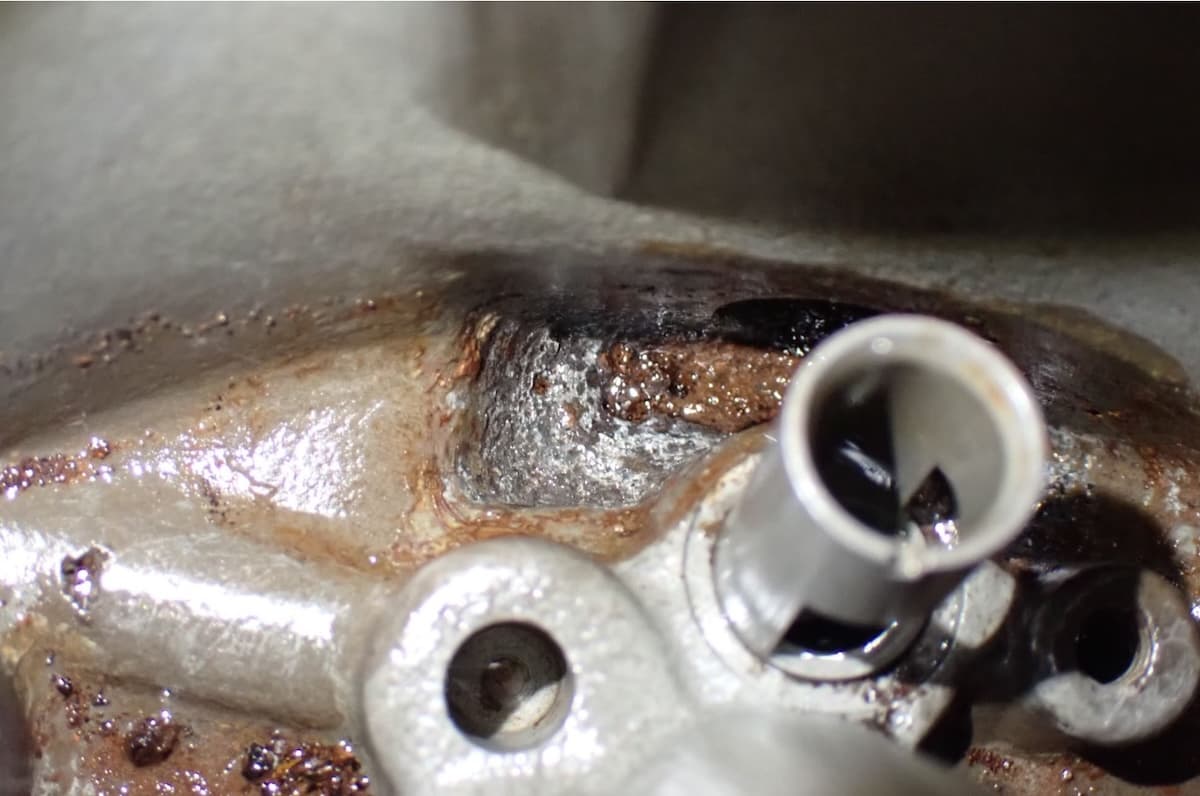
The accelerator pump displayed normal wear signatures. The metal check valve ball was missing within the accelerator pump housing with no sign of the metal check valve ball anywhere within the carburetor. The retaining clip was severely corroded.
According to the PA-28-235 service manual, the carburetor bowl should be drained and the screen should be inspected during each annual/100 hour inspection of the engine.
According to the airplane’s maintenance logbooks, the last annual inspection was performed on March 1, 2024, at a tachometer time of 1,753.0 hours, about three months before the accident. At the time of the last annual inspection, the airplane underwent an avionics panel upgrade, including adding a primary flight display and its associated sensors. The maintenance logbook also revealed that during the previous annual inspection on Jan. 24, 2023, the fuel lines were “cleaned and flushed” after replacing the electric fuel pump. On Oct. 20, 2021, the carburetor had been removed, and the bowl and inlet screen were cleaned.
According to Precision Airmotive Corporation Service Bulletin MSA-3, it is recommended that all float type carburetors on general aviation aircraft should be overhauled at the same time as the engine overhaul or 10 years since the carburetor was placed in service. The logbook revealed the carburetor had been overhauled and reinstalled on Jan. 20, 2014. According to the engine logbook, the last engine overhaul occurred on March 9, 1992. According to Lycoming Service Instruction 1009BE, the engine is recommended be overhauled every 2,000 hours or every 12 calendar years, whichever occurs first. The 12 calendar year recommendation is to “mitigate engine deterioration that occurs with age, including corrosion of metallic components.”
Probable Cause: A partial loss of engine power during initial climb due to fuel contamination that resulted from corrosion and loose corrosion debris in the carburetor, which restricted fuel flow to the engine.
To download the final report. Click here. This will trigger a PDF download to your device.
This June 2024 accident report is provided by the National Transportation Safety Board. Published as an educational tool, it is intended to help pilots learn from the misfortunes of others.
Leave a Reply