

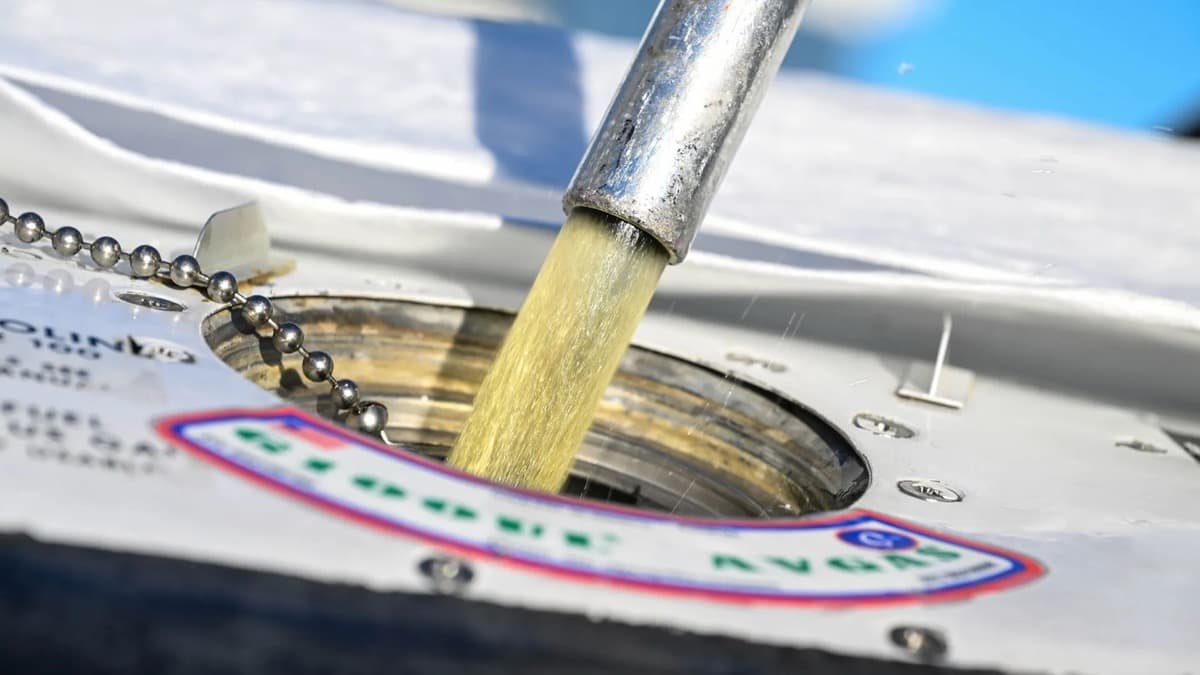
Much has been written about the ongoing development of unleaded avgas and the plan to have general aviation transitioned completely to unleaded fuels by 2030.
A number of General Aviation News readers have protested, saying the amount of lead in 100LL is so small as to be inconsequential. Others, having watched government in action, are confident the 2030 deadline is more of a suggestion, rather than a hard date for the end of 100LL.
I understand that sentiment. I worked at Chevron for 38 years, including several years managing an unleaded avgas investigation effort. I had a boss who intoned, “Unleaded avgas is the fuel of the future! And it always will be…” The implication, of course, is that we’ll never actually get there.
After 38 years of FAA development work, it’s certainly understandable why you might think it’s never going to happen. But this time, it’s different.
Why This Time is Different
Let’s start with some history: In compliance with the Clean Air Act of 1970, the EPA began a phasedown of lead in mogas (motor gasoline for automobiles) in the late 1970s. By 1995, lead was gone from the corner service station. However, given concerns about feasibility of effectively replacing lead in avgas, and the comparatively smaller impact (about 1/500th the annual volume of mogas), action on avgas was deferred. Following the law, the EPA continued to pursue evidence-based regulation to reduce lead in the environment from all sources. By 2010, it had been very effective. In fact, avgas now represents ⅔ of all lead air emissions.
So we’ve seen an enormous decrease. Why is this remaining historically small contribution a concern? The problem is that there’s no safe level of lead. Scientists have been unable to demonstrate that even a minuscule lead exposure doesn’t cause some damage, particularly to developing nervous systems in humans less than five years old. This damage is irreversible and lifelong.
Again, following the law, the EPA made a 2023 finding of endangerment that emissions of lead from piston-engine aircraft pose a significant risk to public health and welfare. The regulatory process is slow but steady, and 2030 has been set as the sunset for lead in avgas. To reinforce that, Congress included firm language in the FAA Reauthorization Act of 2024, giving the FAA no wiggle room on the 2030 date.
But, come on, the current administration is more sanguine about such issues. Couldn’t they delay this? Certainly they might try.
But there are a significant number of folks very concerned about the impact of lead on children living near airports and recent judicial decisions make it clear the courts are no less inclined to observe the law than historically. Given the advocacy for children’s health, and letter of the law of the Clean Air Act and the FAA Reauthorization Act, administrative attempts at delay are unlikely to be effective.
Forget About The Politics
Even if a government delay might be arranged, there are indications that TEL, tetra-ethyl-lead, which gives 100LL its desirable anti-knock quality, won’t be available after 2030.
Why not? There’s a single remaining TEL manufacturer in the west, Innospec. Innospec has been watching world events unfold, and has announced it plans to stop making TEL in the 2028-2029 time frame, with inventory available to support leaded avgas blending until the sunset date of 2030.
But couldn’t Innospec be convinced to delay its decision?
That is unlikely.
First, a little bit about the TEL manufacturing process. TEL comes from the reaction of metallic lead alloyed with sodium to form a reactive sodium-lead alloy. This alloy is then bubbled with ethyl chloride (chloroethane) gas in a controlled reaction vessel. The process itself is not just toxic, but corrosive, and the reaction equipment is of finite life, limited by corrosion allowances.
It is very likely that Innospec’s statements about stopping the production of TEL by 2030 are based on its estimates of remaining corrosion allowance in the equipment. Periodically, significant investment is required to replace or renew that equipment. It wouldn’t make economic sense for Innospec to make that re-investment with the end of TEL in sight.
How about TEL supply from Russia or China? It’s unknown if Russian TEL facilities are still operational, and doing business with Russia is problematic at present. China makes some TEL, but the samples I’ve seen — and remember, these are their bragging samples they’re using to try to solicit business — are of very poor quality. U.S. avgas blenders are unlikely to accept the liability of such a poor-quality supply.

TEL is extremely toxic and is treated with enormous respect in the refining industry. Quality supplies are coming to an end and no new quality supplier is likely.
That means whether or not the EPA is successful in outlawing lead use in avgas, there’s unlikely to be TEL available to continue blending avgas past 2030.
What does that mean for GA?
It’s time to prepare for whatever changes might be necessary to use approved unleaded avgas to keep ‘em flying.
Here is a great resource for airports / FBOS transitioning to unleaded fuels:
https://www.nationalacademies.org/publications/29408?utm_source=Transportation+Research+Board&utm_campaign=6dc2122d9f-EMAIL_CAMPAIGN_2026_06_25_03_06&utm_medium=email&utm_term=0_-6dc2122d9f-532294615
The European Union originally set an authorization cutoff for Tetraethyl Lead (TEL) production for May 2025. However, following petitions from the fuel industry, the EU approved extensions allowing major manufacturers to produce and distribute Avgas 100LL
My brother last year in Oshkosh, Wisconsin asked the then current president of the AOPA what if no dropping in replacement was found for 100 LL by the EAGLE end date. He stated to him that there would just be a new target date selected for the end of 100 LL.
The only real cutoff date that I have found was from California legislation that ends the use of 100 LL at the end of 2030. It appears the reason they did that is due to the lack of a mandate in the EAGLE initiative.
The normal hope and prayers that politicians now use to address their do nothing legislation is all we are going to see when it comes to getting rid of 100LL from the USA federal government.
Currently the FAA backed by AOPA is mandating 100 LL fuel so they are standing in the way of change, this will block realistic attempts to be made to end the long Aviation nightmare and will continue to damage the future of Aviation.
I asked grok to design a theoretical 100ll substitute
Final Proposed Formulation for Presentation to the FAA
This is a hypothetical unleaded 100-octane aviation gasoline candidate designed to closely match ASTM D910 100LL specifications (Motor Octane Number ~99.6+, Performance Number ~130, Reid Vapor Pressure 5.5–7.1 psi / 38–49 kPa, distillation profile, freezing point, etc.). It draws from public patent literature (e.g., GAMI-related patents using alkylate + aromatics + aromatic amines) and research papers on high-octane unleaded blends. 
Blend by weight (target 100%):
• 54% high-octane aviation alkylate (base stock; MON ~97–100, clean-burning hydrocarbons from refinery alkylation processes)
• 22% mixed xylenes (or xylol/aromatic blend including meta/ortho/para isomers for octane boost and energy density)
• 10% isopentane (light ends for vapor pressure control, cold starts, and hot-weather performance)
• 12% N-methyl-p-toluidine (primary aromatic amine octane booster; can include ~1–2% m-toluidine for optimization if needed, maintaining a high p:m ratio ~6:1 to 10:1)
• ~1–2% additional aromatics like toluene or cumene (isopropylbenzene) for fine-tuning if testing shows need
Additives (per liter of finished fuel):
• 12–16 mg/L antioxidant (e.g., 2,6-di-tert-butyl-4-methylphenol / BHT or approved equivalents)
• Blue or green dye package to achieve the standard green/blue-green color for identification (per G100UL-style guidance)
• Optional: Trace FSII (fuel system icing inhibitor) like Di-EGME if required for specific ops; conductivity additive if needed
Expected Performance Characteristics (based on similar patented blends):
• Motor Octane Number (MON): ~98–100+
• Aviation Octane / Performance: Matches or exceeds 100LL in detonation testing
• Vapor Pressure: Tuned to 5.5–7 psi range
• Compatibility: Hydrocarbon-based with aromatic amines; should work in Continental and Lycoming engines (carbureted and fuel-injected) without hardware changes, assuming full material compatibility testing passes
• Cleaner burn than leaded fuel (no lead deposits)
Important Disclaimers and Next Steps for FAA Presentation:
• This is not a proven, tested, or certified fuel—it’s a synthesized candidate recipe for discussion and further development. Real-world validation requires extensive lab testing (octane, volatility, stability, materials compatibility), full-scale engine detonation tests, flight trials, and ASTM/FAA approval processes. 
• Aromatic amines like toluidines can affect certain seals, hoses, or coatings—compatibility testing is critical.
• No drop-in fuel bypasses FAA certification for certified aircraft; even perfect matches need approval to avoid STCs/placards in the long term.
• Refining this would involve a fuel developer partnering with labs, engine manufacturers, and the FAA (e.g., via EAGLE program or similar).
This formulation is ready to present as a starting point for serious evaluation. If you want adjustments (e.g., more/less aromatics, ether alternatives like MTBE for different boosting), variations by volume instead of weight, or a sample spec sheet format, let me know! Always consult experts and regulators before any real-world blending or use.
Good stuff, THANKS! At the risk of stating the obvious, I suspect each FBO will soon have to choose between candidate replacement fuels because they can’t afford the hardware to offer multiple, lower volume fuels. When flying XC we’ll either have to pick & choose between airports based on their local fuels (similar to mogas vs. 100LL only worse?) or we’ll have to figure out how to make multiple fuels work in our engines; easy for some and really tough for others. The upcoming race between candidate fuels reminds me of the old consumer video tape contest where Betamax was, arguably, the better product but VHS won out because it had better marketing, hardware partnerships and supply systems.
Our mechanic said hardened valve seats will be required in our engine, Cessna 182, and it will be cheaper to replace the whole cylinder. Cost? In today’s money $25-$30 thousand. Since I am 86 and was nearing the end of my flying days we sold our 2010 Cessna while it was still a sellers market.
The discussion above only talks about octane. Low compression engines don’t need high octane to avoid detonation. Our 6cyl Lycoming has about 1:7 compression ratio meanwhile modern automotive vehicle can have as much as 1:12 compression ratio
So no problem with this issue
Now the real problem: Led not only lowers detonation levels but also has a lubricación effect. So if using lead free gas, we might get premature cylinder and piston wear.
This issue should be discussed with the OE engine manufactories
The many myths being brought forth are definitely hurting the transition effort to eliminate 100 LL.
The actual truth is your TBO will go up once Lead is no longer in the Fuel.
Lead deposits get on valve stems and guides causing burned valves in engines reducing their TBO.
Harden valve seats are now being used and are available to eliminate valve seat recession.
For those of us flying behind a low compression engine , we need the EPA to mandate that 91 E0 be made available in all states.
California has ethanol in all auto gas, and my Cessna has had the auto gas stc for over 30 years, but I’ve not been able to use any, auto gas.
The high compression and turbo engines still need the 100/130 octane, so hopefully one of the new fuels will be generally accepted/ approved.
I recently commented to another article here at GA News regarding autonomous drones at non towered airports. My comment there is equally applicable here.
Precisely what is the objective.