

The pilot reported that he was preparing to take off on Runway 1 at Deck Airport (9D4) in Myerstown, Pennsylvania, with a destination of Wayne County Airport (KEKQ) in Monticello, Kentucky, when the accident occurred.
The preflight inspection of the Piper PA-32RT-300T and ground operations were uneventful. During the takeoff roll, at about 50-60 knots, the pilot noticed a flashing exhaust gas temperature indication and elected to abort the takeoff.
He pulled off onto the turnaround area at the north end of the runway to troubleshoot the problem. A red “X” then appeared over the oil pressure display and one of the passengers noticed flames emanating from the right side of the engine cowling.
The pilot shut down the engine, got out of the airplane with the passengers, and attempted to extinguish the flames with a fire bottle and blankets. The local fire department was called to assist in extinguishing the fire.
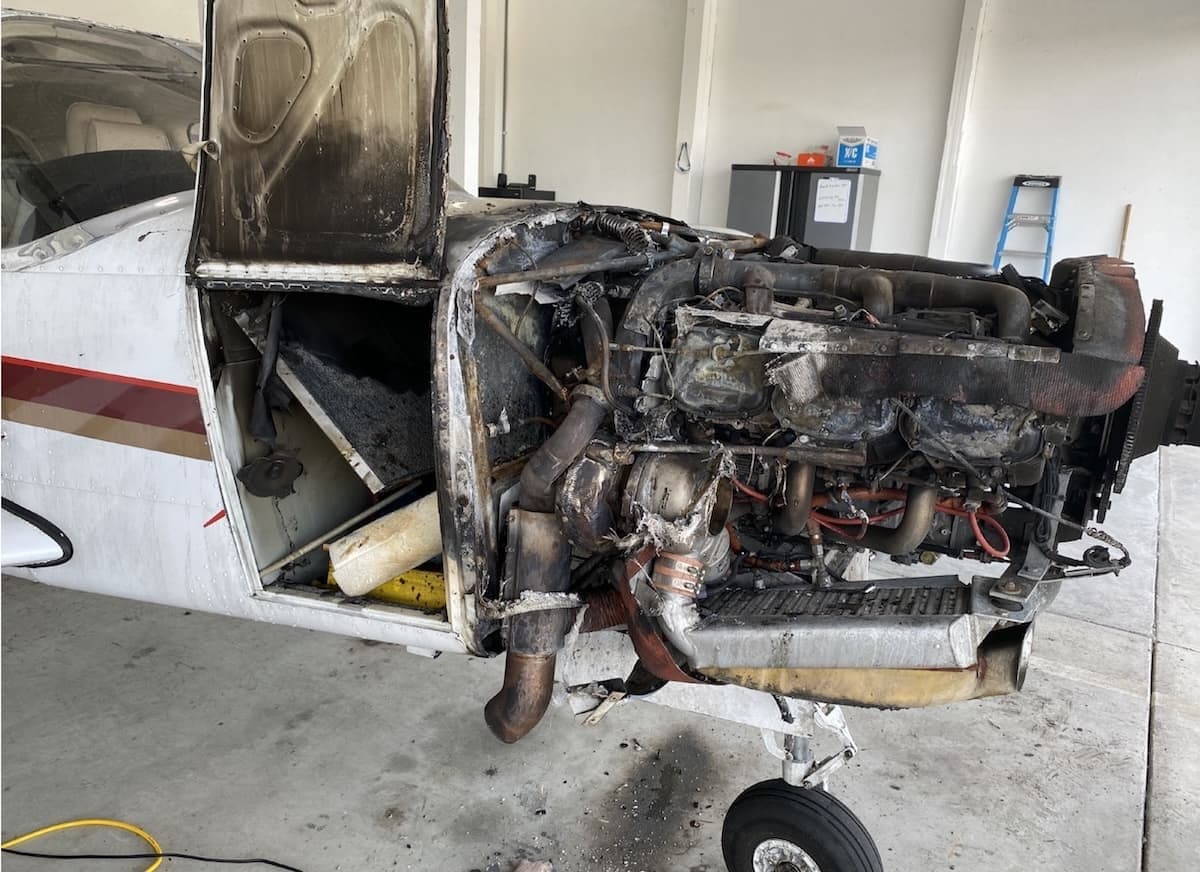
An FAA inspector responded to the accident site and examined the wreckage. He reported that there was substantial fire and heat damage to the forward fuselage and engine.
A subsequent examination found a majority of the fire and heat damage appeared to be concentrated near cylinder Nos. 3 and 5. Further examination revealed that the B-nut on the stainless steel fuel injector line between the No. 5 cylinder and the right fuel injector manifold was loose and was less than finger-tight. The turbocharger was located aft of this loose B-nut. No other fuel system fittings were found to be loose.
A review of the maintenance logbooks revealed that an annual inspection of the airframe and engine was completed on July 2, 2024, two days before the accident. The engine logbook entry stated that a fuel system pressure check was performed during the inspection.
The mechanic who performed the annual inspection reported that the owner asked to have the fuel injectors cleaned due to an intermittent rough idle. The injector lines were removed at the injector, and the injectors were removed and cleaned. The injectors were reinstalled in accordance with the manufacturer’s installation instructions. The injector lines were also inspected during the cleaning process.
Probable Cause: The failure of maintenance personnel to properly secure a B-nut on the No. 5 cylinder fuel injector line, resulting in a fuel leak and engine fire.
To download the final report. Click here. This will trigger a PDF download to your device.
This July 2024 accident report is provided by the National Transportation Safety Board. Published as an educational tool, it is intended to help pilots learn from the misfortunes of others.
Check your work. Go get a cup of coffee. Come back and check your work again.