

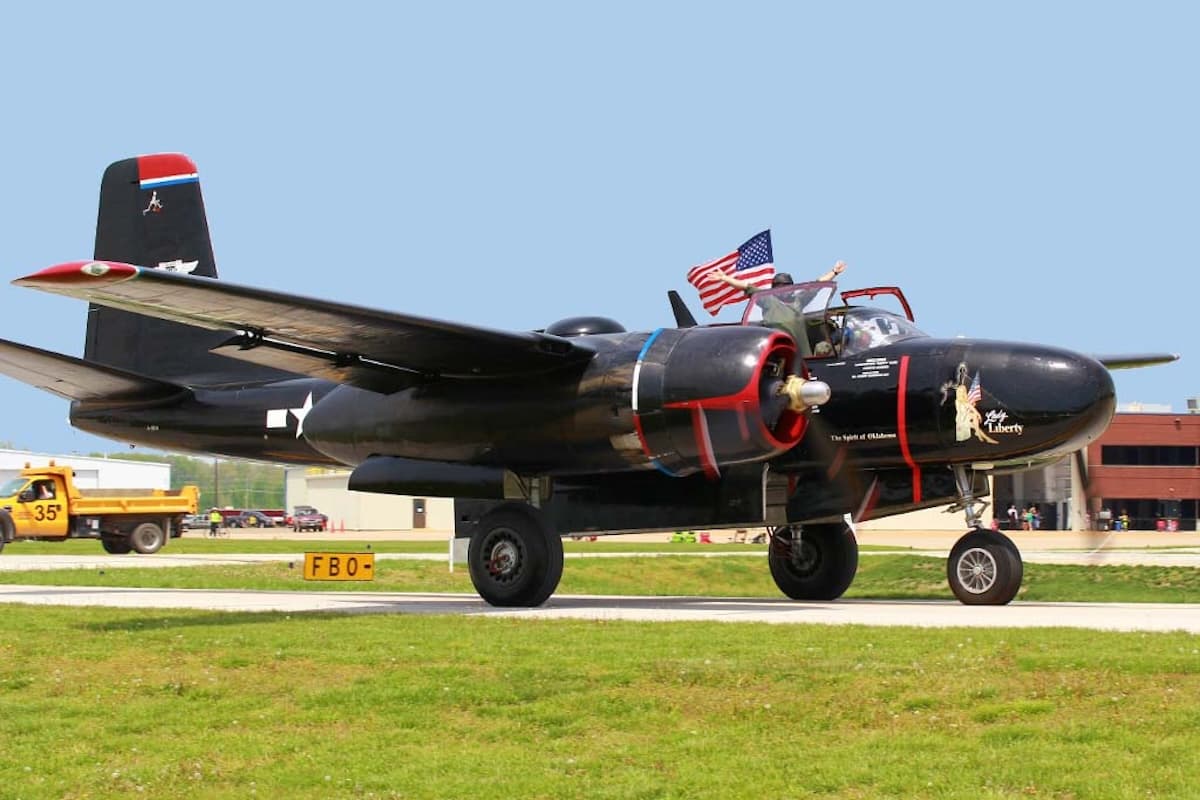
The historic Douglas A-26 Invader “Lady Liberty” has a new mission, with the Commemorative Air Force (CAF) transferring the warbird to the Tulsa Air and Space Museum.
For more than a decade, Lady Liberty has been the flagship aircraft of the CAF Lady Liberty Squadron in Enid, Oklahoma. Through air shows, educational programs, and community events, the aircraft helped connect thousands of people with the history of the Greatest Generation and the legacy of military aviation, according to CAF officials.
Built in August 1944 as A-26B serial number 41-39230, Lady Liberty served with the 9th Air Force in Europe during World War II before beginning a long post-war career that would eventually see her participate in three different wars.
Donated to the CAF in the 1980s, the aircraft became one of the organization’s most recognizable flying artifacts, CAF officials said.
In November 2025, Lady Liberty was involved in an accident at Ponca City Regional Airport when a nose gear failure occurred during an aborted takeoff. Although no one was injured, the aircraft sustained substantial damage.
Following the accident, the Lady Liberty Squadron, CAF maintenance experts, and CAF leadership conducted extensive evaluations to determine the aircraft’s future.
They determined that Lady Liberty would not return to flight. Attention then turned to finding the best way to preserve the aircraft’s legacy and continue sharing its remarkable history with the public, CAF officials said, noting the answer was preservation through public display.
Determining the future of a historic aircraft is among the most important responsibilities within the Commemorative Air Force, according to officials. Such decisions are reviewed through a formal governance process designed to ensure that aircraft entrusted to the organization are managed responsibly and preserved in a manner consistent with the CAF’s mission.
The final decision rested with the American Airpower Heritage Flying Museum Board, the CAF governing body responsible for oversight of the organization’s aircraft collection. The board evaluates matters involving aircraft acquisition, assignment, restoration priorities, transfers, and other significant actions affecting the CAF fleet. Its role is to ensure that each aircraft is preserved and positioned to provide the greatest possible educational value while safeguarding the long-term interests of the collection and the organization.
After review of the available options and consideration of recommendations from the Lady Liberty Squadron and CAF leadership, the American Airpower Heritage Flying Museum Board approved the transfer of Lady Liberty to the Tulsa Air and Space Museum.
“The board’s responsibility is to ensure that these historic aircraft remain meaningful educational resources for generations to come,” said CAF President and CEO David Oliver. “While this was a difficult decision, we believe placing Lady Liberty in a museum setting allows her story to continue reaching and inspiring the public.”
The move also creates a meaningful connection to Tulsa’s own aviation history. During World War II, thousands of Tulsans worked at the Douglas Aircraft plant, helping build aircraft that contributed to Allied victory. Museum officials have noted that displaying an A-26 Invader provides an opportunity to preserve and interpret that important chapter of local history.
Although Lady Liberty’s flying days have come to an end, her mission is far from over.
The aircraft currently remains at Ponca City Regional Airport, where preparations are underway for transportation crews to move the disassembled aircraft to Tulsa.
The Tulsa Air and Space Museum plans to celebrate the aircraft’s arrival with a special dedication event and 1940s-themed dance.
For more information: CommemorativeAirForce.org, TulsaMuseum.org
Leave a Reply