

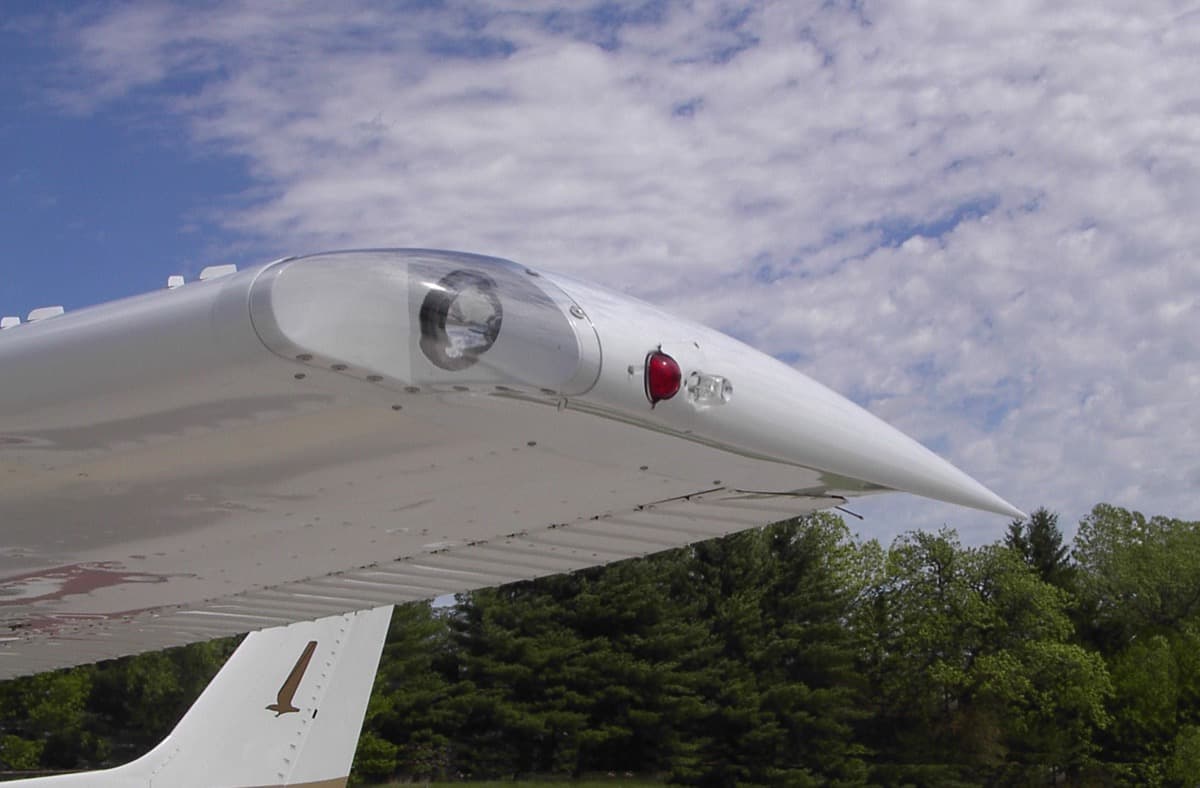
Curtis, a student pilot in Arizona, writes: On a training flight yesterday I saw an airplane coming in to land that had landing lights on the wings that were alternately flashing off and on. My CFI said that it was a “wig-wag” system. Such a funny name. I’m wondering where it came from.
I love wig-wags! There’s something about dancing lights that really catches the eye.
As to the name, unlike so many aviation terms that come from the sea, this time we have trains and automobiles to thank. Well, the fact that trains and automobiles were tending to bump into each other in the late 1800s and early 1900s, that is, with cars smacking into trains and trains smacking into cars. The trains were there first, but clearly everyone needed to adapt, as cars weren’t going away.
In those days, labor was cheap and tech was low, so many busy railroad crossings were manned by a watchman who, at the approach of a train, would stand out in the road and swing a red lantern side-to-side in an arc as a signal for cars to stop.
Then, in 1909, an electrical engineer named Albert Hunt developed a mechanical version of the watchman that could be deployed at less-busy intersections on rail routes. It featured a large pole-mounted pendulum with a red light that automatically swung back and forth on the approach of a train, mimicking the watchman’s signal. You only see them in railway museums nowadays, but at one time, they were as common as railroad crossing gates are today.
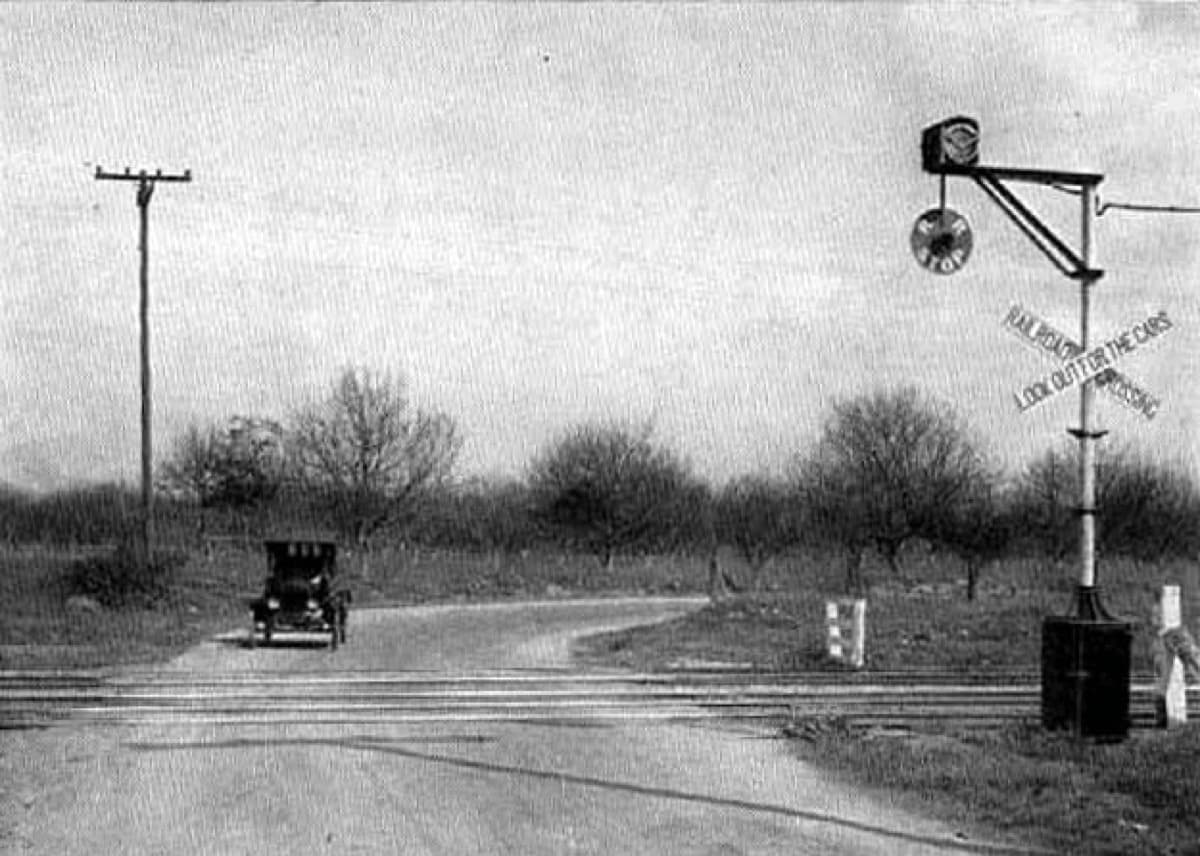
As the automated swinging lights, officially called Magnetic Flagman, became more common, they picked up the colloquial nickname of “wig-wag lights,” apparently describing their motion, which resembled a dog wagging its tail.
This nickname became codified in the 1930s when the Studebaker Company used it as the label for an emergency flasher option in its cars, which, you guessed it, was a system to make the headlights and tail lights alternately flash, just like the landing airplane you witnessed.
As a side note, many cop cars and ambulances still have the alternating headlights to this day, and these systems are still called “wig-wags” in the public safety community. When they were introduced to aircraft, we just took the name with us.
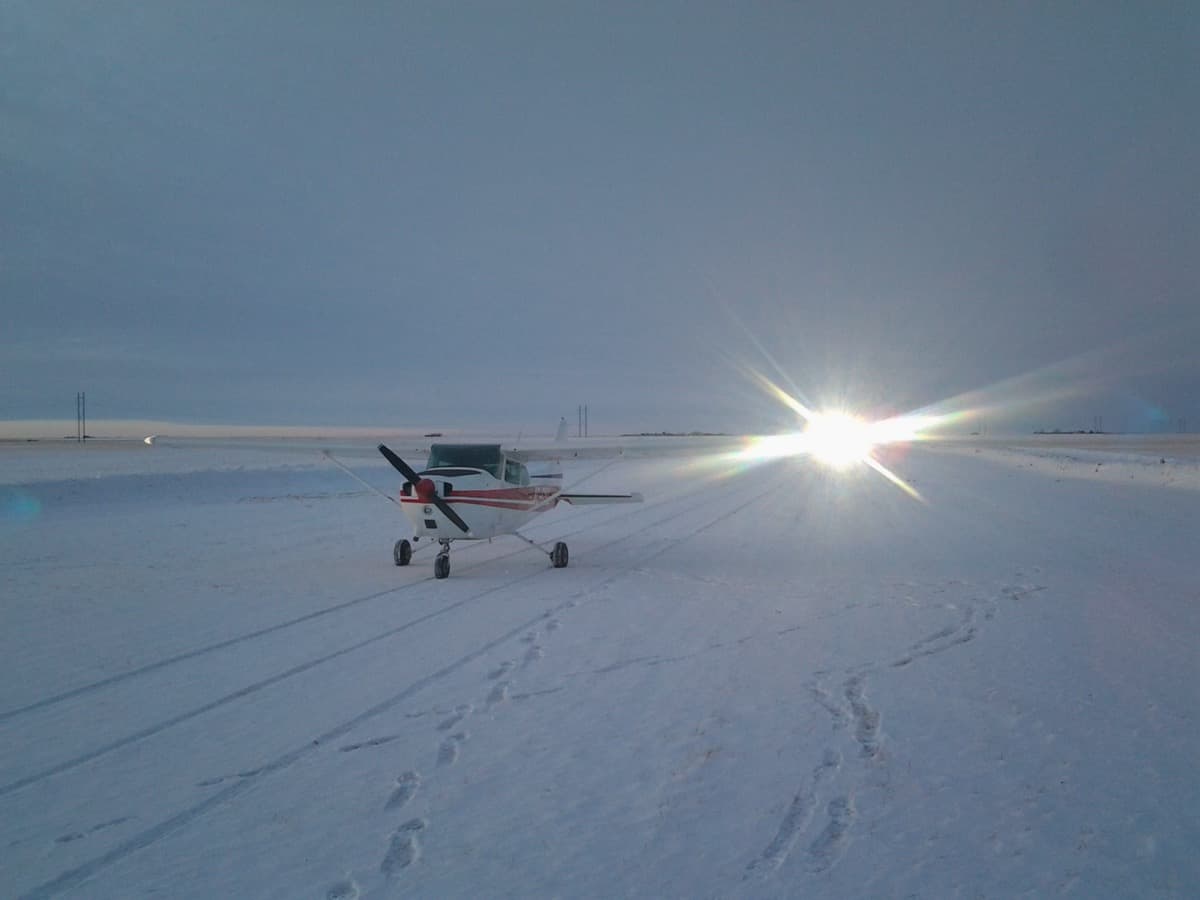
I have a wig-wag system on my Ercoupe that allows me to flash my taxi and landing lights, which are mounted outboard in the wings on opposite sides of each other — one in the left wing and the other in the right. I can choose between no flashing (for twilight/night operations), alternate wigging, or synchronized wagging. I can also choose between several speeds.

Why did I get one? I fly an airplane the color of sky and clouds and I fly in busy airspace. I want to do everything humanly possible to increase my visibility — so I don’t get hit by a train!

perceived as motion to not only humans but other animals as well. i’ve never hit a bird ( or coyote ) with my wig wags wiging … or wagging.
btw: a bird’s instinct to get out of the way is to dive. so do something different.
Good insight; thank you.
Prior to LED, strobes made this concept available to pilots and both types catch your eye. I’m pretty sure that LED’s are cheaper, and perhaps in the reach of more pilots who wish to consider them.
A gong! Application to Lights/Signals
The term became strongly associated with railroad crossing signals (particularly in North America) due to a mechanical warning device invented around 1909 by Albert Hunt, a mechanical engineer for the Pacific Electric Railway in Southern California. en.wikipedia.org
• These signals featured a red target disc (with a central light) on a pendulum-like arm that swung side to side when a train approached, often with a gong. This motion mimicked a railroad worker waving a red lantern—the universal “stop” signal at the time.
In some circles, the railroad automated swinging pendulum light was also known as a banjo signal.
We are a highly evolved organism. Part of that evolutionary path included being both hunters and defenders fighting for our lives against very sharp-toothed predators. Evolution has equipped us, by necessity, with eyes and image processing which excels in detecting motion.
Wig-wag lights are effectively “moving” lights, or at least they are perceived by the human eye as being a moving object. This movement results in a much higher recognition rate of a visible threat to our safety. Our brains filter out non-moving objects while prioritizing moving objects. Wig-wags make us look like a moving target, thus easier for the human eye/brain to detect. It’s pretty simple science that results from hugely complex evolutionary programming. The result is simply amazing!
Wig-wag modules tend to be inexpensive and worth every penny in terms of making it easier for our aircraft to be seen. I have wig-wagging LED wingtip lights and have had an FAA controller confirm my aircraft is visible beyond 10 miles. Pretty astounding!
My Navy father always said the word comes from wigwag signaling flags. Different than semaphore.