

By PAUL JAROD YOUNG
The Inland Empire counties of Southern California — Riverside and San Bernardino — once hosted three almost longitudinally aligned Air Force bases: George, March, and Norton.
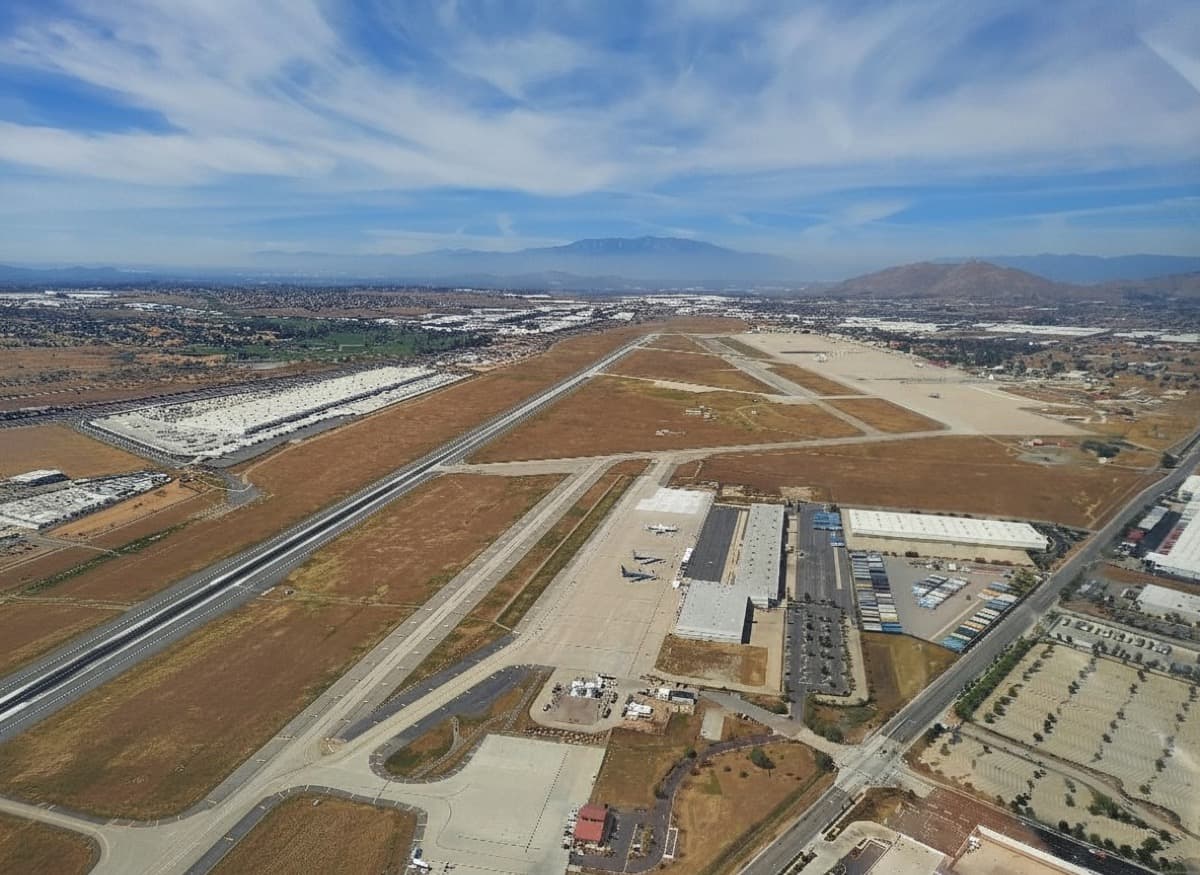
Only March survives now, as March Air Reserve Base (KRIV), and general aviation pilots from anywhere in the U.S. can take off and land on the 13,300-foot runway — without prior authorization.
Practice instrument approaches and VFR arrivals are permitted most of the time. Military traffic still takes priority, however, and there are times when weather or special events may limit civilian flying opportunities at the Riverside base.
According to Base Community Partnership Director Amee Howard, March enjoys a “symbiotic relationship” with surrounding communities and deems its civilian neighbors “partners.” So, just like the commercial concerns that utilize the space, GA operations are welcome.
This evolved in the 1990s after March was spared Congress’ Base Realignment & Closure policy, which ushered in the conversion of George and Norton to full-scale civilian airfields — George is now the Southern California Logistics Airport-Victorville Airport and Norton is now San Bernardino International Airport. March was downsized, but carried on, maintaining Air Force Reserve and Air National Guard units while accommodating civilian entities.
The base has a storied past. Starting out as Alessandro Flying Field for Army Air Corps training during World War I, it later became March Field before the name March Air Force Base was adopted.
Hollywood stunt pilot Albert “Paul” Mantz trained there (until he was booted out of the service for — what else? — stunting). In the 1930s, Amelia Earhart was at March to work on plans for one of her flights. General Henry “Hap” Arnold was base commander at the time, and also just prior to the war, Bob Hope entertained the troops at March, delivering the first of what would become a legacy of USO shows.
Actor Chuck Norris was a military policeman at the base, and lamentably, it was the last place Air National Guard Capt. Dean Paul Martin, son of actor-singer Dean Martin, was seen alive. The pilot and his radar intercept officer (RIO), Ramon Ortiz, perished in 1987 when their F-4 Phantom slammed into a mountain during a snowstorm moments after departure.
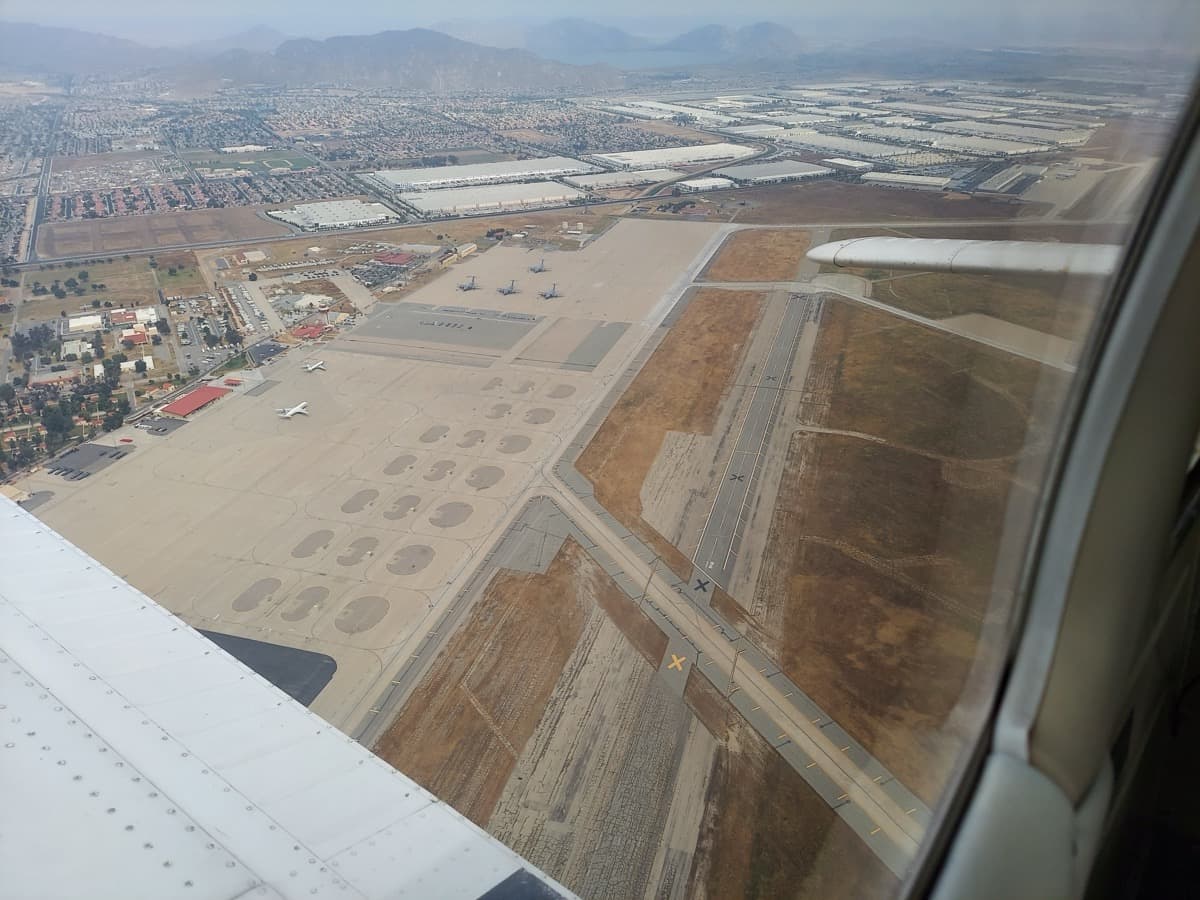
The 452nd Air Mobility Wing is the core component at March, operating KC-135s, C-130s and C-17s. Giant KC-46 Pegasus tankers are due to replace the KC-135s.
The base is under Class C, but March Approach Control switches off at midnight weekdays and 7 p.m. weekends, returning at 8 a.m. The Tower has no published schedule, and Class D is supposed to remain in effect. There are times, however, when it will go dark.
The March Inland Port is the part of the airport designated for civilian operations. Airbus and Boeing cargo jets come and go semi-regularly. Base authorities prefer that all Part 91 general aviation arrivals occur between 7 a.m. and 11 p.m. when the FBO, Million Air, is open. After-hours arrangements can be made in advance. The FBO is not difficult to find on the south end of the terminal complex.
Interested in Flying In?
Here’s are a few tips for your flight:
When the nearby Perris Valley Airport “jump zone” is overly active with skydivers, practice instrument approaches may be denied.
If landings are to the south at March due to winds, the tower may also say no dice to instrument work, nor will it be amenable if Guard and Reserve units are in the pattern for currency. (A C-17 bearing down on a Piper Cherokee making a low approach tends to make them nervous!)
Expect the ILS or Localizer Yankee approach for practice or IMC arrival.
The first-day tie-down fee for singles is $41 and $82 for twins. Million Air will waive most fees with a gas top-off. Parking after day one is $5 daily for singles, $8 daily for twins.
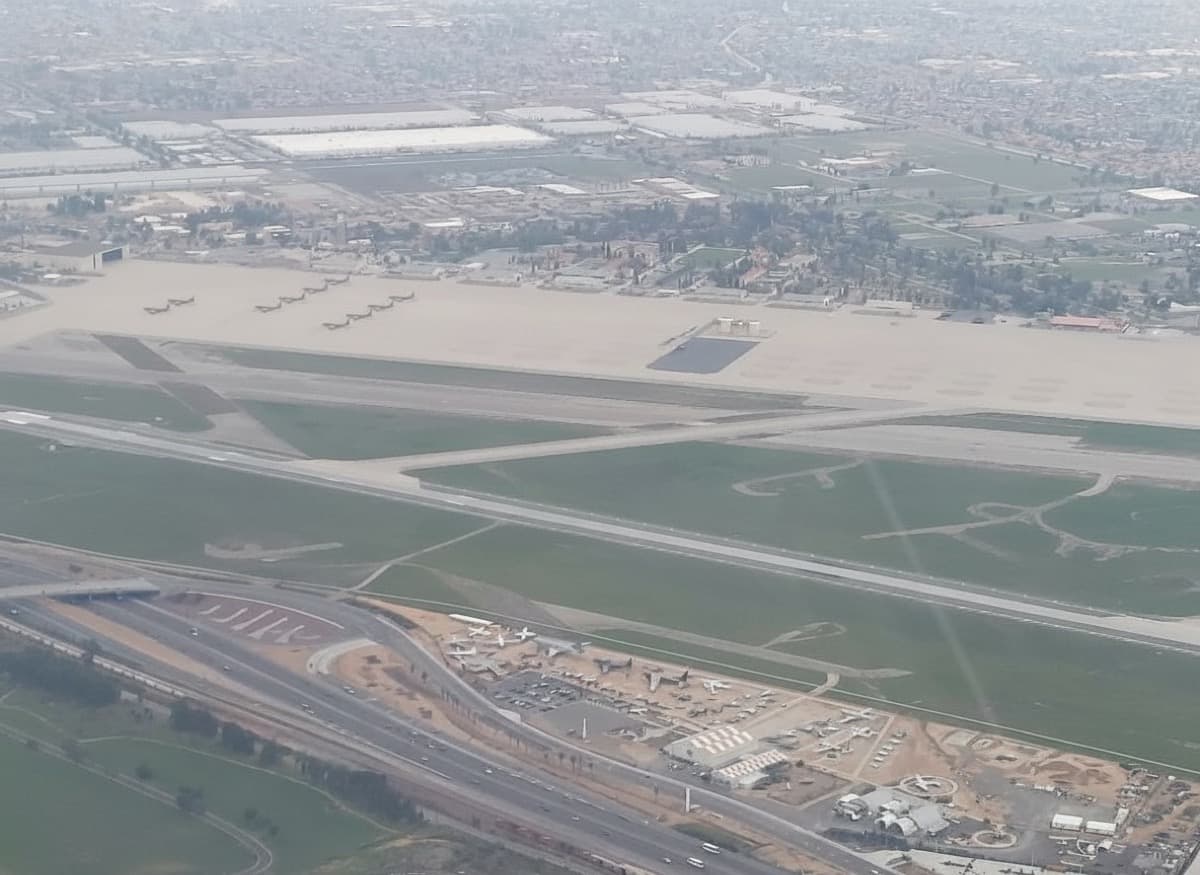
March is about equidistant between Los Angeles and Palm Springs, so there are advantages to flying to KRIV if a visitor is considering trips in either direction. There are three superbly outfitted aviation museums in the inland region. The March Field Air Museum is the closest, boasting a huge array of aircraft from the past century.
Landing at March may provide a civilian GA pilot with the one thing he or she isn’t ever likely to experience anywhere else in the country — an opportunity to touch down or wing around military real estate, where Uncle Sam’s fliers also do their stuff!
Paul Jarod Young is a veteran Southern California journalist, commercial pilot, and author of “7 Down: Air Losses & Lessons Across the Inland Empire.”
Leave a Reply