

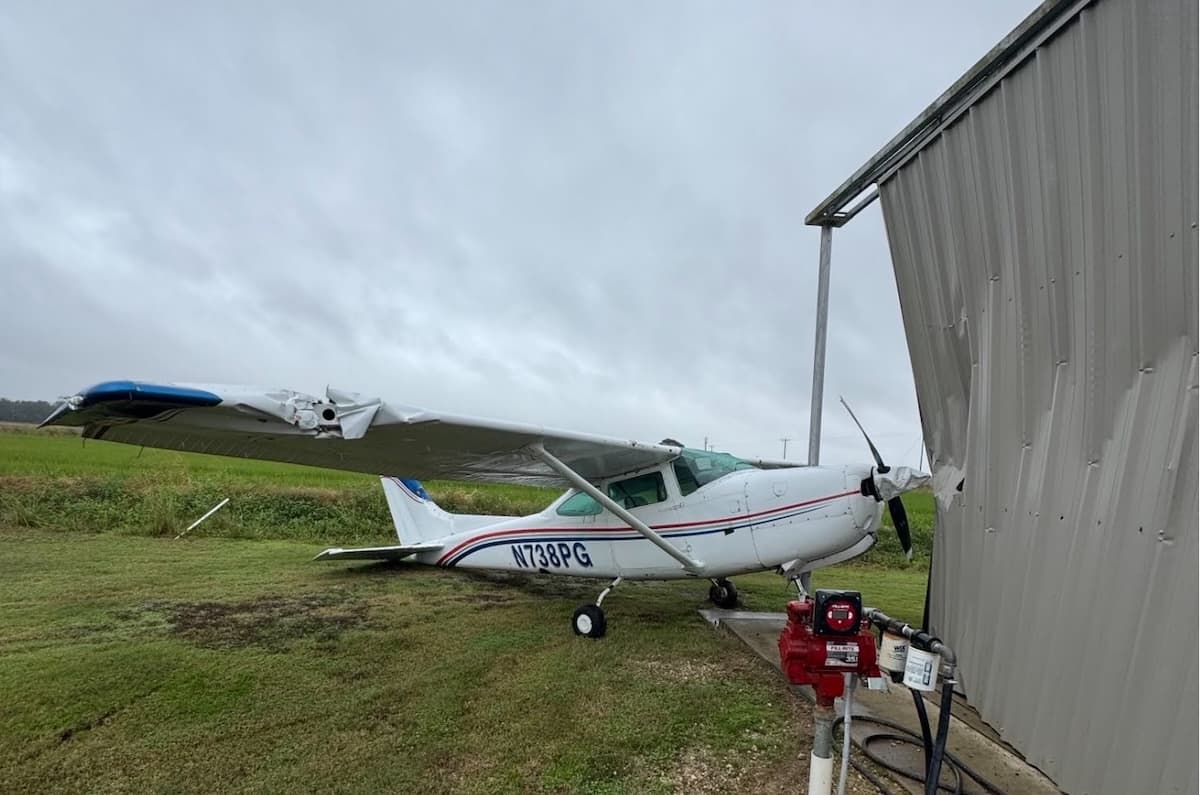
The pilot was returning from a pipeline patrol flight and was landing to the south on the north-south oriented grass runway at the airport in Crowley, Louisiana. He told investigators the runway was wet from recent rain.
He added that, upon touchdown, the Cessna R182 “yanked” to the left and began sliding on the wet grass. He could not stop the airplane because of the reduced braking action due to the wet runway.
The plane hit a hangar at the south end of the runway and the right wing sustained substantial damage.
The operator, who witnessed the accident, noted that the weather conditions were getting worse and were approaching instrument meteorological conditions. He saw the airplane approach from the north to land to the south on the north-south oriented runway. Initially the airplane was lined up on a field to the east of the runway and he then saw the airplane attempt to turn and line up with the runway. He noted that the airplane appeared lower and faster than normal.
After the airplane turned toward the runway, it touched down about halfway down the 2,500-foot runway and was about 45° from runway alignment. The airplane then started to skid sideways on the wet grass. The airplane tires regained grip and the airplane darted to the side and hit the hangar.
Well after the accident, the pilot stated that the rudder trim on the airplane was not operating correctly, and the skid-slip ball was not centered during the flight. He said the rudder trim wheel had no tension. He reported no other mechanical issues with the airplane.
The operator stated that the pilot did not report any problem with the rudder trim system either before or after the accident.
The pilot’s report of the rudder trim system issues was not provided until after the airplane was no longer available for examination. Regardless, the rudder trim should not have inhibited the pilot from maintaining directional control of the airplane while landing on the wet runway.
The reported weather conditions at a nearby airport included a broken ceiling of 700 feet above ground level (AGL), an overcast ceiling at 1,300 feet, and 7 miles visibility.
Probable Cause: The pilot’s un-stabilized landing approach and high airspeed during the approach, that resulted in touchdown with insufficient runway remaining to stop the airplane.
To download the final report. Click here. This will trigger a PDF download to your device.
This November 2024 accident report is provided by the National Transportation Safety Board. Published as an educational tool, it is intended to help pilots learn from the misfortunes of others.
No rudder trim caused him to hit the hangar after landing long and in a crab on a short, wet grass runway? Sorry. I don’t think I’ll buy that.