

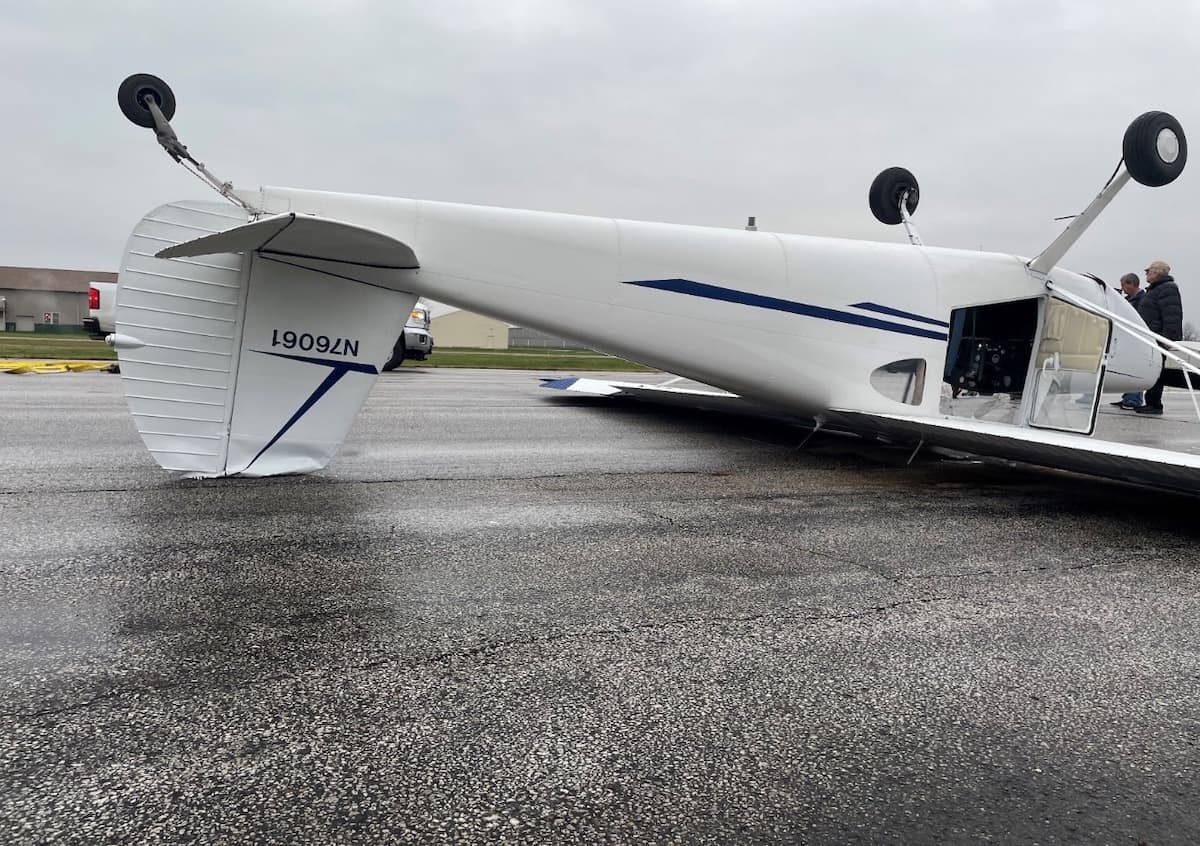
The pilot was receiving flight instruction from a flight instructor towards a tailwheel endorsement at the time of the accident.
He completed several flight maneuvers with the CFI before returning to the airport in Mason, Michigan, where they practiced landings. During these landings, the Cessna 140 ended up about 10 to 15 feet left of the runway centerline before stopping.
During the last landing, the pilot flew a stabilized approach with full flaps, at an airspeed of 60 mph, and a descent rate of 300 ft/min. The airplane touched down on its main landing gear and during rollout the pilot placed aileron control input into the wind.
He applied corrective rudder control input when the airplane began to drift left of the runway centerline, but the plane continued to drift left. The pilot told investigators he did not remember if he applied brakes during the beginning of the landing rollout, but applied brakes to prevent the airplane from going off the runway.
The CFI stated the pilot applied full braking, and the airplane nosed over on the runway.
The airplane sustained substantial damage to the vertical stabilizer, rudder, and left wing.
Probable Cause: The pilot’s failure to maintain aircraft control during landing rollout that resulted in a nose over and an impact with the runway.
To download the final report. Click here. This will trigger a PDF download to your device.
This November 2024 accident report is provided by the National Transportation Safety Board. Published as an educational tool, it is intended to help pilots learn from the misfortunes of others.
Leave a Reply