

It was not uncommon for mass-produced aircraft of the 20th Century to stick with one type of engine, albeit with model advances as the engines improved.
All production B-17s except the Model 299 prototype flew with some version of the Wright R1820 radial; B-24s were loyal to Pratt & Whitney R1830s.
The Douglas DC-3/C-47 series bucked that trend early, as commercial DC-3 variants tended to ride on Wright 1820s, while military C-47 versions were typically powered by Pratt 1830s.
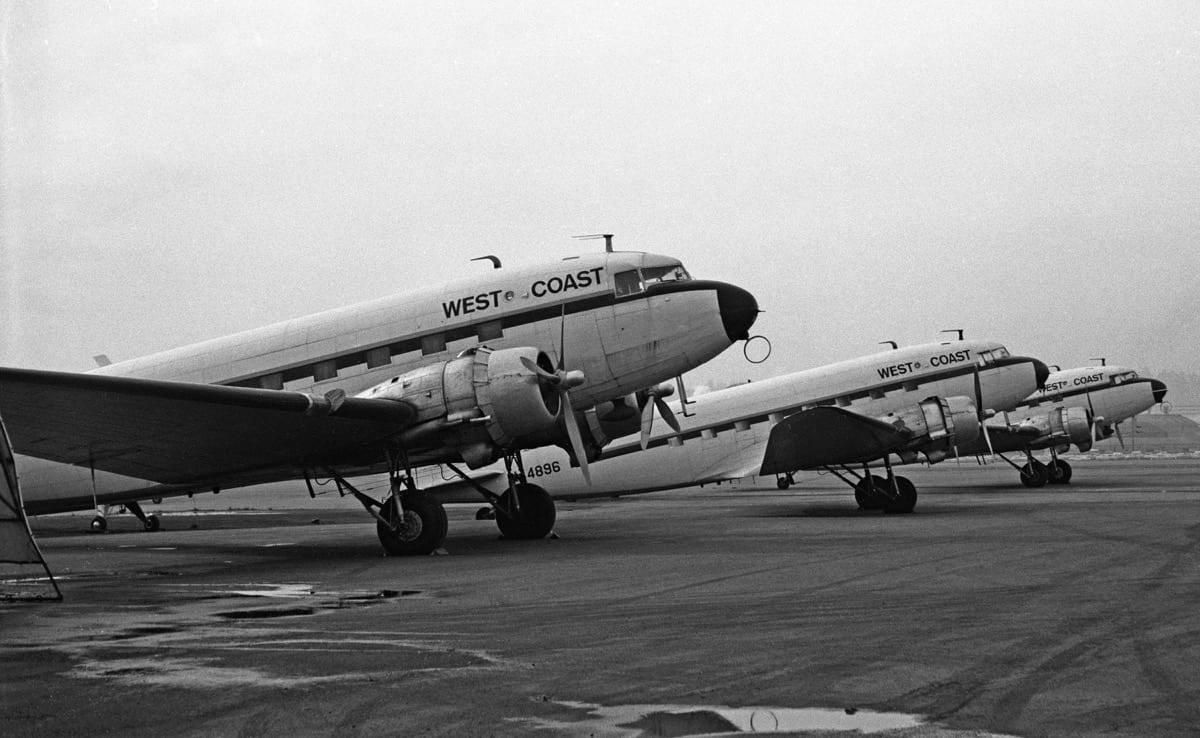
While the C-47 carved out a burnished reputation for service during World War II as a powered transport and glider tug, it is unique in becoming the glider as well as the tug in a 1944 U.S. Army Air Forces experiment.
A single C-47, serial number 41-18496, had both its engines removed, with bluntly rounded and ballasted caps affording some measure of streamlining to its engineless nacelles.
The AAF envisioned towing engineless C-47s as CG-17 gliders behind larger four-engine Douglas C-54s. This would capitalize on the power and capability of the C-54 to tow gliders larger and heavier than the typical Waco CG-4s then in service. With a wing spanning more than 95 feet, the Gooney Bird Glider had a flat glide angle.
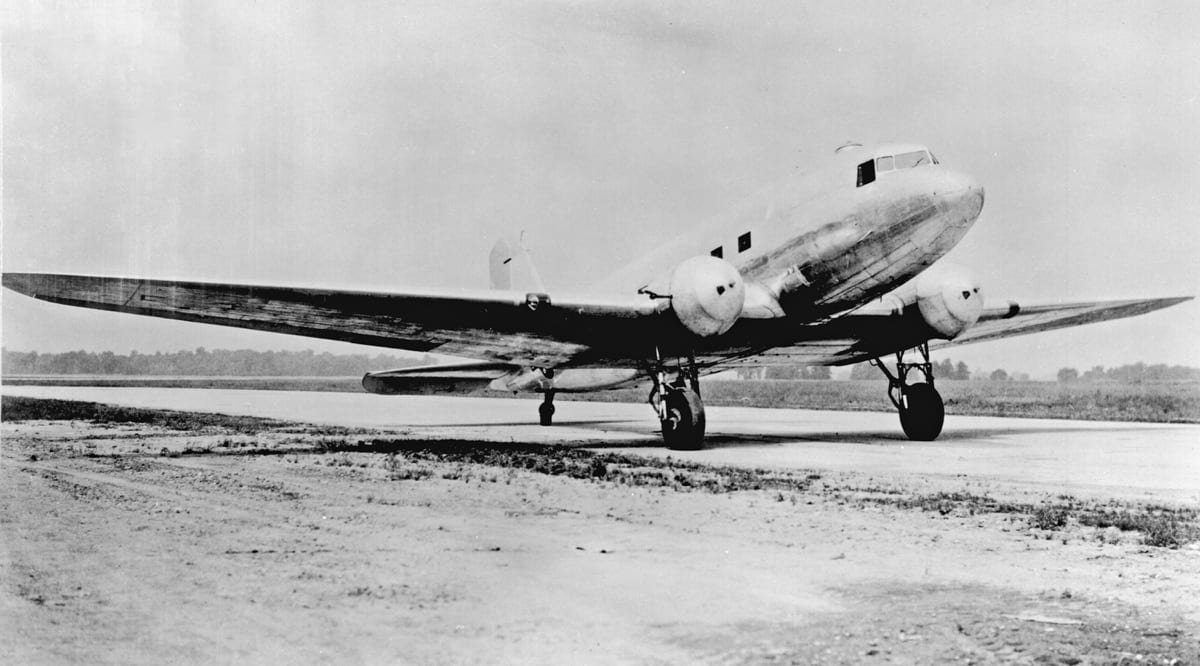
The test specification required the ability to revert CG-17s back to powered configuration, so the large nacelles with blunt caps were a necessity that no doubt diminished even this great gliding performance.
Tests included tows behind a C-47, and behind a pair of C-47s, and with a four-engine B-24 Liberator bomber acting as tug. The flight tests were conducted by the Air Technical Service Command of Wright Field based at Dayton, Ohio, and took place at the Clinton County airfield at Wilmington, Ohio, about 35 miles distant. During the war, a number of satellite airfields ringing the Dayton area hosted flight test projects like this one.
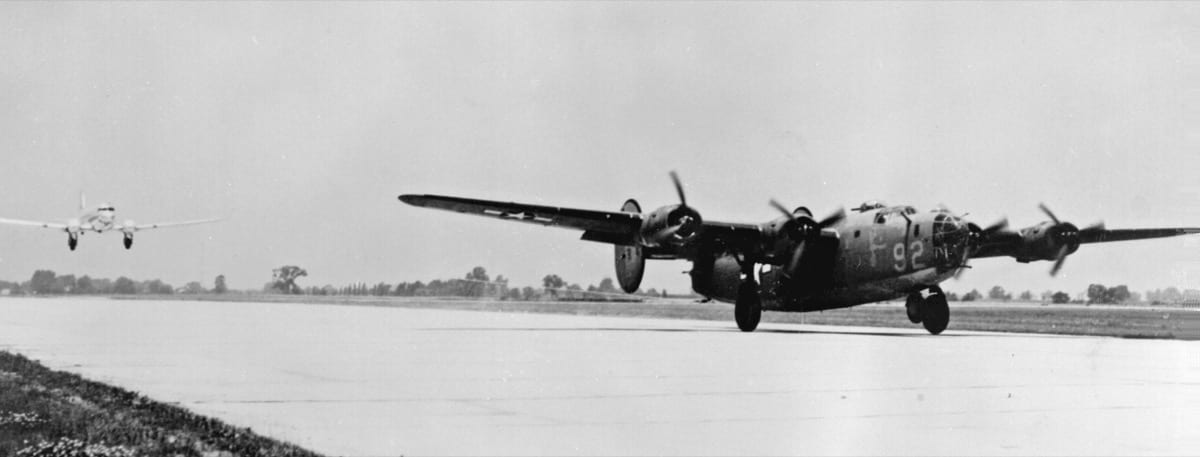
Though the XCG-17 did not make it to production, it did serve to further validate the remarkable versatility of the Douglas DC-3 design.
In the Philippines after the end of the war, another C-47 was converted by the Army Air Forces into a glider in 1946 to explore the concept of delivering large amounts of cargo via towed “trains” of aircraft. A long towed flight was successful, but this knock-off of the XCG-17 was reverted to powered status.
In the 1960s and 1970s, the attraction of high performing turboprop engines led to a number of converted airframes.
John Conroy at Goleta, just outside of Santa Barbara, California, experimented with a DC-3 and a Super DC-3, each powered with a pair of Rolls Royce Dart turboprops.
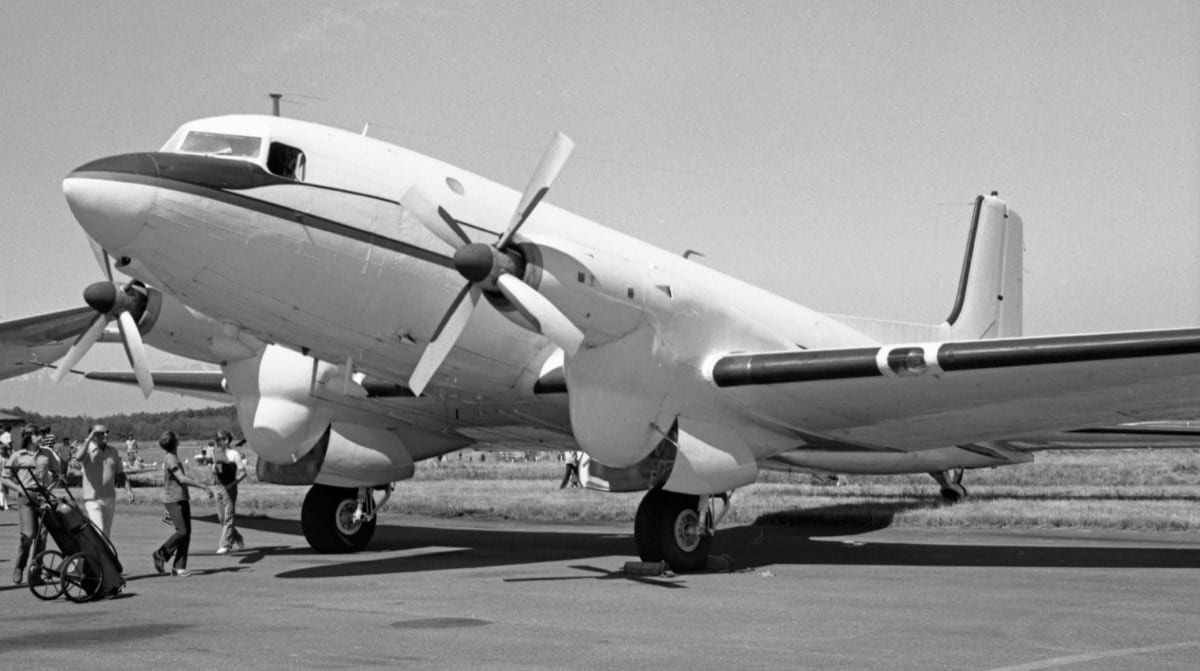
But Conroy’s Specialized Aircraft Company made the ultimate DC-3 iteration in 1977 when a DC-3 became a trimotor powered by three PT6 turboprops turning five-blade propellers. It was called the Tri Turbo-3.
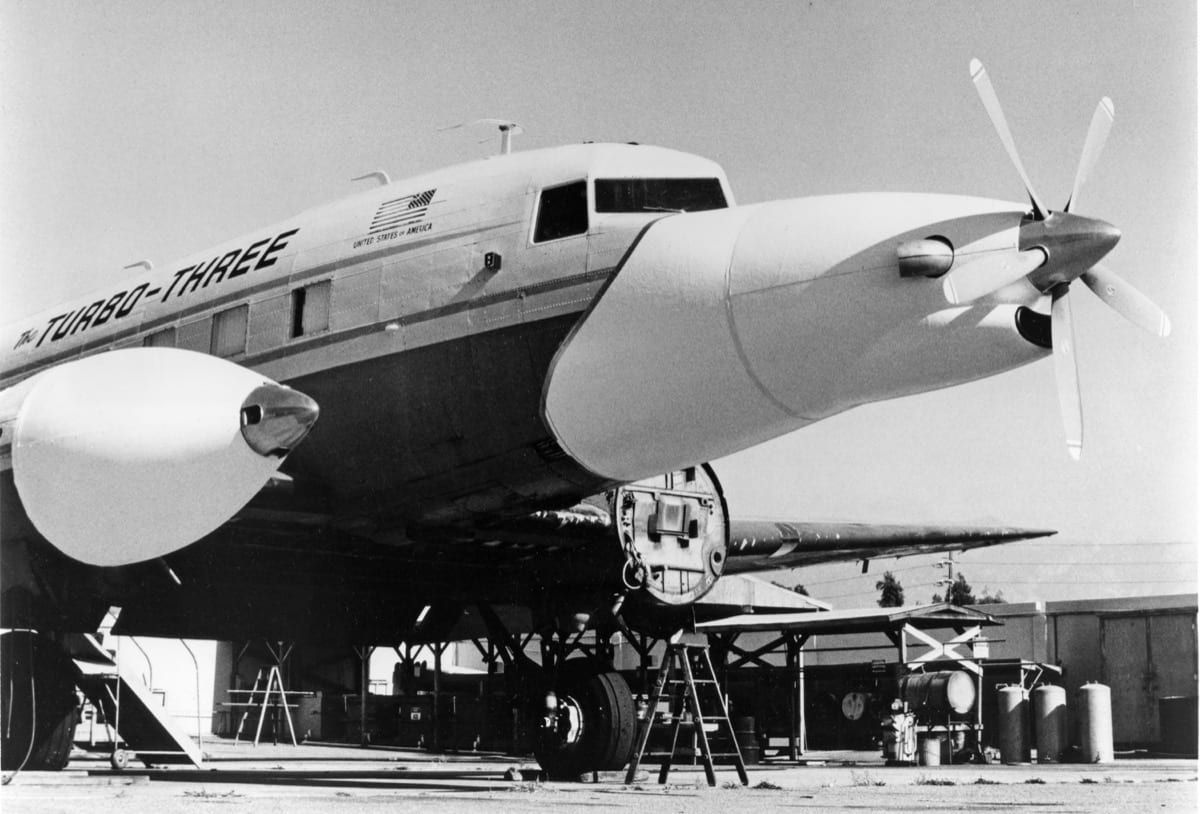
A news release touted the Tri Turbo-3: “The conversion of the twin-engine Douglas DC-3 to a three-engine turboprop configuration provides a versatile aircraft ideal for maritime surveillance, search and rescue, photographic and mapping missions, counter insurgency, Arctic and bush operations, military and civilian cargo and commuter use. Equipped with Pratt & Whitney PT6 engines, the aircraft will cruise at 230 mph and will be capable of carrying payloads up to 12,000 pounds.”
The innovative Tri Turbo-3 did not lead to orders for mass conversions of DC-3s. It served in transport duties, including some Arctic and Antarctic operations under the name Polair until, back in Santa Barbara, a cockpit fire damaged the fuselage in May 1986.

The Tri Turbo-3 was resurrected with a different DC-3 fuselage, as documented by aviation researcher Brian Lockett.
Stories of DC-3 engine conversions illuminate the versatility of this timeless Douglas design while underscoring the validity of the original choices to use two reliable radial engines of the era to power the vast majority of these aircraft.

???? DC-Crafters? I wonder why Douglas and Boeing did not pull a DC-3 in and try to improve performance in a wind tunnel. And then make a new and improved model ?Super DC-3 Plus. If it such a good airplane and goes so good. Why not make a new ‘state of the art’ model and use it as a feeder
cargo aircraft. And then make parts for the older models still around.
Mr. Johnsen,
I worked for DAC in the early ’60’s and during that time the USAF brought in a C-47/DC-3 with some 85,000 hours on it. It was disassembled to evaluate its remaining service life. To my recollection it was deemed fit for another “85,000” hours.