

A fabulous aircraft collection resides just to the east of Oregon’s fabled snow-capped volcanic peaks, in Madras, Oregon. Numbering nearly 30 airplanes and ranging from a Stearman biplane to a B-17G Flying Fortress, the Erickson Aircraft Collection is the realized dream of Oregon aviation pioneer Jack Erickson.
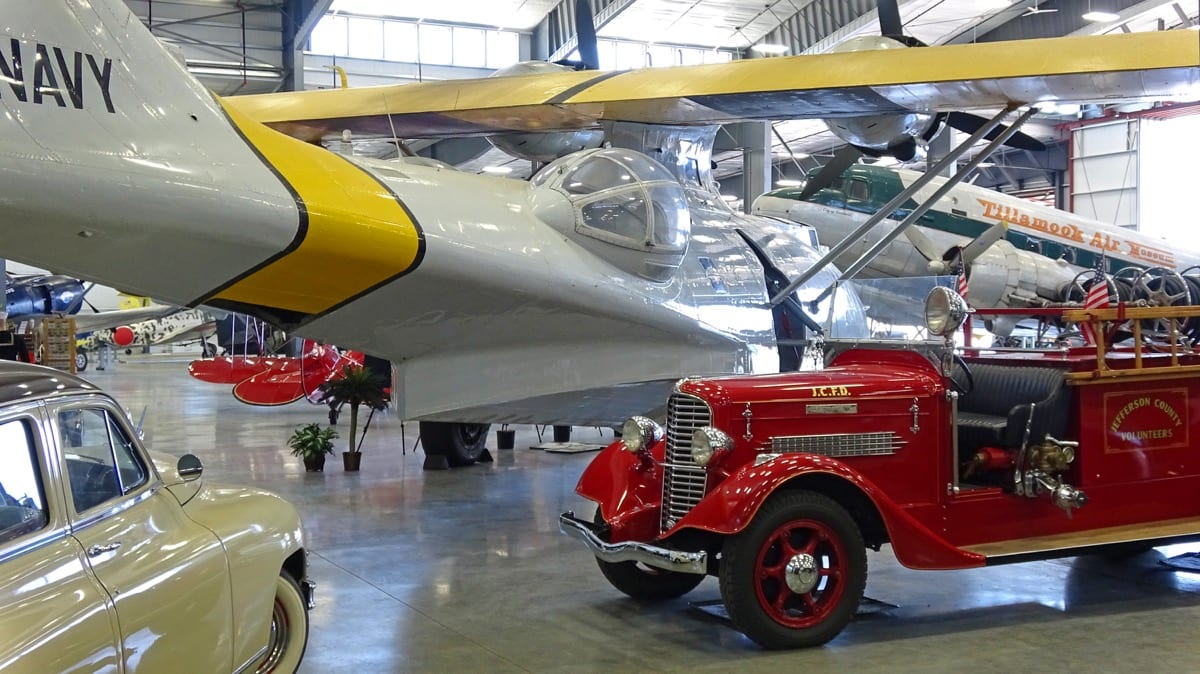
Michael Oliver is the general manager of the rare collection, which is an interesting venture. The public is welcome to visit the collection daily except Mondays, yet the primary motivation for the collection is for the Erickson family.
“We’re going to keep these airplanes for the future family members,” Oliver says, with a sense of stewardship for the historic aircraft.

That stewardship led to the relocation of the Erickson collection from Tillamook on the beautiful but moist Oregon coast to the drier climate of central Oregon, east of the Cascade mountain range.
Given the private nature of the ownership, the Erickson Aircraft Collection is not a typical museum — in fact the word museum does not appear in the name of the collection. No non-profit organization, no strings attached — the Erickson family can do as they please with their rare machines, and the collection is available for public viewing.
Erickson pilots also fly some of the aircraft to air shows in different parts of the U.S. and Canada, and the collection’s B-17G, nicknamed Madras Maiden, is currently touring the United States, giving people a glimpse of its famous form.
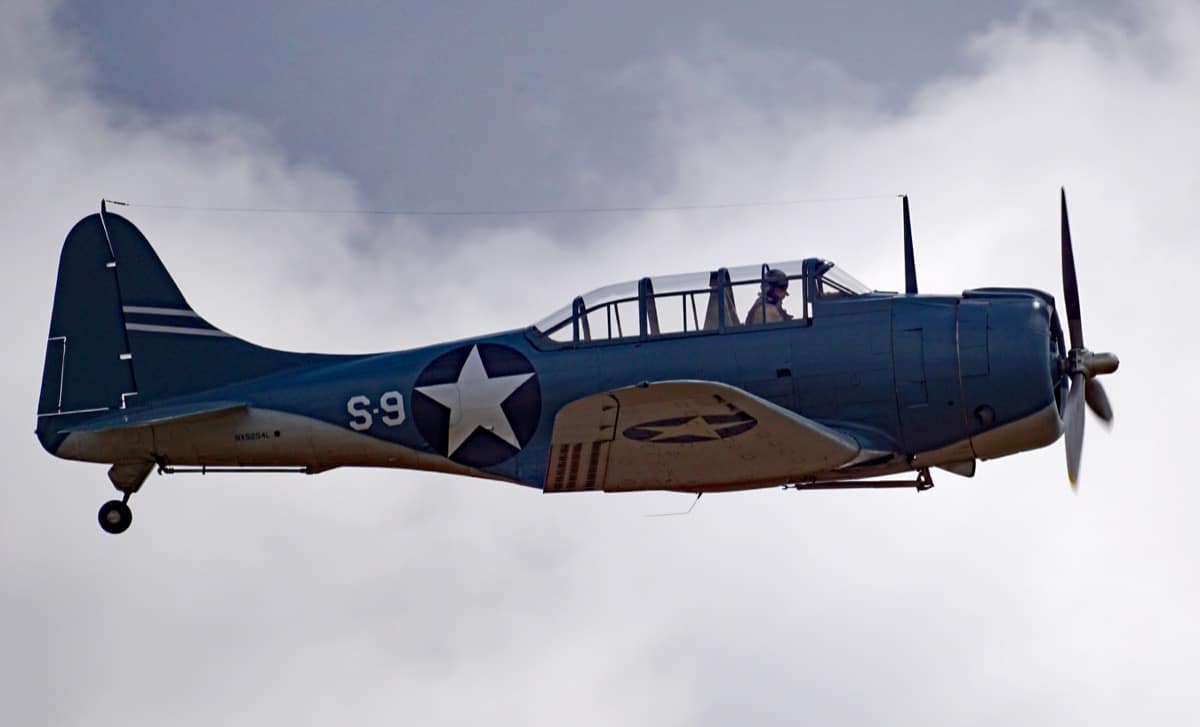
During the Airshow of the Cascades at Madras Aug. 25-26, 2017, the Erickson Aircraft collection hangar is open free to those who have purchased an air show ticket. Several of the collection’s warbirds will fly during the show, including a Stearman PT-17 available for rides.
Oliver says the Madras show combines top-flight performers with a laid-back fly-in ambience.
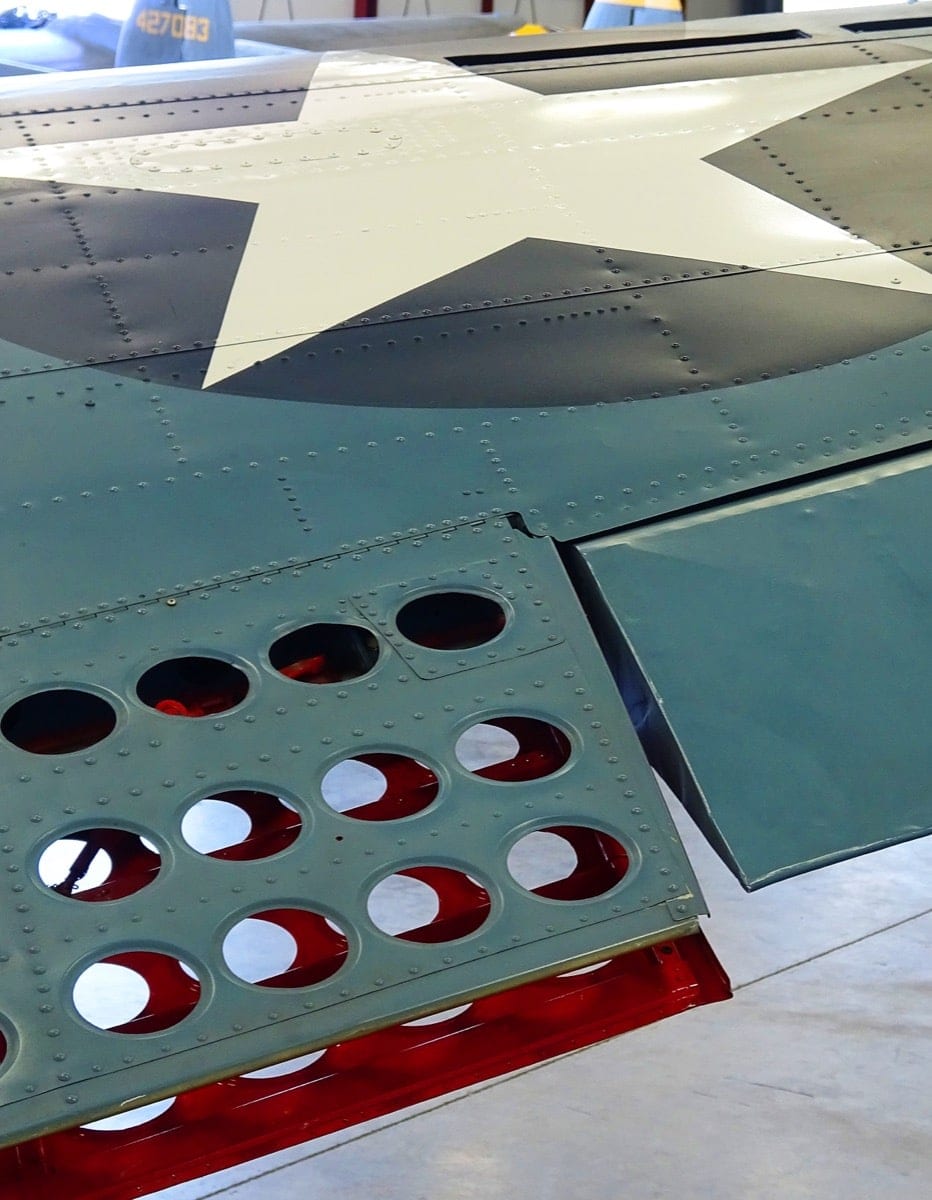
The Erickson collection includes some unique examples of the warbird restorers’ craft.
A Spanish-built variant of the famed German World War II Bf 109 fighter was purchased from Texas collector Connie Edwards, who obtained several of the fighters after flying them for the 1969 motion picture “Battle of Britain.”
Purists have long expressed disappointment in the look of the Spanish versions, since they employ a Merlin engine in an enlarged cowling that substantially alters the lines of the German original.
Radical, yet subtle, changes were made to this airframe to permit an American Allison V-1710 engine to be mounted with a thrust line more nearly matching the German original. The modification uses longer exhaust stubs under original German cowling to give the finished product the look of an original German Daimler Benz installation. The result, capped with a large Messerschmitt-style propeller spinner, sets a new standard for these Spanish imports. Mike Oliver applied the Luftwaffe paint and markings to the machine.
This retro Messerschmitt joins a restored Nakajima Ki-43 Hayabusa Japanese fighter from the war that was the subject of an extensive rebuild and fitting with a Pratt & Whitney Twin Wasp radial engine nested snugly in its cowling. Together they offer rare glimpses of the fighters of America’s adversaries of World War II.
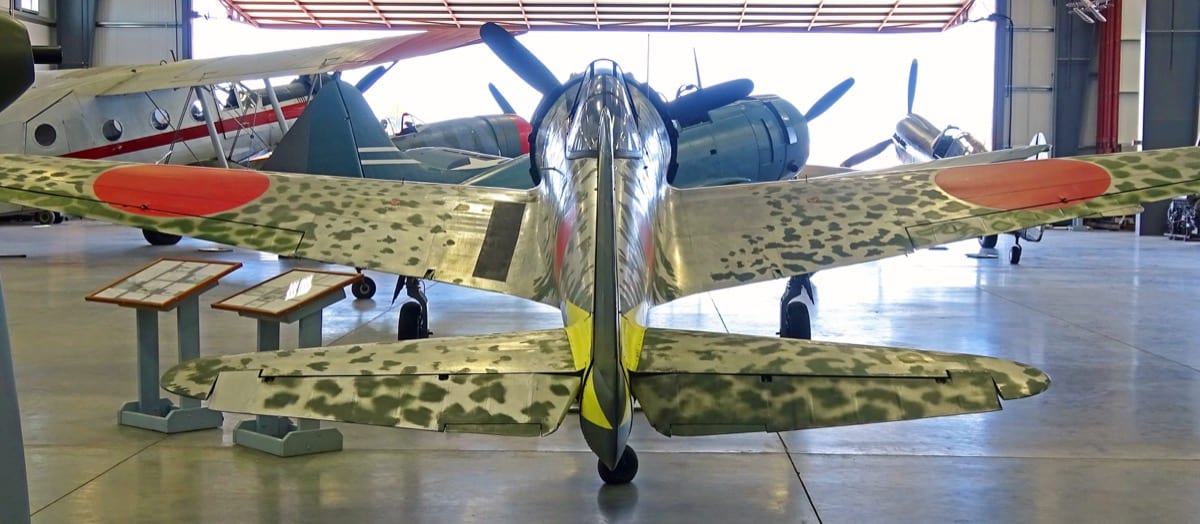
The treatments given the Messerschmitt and the Nakajima set a tone for the Erickson team. Whether purchasing or performing restoration work, the staff at Erickson Aircraft Collection has introduced nuances unlike those found in some other flying museums.
While warbird enthusiasts will not be disappointed when visiting the Erickson collection in Madras, that nuanced style shows up in other ways, like the “Flying W,” a large and lanky single-engine 1938 Bellanca Aircruiser that spent most of its life flying the Canadian bush country.
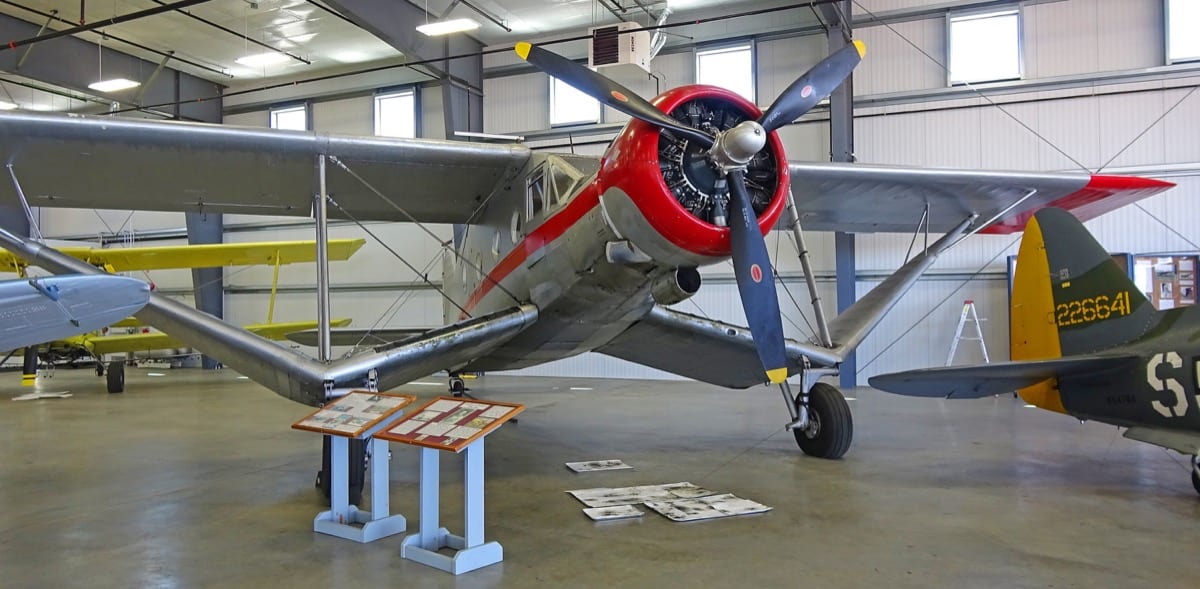
Technically a high-wing aircraft, the Aircruiser had great lifting capability and strength due to the unusual employment of angled airfoil-shaped structure that met the wing near the tips and plunged low enough to provide a foundation for sturdy landing gear farther inboard. It is this unorthodox flying truss that, when viewed head-on, gives the appearance of the letter “W.”
Not all of the aircraft in the Erickson collection fly — for now. But Mike Oliver doesn’t close the door on the possibility of making the collection’s rare Martin AM-1 Mauler Navy bomber airworthy again.
Powered by a single R-4360 radial engine, only 151 Maulers were built before the U.S. Navy decided the Mauler’s mission would be performed by the Douglas AD Skyraider. Four Maulers survived.
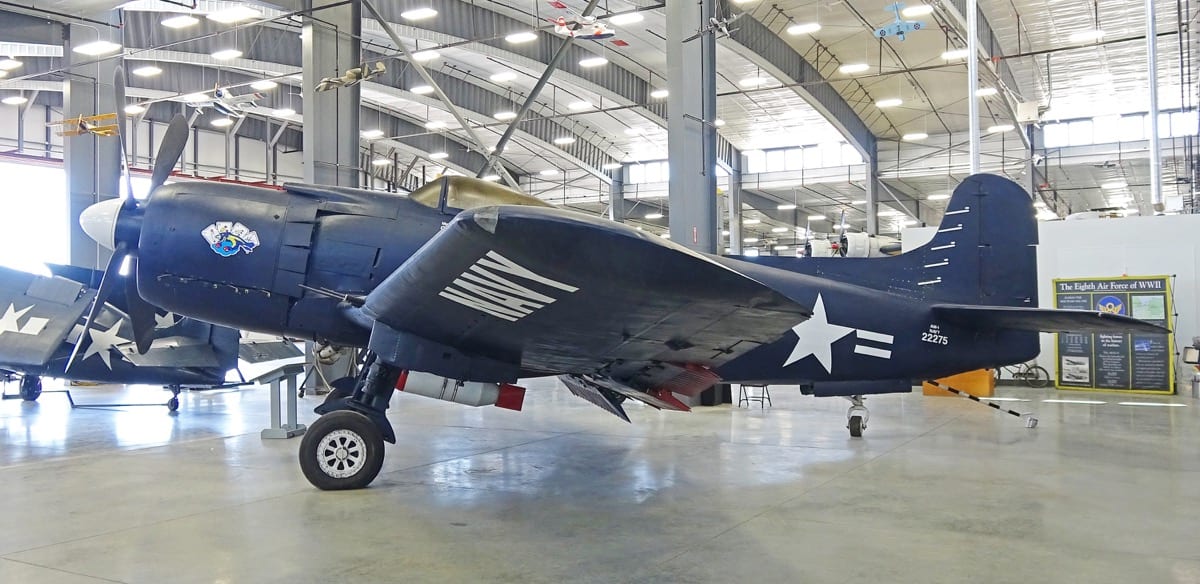
The Erickson machine left Navy service in February 1955 and went to the Army’s Aberdeen Proving Ground in Maryland where it might have been consumed in weapons testing, or scrapped when no longer useful. But a fortunate transfer to the Bradley Air Museum in Connecticut saved the day in 1979. By 1990, this unusual Mauler was part of the Erickson stable, and brought up to static display condition.
The Erickson Aircraft Collection’s modern hangar, large enough to dwarf aircraft like the DC-3, PBY Catalina, and even the B-17, is a spotless home for the aircraft. When weather allows, the hangar doors on the west side of the structure open to reveal a stunning panorama of the Oregon Cascades.

Signage posted by the aircraft provides a quick history of the type, often including a specific pedigree of the aircraft in the collection.
Erickson warbird pilot Jim Martinelli says the availability of such a large hangar makes it feasible to show the collection to the public, instead of keeping the aircraft sequestered in several smaller hangars.
Pondering the broader use of the word “museum,” Martinelli says, “Here we have a museum because we park all the airplanes in one hangar.”
Mike Oliver says the collection at Madras gets about 25,000 visitors a year. But, he adds, “That’s not why we came here — to get head count.”
The reason, pure and simple, was to protect the exotic collection from the elements.
There’s a metamorphosis in air museums — or collections — that is changing the model. Not all collections are museums; some are not even open to the public. Yet the owners of these groups of scarce flyable World War II aircraft embrace a common drive to share their finds with the public, often by flying several of the machines out to air shows like the Experimental Aircraft Association’s AirVenture and the home-field Madras Airshow of the Cascades.
If philanthropists of another age built libraries and sponsored symphonies for the benefit of the public, today’s A-list warbird collectors contribute to the public good when their historic time machines roar to life at a public air show.
And when they’re not flying, the Erickson Aircraft Collection in Madras, Oregon, is currently open to the public from 10 a.m. to 5 p.m. daily except Mondays, with an admission fee that is not too steep, and favors veterans, seniors and kids.
ERICKSON AIRCRAFT COLLECTION HOLDINGS:
- Aero L-29 Delphin
- Bell P-39 Airacobra
- Bellanca Aircruiser
- Boeing (Vega-built) B-17G Flying Fortress
- Consolidated PBY-5A Catalina
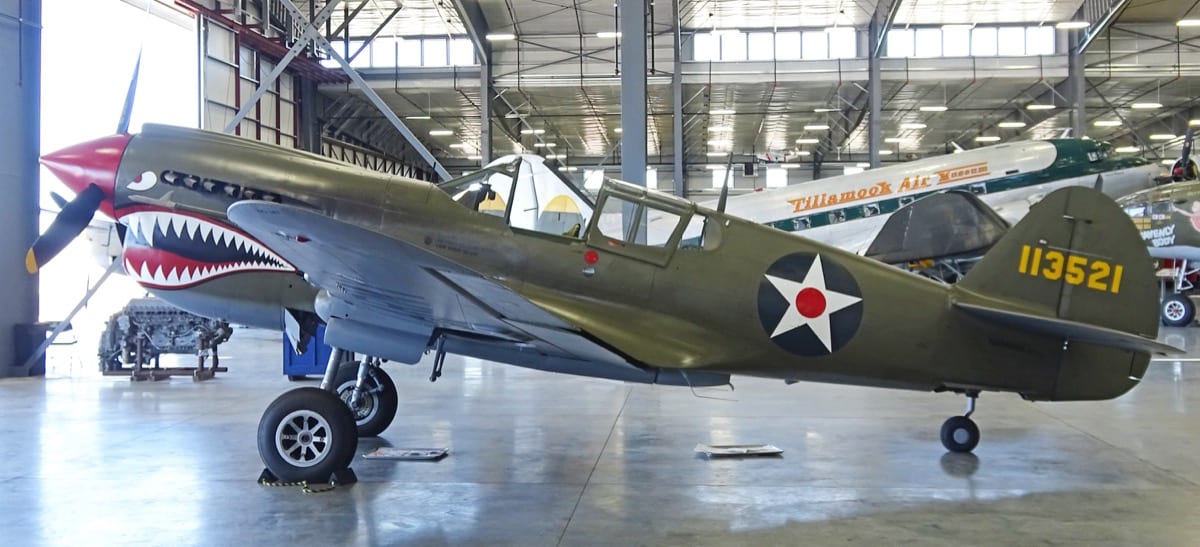
- Curtiss P-40E Warhawk (Kittyhawk)
- Douglas A-26B Invader
- Douglas AD-4W Skyraider
- Douglas DC-3 (C-47B)
- Douglas SBD (A-24) Dauntless
- Focke Wulf Fw-190A (Replica)
- Grumman (General Motors-built) FM-2 Wildcat
- Grumman J2F-6 Duck
- Grumman (General Motors-built) TBM-3E Avenger
- Lockheed P-38 Lightning
- Lockheed PV-2D Harpoon
- Lockheed P2V-7 Neptune
- Martin AM-1 Mauler
- Messerschmitt (CASA-built) Bf 109
- Nakajima Ki-43 Hayabusa (Oscar)
- North American B-25J Mitchell
- North American P-51D Mustang
- North American T-6 Texan
- Republic P-47D Thunderbolt
- Stearman PT-17 Kaydet
- Vought F4U-7 Corsair

I have had the pleasure of visiting this collection and I must say it is awesome!!
Absolutely IMPRESSIVE collection and article…great story.
I’ve been in aviation 44 years aircraft maintenance marketing, worked for Evergreen and been to many airshows. I truly appreciate a fine fleet of aircraft. Bravo!