

An age-old component of aviation has been the pilot-in-the-loop. A pilot brings sophisticated human faculties to bear in solving problems of flight and making judgments on proper actions.
But sometimes, the presence of a pilot can be detrimental — to the pilot.
If an aircraft is to be subjected to dangers ranging from gun and rocket fire directed its way to the unseen perils of airborne radioactivity, then relocating the pilot to another distant aircraft or ground station can be a solution.
Long before today’s fleet of sophisticated purpose-built unmanned aerial systems, the military took advantage of its own surplus aircraft to create expendable drones.
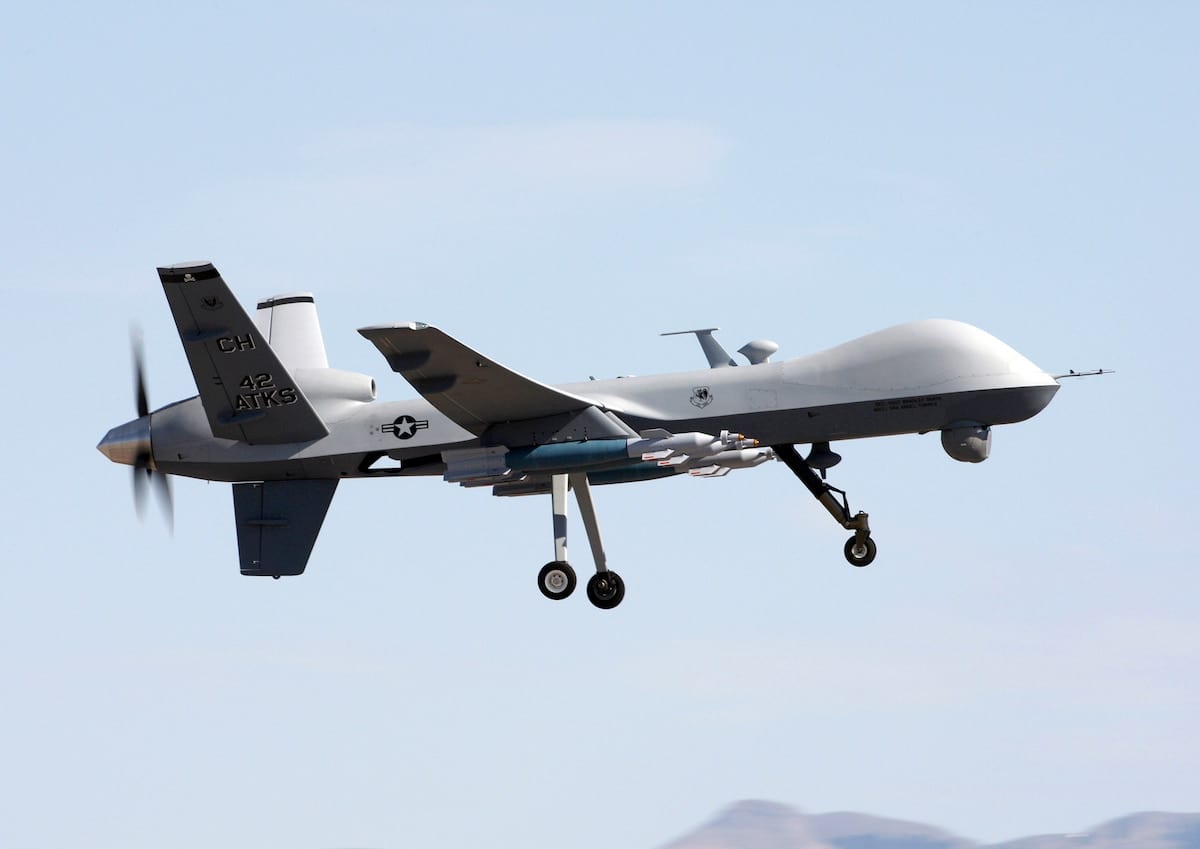
With fascination over this lethality and largesse, film clips showing four-engine B-17G Flying Fortresses torn asunder by rockets became emblems of a Cold War era in which the use of full-scale drones flourished.
The first U.S. flight of a converted full-size aircraft came in 1924 when a Navy Curtiss N-9 biplane on floats took off from the Potomac River unoccupied, flew a triangular course, and landed on the river, all at the command of a radio operator on the ground.
There was speculation of making airplanes into pilotless torpedoes, but that remained out of reach for the time.
The British Navy made significant strides in the 1930s with droned variants of the deHavilland Tiger Moth biplane trainer, and this rejuvenated U.S. Navy efforts at droning.
In 1940, the Army Air Corps assigned the designator A-5 to an aging P-12E biplane fighter that was to have been converted into a target drone, but the Army dropped plans for full-scale drones at that time.
The following year, the Navy obtained 23 P-12s of various models for conversion along the A-5 idea, calling them all F4B-4A as expendable target drones.
The Army Air Forces re-engaged in full-scale drone work during World War II with Project Aphrodite, using available aging B-17s as radio-controlled flying bombs packed with tons of explosives intended for difficult and hardened targets in Europe, while the Navy concurrently explored the use of PB4Y-1 Liberator variants for the same purpose.
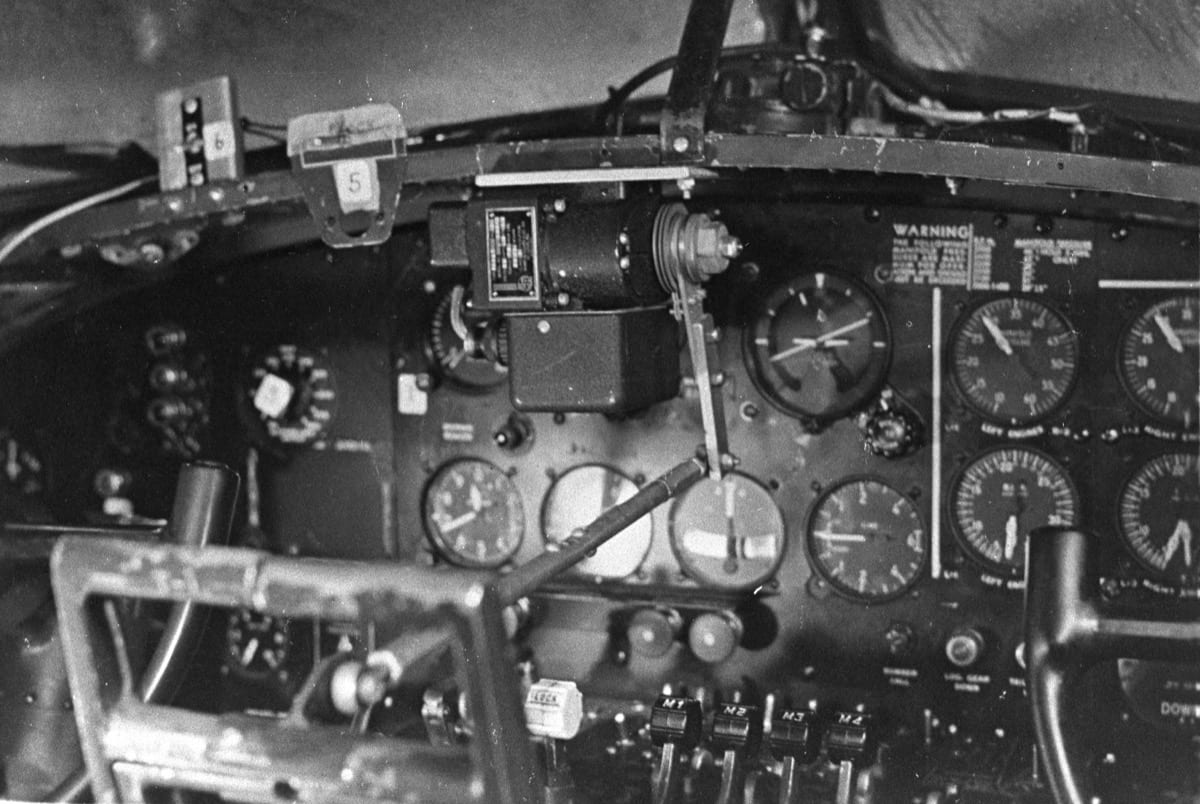
Results were not encouraging — a number of missions ended in failure to reach the target.
Pilots were to take off in the bombers and bail out once control was handed off to a drone director in another aircraft. There were casualties, including the loss of Joseph P. Kennedy, Jr., flying a PB4Y-1.
The AAF continued improving its radio-control capabilities to the extent that by 1946 QB-17 drones could take off and land with nobody on board, while ground stations and airborne DB-17 director aircraft handled the chores of piloting.
This time, the requirement was to gather photographs and motion picture film in the immediate wake of the two atomic bomb detonations during Operation Crossroads that July, placing the unpiloted QB-17s in areas of radioactivity deemed unsafe for humans.
Droning of aging warplanes became a viable tool from the late 1940s onward.
The U.S. Navy found it feasible to convert F6F Hellcat single-engine fighters for use as targets to test new weapons. As a stopgap combat experiment, droned Hellcats carrying a 1,000-pound bomb were launched from the aircraft carrier USS Boxer several times in August and September 1952.
Once airborne, the remotely piloted Hellcats were directed by crews aboard AD Skyraiders, striking at targets in North Korea. Successes were too low to justify continuing the effort.
In the 1950s at Holloman AFB in New Mexico and later Cape Canaveral, Florida, QB-17s flew while a variety of antiaircraft missiles were launched to intercept the aging unmanned bombers.
Sometimes near misses were planned; proximity fuzes would have ensured a kill in actual combat with a live warhead.
On other drone sorties the B-17s were hit, sometimes limping home, and other times providing spectacular grainy test footage as they came apart in the air high over test ranges.
Some of the drone Fortresses, though created from B-17Gs, were identified as QB-17L and QB-17N models, depending on some specialized mission equipment configurations. Some were fitted with an optional arresting cable hook attached to the front face of the tailwheel strut, evidently a hedge against brake failure.
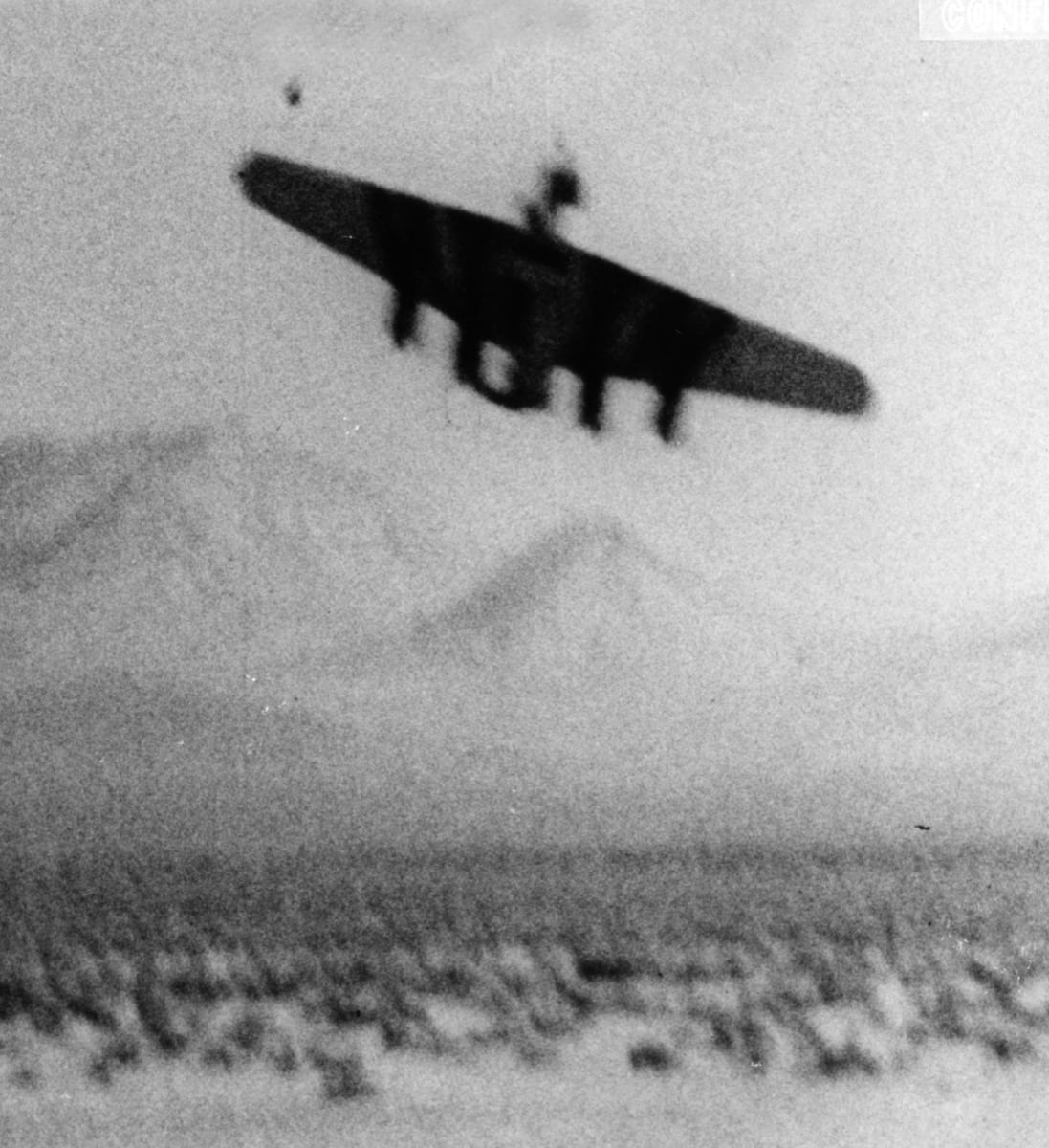
The Navy took a different route with large drones, using some of its excess PB4Y-2 Privateer patrol bombers for the purpose.
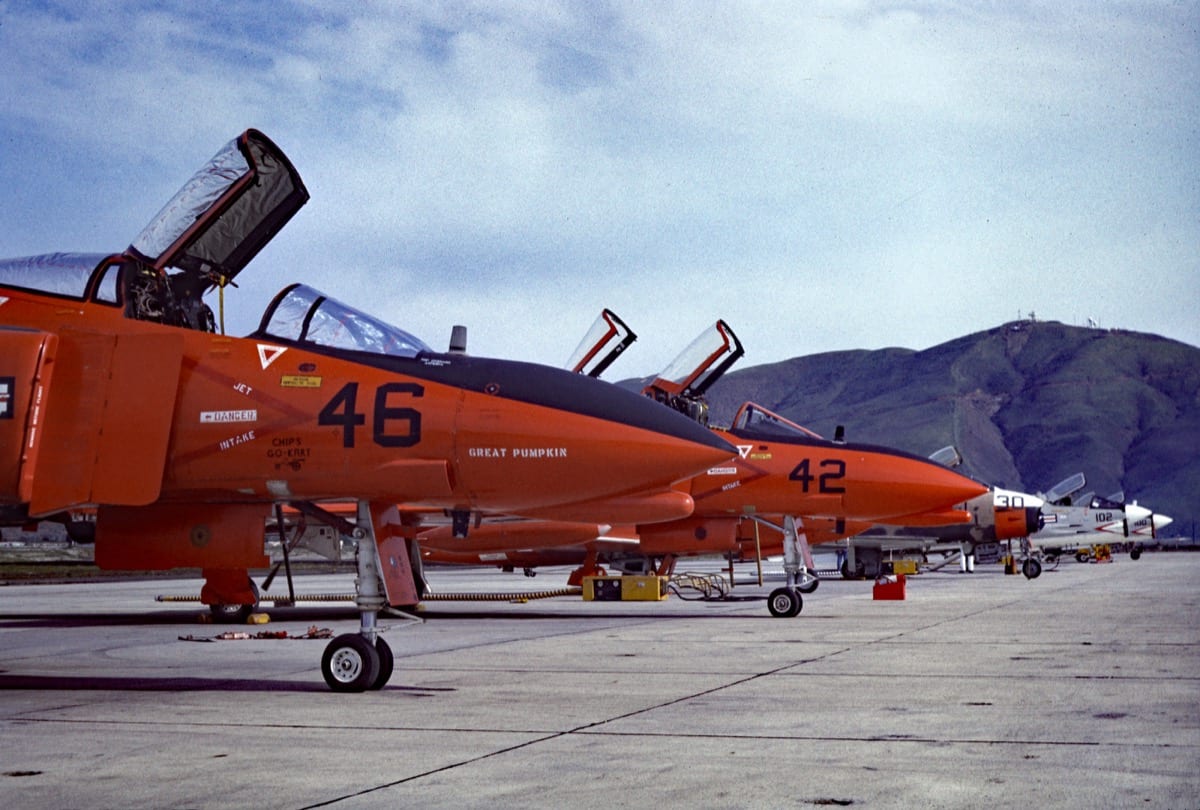
Privateers at times flew over the White Sands ranges in New Mexico, and also over the Pacific, launching from Point Mugu and San Nicholas Island on the California coast.
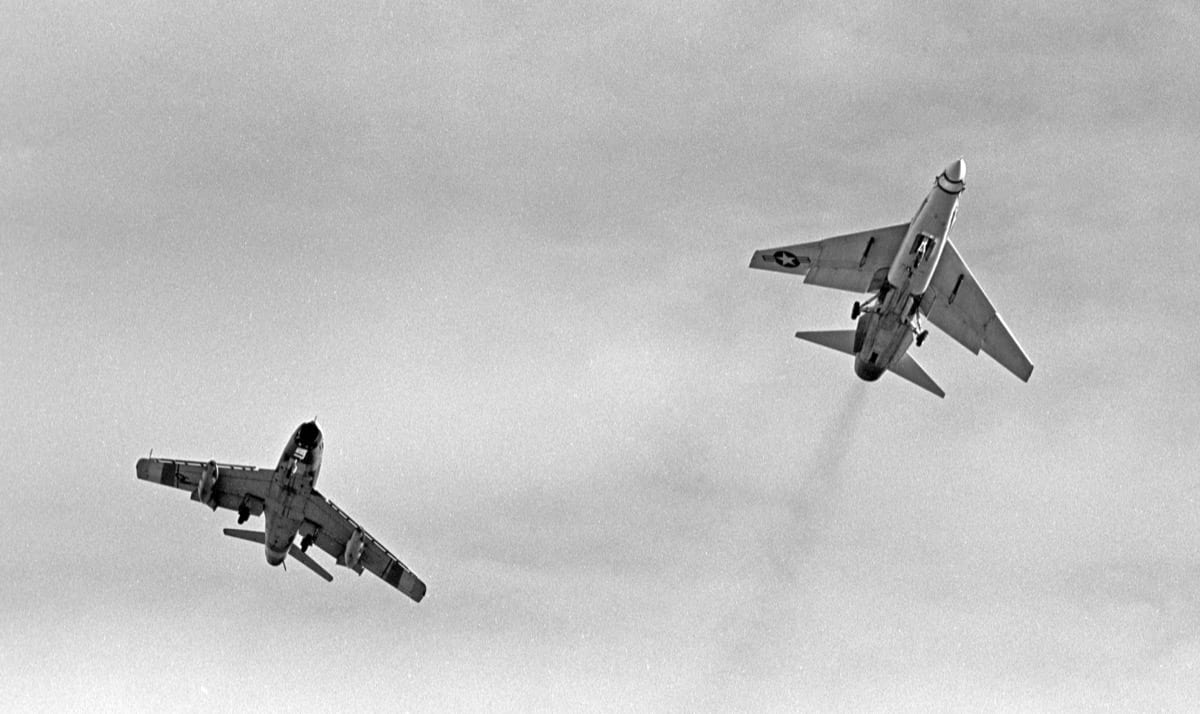
Common to a number of Privateer, Hellcat, and Fortress drones were wingtip-mounted cameras that recorded the path of approaching missiles, helping testers assess the lethality of near-misses.
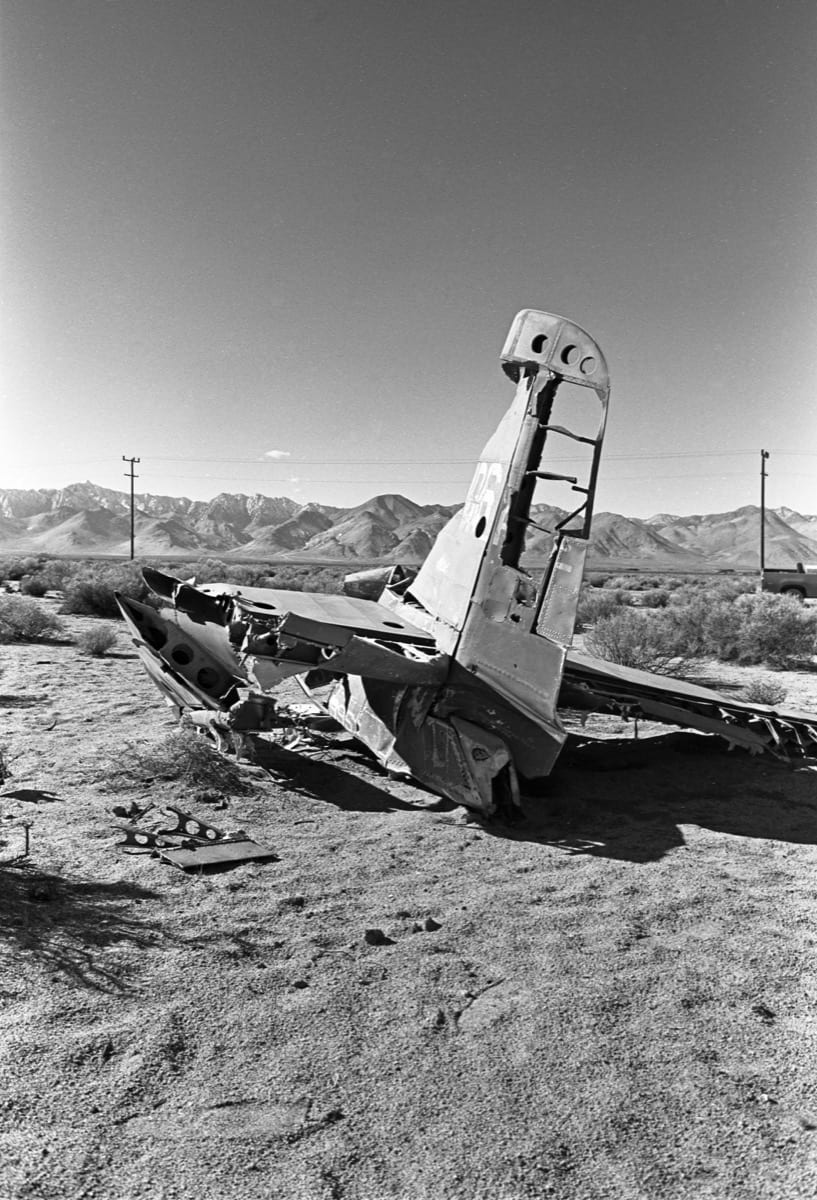
Both the Navy and Air Force comprehended the need to use jet fighter target drones to mimic the jet fighters of potential adversaries in the Cold War.
The Navy droned a number of F9F Panther and Cougar jet fighters and the Air Force had P-80 and T-33 Shooting Stars so configured. A handful of modified JQB-47E Stratojet bomber drones provided something for Bomarc missile test shots to target.
By the 1970s, the Navy was evolving a mix of foreign and ex-USAF F-86 Sabres as drones. In the late part of that decade, the longevity of the McDonnell F-4 Phantom II supersonic jet fighter was evident as the Navy droned early F-4Bs while the factory in St. Louis still built brand-new later model Phantoms.
The Air Force moved into supersonic drone fighters in that era with F-102 Delta Daggers, variously labeled QF-102s or PQM-102s, plus F-100 Super Sabres, followed by QF-106 droned versions of the Delta Dart, QF-4 Phantoms, and now QF-16 Fighting Falcons.
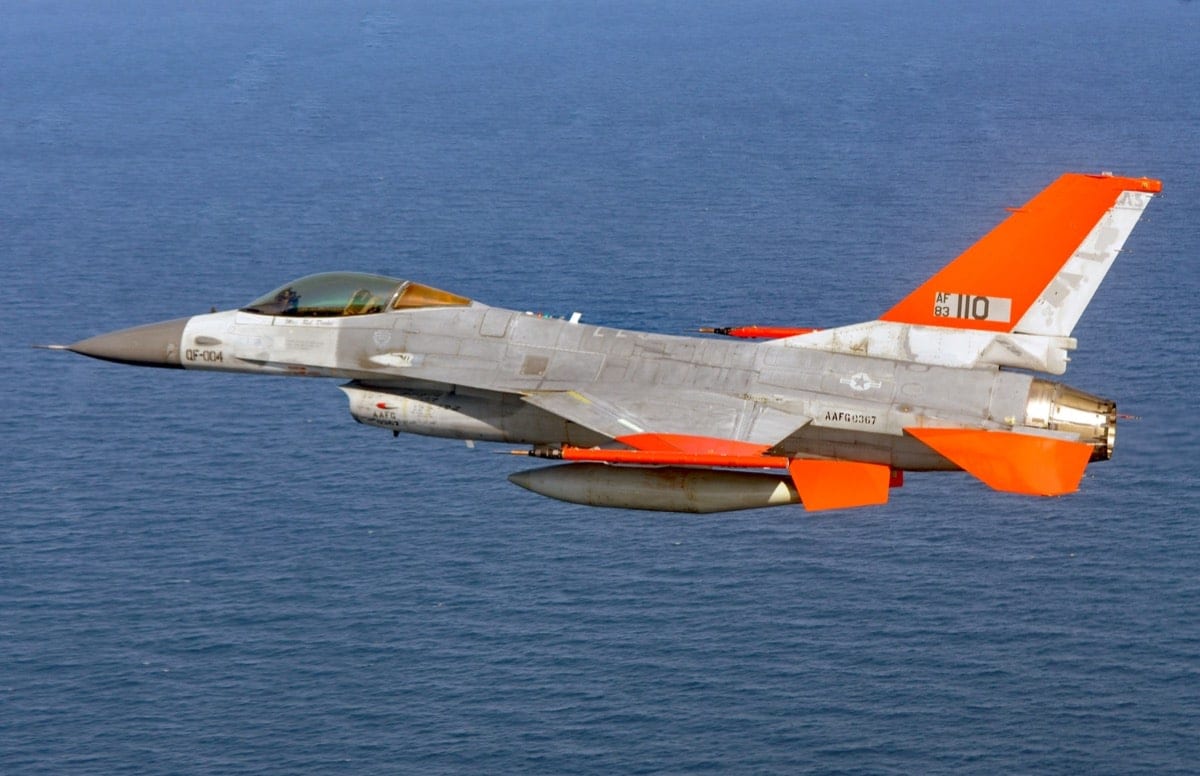
Some military aviation enthusiasts have had a love-hate relationship with the droning of once-prized fighters and bombers. Without droning, these airframes would in all likelihood have been scrapped unceremoniously much sooner.
But they filled a need, and some of them left a spectacular legacy on film while providing valuable testing and training opportunities for the military services.

Pilotless aircrafts? I even don’t believe that the idea of building a pilotless airliner or a fighter, will come true in 22nd century. Human must observe and fix the human made machines’ errors.
Enjoy this magazine! How about unexplained sightings at airfields?(ghosts) make a good read thanks happy new year!