

The first generation of jet aircraft during World War II involved a nearly universal rush to produce a viable fast fighter aircraft. Germany’s Me 262, America’s P-59 — and more operationally suitable P-80 — and England’s Gloster Meteor all had the fighter mission as primary when they were designed.
After the war, purpose-built jet bombers were a logical step in the accelerating turbojet revolution.
But the world’s first jet bomber design was a 1944 German product from the Arado company, the Ar 234B. Some writers delight in using gutturally-pronounced German military names in articles describing wartime technological advances made in that country, and one of the Ar 234B bomber’s monikers sounds like something out of a movie script: Schnellbomber.
It means Fast Bomber, a promise the Ar 234B delivered. Otherwise, the Ar 234 was known as the Blitz or Lightning.
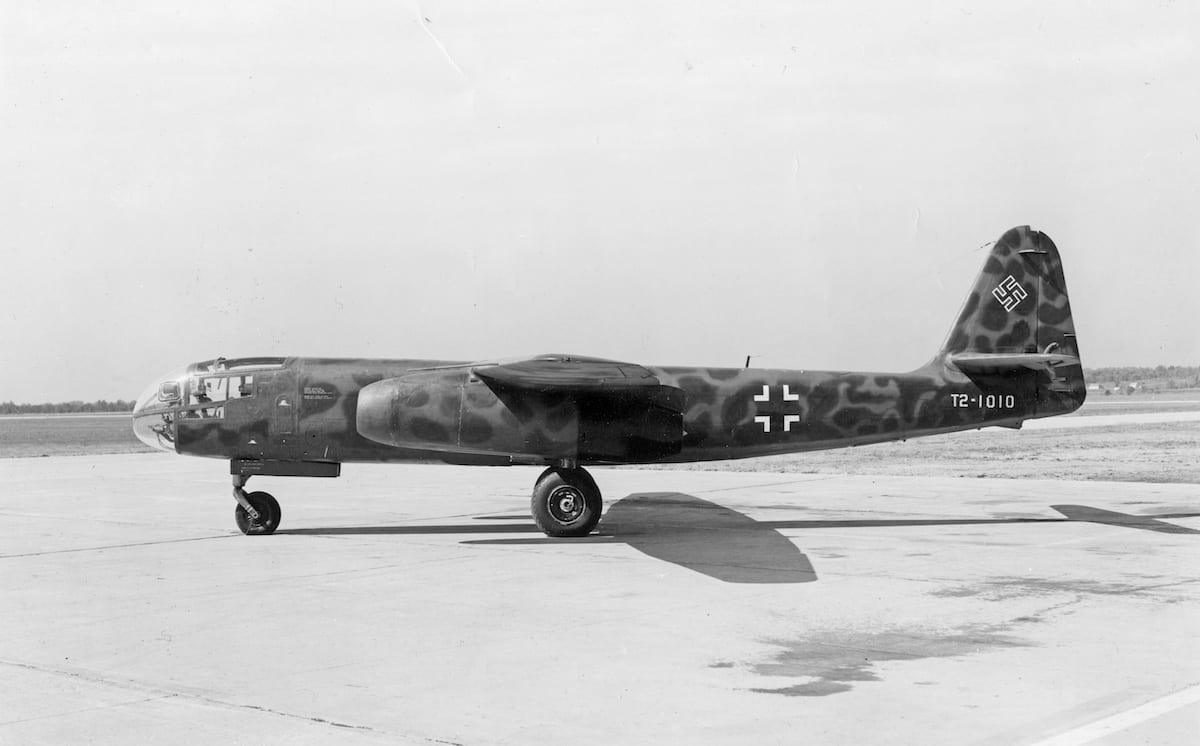
There may be a bit of technical wiggle room in the Ar 234B’s claim as the first purpose-built bomber, since the Ar 234 prototypes were designed as fast reconnaissance aircraft to meet a German Air Ministry requirement. Variations in equipment differentiated the recon from the bomber Ar 234B Blitzes.
Range and speed were primary considerations in the original Ar 234. To save weight and space inside the fuselage for more fuel, the prototypes relied on a wheeled dolly for takeoff and lightweight skids for landing on grass airfields.
This changed with the seminal Ar 234B variant. Traditional tricycle landing gear made it much easier to clear an airfield of Ar 234Bs after they landed. The earlier skid versions could not simply taxi off the runway when they skidded to a slippery stop on the turf.
Reconnaissance Ar 234Bs operated with impunity over the United Kingdom well into 1945, providing reconnaissance photography from altitudes of around 29,000′, where the jets’ speeds, measured at over 430 miles an hour in cruise at 20,000′, gave them security. Top speed at 20,000 feet was more than 460 miles an hour.
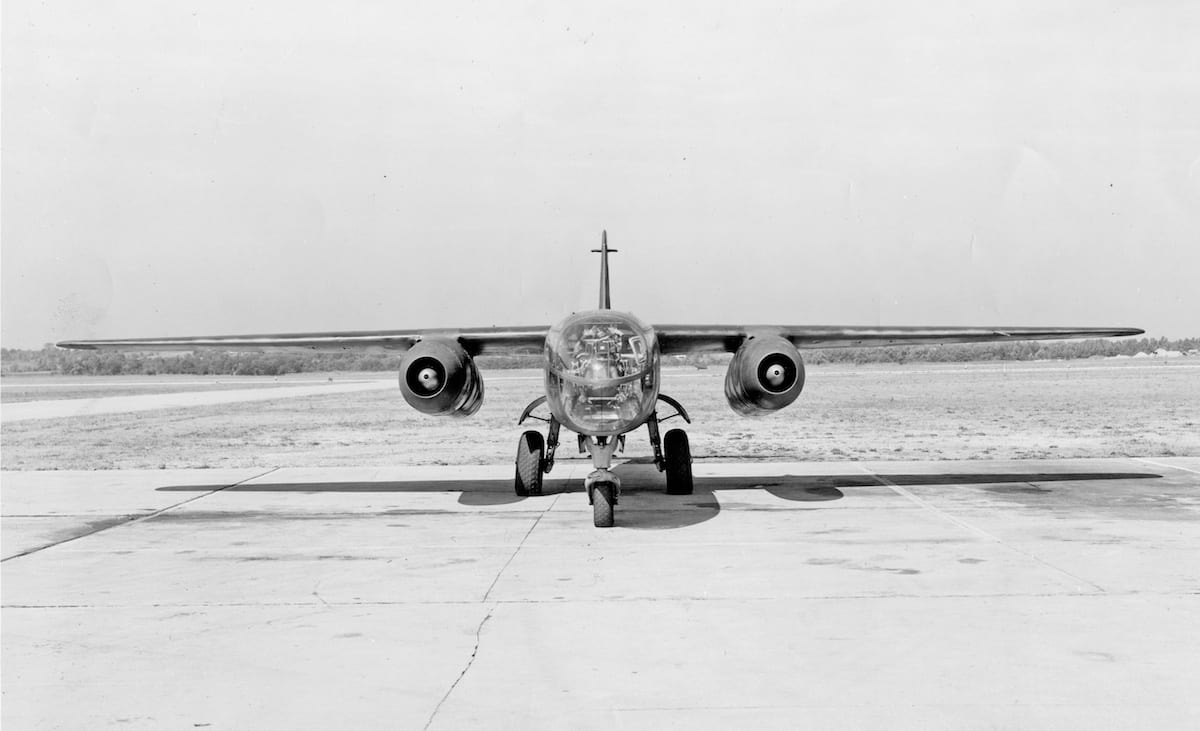
Ar 234B bombers were deployed operationally in an attempt to thwart the Allies in the Ardennes offensive in January 1945. The Ludendorff Bridge across the Rhine River was captured intact by the U.S. Army, and German attempts to destroy it included repeated sorties by bomb-laden Ar 234Bs, to no avail. American antiaircraft artillery and British and American fighters downed some of the attacking jet bombers.
During development of the Ar 234, the Germans assigned the code name Hecht, meaning Pike, to the jet. This duplicated the use of Hecht to denote an entirely different glide bomb project and may have been a subterfuge intended to throw off Allied intelligence gathering.
At war’s end, Ar 234Bs were valuable war prizes. More than one of the jets were placed aboard the British Navy carrier HMS Reaper that delivered German war prize aircraft to the United States.
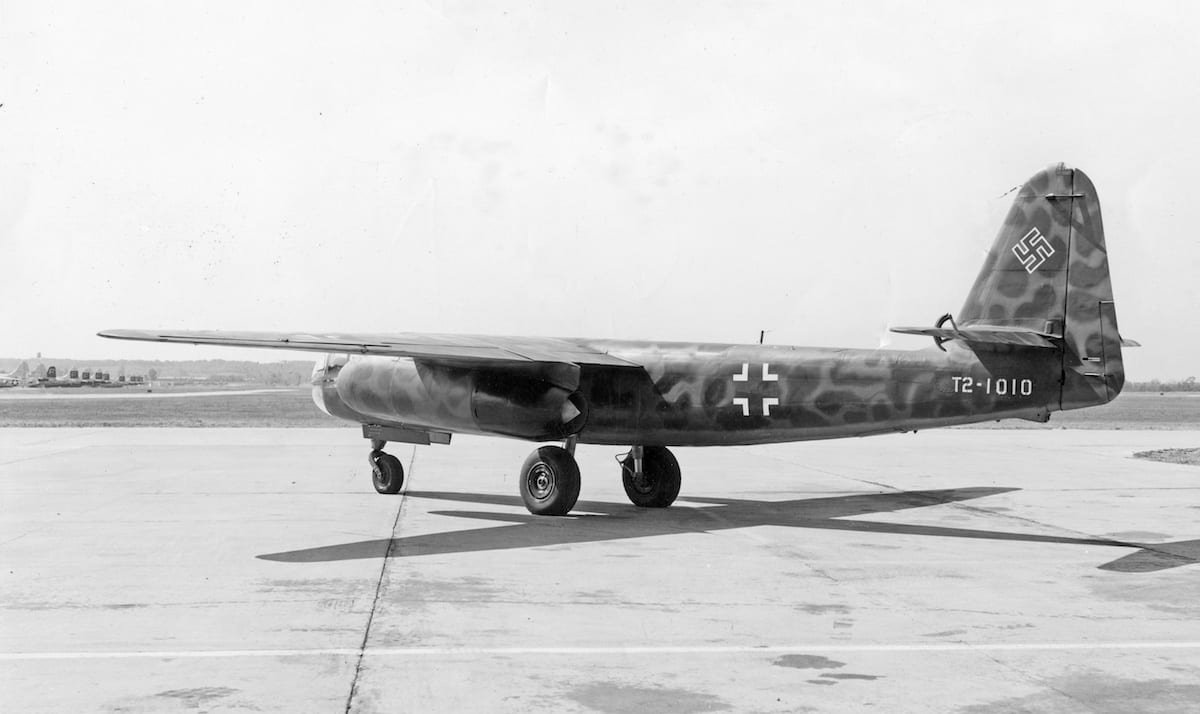
At Wright Field in Ohio, the Ar 234B number 140312 logged more than 20 hours of flight time with American test pilots. To be sure, there was intelligence to be gained from captured German aircraft, but the technologies embodied in the wartime Ar 234B were quickly surpassed in the late 1940s.
When testing was finished, this Ar 234B was taken to Park Ridge, Illinois, for storage pending its display as a museum piece. The Arado migrated to the Smithsonian Institution’s storied compound for unrestored aircraft at Silver Hill, Maryland, until it could be refurbished and exhibited. This is the only remaining Ar 234.

(GAN reader Jack Handy sent a batch of U.S. Air Force photos that were gathered by Wilber Clouser, an Air Force Systems Command technical editor of handbooks after World War II. The pictures included several Ar 234B images used in this article. With thanks to both Handy and Clouser, photos from this group will illustrate columns over time).

It’s not a sport it’s a living cartoon.
Thank you for this informative article!