

From a distance, it looks like a new airplane. Closer, it wears a mantle of age gracefully. It is the Douglas C-47 called “That’s All, Brother,” and it is testament that everything old is new again.
Any C-47 flying today deserves the respect reserved for such a long-lived classic. “That’s All, Brother” rises far above that level with a story of heroism that turned the course of history.
This C-47 — yes, this very aircraft, not just one like it — led a stream of 800 C-47s on the initial airdrop missions opening the Normandy invasion on June 6, 1944. That’s the day the Allies had waited years to see. The western European continent was being reclaimed and liberated from German occupation from that date on.
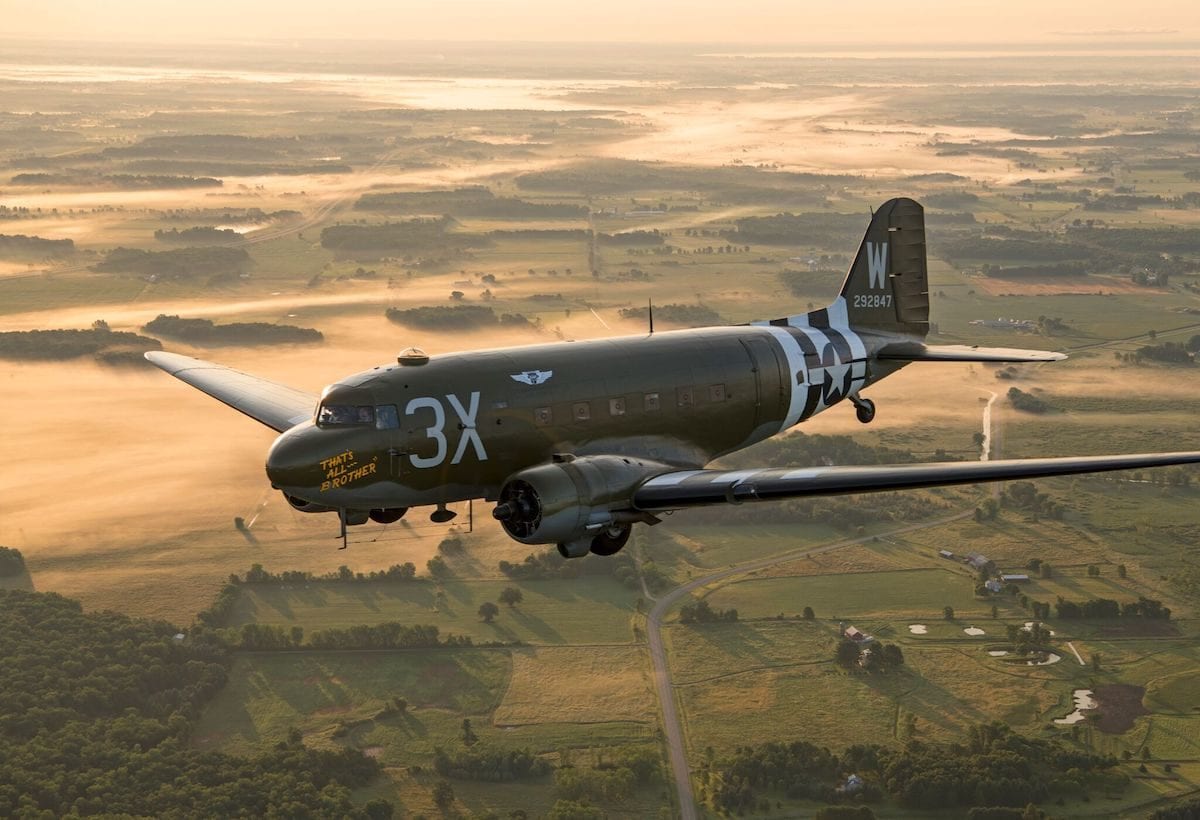
“That’s All, Brother” was photographed a few times on that fateful date, but then slipped into the anonymity of a working airlifter, flying other combat missions over Europe until war’s end, when it joined fleets of surplus warplanes on the civil market. Several civilian operators flew this C-47 over the ensuing years, oblivious to its pivotal place in combat history.
As C-47s aged, some were acquired by Basler Turbo Conversions of Oshkosh, Wisconsin, where they were rebuilt or possibly cannibalized so others could fly. Basler became the go-to place for all things C-47.
In the company’s storage compound rested a C-47, looking the worse for wear. About this time, researchers tracing the history of a retiree who had flown in “That’s All, Brother” were astounded to find that serial number matched the derelict airframe in Basler’s compound.

Though the argument might have been made that this C-47 was too tired to rebuild, its Normandy pedigree said otherwise. The Commemorative Air Force saved the airplane and Basler applied its wealth of C-47 knowledge to bring it back to first-class flying status. And that’s how “That’s All, Brother” came to be a pleasing mix of newly-refurbished aircraft with a subtle patina of age.
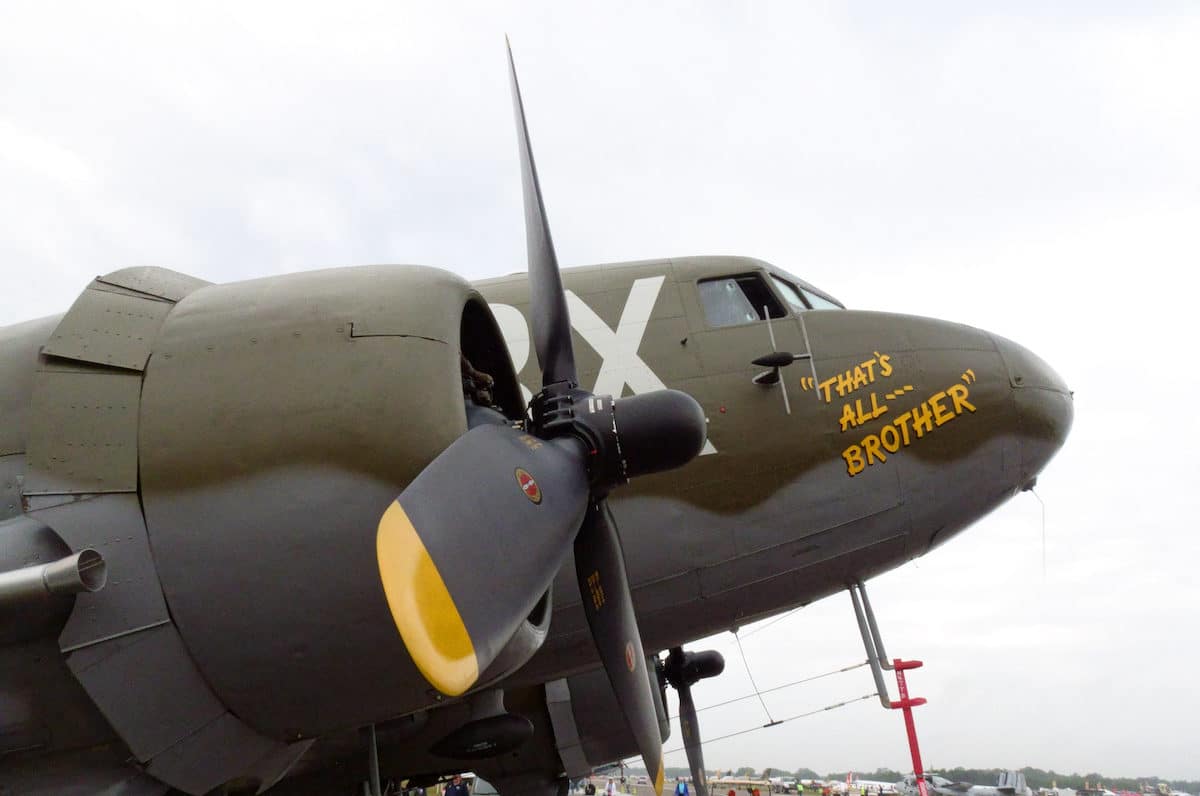
The paint was applied thoughtfully to this Normandy veteran. The base of olive drab and gray was only the beginning. Markings, including well-executed new versions of its name on the sides of the nose, added personality. The restorers knew the application of black-and-white identification stripes — invasion stripes — on C-47s like this one were hasty last-minute affairs applied only 24 hours before the fateful invasion in 1944, using whatever paint brushes were available. So that’s how the markings were added during the restoration. The result is crude by some standards — and that’s the way it was in 1944.
Photos of “That’s All, Brother” taken just before it took off for Normandy showed a curious unpainted patch on the troop door, where the white invasion striping was intentionally omitted. Airlifters of that day would scrawl a number in chalk on each aircraft of a mission so the paratroops or cargo loaders would know what aircraft they were assigned to. These chalk numbers — a term still used by airlifters decades after they dispensed with the chalk — gave rise to the unpainted spot on some of the Normandy transports. This restored Normandy veteran carries that irregular rectangle on its striping.
When the Commemorative Air Force took on the task of preserving “That’s All, Brother” in 2015, it was done with a sense of urgency. Time was slipping away to honor the living veterans of World War II, and this C-47’s presence was needed.
And as a landmark anniversary — the 75th anniversary of D-Day — rolls around this June, “That’s All, Brother” will once again lead a contingent of C-47s over the Normandy beaches this year.
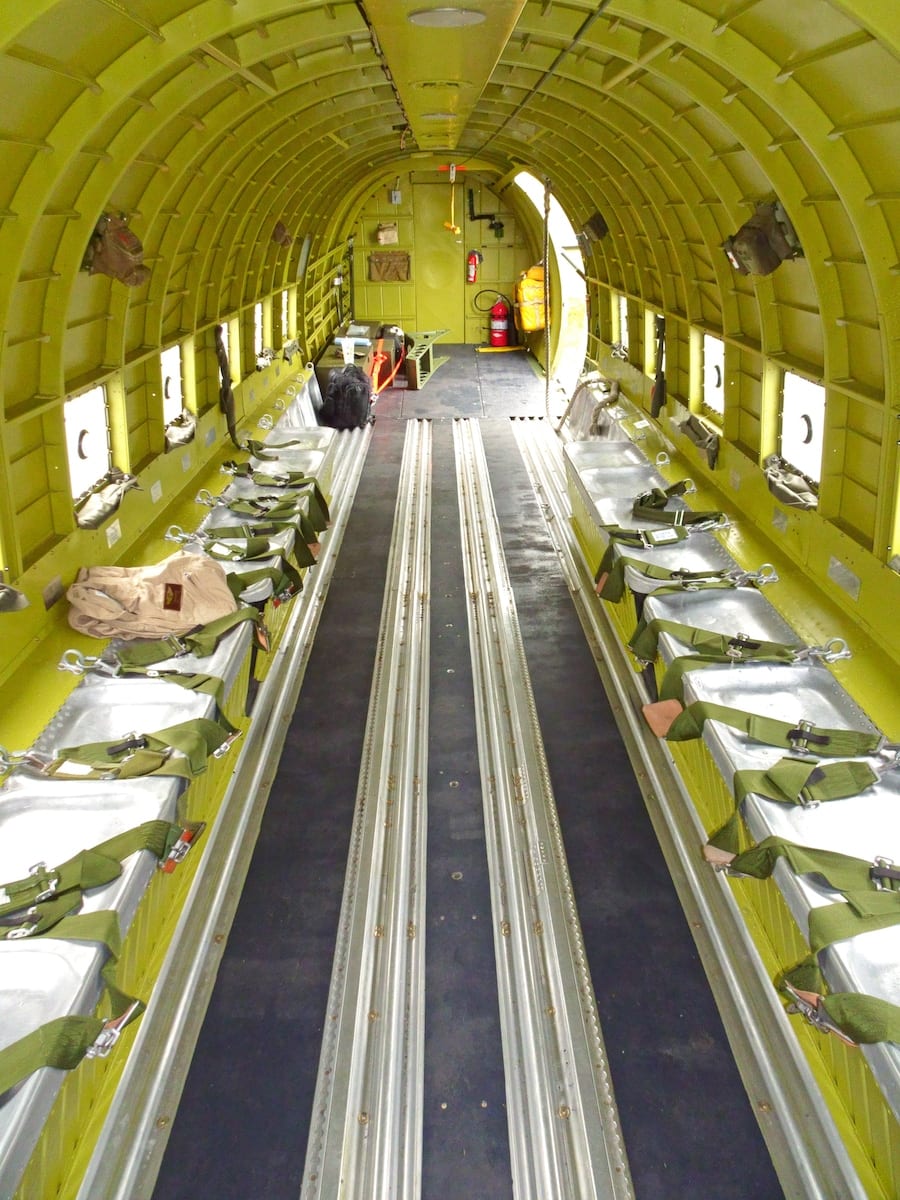
But preservation is pricey, while experiences are excellent. The CAF combines both to raise funds for the operation of “That’s All, Brother” while affording the public the rare chance to fly aboard this D-Day icon. A seat aboard this C-47 — a stamped aluminum hollow — will give a passenger a ride through history for $249. At least seven passengers — signing up individually or in groups — are required before “That’s All, Brother” will make a flight. Up to 13 can make the half-hour journey into the past. The crew says reservations and payment may be made at the website https://WWIIdays.org/Fly-C-47-Thats-Brother/
And the flight is special. A crew briefing acquaints passengers with the C-47’s emergency exits, and the crew chief ensures all are properly buckled in their military lap belts. The furnishings are Spartan, as they should be in this war horse. When the two Pratt and Whitney R-1830 engines twist the propellers into motion, a comforting low roar conveys the sense of power.
At the runway, each engine is exercised to check the magnetos. Takeoff power puts the previous low roar in perspective, as the C-47 lurches forward. Sitting sideways, and leaning toward the low tailwheel, that first acceleration acquaints you with your next door seat mate. As the tail comes up, things smooth out and the experienced crew eases “That’s All, Brother” into the sky.
The elegantly swept leading edges of the C-47’s wings extend over the terrain. Alternating black-and-white bands near the wing roots telegraph this machine’s ownership by the Allies. The steady throb of the engines adds a musical drone.
A single braided steel cable runs overhead from the front of the cabin to a point at the exit door on the left side of the airplane. The cable is the static line, to which young paratroopers clipped their parachute rip cords — and their hopes — in the fidgety final minutes before they jumped into history. As the C-47 drones along, the cable moves silently, like a huge twangy bass guitar string.
In the darkness of the navigator’s station, a column of light spills down from the Plexiglas astrodome. Up ahead, pilots Tom Travis and John Cotter keep tabs on the panel of round instruments, deftly tweaking throttles if needed.
And then, it’s time to return to the runway. A solid low-pitched squeal radiates up into the cabin from the main tires as confirmation of the landing.
Young men animated this same C-47 above contested Normandy three-quarters of a century ago. Today, experienced pilots with a sense of stewardship share the experiences of those veterans in this remarkable time machine.

Great article Mr. Johnsen !! I hope to one day be among the privileged few to take the ride into the sky on this living piece of American history. We will never forget the heroes who sacrificed everything for so many others.